Sitting a Creek Crossing at First Light
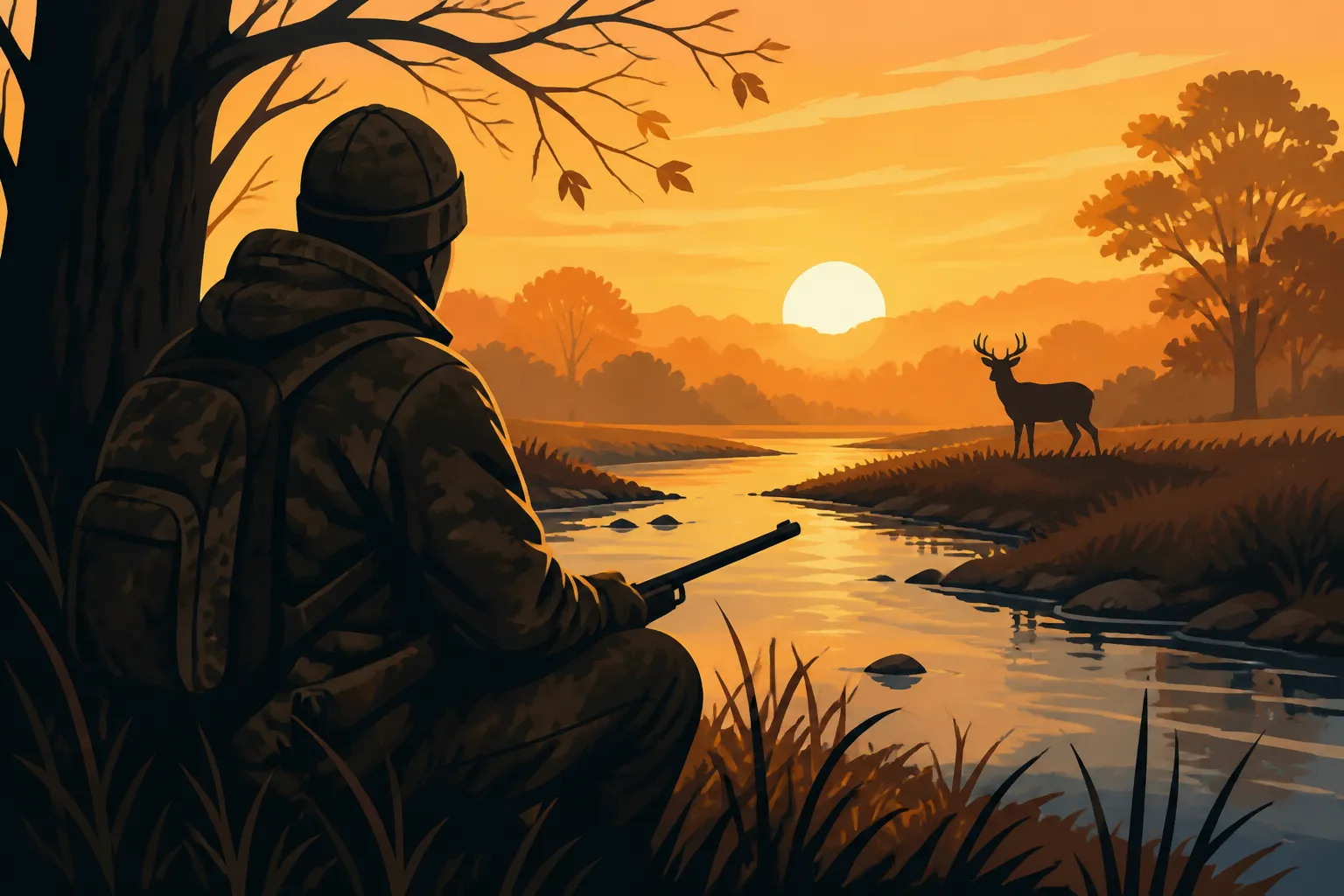
There's a special kind of anticipation, and sometimes frustration, that comes with deer hunting at first light. You know the deer are moving, transitioning from their nocturnal feeding to the safety of their bedding areas, but actually intercepting them can feel like chasing ghosts. This guide is all about mastering the art of sitting a creek crossing at first light in Illinois, helping you understand deer patterns and optimize your setup for success when it matters most.
Understanding Deer Movement Around Creek Crossings
Creek crossings are often overlooked hotspots, yet they serve as critical pathways for deer, especially during those low-light hours. They're not just random spots where deer get a drink; they're strategic choke points that funnel deer movement.
Why Deer Use Creek Crossings
Deer are creatures of efficiency and safety, and creek crossings offer both in spades. First, creeks, even small ones, create natural funnels in the landscape. Instead of battling thick undergrowth or navigating steep, muddy banks, deer will instinctively seek out the path of least resistance. This might be a subtle dip in the bank, a fallen log acting as a bridge, a shallow ford with a hard bottom, or even just a narrow pinch point where the water slows.
Moreover, these areas often provide concealment. The banks themselves, coupled with surrounding vegetation, offer cover as deer travel. They can move from one timber block to another, or from a food source to a bedding area, with a sense of security that open fields or bare ridges might not provide. Water itself is also a draw, especially during dry periods or early season, making these crossings dual-purpose travel corridors and hydration stops. Deer are constantly seeking to minimize exposure to predators, and a creek bottom, with its inherent cover and often noisy water, helps mask their approach and retreat.
First Light Behavior and Timing
The transition period just before and immediately after sunrise is golden hour for a reason. Deer have typically spent the night feeding, perhaps in a soybean field, a standing corn field, or an oak flat laden with acorns. As the sun begins to lighten the eastern sky, their internal clocks tell them it's time to head for thicker cover to bed down for the day. A creek crossing often lies directly between these nocturnal feeding grounds and their secure bedding areas.
Your window of opportunity is often the first hour or two of legal shooting light. This is when deer are most actively moving through these funnels. They might be walking with purpose, but they're still cautious, using the low light to their advantage. As the light increases and human activity begins to stir, deer will become more hesitant. Understanding this timing is critical; you need to be in your stand or blind well before dawn, settled and still, ready for that fleeting moment when a deer steps into your shooting lane. Missing this critical window can mean the difference between a successful hunt and just seeing tracks.
Scouting and Location Selection for Creek Crossings
Finding the right creek crossing isn't just about spotting water on a map; it's about identifying active and strategic crossings. This requires boots-on-the-ground effort, combined with smart use of modern tools.
Identifying Active Crossings
The first step in finding a killer creek crossing is thorough scouting. You're looking for evidence of consistent deer use. Start by examining the banks of any creek you're considering. Look for fresh deer tracks in the mud or soft soil. Are there multiple tracks? Are they heading in a consistent direction? Pay attention to the size of the tracks – bigger, deeper tracks might indicate a mature buck. Follow these trails back from the creek to see where they lead. A well-worn trail leading to and from a specific crossing is a huge indicator.
Beyond tracks, keep an eye out for other deer sign. Rub lines along trees near the crossing, where bucks have rubbed their antlers, signify that mature deer are frequenting the area. Scrape lines, patches of disturbed earth where bucks paw the ground and deposit scent, are also key indicators, especially during the rut. If you find scrapes or rubs right at a crossing, you've likely found a primary travel corridor. Using mapping tools like GoHunt can be incredibly helpful here. You can identify potential crossings from aerial imagery, then use the topographical features to predict natural funnels. This kind of Scouting Illinois Public Land Before Season will save you valuable time and legwork. Don't be afraid to walk the creek banks for a mile or two, noting every potential crossing, even seemingly insignificant ones. Deer are lazy and will often use the easiest path.
Evaluating the Surroundings
A creek crossing isn't an island; its value is deeply tied to the surrounding habitat. When evaluating a crossing, think about the "why" behind deer movement. Where are the deer coming from, and where are they going? For many Illinois hunters, this means considering nearby food sources. Are there agricultural fields (corn, soybeans, alfalfa) or oak ridges loaded with acorns within a reasonable distance? Deer will be traveling from these feeding grounds to their bedding areas after a night of munching.
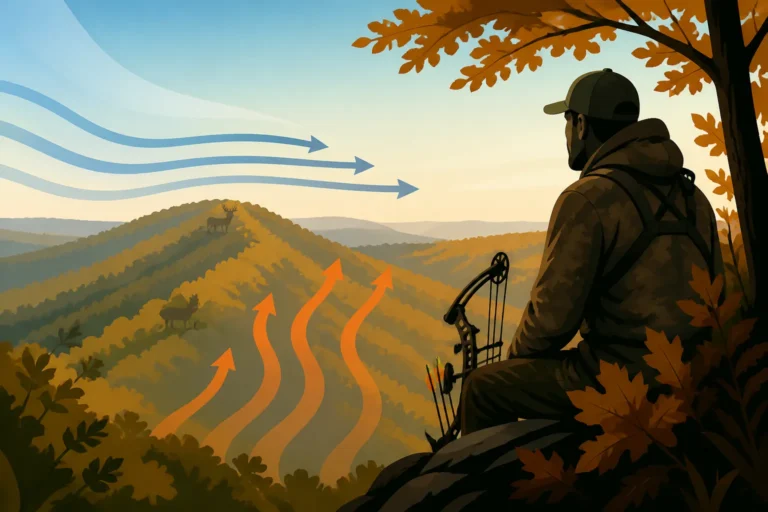
Equally important are the bedding areas. Look for thickets, dense timber, regenerating clear-cuts, or even standing thermal cover where deer feel secure enough to lay up for the day. The ideal creek crossing will be situated on a direct line between a preferred food source and a dense bedding area. Also, consider the water source itself. While deer don't always cross creeks just for a drink, if the creek is a reliable water source during dry conditions, it adds another layer of attraction. Don't forget to factor in elevation changes. On a ridge, thermals will typically drop into creek bottoms at first light, then rise later in the morning. Understanding Wind and Thermals on a Southern Illinois Ridge is paramount; you want your scent to be carried away from where deer are likely to approach. A creek that runs along a natural contour or through a timbered funnel provides an excellent opportunity to catch deer moving unseen.
Strategic Setup for First Light Success
Once you've identified a promising creek crossing, the real chess match begins: choosing your setup. A poorly chosen stand or blind location, or a careless entry, can ruin your hunt before it even starts.
Wind Direction and Scent Control
This cannot be stressed enough: wind direction is your absolute number one priority when hunting any whitetail, but especially at a first-light creek crossing. Deer, particularly mature deer, rely almost exclusively on their noses for survival. If your scent drifts into the path of an approaching deer, your hunt is over. At first light, thermals often "fall" into creek bottoms, meaning your scent can sink and travel along the low-lying areas. As the sun rises and warms the air, thermals can start to rise. You need to position yourself so that the prevailing wind, and any expected thermal shifts, carry your scent away from where you anticipate deer will approach and cross.
Always check the wind before heading out. If the wind isn't right for your chosen setup, have a backup plan or choose a different location. Don't try to "get away with it" – you rarely will. Beyond wind, meticulous scent control is a must. Shower with scent-eliminating soap, wear clean hunting clothes stored in airtight containers, spray down with scent killer, and even consider carbon-lined clothing. Every little bit helps. Deer are incredibly sensitive, and a single whiff of human odor can send them veering off your property or into thicker cover.
Stand Placement and Concealment
The exact placement of your stand or ground blind around a creek crossing is crucial. For elevated stands, you want to be downwind, of course, but also high enough to get your scent above the primary travel routes and to offer a good vantage point. Look for a tree that provides excellent cover, breaking up your outline against the sky or background. Consider your shooting lanes to the crossing itself and any trails leading into or out of it. You want clear shots without excessive limb interference. Think about the angle of the sun as well; you don't want to be silhouetted or have the sun directly in your eyes at prime time.
If using a ground blind, ensure it's brushed in thoroughly, making it blend seamlessly with the natural surroundings. Deer are accustomed to seeing trees and bushes, not large, square objects. Position it so you have good shooting lanes, are downwind, and have a solid backdrop to conceal your movement inside. Remember that deer will be looking for danger, so minimal movement inside your blind is key. A portable blind, like those from popular brands, can be great for quick, adaptable setups, but always take the time to brush it in naturally. Consider how you will enter and exit your blind quietly and discreetly.
Entry and Exit Routes
This is where many hunters make critical mistakes. Your entry and exit routes to and from your creek crossing setup are just as important as the setup itself. The goal is to get to your spot well before first light, without spooking any deer that might already be in the area or on their way to the crossing. This means planning your path to avoid known bedding areas, high-traffic trails, or open fields where deer might see or hear you.
Use natural features to your advantage: walk through a ditch, along a fenceline, or even wade up the creek itself if it’s shallow and quiet enough. The sound of running water can mask your approach. Darkness is your friend here, but move slowly and quietly. Similarly, your exit should be planned to avoid disturbing deer that have already bedded down. If you plan to sit all morning, you might need to wait until midday when deer activity is minimal, or until you're confident that any deer have moved past your immediate area. A well-thought-out entry and exit strategy, much like anticipating Entry Routes Through Standing Corn to a distant bedding area, can make or break your hunt, ensuring that the deer you’re targeting don't even know you were there.
Adapting to Conditions and Maximizing Your Sit
Hunting at a creek crossing isn't just about finding the spot and setting up; it's about being prepared for whatever Mother Nature throws at you and maintaining discipline throughout your hunt.
Weather Influences and Adjustments
Weather plays a massive role in deer movement, and creek crossings are no exception. A sudden cold front, especially one following a warm spell, can kick deer movement into high gear. They'll be looking to feed heavily and move with more purpose, making a creek crossing a prime interception point. Light rain or drizzle can also be fantastic, as it often masks hunter noise and washes away scent, encouraging deer to move more freely. However, heavy downpours can push deer to hunker down, making movement sparse.
Pay close attention to barometric pressure. A rising or stable high-pressure system generally encourages more deer movement, while rapidly falling pressure before a storm can make deer feed heavily, then become inactive during the storm itself. Fog can create tricky conditions; while it provides cover for deer, it also severely limits visibility. You might need to adjust your setup to a slightly more open area or be prepared for very close encounters. Being aware of these weather patterns and making minor adjustments to your timing or even your exact crossing choice can significantly impact your success. For example, knowing what Late-Season Food Sources for Illinois Whitetails are available in conjunction with cold weather will influence how deer use those crossings to get to that food.
Patience and Persistence
The truth about hunting is that not every sit is going to be a blockbuster, especially when you're targeting specific travel corridors like creek crossings at first light. Deer are wild animals, unpredictable by nature. You might have the perfect setup, the ideal wind, and all the fresh sign in the world, and still not see a single deer. This is where patience and persistence become your most valuable assets.
Once you're in your stand or blind, stay alert, minimize movement, and remain quiet. Scan your shooting lanes frequently, not just at the crossing itself, but along the trails leading to and from it. Drink plenty of water (quietly, of course) and bring snacks if you plan a long sit. Enduring the cold, the waiting, and the quiet can be mentally taxing, but it's part of the experience. Don't get discouraged if the first few hours are slow. Sometimes, that mature buck might be the last deer to move off the feeding grounds, just before he beds down for good. Knowing when to simply call it a morning, gather your gear quietly, and plan for your next sit, versus when to push it a bit longer, comes with experience. Every sit, successful or not, teaches you something new about the deer and the land.
| Creek Crossing Type | Characteristics | Advantages | Considerations |
|---|---|---|---|
| Shallow Ford | Wide, often rocky or sandy bottom, easy to cross | Deer prefer for ease; clear visibility of crossing | Can be open, requiring good concealment; more likely to be used by all deer |
| Fallen Log/Bridge | Natural bridge over deeper water | Highly concentrated movement; deer feel secure on solid ground | Log might be unstable; limited shooting lanes around the log |
| Narrow Pinch Point | Creek becomes very narrow, steep banks elsewhere | Funnels deer into a small area, predictable path | Can be harder to set up without spooking deer; thermals can be tricky |
| Ditch/Culvert | Man-made crossing, often near roads or fields | Direct route for deer avoiding open areas; common in farmland areas | Higher human presence; potential for noise from roads |
| Brushy Bend | Creek turns sharply, dense cover on inside bend | Deer use cover for security; good for still-hunting approaches | Thick cover can obscure deer; difficult to get clear shots |
This detailed approach, coupled with a deep understanding of deer behavior, will put you in a prime position to capitalize on the crucial first light movement around creek crossings in Illinois. Remember to check Illinois Hunting Licenses and What They Cost and ensure you're compliant with all local regulations before heading out.
Disclaimer
Hunting is an inherently dangerous activity. Always prioritize safety, follow all local, state, and federal hunting regulations, and ensure you have proper training and equipment. The information provided in this guide is for informational purposes only and should not replace professional guidance or personal judgment.