Hunting a Standing Milo Field for Deer
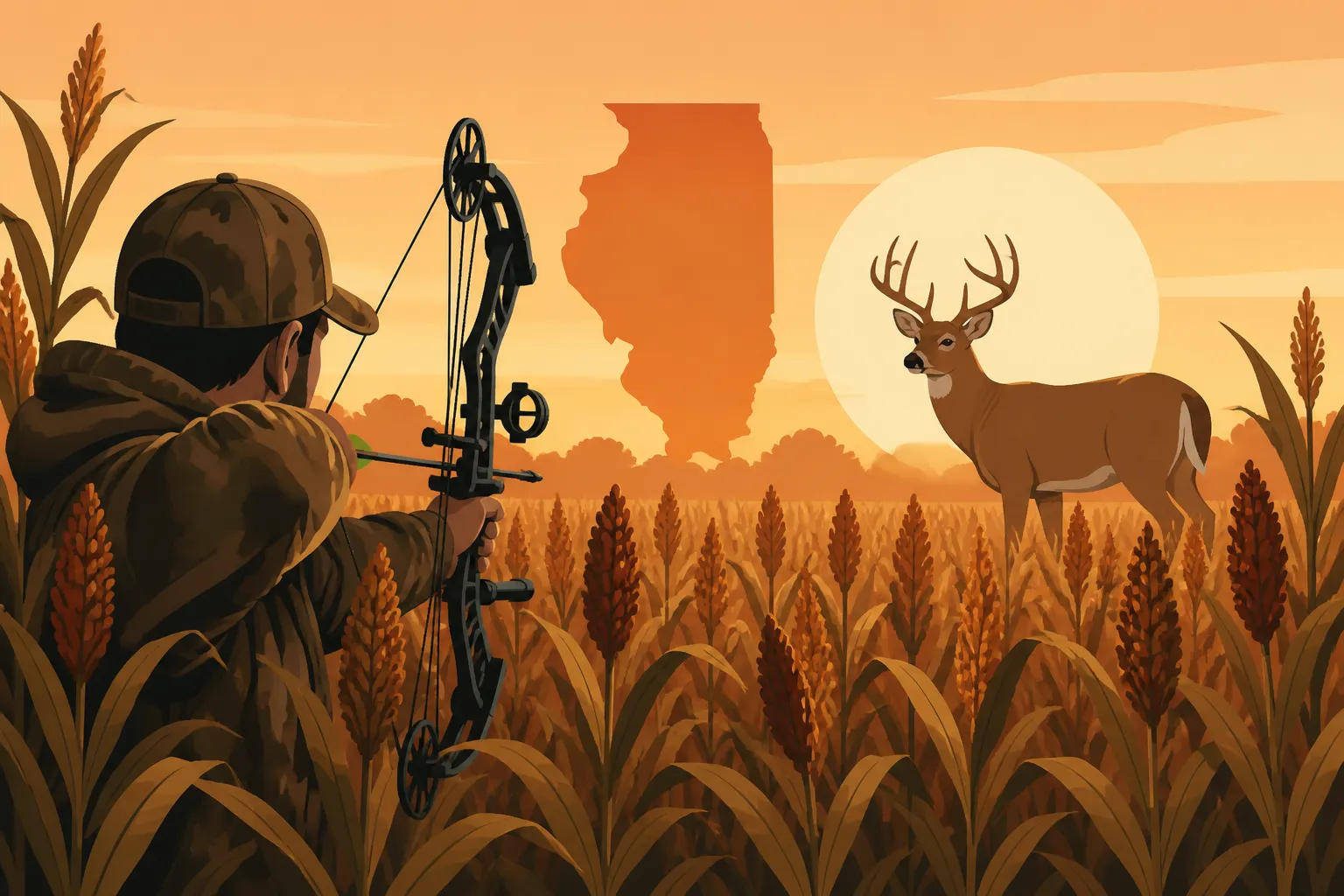
Hunting deer in a standing milo field presents a truly unique set of challenges and rewards. Unlike hunting an open timber or a clear-cut food plot, these dense, towering stalks offer deer incredible security, food, and bedding all rolled into one, making them incredibly frustrating to hunt if you don't know where to start. This guide aims to demystify the art of hunting standing milo in Illinois, providing practical, in-depth strategies to help you navigate these often-overlooked whitetail havens.
Why Milo Fields are Whitetail Magnets
Milo, or grain sorghum, isn't as widely planted as corn or soybeans in Illinois, but where it is, it can be an absolute sanctuary for deer. Its robust, dense stalks provide exceptional thermal and visual cover, often holding deer even when other cover sources have been pressured or disturbed. Plus, the grain itself offers a high-energy food source that can last well into the late season, making it a critical attractant when other food becomes scarce.
The Unbeatable Combination of Food and Cover
Imagine a deer's perfect world: a buffet that never closes, surrounded by walls of impenetrable vegetation. That's essentially what a standing milo field offers. Unlike corn, which often gets picked earlier in the fall, milo can stand well into winter, providing continuous sustenance. Deer can literally live inside these fields for weeks, moving only under the darkest cover of night, or during periods of intense rutting activity, to venture out briefly. This makes them incredibly difficult to pattern from afar, and even harder to bump out of their comfort zone. They have everything they need right there, protected from the elements and prying eyes.
It's not just about the food, though. The thick, tough stalks of milo create an almost tunnel-like environment, perfect for bucks to hide their racks and does to feel secure with their fawns. Hunters often assume deer only use these fields for feeding, but the reality is they will bed right in the middle, especially larger fields or those with variations in terrain. They feel safe, warm, and well-fed, which means they're not eager to leave. Understanding this dual function of food and cover is the first step to unlocking the secrets of a productive milo hunt.
Late-Season Potential and Cold Weather Benefits
When winter truly sets in and temperatures drop, standing milo becomes even more valuable. Those dense stalks do an amazing job of blocking wind and trapping warmth, creating microclimates that deer appreciate when the mercury plunges. While other food sources like acorns are long gone or covered by snow, and many soybean fields are just stubble, milo still offers accessible, high-energy forage. This makes it a prime candidate for a successful hunt during the late-season December lull. You might find bucks that have been pressured out of timber blocks or smaller woodlots retreating into the safety and warmth of a large milo field.
For hunters braving the cold, knowing that deer are concentrated in these fields provides a distinct advantage. Instead of wandering vast tracts of timber hoping to cut a track, you can focus your efforts on a more defined area. The trick, of course, is getting into that area without blowing out every deer in the process. We'll delve into specific tactics later, but recognizing milo's critical role as a cold-weather sanctuary is key to planning effective hunts when other spots might be slowing down.
Scouting Standing Milo Fields Effectively
You can't just walk into a standing milo field blind and expect success. These fields require meticulous scouting, often from a distance, and careful, low-impact boots-on-the-ground investigation. Understanding how deer are using the field is paramount to placing yourself in the right spot at the right time.
Reading Entry and Exit Routes from a Distance
Before you ever set foot in the milo, spend time glassing the edges, especially in the early mornings and late evenings. Look for obvious trails leading into and out of the field. These will often be well-worn paths, sometimes even visible from an elevated vantage point like a distant hill or a tall feeder road. Deer tend to use the path of least resistance, so focus on corners, saddles in the terrain, or where the milo meets a different cover type like a creek bottom or a woodlot. Pay close attention to trails that seem to be "funnels" where multiple paths converge before entering the dense cover. Using aerial photos from platforms like GoHunt can be incredibly helpful here, allowing you to identify potential travel corridors, pinch points, and transition lines that might not be obvious from the ground.
Don't just look at where they enter, but consider why. Are they coming from a distant bedding area in a swamp, or are they staging in a small timber block adjacent to the field before venturing into the milo? Identifying these patterns will give you clues about their daily routines. Sometimes, the most telling sign won't be in the milo itself, but in the thin strip of grass or brush right along its edge, where deer might pause, sniff the wind, or nip at other browse before disappearing into the stalks.
Searching for Hidden Internal Trails and Bedding Sign
Once you've identified general entry points, it's time for some stealthy internal scouting. This is where you need to be incredibly careful not to disturb the deer you're hoping to hunt. If possible, do this during the middle of the day, preferably on a windy or rainy day when deer movement is minimal and your scent is dispersed. Enter the field from a downwind direction, following one of those exterior trails for a short distance. Your goal is to find internal "highway" trails within the milo itself. These are usually much harder to spot but will be heavily matted down.
Look for areas where the stalks are broken or pushed aside, indicating heavy traffic. You're trying to identify the routes deer use to move within the field – from a bedding area deeper inside to an edge feeding location, or from one part of the field to another. You might even find circular trails where deer have been feeding extensively. Keep an eye out for buck rubs on thicker milo stalks (though less common than on trees), or small scrapes if a buck is really feeling secure. In some cases, you might even stumble upon a bed, identifiable by a flattened area in the stalks, often with droppings nearby. These hidden pockets are gold, as they tell you exactly where deer are spending their daytime hours. Remember, even a short, quiet scouting mission can provide invaluable information, but too much pressure can ruin a field for weeks.
Hunting Strategies for Standing Milo
Hunting standing milo requires a strategic approach that maximizes your chances of intercepting deer without alerting them to your presence. Whether you prefer a stationary setup or a more active approach, understanding the nuances of this unique habitat is key.
Strategic Stand and Blind Placement
For stationary hunters, choosing the right setup location is critical. Deer in milo fields are often moving within the field, or just on the periphery. Therefore, focusing your efforts on the transition zones or areas where natural funnels occur is often your best bet. Consider placing a stand where the milo meets a woodlot, a creek bottom, or even a fencerow that provides a natural travel corridor. These edges are where deer are most likely to enter and exit, or where they might pause before committing to the deeper cover. Think about a stand positioned to overlook a well-used trail as discussed in "Hunting a Funnel Between Two Woodlots".
Ground blinds can be incredibly effective when hunting standing milo, especially if you're looking to conceal your entry and exit. The height of the milo itself provides natural camouflage, allowing you to tuck a blind into the stalks along an internal trail or at a strategic pinch point without disturbing the surroundings too much. Brush in your blind extensively, using milo stalks and other natural vegetation to break up its outline. Remember, deer might be accustomed to seeing farm equipment, but they're not used to seeing a foreign object sitting in their living room. Setting up your blind well in advance, giving deer time to get used to it, is a huge advantage. You can learn a lot from "Using a Ground Blind on Illinois Public Land" about proper setup and concealment.
Still-Hunting the Perimeter and Internal Edges
If sitting still isn't your style, or if the field is simply too vast for a single stand, still-hunting can be a viable option, though it requires immense patience and skill. This method works best on windy or rainy days when your noise is masked, and deer are less likely to hear you. Focus on moving very slowly along the internal edges of the milo, where it meets other cover, or along the most heavily used internal trails you identified during scouting. You're not trying to push deer out; you're trying to catch them unaware as they feed or move.
Take a few steps, then stop and glass, using binoculars to pick apart the dense cover. Look for horizontal lines (a deer's back) in a vertical world, a flicker of an ear, or the twitch of a tail. This is where a good rangefinder and a steady rest come in handy, as shots can be fleeting and at odd angles. One critical piece of advice: always be mindful of the wind. A sudden shift can instantly give away your position and send deer scattering. For more on navigating dense cover while still-hunting, consider the insights from "Still-Hunting Southern Illinois Ridges" which, while focused on ridges, shares principles of slow, deliberate movement.
When a Deer Drive Might Be Effective
While often a last resort, a well-planned deer drive can be effective in larger standing milo fields, especially if you know deer are consistently bedding deep within. This isn't a strategy for every hunter, nor every field, but it can be particularly useful in late-season when deer are holding tight. The key is to have enough hunters to safely and effectively cover the field, and a clear understanding of where deer are likely to exit.
Typically, drivers will walk through the field, spaced appropriately, pushing deer towards standers positioned at the most likely escape routes – often where the milo meets timber, or a natural bottleneck. Safety is paramount, so clear communication, orange clothing, and a predefined plan for zones of fire are absolutely essential. This isn't a tactic for one or two people; it usually requires a group of at least three or four hunters, ideally more, to truly cover a large milo block. Understanding the principles of "Deer Drives With Three or Four Hunters" can provide a solid foundation for planning such an operation safely and effectively. It's a high-impact strategy, but sometimes it's the only way to get a reluctant buck out of his milo fortress.
Essential Gear and Considerations for Milo Hunts
Hunting standing milo fields isn't like a typical timber hunt; it requires some specific gear and careful planning to ensure both safety and success. The dense environment and the type of cover dictate different choices in equipment and approach.
Optics, Clothing, and Navigation
Good optics are non-negotiable for milo hunting. While you might not be glassing vast distances, a quality pair of binoculars will help you pick apart the dense stalks for subtle signs of deer. A good rangefinder is also essential for estimating distances in what can be a confusing, disorienting environment. When it comes to clothing, consider durability. The stiff milo stalks can be tough on fabrics, so choose outerwear that can withstand snagging and abrasion. Layers are key for temperature regulation, especially when you might be still-hunting and generating body heat, then sitting for long periods. Blaze orange is a non-negotiable safety item, especially if you're hunting during firearm seasons or if there's any chance of other hunters in the area.
Navigation can be surprisingly tricky in a large milo field. Once you're 50 yards in, everything can start to look the same, and it's easy to lose your sense of direction. This is where a GPS device or a mapping app like GoHunt on your phone becomes invaluable. Mark your entry point, stand location, and any observed deer sign. This will not only help you navigate during the hunt but also aid in tracking a downed animal. Familiarize yourself with how to use these tools before you head out.
| Strategy | Best for | Wind Conditions | Pros | Cons |
|---|---|---|---|---|
| Ground Blind | Edges, internal trails | Any | Excellent concealment, easy setup | Limited visibility, deer can pattern |
| Elevated Stand | Field edges, funnels | Consistent | Better visibility, scent dispersion | Harder to conceal, noisy setup |
| Still-Hunting | Large fields, dense cover | Windy/Rainy | Active, covers more ground | Requires extreme patience, high chance of bumping deer |
| Deer Drive | Known bedding areas, late season | Any | Forces movement, good for multiple hunters | High impact, requires coordination, safety concerns |
Safety and Deer Recovery in Thick Cover
Safety should always be your top priority, and hunting thick milo presents specific considerations. Always be aware of your surroundings and any other hunters. Communicate your plans clearly if hunting with a group. When still-hunting, proceed slowly and deliberately, taking extra care to identify your target and what's beyond it before taking a shot. Visibility can be severely limited, making target identification challenging.
Recovering a deer in standing milo can be an arduous task, especially if it's a long track. The dense cover makes blood trailing incredibly difficult. This is where those GPS waypoints become vital. Mark the last spot you saw the deer, and the direction it was heading. Take your time, grid-search if necessary, and don't be afraid to call in a tracking dog if you have access to one. It's often better to back out and return with more help than to push a wounded deer deeper into the impenetrable cover. For more on tracking, check out "Blood Trailing After Dark in Illinois" – many of those principles apply to dense cover, even in daylight.
Final Thoughts on Hunting Illinois Milo
Hunting a standing milo field for deer in Illinois is a challenging, but ultimately rewarding, experience. It demands patience, strategic thinking, and a willingness to adapt your tactics to the unique environment. These fields aren't just food sources; they are fortresses where deer feel incredibly secure, offering everything they need to thrive, especially when conditions get tough.
By diligently scouting, understanding deer behavior within this dense cover, and employing the right strategies – whether it's a well-placed ground blind, a slow and deliberate still-hunt, or a coordinated drive – you can unlock incredible opportunities. Remember to prioritize safety, utilize your mapping tools, and be prepared for a tough recovery if you're successful. The feeling of pulling a buck from the depths of a milo field is truly something special, a testament to your hard work and understanding of this often-overlooked whitetail haven.
Disclaimer
Hunting carries inherent risks, including injury and death. Always follow all local, state, and federal hunting regulations. Ensure you have the proper licenses and permits. Practice firearm safety and be aware of your surroundings and other hunters. This guide is for informational purposes only and does not substitute for professional hunting education or expert advice.