Bowfishing Illinois Rivers in the Off-Season
That long stretch after spring turkey season wraps up and before the first whitetail opens in the fall can feel like an eternity for us Illinois hunters. The woods go quiet, and the gear gets put away, leaving many of us itching for some real, hands-on outdoor action. But what if I told you there's a thrilling, often overlooked pursuit that keeps you dialed into nature, sharpens your aiming skills, and even puts delicious wild game on the table, all while most other seasons are closed? This guide will dive deep into bowfishing Illinois rivers during the off-season, offering an exciting, action-packed way to stay engaged and explore our state's incredible waterways.
Embracing the Off-Season with Bowfishing in Illinois
Bowfishing is far from a new sport, but it's one that more and more hunters are discovering as a fantastic way to fill the void between traditional hunting seasons. It combines the precision of archery with the thrill of fishing, targeting rough fish species that are often abundant and, frankly, quite a blast to pursue. For those of us who live for the challenge of the hunt, bowfishing offers a unique blend of stalking, aiming, and the immediate gratification of a successful shot. It's a prime example of utilizing Illinois's diverse natural resources year-round, ensuring that your skills don't get rusty just because deer or turkey aren't in season.
The Allure of Year-Round River Action
One of the biggest draws to bowfishing in Illinois is its accessibility for most of the year. Unlike the strict, often short seasons for deer or turkey, many of the primary bowfishing species have continuous open seasons, or very liberal ones, especially on private waters. This means that from the moment the ice melts in early spring until the first hard freezes of winter, you can often find opportunities to get out on the water. It's an excellent way to introduce new hunters, particularly younger ones, to the excitement of harvesting wild game without the intense pressure or early mornings often associated with big game hunting. Plus, spending time on the water gives you a completely different perspective on the landscape, revealing hidden channels, backwater sloughs, and wildlife that you might never see from a treestand.
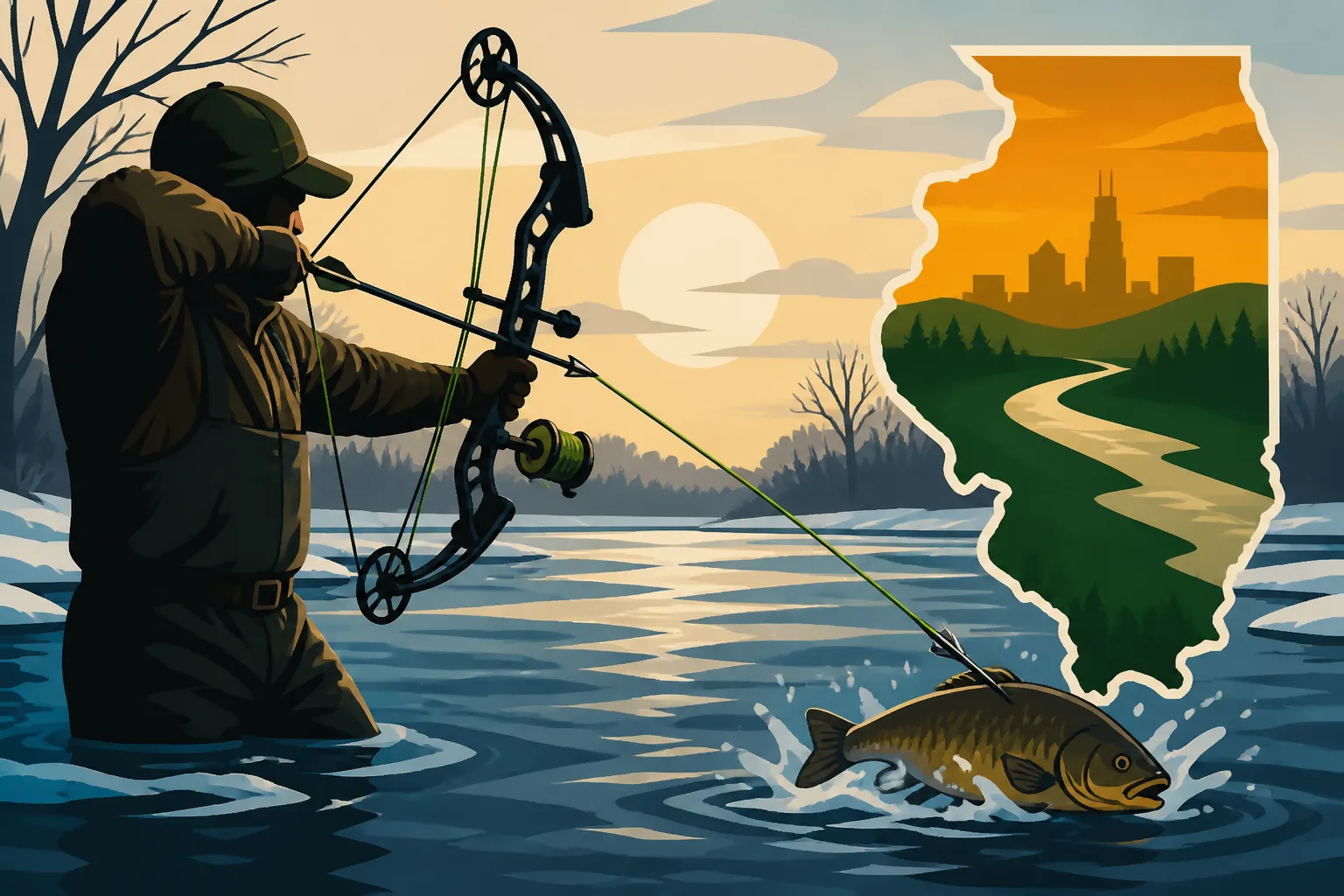
Imagine a warm summer evening, gliding silently along a shallow backwater on the Illinois River, spotlighting the murky depths for the tell-tale shimmer of a carp's scales. The air is thick with humidity, crickets are chirping, and then suddenly, a massive common carp flashes into view. The adrenaline surge is real, the draw is smooth, and the shot connects with a satisfying thud. This kind of raw, engaging experience is what bowfishing delivers consistently. It's a physical pursuit too, involving maneuvering boats, wading in shallows, and often wrestling sizable fish, making it a great workout and an immersive outdoor experience when the woods are too green and thick for traditional stalking.
Beyond Deer and Turkey: A New Challenge
For many dedicated deer and turkey hunters, the off-season can feel like a quiet waiting game. We spend countless hours Scouting Illinois Public Land Before Season, reviewing trail camera photos, and obsessing over Reading Illinois Mud for Fresh Deer Movement. Bowfishing offers a completely different set of challenges that still tap into those core hunting instincts. You're still scouting for sign, albeit in a different medium. You're looking for wakes, tailing fish, or the slight disturbance of a feeding carp in shallow water. The shot placement is critical, demanding the same focus and precision you'd use on a broadside buck. The thrill of a successful shot, especially on a hard-fighting fish, is incredibly rewarding.
It's also a fantastic way to hone your archery skills. Unlike paper targets, a moving fish in water presents a dynamic, three-dimensional target, often requiring you to account for water refraction, a skill that translates surprisingly well to judging distances and angles in the woods. While the gear is specialized (more on that later), the fundamental principles of drawing, aiming, and releasing remain the same. This constant practice keeps your muscles memory sharp, ensuring you're in peak form when Illinois Archery Season Opening Day finally rolls around. Furthermore, it's an opportunity to hunt species that are often considered "rough fish" or "invasive," providing a service to the ecosystem by helping to control populations that can sometimes negatively impact native sportfish.
Top Species and Prime Locations for Illinois River Bowfishing
Illinois is blessed with an extensive network of rivers and lakes, many of which are teeming with excellent bowfishing opportunities. The vast Illinois River system and its connection to the mighty Mississippi are particularly prime grounds. When you're thinking about where to go, consider areas with shallow flats, backwater lakes, slow-moving currents, and extensive weed beds, as these are natural havens for the fish you'll be targeting. Using mapping resources, like those found on GoHunt, can help pinpoint these promising spots before you even launch your boat.
Common Targets: Carp, Buffalo, and Gar
The primary species targeted by bowfishers in Illinois are common carp, various buffalo species, and longnose gar. These fish are generally abundant, grow to impressive sizes, and are often found in shallow, accessible waters.
- Common Carp: These are the bread and butter of Illinois bowfishing. They're often found cruising shallow flats, in weed beds, or rooting around in muddy bottoms. They can grow very large, offering a real challenge, and are often quite visible, especially during their spring spawning season when they move into extremely shallow water. Look for their distinct "rolls" or tail fins breaking the surface. They offer strong, exhilarating fights when hit.
- Buffalo (Bigmouth, Smallmouth, Black): Buffalo are native Illinois fish that resemble carp but have smaller mouths and are typically found filter-feeding in deeper water or mid-column. However, they will also move into shallows to feed, especially bigmouth buffalo. They are known for their incredibly strong fights and can reach immense sizes, making them a highly prized target for bowfishers. They often appear as large, dark shapes cruising slowly.
- Gar (Longnose, Shortnose, Spotted): Gar are prehistoric-looking predators with long, toothy snouts. They often bask just below the surface in calm, warm waters, especially in backwater areas or slow river sections. They can be challenging targets due to their hard scales and the difficulty of penetrating their bony bodies, but a successful hit on a big gar is incredibly satisfying. Their unique appearance and aggressive nature make them a favorite for many bowfishers.
- Other Species: While not as common, sometimes you'll encounter shad, bighead carp, or silver carp, especially on the Illinois and Mississippi rivers. Be cautious with silver and bighead carp; they are invasive and prone to jumping out of the water when startled by boat noise, which can be dangerous. It's always a good idea to know your target species.
| Species | Average Size (lbs) | Prime Habitat | Notable Traits |
|---|---|---|---|
| Common Carp | 5-30 | Shallow flats, weed beds, muddy bottoms | Large scales, often tailing or rooting, strong fight |
| Bigmouth Buffalo | 10-50 | Open water, shallow bays, often schooling | Large, dark body, deep fight |
| Longnose Gar | 5-20 | Still backwaters, surface basking, log jams | Long, toothy snout, hard scales, unique look |
| Silver/Bighead Carp | 10-60 | Main river channels, feed on plankton | Jumps when startled, dangerous for boaters |
Navigating Illinois's Key Waterways
Illinois offers a wealth of potential bowfishing locations. The key is to find public access points and areas with suitable habitat.
- Illinois River Valley: This is arguably the premier destination for bowfishing in Illinois. The river itself, along with its extensive backwaters, sloughs, and connected lakes, provides miles of prime habitat. Areas around Peoria, Havana, and along the lower stretches of the river offer fantastic opportunities. Look for shallow areas that warm up quickly in spring, drawing fish in to feed and spawn. Understanding Hunting the Illinois River Valley can even give you insight into the lay of the land near the water.
- Mississippi River: The western border of Illinois is defined by this massive river, which holds enormous populations of carp, buffalo, and gar. The numerous backwater lakes, wing dams, and shallow side channels along the Mississippi are excellent for bowfishing. Access can be found through various state parks and public access points. Just like with Mississippi River Public Hunting Access, it's about finding the right entry points to reach less-pressured areas.
- Smaller Rivers and Tributaries: Don't overlook the smaller rivers like the Kaskaskia, Sangamon, Rock, and Cache rivers. While they might not hold the sheer volume of fish as the major rivers, they can offer more intimate, less crowded bowfishing experiences, especially in their lower reaches where they slow down and widen. Creeks and drainage ditches emptying into larger rivers can also be hotspots, particularly during high water events or spawning runs.
- Lakes and Reservoirs: Many of Illinois's larger public lakes and reservoirs also offer bowfishing opportunities for carp and buffalo, especially in shallow coves and around submerged vegetation. Check individual site regulations, as some lakes might have specific rules or restrictions. Often, you'll find great bowfishing where you might also find good spots for Hunting Illinois River Bottom Funnels or other riverine hunting tactics.
Before heading out, many experienced bowfishers use tools like GoHunt's mapping features to scout potential river bends or shallow backwaters where carp might be spawning, or where gar might be basking. These tools are invaluable for identifying suitable habitat and planning your approach.
Gearing Up for Success on Illinois Waters
Bowfishing requires specialized equipment that allows you to shoot arrows into the water and retrieve your catch. While some items might look familiar to a traditional archer, the specific adaptations are crucial for success and safety on the water. Don't skimp on quality, especially for your bow and reel, as these will take a beating from water and fish fights.
Bows, Reels, and Arrows: Your Primary Arsenal
The core of your bowfishing setup consists of your bow, a specialized reel, and solid fiberglass arrows.
- The Bow: While you can use an old compound or recurve hunting bow, many serious bowfishers prefer dedicated bowfishing bows. These are often simpler, fixed-draw weight bows (typically in the 30-50 lb range) that are durable and designed for quick, repetitive shots. Simplicity is key; you don't need cams, sights, or stabilizers that can snag or get damaged. Many budget-friendly options are available, or you can repurpose an older bow that's no longer your primary hunting rig. Remember, the goal is often high volume shooting, not necessarily extreme precision at long range.
- The Reel: This is perhaps the most unique piece of bowfishing gear. There are two main types:
- Bottle/Drum Reels: These are simple, robust reels where the line is manually wound onto a bottle-shaped spool. You simply pull the line off before each shot, then retrieve by hand. They are incredibly durable and reliable, perfect for big fish that put up a serious fight.
- Spincast Reels: These are modified fishing spincast reels that are mounted to the bow. They allow for quicker line retrieval and re-spooling. Look for heavy-duty models designed for bowfishing, as standard fishing reels will quickly fail under the strain of continuous shooting and fish retrieval. Brands like AMS Bowfishing or Cajun Bowfishing are popular choices for reliable setups.
- The Arrow: Bowfishing arrows are distinct from hunting arrows. They are typically solid fiberglass, heavier, and much more durable, designed to penetrate water and fish scales without breaking. They feature a specialized barbed tip that holds the fish securely, but which can be reversed or removed to easily release the fish once it's in the boat. The arrow also has a hole or sleeve near the front where your line attaches, ensuring the line stays clear of the bowstring during the shot. Ensure your arrow tips are sharp and the barbs are functioning correctly to minimize lost fish.
When choosing your gear, think about the kind of shooting you'll be doing. If you're wading in shallow rivers and taking many shots, a lighter, simpler setup might be best. If you're targeting monster buffalo from a boat, you'll want something more robust. It's not unlike choosing between different Illinois Legal Firearms for Deer Hunting – the right tool for the job makes all the difference.
Crucial Accessories for a Productive Day
Beyond your core bowfishing setup, a few key accessories will make your time on Illinois rivers safer, more comfortable, and more successful.
- Line: Braided bowfishing line (typically 200-400 lb test) is essential. It's strong, durable, and resists abrasion from fish scales and submerged obstacles. Never use monofilament; it will snap under the strain.
- Boat and Lighting: While you can bowfish from shore or by wading in very shallow areas, a boat opens up many more opportunities. A shallow-draft jon boat is ideal for navigating Illinois's rivers. For night bowfishing (which is incredibly effective as fish move into shallows under cover of darkness), powerful lights mounted to your boat are a must. LED lights are popular for their brightness and low battery drain.
- Polarized Sunglasses: For daytime bowfishing, polarized sunglasses are invaluable. They cut glare off the water, allowing you to see deeper and spot fish more effectively.
- Gloves: Handling rough fish, especially gar with their sharp scales and teeth, can be tough on your hands. A good pair of gripping gloves can save you a lot of pain.
- Safety Gear: Always wear a PFD (Personal Flotation Device) when boating, especially at night or in moving water. A first-aid kit, a sharp knife, and a paddle or push pole are also essential.
- Waders/Boots: If you plan to wade, good quality waders or knee-high rubber boots will keep you dry and comfortable.
- Container for Fish: You'll need a large cooler or a livewell to store your harvested fish. Remember, these fish can be big and slimy!
- Knife/Debarbing Tool: A sturdy knife is useful for a variety of tasks, and a dedicated debarbing tool can make removing arrows from tough-skinned fish much easier.
- Mapping App: While not physical gear, a reliable mapping app can be as important as your bow. Resources like GoHunt can help you mark productive spots, identify public access points, and navigate unfamiliar waters, saving you precious time on the water.
Understanding Illinois Bowfishing Regulations and Ethical Practices
Just like any other hunting or fishing pursuit in Illinois, bowfishing is subject to specific regulations designed to ensure safety, promote ethical harvesting, and protect the state's aquatic resources. It's crucial to be familiar with these rules before you ever draw back your bowstring. Ignorance of the law is never an excuse, and violating regulations can lead to significant Illinois Wildlife Violation Penalties.
License Requirements and Legal Hunting Hours
- Fishing License: To bowfish in Illinois, residents and non-residents alike must possess a valid Illinois fishing license. If you're an Illinois resident, this typically means obtaining your Illinois Resident License Options, which might include a basic fishing license. Non-residents will need to purchase the appropriate Illinois Nonresident License Options. Always check the current year's Illinois Department of Natural Resources (IDNR) regulations, as costs and specific requirements can change. Remember, if you're targeting migratory waterfowl or certain small game with a bow, you'd need additional stamps and permits, but for most rough fish, a fishing license is sufficient.
- State Habitat Stamp: In addition to your fishing license, Illinois requires most anglers and hunters to purchase an Illinois State Habitat Stamp. This stamp helps fund crucial habitat restoration and conservation efforts across the state.
- Legal Hours: For most rough fish species targeted by bowfishers, there are no specific hour restrictions, meaning you can bowfish day or night. This is a huge advantage, as many of the best bowfishing opportunities, especially for carp, occur after dark when fish move into the shallows. However, always double-check specific site regulations, as some public areas might have restrictions on night activities or specific entry/exit times.
- Legal Methods: Only lawful archery equipment (bow and arrow with barbed points) is permitted. Explosive arrows, poisoned arrows, or any other means not specifically authorized are illegal.
It's your responsibility to be aware of the most current regulations. The IDNR website is the best source for up-to-date information.
Responsible Harvesting and Disposal
Ethical bowfishing extends beyond just following the law; it involves respecting the resource and minimizing waste.
- Targeting and Shot Placement: Only shoot at fish you intend to harvest and know you can retrieve. Avoid taking shots that are too far, obscured, or into areas where retrieval will be impossible. A clean, ethical shot minimizes suffering for the fish. For those considering Hunting Illinois's Year-Round Feral Hogs, the same principle of ethical shot placement applies to ensure a quick harvest.
- Carcass Disposal: This is perhaps the most critical aspect of ethical bowfishing and one where the sport often gets a bad rap if done improperly. You must always dispose of your harvested fish legally and responsibly. This means:
- Consumption: Many rough fish, especially smaller carp and buffalo, are excellent table fare when properly prepared. Learning how to clean and cook your catch is the most respectful way to utilize the resource.
- Burying: If not consumed, fish can be buried on private land (with landowner permission) deep enough to deter scavengers.
- Landfills: Disposing of fish in designated public landfills is a legal option.
- Do NOT Dump: Never, under any circumstances, dump fish carcasses back into the water, on public land banks, or along roadsides. This is illegal, attracts pests, creates foul odors, and gives bowfishing a negative image. Treat harvested fish with the same respect you would a deer or a turkey. Consider the impact of your actions on other users of the river.
- Cleaning and Processing: If you plan to eat your catch, learn proper cleaning techniques. Many bowfishers "bleed out" their fish immediately after harvest for better meat quality. For carp, removing the mud vein and utilizing techniques like grinding for fish cakes or smoking can yield delicious results. Buffalo can be filleted like crappie or bass. Even if you're not eating every fish, being mindful of your impact on the environment and other outdoor enthusiasts is paramount.
Bowfishing is a fantastic way to enjoy Illinois's outdoor bounty during the off-season. It's challenging, exciting, and offers a unique connection to our state's waterways. By understanding the species, preparing with the right gear, and adhering to ethical practices and regulations, you'll find yourself eagerly awaiting those long summer days on the river.
Disclaimer
Always consult the most current Illinois Department of Natural Resources (IDNR) regulations and local ordinances before engaging in any hunting or fishing activities. Regulations can change annually, and it is the hunter's responsibility to stay informed and compliant with all applicable laws.