Setting Up on a Central Illinois Field Edge
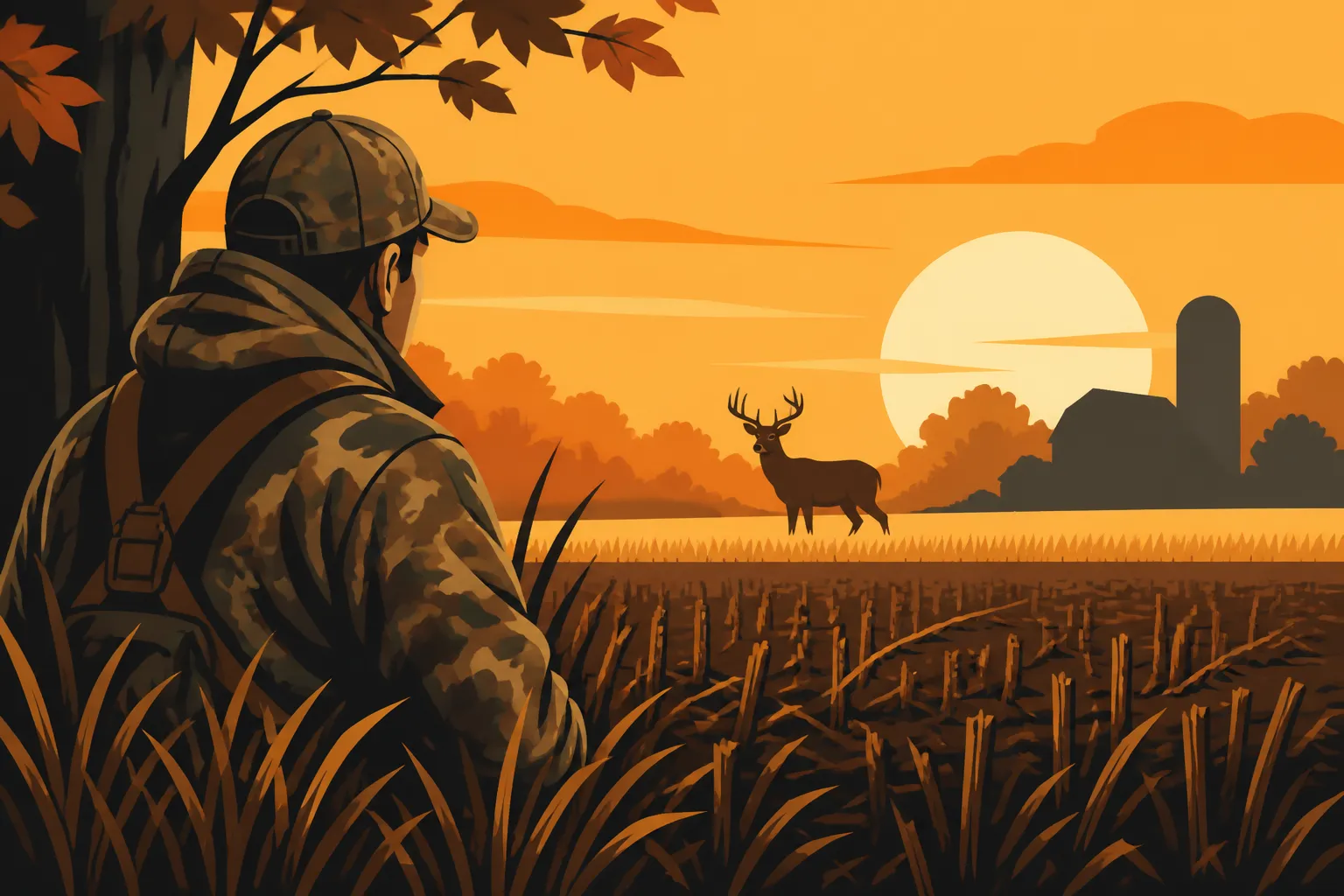
Hunting along the edges of agricultural fields in Central Illinois might seem straightforward, but anyone who's spent countless hours staring out at a cornfield knows it's often anything but easy. Deer have an uncanny ability to materialize and vanish, making a solid setup absolutely critical for success. This guide is all about equipping you with the knowledge to consistently place yourself in the best possible position when hunting a central Illinois field edge, turning those frustrating near-misses into successful hunts.
Understanding Central Illinois Field Edge Dynamics
Central Illinois is a patchwork of vast agricultural fields interspersed with timber, creek bottoms, and fencerows. These field edges aren't just arbitrary lines in the landscape; they are dynamic zones where deer activity is often concentrated, presenting unique opportunities and challenges for hunters.
The Allure of the Edge for Deer
Deer, especially in heavily farmed areas, rely heavily on the resources provided by agricultural fields. Corn and soybean fields offer incredible amounts of food and cover. During the growing season, standing corn provides impenetrable bedding and travel corridors, while soybeans offer lush forage. Once harvested, the waste grain left behind becomes a critical late-season food source, especially as natural browse diminishes. The edge itself acts as a transition zone – a place where deer can stage before entering a field to feed, or a quick escape route back into the timber. It’s where food, cover, and travel paths often converge, making it a natural magnet for whitetails throughout the season.
Reading the Field Edge Landscape
Successful field edge hunting starts long before you ever set up a stand or blind; it begins with intimately understanding the specific nuances of your chosen edge. Look for natural funnels like narrow strips of timber connecting larger woodlots, brushy creek bottoms, or even thick fencerows that provide low-profile cover for deer moving from one piece of habitat to another. Corners of fields are often hotspots, as they frequently offer multiple entry and exit points into the timber and can concentrate deer movement. Subtle terrain features, like a slight rise in the ground or a small draw, can also dictate how deer approach and use an edge. Paying attention to these smaller details, often visible on an aerial map, is key to pinpointing high-traffic areas.
Seasonal Changes and Deer Behavior
The life cycle of crops dramatically influences deer behavior and, by extension, your field edge strategy. In early archery season, standing corn and tall soybeans offer unparalleled cover. Deer might bed deep in these fields, emerging only at dusk, making an edge setup near a well-used trail crucial. As crops mature and are eventually harvested, the landscape transforms. Suddenly, formerly hidden areas become exposed. Deer shift from using crops for cover to relying on them as primary food sources. During the late season, harvested fields with waste grain become critical, drawing deer out into the open, sometimes even during daylight hours, particularly after a cold front. Understanding this seasonal ebb and flow is paramount for effective placement, and you might find yourself moving your setup multiple times as the season progresses. You might even find yourself focusing on Late-Season Food Sources for Illinois Whitetails on these very edges.
Strategic Placement for Field Edge Stands and Blinds
Once you understand the general movements and motivations of deer along field edges, the next step is to select the perfect spot for your setup. This involves a careful balance of wind, concealment, and anticipating how deer will approach.
Mastering Wind and Scent Management
Wind is arguably the single most critical factor when hunting a field edge. Deer will almost always try to use the wind to their advantage, scenting danger ahead as they approach. This means your setup must put you downwind of where you expect deer to approach and travel, while also keeping your scent out of any potential bedding areas. Central Illinois often experiences strong, consistent winds, but thermals can still play a role, especially in the mornings and evenings along creek bottoms or elevation changes. For instance, cold air sinks at dawn, pulling your scent down into a low-lying field, while warm air rises at dusk. Always check the wind direction using a reliable weather app or a simple puff bottle before heading out. Don't be afraid to adjust your stand or blind location, or even abandon a spot for the day, if the wind isn't right. It’s better to hunt another day than to blow out your best spot.
Choosing the Right Stand or Blind Type
The type of setup you choose for a field edge depends on the specific location, the available cover, and your hunting style.
- Treestands: Whether it’s a hang-on, climbing stand, or ladder stand, a treestand offers elevation, which helps with scent dispersal and provides a better vantage point over a field. They are ideal when mature trees are present directly on or just inside the timber line. Make sure your stand is safely secured and provides shooting lanes both into the field and along the edge. For maximum stealth, consider using a hang-on stand that you can move as conditions change.
- Ground Blinds: Ground blinds offer excellent concealment and warmth, making them fantastic choices for cold weather or when suitable trees are sparse. Pop-up blinds are portable and quick to set up, perfect for a dynamic approach. Permanent ground blinds, built from natural materials, can blend seamlessly into the environment if constructed properly and allow you to hunt with less concern about breaking your silhouette. When using a ground blind, remember to thoroughly brush it in to break up its outline. You can learn more about Using a Ground Blind on Illinois Public Land and specific tactics for Brushing In a Blind on a Field Edge for maximum effectiveness.
The choice ultimately boils down to the specific conditions of your spot. I personally prefer a ground blind if I can get it completely hidden for maximum comfort and concealment, especially when I’m trying to stay warm during a long sit.
Precision in Setup Location
Once you've decided on your stand type, the precise location along the field edge is paramount. Don't just pick the first big tree. Instead, look for micro-features that will funnel deer right past your setup. This could be:
- Corners and Pinch Points: Deer naturally gravitate towards corners where two edges meet, as it often minimizes their exposure. Similarly, any natural pinch point where timber or thick cover narrows between two fields will concentrate movement.
- Near Draws or Depressions: Deer often use depressions or draws to approach a field undetected, utilizing the topography for cover. Setting up where a draw meets the field edge can be deadly.
- Edge of Entry/Exit Trails: Look for heavily used deer trails entering or exiting the field. These are clear indicators of preferred travel paths. Set up downwind of these trails, just inside the timber line, allowing you to intercept deer as they come and go. Remember, sometimes deer will actually skirt the inside edge of the timber, just out of sight of the field itself, making a setup 10-20 yards into the woods more effective than right on the edge.
It's all about playing the angles and using the deer's natural tendencies against them. A tool like GoHunt's mapping features can be incredibly helpful here, letting you zoom in and identify these subtle funnels and pinch points before you even step foot in the woods.
Timing Your Approach and Exit on Field Edges
Setting up in the perfect spot is only half the battle; how you get in and out of that spot can make or break your hunt. Deer are incredibly sensitive to intrusion, especially in these open field environments.
Stealthy Entry and Exit Strategies
The number one rule for hunting field edges is to minimize your disturbance. Deer are constantly watching and listening, and a noisy or poorly concealed approach will send them running before you even climb into your stand. Always plan your entry and exit routes meticulously.
- Utilize Natural Cover: Whenever possible, use existing terrain features like creek beds, ditches, fencerows, or dense brush lines to conceal your movement to and from your stand. If you're Entry Routes Through Standing Corn are an option, use them. These natural barriers help block sight and sound.
- Walk with the Wind (When Possible): If your entry route allows, try to have the wind in your face or quartering as you walk in, to prevent deer from scenting you. This isn't always feasible, but it's ideal.
- Time Your Movements: For morning hunts, arrive well before daylight, giving yourself ample time to get settled and for the woods to settle down after your disturbance. For evening hunts, stay in your stand until well after dark, allowing deer that may be in the field to move off before you exit. You might even need to consider Blood Trailing After Dark in Illinois if you make a shot late in the evening and need to wait for deer to clear out.
- Minimizing Noise: Wear soft clothing, avoid rattling equipment, and walk slowly and deliberately. Every twig snap or rustle can alert a deer.
Dawn, Dusk, and Mid-Day Opportunities
While field edges are famous for morning and evening feeding activity, don't rule out other times, especially depending on the season.
- Dawn and Dusk: These are prime times. In the morning, deer often filter out of fields and head to bedding areas. In the evening, they move from bedding to fields to feed. An ideal setup intercepts them during these transitions. During these times, deer are often less wary, focused on movement to and from food and cover.
- Mid-Day Movement: While less common, deer do move during the middle of the day, particularly during the rut or periods of intense cold weather. During the Hunting the Rut in Early November, bucks are constantly searching for does and might cruise field edges at any time. A well-placed stand in a travel corridor connecting two woodlots along a field edge could be productive all day long. Extremely cold weather also prompts deer to feed more frequently to maintain body temperature, sometimes driving them to fields mid-day. This is where a strategic Cold-Weather Sitting Strategy in Illinois pays off.
Adapting to Changing Field Edge Conditions
Central Illinois landscapes are rarely static. From season to season, and even week to week, conditions can change dramatically, requiring hunters to be flexible and adaptable.
Weather's Impact on Field Edge Activity
Weather patterns heavily influence how deer use field edges.
- Rain and Snow: A light rain can often get deer moving, as it dampens sound and washes away human scent. Heavy rain, however, usually means deer will hunker down. Snowfall can reveal fresh tracks, helping you identify current travel patterns, and also highlights deer against the landscape. During heavy snow, deer will often seek out any exposed waste grain in harvested fields, making these edges highly productive.
- Cold Fronts: A strong cold front almost always triggers increased deer activity, especially in the days immediately following. Deer know severe weather is coming and will feed heavily beforehand, or move to secure bedding during it. After the front passes, they'll often emerge hungry, making harvested field edges prime spots. Monitoring long-range forecasts is crucial for capitalizing on these opportunities.
Crop Rotation and Harvest Schedules
Farmers in Central Illinois are constantly rotating crops and working their fields, and these activities have a direct impact on deer.
- Standing Crops: Early in the season, you might be hunting a field with towering corn or dense soybeans. As mentioned, these provide excellent cover. Your setup should be focused on the very edge of the timber, intercepting deer as they leave the field. A good mapping tool like GoHunt can show you historical crop data, giving you a general idea of what crops might be planted where.
- Harvested Fields: Once crops are cut, the entire dynamic changes. The cover is gone, but the food source remains (waste grain). Deer become much more visible but also warier. Your setup might need to be deeper in the timber, or you might switch to a well-concealed ground blind brushed into a fencerow or thicket. Sometimes, in larger timber blocks, a stand overlooking a funnel that leads to a harvested field can be more productive than a stand directly on the edge, as deer might stage in cover before exposing themselves. Consider how these Hunting Central Illinois Farmland Deer patterns change based on harvest.
Mitigating Hunting Pressure on the Edge
Field edges, especially those on public land or easily accessible private land, can see a lot of hunting pressure. Deer quickly learn to avoid these spots if they sense danger.
- Hunt Deeper: Don't be afraid to walk further. Many hunters stop at the first easy access point. By hiking an extra quarter or half-mile, you might find less pressured deer using field edges that are harder to reach. Finding Ground Others Walk Past is a key public land strategy.
- Non-Obvious Setups: Instead of the obvious corner, look for subtle features – a small dip, a brushy point, or even a single cedar tree that offers just enough cover. Deer that are used to pressure will often use these less obvious routes.
- Use Ground Blinds for Stealth: A well-placed and brushed-in ground blind can allow you to hunt a more exposed edge than a treestand, as it conceals your movement and silhouette more effectively, especially after deer have been bumped.
The key to successful field edge hunting in Central Illinois is observation, adaptation, and an unwavering commitment to stealth. Every field edge is a little different, and what works one day might not the next. By understanding the deer, the landscape, and the season, you'll be well on your way to filling your tags.
Disclaimer
Hunting is an inherently dangerous activity. Always prioritize safety, understand and follow all local and state regulations, and obtain proper licenses and permits. The information provided in this guide is for informational purposes only and should not be considered a substitute for professional guidance or formal hunter education. Always scout thoroughly, check local rules for specific hunting areas, and inform someone of your hunting plans.