Hunting Rock River Valley Farmland
It can feel incredibly frustrating to hunt Illinois's vast agricultural landscape, especially in areas like the Rock River Valley. Deer seem to appear and disappear like ghosts, their patterns shifting overnight with every farmer's harvest. This guide is here to help you navigate those challenges, offering practical, on-the-ground strategies for understanding deer behavior, pinpointing the best stand locations, and adapting your tactics to the ever-changing farmland environment so you can find consistent success.
Understanding the Rock River Valley Farmland Landscape
The Rock River Valley, slicing through northern Illinois, presents a unique and often challenging environment for deer hunters. Unlike the sprawling timber blocks of Southern Illinois or the deep ravines of the western part of the state, this region is a mosaic of cultivated fields, fragmented woodlots, and linear riverine habitats. Understanding this distinct landscape is the first step toward unlocking its deer hunting potential.
Geographic Overview and Habitat Features
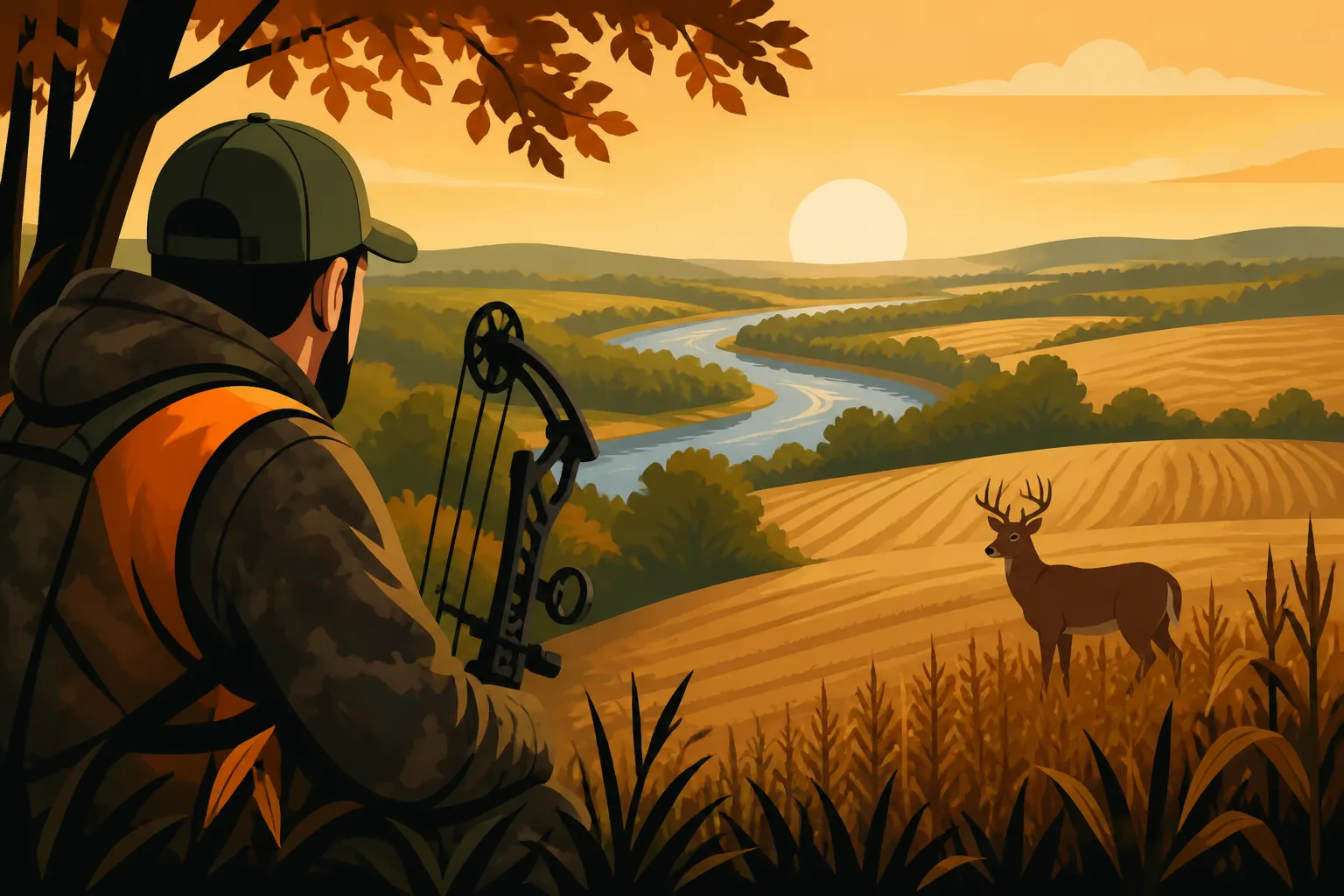
The Rock River Valley is primarily characterized by its flat to gently rolling topography, dominated by extensive agricultural fields. Think corn, soybeans, and alfalfa stretching for miles, broken up by isolated timber patches, narrow creek bottoms, and dense fencerows. The Rock River itself, along with its various tributaries like the Kishwaukee River and Leaf River, weaves through this landscape, creating crucial riparian corridors that offer dense cover and travel routes for whitetails. These river systems, even smaller ones, can act as natural highways for deer, providing security in an otherwise open environment.
What makes this area truly unique is the dynamic nature of its "cover." During the growing season, mature cornfields stand as impenetrable jungles, offering both food and security for deer. They can disappear into these towering stalks, only emerging at the edges or in small, hidden clearings. However, this cover is temporary. Once harvest begins, typically in late fall, vast tracts of land that were once deer havens suddenly become wide-open expanses. This dramatic shift forces deer to adapt quickly, congregating in the remaining pockets of timber, CRP fields, brushy ditches, and fencerows. Hunters who don't anticipate and adapt to these changes will find themselves constantly playing catch-up.
Deer Movement Patterns on Farmland
Deer in the Rock River Valley are intimately tied to the agricultural cycle. Their feeding and bedding patterns are dictated by the availability of crops and the amount of standing cover. In the early season, as crops are lush and tall, deer will often bed right in the middle of large soybean or cornfields, feeling incredibly secure. They'll emerge at dusk to feed within the same field or move to adjacent ones. Bucks, in particular, will use the dense cover of standing corn as a daytime sanctuary, making them incredibly difficult to pattern. You might see deer entering a cornfield at one point and never see them come out, simply because they're moving through the standing cover itself.
As the season progresses and the crops are harvested, deer movement changes dramatically. The security of the fields vanishes, forcing deer to concentrate in the remaining hard cover: the small woodlots, creek bottoms, and thick fencerows. This is when those often-overlooked linear features become critically important travel corridors. Deer will use every available strip of cover to move between remaining food sources, such as waste grain, winter wheat, or mast crops in the timber, and their newfound bedding areas.
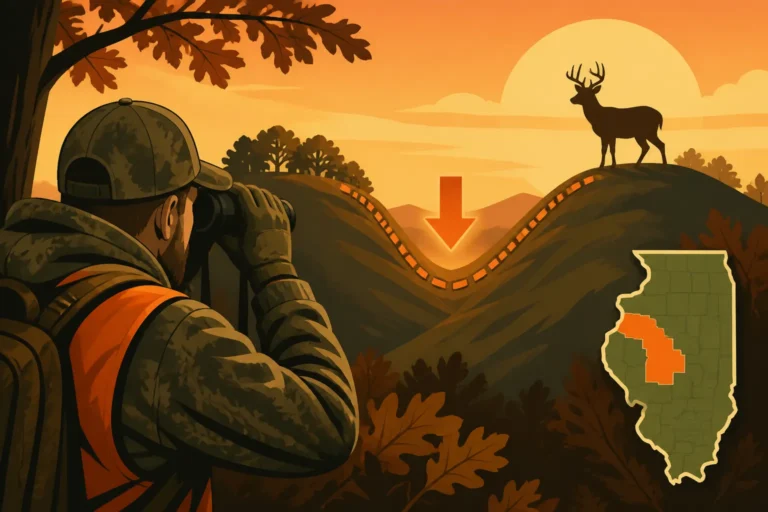
During the rut, bucks will still utilize these routes but will expand their range considerably, cruising fencerows and woodlot edges in search of does. They'll often follow the most protected paths, using slight depressions in fields or the cover of a ditch to travel across open areas. Understanding this ebb and flow of habitat and how it influences deer behavior is absolutely foundational to hunting successfully in the Rock River Valley. It's a continuous puzzle, and being able to anticipate the next shift is key.
Key Deer Hunting Strategies for Farmland
Hunting deer in the Rock River Valley requires a very different mindset and approach compared to big timber country. Here, success hinges on meticulous observation, understanding subtle terrain features, and adapting to agricultural rhythms.
Identifying Prime Stand Locations
In areas dominated by agriculture, the game is all about identifying those critical transition zones where deer feel safe moving between food and cover. Forget endless woods; think small, strategic pieces of habitat. One of the most classic and effective strategies is to identify pinch points. These are narrow strips of cover, like a fencerow, a small woodlot, or a brushy creek bottom, that funnel deer traffic between two large, open fields or distinct bedding and feeding areas. Deer prefer to walk through these constricted pathways rather than expose themselves in open ground. If you're looking for more details on this, take a peek at "Hunting a Funnel Between Two Woodlots" for some excellent insights that apply directly to farmland scenarios.
Field edges are another prime location, but they demand careful consideration. Simply setting up on any field edge often leads to frustration. Instead, look for edges where subtle features offer an advantage: a point of timber jutting into a field, a low spot in the terrain that creates a slight funnel, or an area with a clear, well-used trail. The key is to be on the downwind side of where deer are entering or exiting, making sure your scent isn't blowing into their approach path. Many times, the optimal stand isn't right on the edge, but 20-30 yards inside the timber, offering a better ambush point and breaking up your silhouette.
Don't overlook small, isolated pockets of cover, especially on private land where other hunters might ignore them. A forgotten corner of thick brush, a small stand of cedars in a pasture, or even an overgrown drainage ditch can be a sanctuary for a mature buck, offering a secure bedding location with a view of nearby food. These "island" covers are often low-pressure areas and can be incredibly productive, especially during the rut when bucks are cruising for does. Pinpointing these spots requires keen observation, either from a distance or through careful, low-impact scouting.
Utilizing Cover and Wind Direction
When you're hunting expansive, often flat farmland, cover is a precious commodity, and your concealment relies heavily on understanding wind direction and terrain. Standing corn, for example, provides phenomenal cover. Before harvest, strategically setting up on the downwind side of a cornfield where deer are entering or exiting can be incredibly effective. However, once that corn comes down, your entire approach needs to shift. You'll need to immediately transition your focus to the remaining timber blocks, thick fencerows, and creek beds, which suddenly become the only available security for deer. If natural cover is truly sparse, consider using a ground blind, brushed in thoroughly, especially in more open woodlots or along fencerows where a treestand might silhouette you too much. An article like "Using a Ground Blind on Illinois Public Land" offers excellent advice on making these work in various environments.
Wind direction isn't just important in farmland hunting; it's absolutely paramount. With fewer terrain features to break or swirl the wind, your scent cone can carry for impressive distances across open fields. Always, without exception, position yourself downwind of where you anticipate deer will approach. This often means having multiple stand locations for a single general area, each designed for a different prevailing wind direction. Checking a detailed wind forecast, perhaps with an app like GoHunt, is a non-negotiable part of your pre-hunt routine in the Rock River Valley. If the wind isn't right for your primary spot, you need to be willing to move to your backup.
While the Rock River Valley is generally flatter than other parts of Illinois, thermals still play a role, particularly along river and creek bottoms. In the mornings, cooler air will sink into these low-lying areas, causing your scent to drift downhill. In the evenings, as the ground warms, air will rise, taking your scent upwards. Factor these subtle thermal shifts into your stand placement, especially when hunting transition zones where deer move from a creek bottom to an open field. Ignoring thermals, even in seemingly flat country, can quickly lead to getting busted.
Hunting Specific Crop Cycles
The agricultural calendar dictates deer movement in the Rock River Valley, meaning your hunting strategy must be fluid and adaptable to the changing crops.
| Crop Type (Phase) | Deer Behavior Focus | Recommended Stand Location | Key Considerations |
|---|---|---|---|
| Standing Soybeans | Bedding & Feeding within field | Field edges, pinch points leading to cover | Early season, quiet entry, wind critical |
| Standing Corn | Bedding & Feeding deep inside | Entry/exit points, timber fringes adjoining | Excellent security, check "Entry Routes Through Standing Corn" |
| Harvested Crop Fields | Waste grain foraging, seeking new cover | Remaining timber, thick fencerows, creek beds | Post-harvest shift, identify new bedding, late season |
| Alfalfa/Green Browse | Consistent early/mid-season food | Edges where cover meets browse, interior trails | Deer often feed in daylight, good for morning/evening |
| Acorn-producing Timber | Late season food, bedding | Ridge saddles, creek bottoms, transition zones | Post-harvest shifts, especially in poor crop years |
In the early archery season, from September through mid-October, focus heavily on standing soybeans, alfalfa fields, and mature corn. Deer will be largely concentrated in these prime food sources. If you're hunting "Hunting a Standing Soybean Field" before it yellows, you'll often find deer bedding right in the field for security. Target the corners, pinch points, and entry/exit trails leading to small woodlots or creek beds. This is often when you can catch deer in predictable patterns as they transition from bedding to feeding.
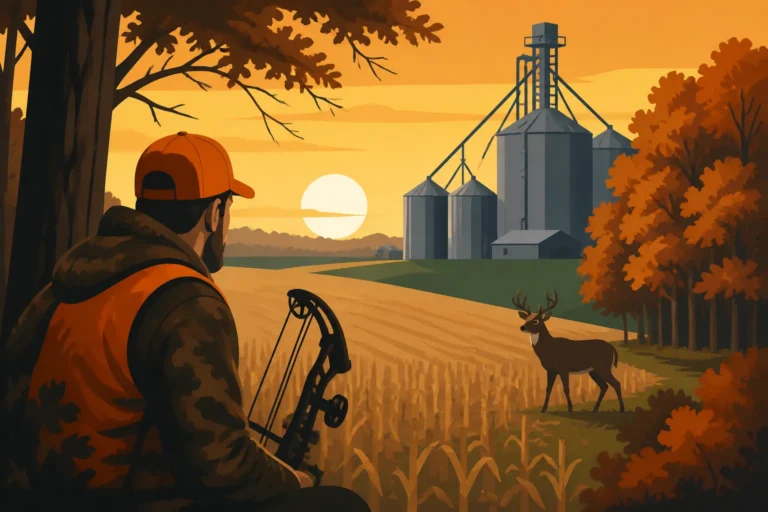
Mid-season, typically from late October through mid-November, is when the corn harvest kicks into high gear. This period can be incredibly challenging yet highly opportunistic. As fields are cut, deer are displaced and pushed into any remaining cover. This is when those often-overlooked small woodlots, brushy fencerows, and creek bottoms suddenly become critical sanctuaries. Bucks, disoriented and seeking new security, may expose themselves more often. After the main harvest, waste grain in cut fields becomes a significant draw, especially as other natural food sources dwindle.
Late season, running through December and January, demands an even tighter focus on available food. Most fields will be cut, and deer are looking for easy calories and maximum protection from the elements. Target standing grain fields that might have been missed by the combine, browse in thicker timber, and any dedicated food plots if you have access to them. Deer will be trying to conserve energy and will often move during daylight hours if they can find unpressured food. This is a time when cold fronts can really get deer on their feet, pushing them to feed before temperatures plummet even further.
Optimizing Your Hunt: Gear and Scouting
To consistently fill tags in the Rock River Valley, you need more than just good luck; you need the right gear and an unwavering commitment to scouting. The subtle nuances of this landscape require a thoughtful approach to preparation.
Essential Gear for Farmland Hunting
Given the often-open nature of Rock River Valley farmland, your gear choices can significantly impact your success. First and foremost, quality optics are non-negotiable. With large fields and distant tree lines, a good pair of binoculars (10×42 or 12×50 are ideal) will allow you to glass vast areas, identify deer patterns, and pick out subtle movements without disturbing animals. Sometimes, a spotting scope can even be a valuable addition for long-range observation from a safe distance, especially when you're trying to pattern deer at dawn or dusk from a vantage point.
Comfortable, quiet clothing is always a priority for any hunter, but on farmland, where sound can carry easily, it's even more critical. Opt for layers that allow you to adapt to Illinois's often unpredictable weather, which can swing wildly from morning chill to midday warmth. Scent control is also paramount. Your scent cone can travel for long distances across open fields, making it easy for deer to bust you. Invest in scent-eliminating sprays, ozone gear, or specialized carbon-lined clothing to minimize your odor. For your feet, waterproof boots are a must, as dewy fields, creek crossings, and muddy approaches are common.
Your stand setup might also need some specific considerations. While lightweight hang-on stands offer flexibility for repositioning, a well-brushed-in ground blind can provide superior concealment in areas with sparse natural cover, like along a fencerow or in a small, open woodlot. This can be particularly useful if you're concerned about silhouetting yourself against the sky. Regardless of your choice, ensure your stand is safe, secure, and provides clear shooting lanes for the expected deer movement. While terrain differs, general treestand safety advice from articles like "Treestand Setups in Shawnee National Forest" is always relevant.
Pre-Season Scouting and In-Season Adaptations
Scouting isn't just a pre-season activity in the Rock River Valley; it's a continuous, season-long endeavor. Start in the spring and summer by pouring over aerial imagery. Platforms like GoHunt offer incredible mapping features that allow you to identify potential travel corridors, isolated woodlots, thick fencerows, and drainage ditches. Mark these potential hot spots on your map. Then, hit the ground in the off-season. Walk these areas to confirm trails, locate historical bedding sites, and identify key entry and exit points to and from crop fields. Pay close attention to subtle terrain features, even minor elevation changes, that deer might use for cover. Learning how to interpret these features from above is critical, and resources like "Reading Aerial Photos for Southern Illinois Deer" can provide excellent strategies, even if the geographic focus is different.
As hunting season draws near, and especially during the early archery season, frequent observation becomes your best friend. Drive country roads safely at dawn and dusk, using your binoculars or spotting scope to observe deer movement in fields. Note where they enter and exit, which crops they prefer, and how they utilize the available cover. Trail cameras, placed strategically along pinch points, fencerows, or known travel corridors, can provide invaluable, non-invasive intelligence on buck activity, age class, and movement patterns throughout the day and night.
The most successful Rock River Valley hunters are masters of adaptation. The agricultural landscape is constantly changing, and your strategy must change with it. The moment a farmer harvests a cornfield, your entire plan for that area likely needs to be re-evaluated. Don't be afraid to pull a stand and move it to a newly exposed travel corridor or a freshly critical timber block. This adaptability, combined with consistent scouting and observation throughout the season, is what separates those who consistently find success from those who get frustrated by the ever-shifting conditions.
Navigating Access and Pressure in the Rock River Valley
Hunting in the Rock River Valley, like much of Illinois, often comes with the dual challenges of securing land access and managing hunting pressure. Understanding how to navigate these aspects is as crucial as understanding deer movement itself.
Public Versus Private Land Access
A significant portion of the prime agricultural land in the Rock River Valley is privately owned, meaning that securing permission from landowners is often the most direct route to consistent hunting success. This typically involves a good deal of legwork, often requiring you to spend time "Knocking on Doors in Central Illinois Farm Country" and building genuine relationships with farmers and landowners. Be polite, respectful, and consider offering to help with small chores around their property. Always clarify boundaries, vehicle access rules, and any specific requests they might have. A positive relationship can grant you years of exclusive, low-pressure hunting access that's invaluable in this region. Many landowners are open to ethical hunters who respect their property and understand the agricultural impact.
While private land dominates, public hunting opportunities do exist in the Rock River Valley. These often come in the form of State Fish and Wildlife Areas (FWAs), State Parks, or even some conservation areas. However, these areas are typically smaller, more fragmented, and can experience significant hunting pressure, especially during Illinois's popular firearm seasons. It is absolutely essential to consult the Illinois Department of Natural Resources (IDNR) website for specific regulations, season dates, and access rules for each individual public site, as they can vary greatly. Some areas might require site-specific permits or participate in quota hunts. Preparing for these areas is vital, so consider reviewing "Scouting Illinois Public Land Before Season" to get a head start on finding less-pressured areas.
If you choose to hunt public ground in the Rock River Valley, be prepared to work harder and walk farther than many other hunters. Look for areas that are difficult to access, perhaps requiring a canoe to reach river island pockets or a long hike away from common parking areas. These overlooked or harder-to-reach pockets of public land can often hold resident deer that have learned to avoid easy access points. Understanding the full scope of "Illinois Deer Season Structure Explained" is also critical, as different seasons bring varying levels of hunter density and deer movement patterns that you'll need to account for.
Minimizing Hunting Pressure and Maximizing Success
One of the most significant frustrations in farmland hunting, especially on public land, is dealing with hunting pressure. Whether it's from other hunters or constant agricultural activity, deer in these areas are often highly wary. On private land, you have more control over this, but on public land, minimizing your own impact and understanding how others hunt is crucial. Consider using less conventional entry and exit routes, even if they require a bit more effort, to avoid bumping deer near commonly used access points. Hunting mid-week, if your schedule allows, can often put you in areas with significantly fewer hunters compared to busy weekends.
The late season, often referred to as the "December Lull," can be particularly challenging due to months of accumulated pressure and dwindling food sources. During this time, deer often become largely nocturnal and incredibly wary. This is when pinpointing unpressured food sources becomes paramount. Look for standing soybean or cornfields that haven't been harvested, patches of winter wheat, or dense timber blocks with remaining acorns. Deer will concentrate around these limited resources, making them prime targets. Don't be afraid to completely switch up your tactics if your early or mid-season spots aren't producing.
Ultimately, consistency, patience, and persistence are your greatest allies in the Rock River Valley. The deer are undoubtedly there; they're simply highly tuned to their environment and any perceived threat. By deeply understanding their seasonal patterns, adapting to the dynamic crop cycles, meticulously scouting, respecting the wind, and carefully managing your hunting pressure, you can find consistent success in this challenging but incredibly rewarding agricultural landscape. Always remember to carry your "Illinois Hunting Licenses and What They Cost" and any required permits, ensuring you're compliant with all state regulations before you step afield.
Disclaimer
Please remember that hunting regulations, season dates, and access rules can change. Always consult the latest official Illinois Department of Natural Resources (IDNR) publications and local regulations before planning any hunting trip. This guide is for informational purposes only and does not constitute legal advice. Adhere to all safety protocols and ethical hunting practices.