Tracking a Deer in Fresh Illinois Snow
There's nothing quite like the rush of a successful shot on a beautiful Illinois whitetail, but that triumph can quickly turn to dread if the deer doesn't drop in sight. Add a fresh blanket of snow to the equation, and while it might seem like a tracking dream, losing a blood trail in the white can be even more frustrating. This guide is here to walk you through the precise steps and crucial mindset for tracking a deer in fresh Illinois snow, helping you recover your hard-earned game and honor your hunt.
The Critical First Steps After the Shot
That heart-pounding moment when your arrow or bullet flies, and the deer reacts – it's a whirlwind. But what you do in the immediate aftermath, especially when there’s snow on the ground, can make or break your recovery efforts. Don't let excitement or disappointment cloud your judgment; a methodical approach is key.
Assessing the Shot and Deer's Reaction
As soon as the shot breaks, try to imprint every detail of the deer's reaction into your mind. Did it mule kick, tuck its tail, or bolt like a rocket? A high kick often indicates a lung or heart shot, while a tucked tail and hunching might suggest a gut shot. Did you hear a distinct thwack of an arrow hitting vitals, or a whop of a bullet finding its mark? Every sound and visual cue is a piece of the puzzle.
Pinpoint the exact spot where the deer was standing when you shot, and where it was when you last saw it disappear. Look for a landmark – a distinctive tree, a rock, a bend in a creek. This initial observation point is your starting line for tracking. Once you reach that spot, examine the ground for any sign: hair, blood, bone fragments, or even disturbed snow from the deer’s leap. The type and color of hair (short, dark body hair versus long, white belly hair) can offer clues about the impact zone.
It’s incredibly tempting to rush right in, especially with snow on the ground, thinking the trail will be obvious. Resist that urge. Take a deep breath, calm your nerves, and mentally replay the shot. Your ability to recall these details accurately will be far more valuable than a hasty pursuit that might push a wounded animal further.
The Waiting Game in Winter Conditions
The standard hunting advice is always to wait before tracking a wounded deer, and for good reason. A pushed deer, even if mortally wounded, can travel miles, making recovery exponentially harder. However, fresh snow adds a layer of complexity to this waiting game. On one hand, you don't want new snow to fall and cover your trail, or for temperatures to rise and melt away precious blood drops. On the other hand, you absolutely don't want to bump a deer that's bedded down trying to recover.
For what you believe to be a solid heart or lung shot, a wait of 30 minutes to an hour is generally sufficient. The deer usually won't travel far and will expire quickly. If you suspect a liver or muscle hit, waiting 2-4 hours is a safer bet. For the dreaded gut shot – characterized by dark, chunky, or foul-smelling blood – you need to extend your wait significantly, often 6-10 hours or even overnight. The cold Illinois winter air can actually work in your favor here, slowing down spoilage of the meat compared to warmer weather, allowing you that extended wait time without as much worry. Always prioritize waiting if there’s any doubt about the shot placement.
Carefully consider the weather forecast. If more snow is expected, you might need to lean towards a slightly shorter wait, while still respecting the need for the deer to expire. If temperatures are plummeting and the blood could freeze, diminishing its visibility, that’s another factor. Trust your gut, but err on the side of caution.
Assembling Your Tracking Arsenal
You wouldn't go hunting without your weapon, and you shouldn't go tracking without the right tools. Beyond your rifle or bow, gather a few essential items. A powerful flashlight or headlamp is paramount, even if tracking during the day. Shadows in the timber or under dense pines can conceal blood spots, and a focused beam of light can make them pop against the white snow. Red or green filters can sometimes enhance blood visibility.
Bring plenty of flagging tape (biodegradable, if possible). You’ll use this liberally to mark every drop of blood, every track, and your general direction. A reliable GPS device or a robust mapping app like GoHunt is invaluable. It allows you to mark the shot site, the last blood, and your entire tracking route, preventing you from getting lost or unknowingly circling back on yourself. Remember to also bring your phone for pictures – sometimes reviewing photos of the blood trail later can reveal details you missed in the moment.
Dress warmly in layers, bring water, and snacks. Tracking can be physically demanding and take hours. A small first-aid kit is always prudent. If you’re hunting alone, ensure someone knows your general location and your plan. Safety, after all, is the most important part of any hunting endeavor, especially when you're focusing intensely on the ground in front of you.
Deciphering the Story in the Snow
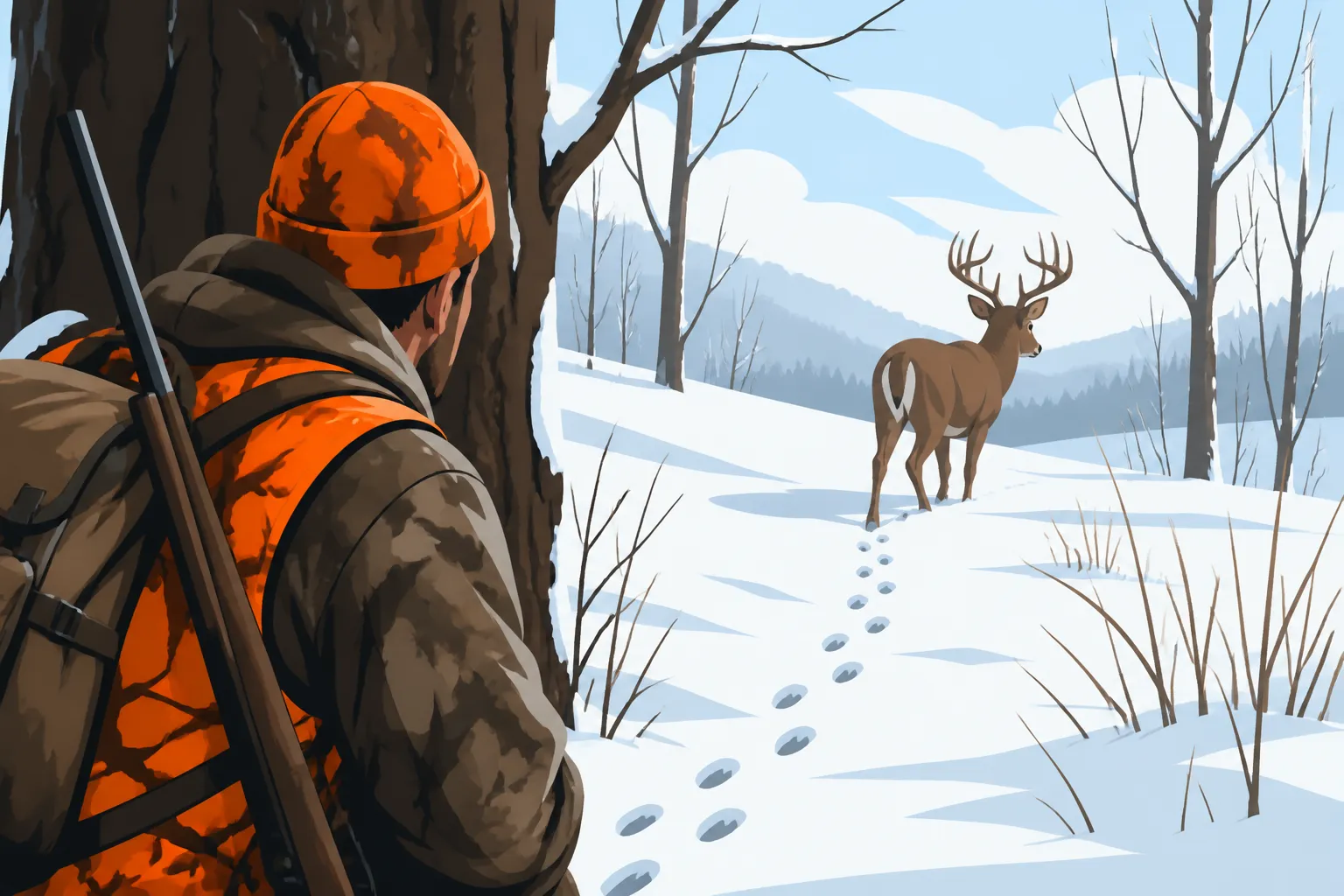
Fresh snow truly is a tracker’s best friend. It transforms a nearly invisible trail into a clear, albeit sometimes challenging, narrative. Learning to read this story—from subtle hoof prints to the nuances of blood—is an art that significantly boosts your chances of a successful recovery.
Reading the Tracks: Hoof Prints, Stride, and Drag Marks
When you’re tracking a deer in fresh snow, don't just look for blood; read the tracks themselves. A wounded deer will often exhibit an altered gait. Look for irregularities:
- Splayed Prints: Hooves spread unnaturally wide can indicate a deer that's losing its balance or struggling to put weight on a particular leg.
- Dragging Hooves: A distinct drag mark between prints or a deep furrow where a hoof should lift cleanly is a tell-tale sign of a broken leg or severe weakness. This can be one of the easiest signs to spot in fresh snow.
- Irregular Stride: One stride might be shorter or deeper than the other, suggesting an injury.
- Depth of Prints: A deer losing blood and strength might dig in deeper as it struggles, or conversely, lighten its step as it weakens and its body begins to shut down.
Beyond the individual prints, look for disturbed snow, kicked-up powder, or even small branches broken at unusual heights. These can be indicators of a deer struggling or thrashing through thick cover. Urine or feces with blood in it is also a grim but useful sign, especially with a gut shot. Your goal is to not just follow the tracks, but to understand what they're telling you about the deer's condition. The more you "read" the snow, the better you’ll become at predicting the deer's next move, which is critical if the blood trail becomes sparse.
Interpreting Blood Trails on White Canvas
Blood on snow offers a stark contrast that can make it seem easy to follow, but its color, consistency, and volume are critical clues to the type of wound.
- Bright Red, Frothy Blood: This is the best news you can get. Bubbles or froth indicate a lung hit. This usually means a quick kill, and the deer won't go far. You can track this type of trail with steady confidence after a short wait.
- Dark Red, Thick Blood: Often indicating a liver or muscle hit. The deer may travel a bit further, but it’s still a lethal shot.
- Pinkish-Red, Watery Blood: Could be a muscle wound, or just a very light hit. This type of trail is concerning and requires extreme patience.
- Greenish-Brown, Chunky, Foul-Smelling Matter: This is characteristic of a gut shot. This is the hardest trail to follow and requires the longest waiting period (6-10+ hours). Pushing a gut-shot deer almost guarantees it will travel for miles, and recovery becomes very unlikely.
- Bone Fragments: If you find small bone fragments along with the blood, it usually means a shoulder, leg, or possibly a spine hit. This also dictates patience and careful tracking.
Don't just look for big pools of blood. Often, especially with a good lung shot, a deer will bleed internally for a short distance before the external bleeding really begins. Look for tiny, pin-prick drops or subtle smears on snow-covered branches that are low to the ground. Mark every single piece of sign, no matter how small, with flagging tape. Remember the saying, "The last drop of blood is the most important." Always track from the last known sign. This systematic approach will ensure you don't lose the precious trail.
Navigating Obstacles and Terrain Shifts
Deer are intelligent creatures, and a wounded one will often seek out the path of least resistance or the thickest cover. Expect them to follow natural travel corridors, old logging roads, creek bottoms, or fence lines. When the trail leads to obstacles like a thick briar patch, a frozen creek, or a dense cedar stand, the blood may become sparse or vanish. This is where your ability to anticipate deer behavior and use tools like the GoHunt app for terrain analysis comes in handy.
When the blood trail thins or disappears, go back to your last marked spot. Don’t assume the deer kept going straight. Wounded deer frequently make sharp turns, double back, or try to circle around their pursuer. From the last sign, expand your search in a circular or grid pattern. Look for tracks leading into and out of obstacles. For instance, if the deer crossed a frozen creek, look for tracks or disturbed snow on the opposite bank. If you know the area well, perhaps from Scouting Illinois Public Land Before Season, you can predict where the deer might be headed for security.
In hilly country, like sections of the Shawnee National Forest, wounded deer often head downhill towards water or the thickest low-lying cover. Remember that Wind and Thermals on a Southern Illinois Ridge can influence deer movement, even wounded ones, as they seek to use conditions to their advantage to remain undetected. Take your time, mark your last blood, and fan out methodically. This patience will serve you far better than a hurried, frustrated search.
| Blood Type/Sign | Indication | Recommended Tracking Action |
|---|---|---|
| Bright Red, Frothy | Lung Hit | Wait 30-60 min. Track confidently, deer likely down close. |
| Dark Red, Clotting | Muscle/Artery | Wait 1-2 hours. Track steadily, deer may be a bit further. |
| Dark Red, Thick, Jellied | Liver/Heart | Wait 2-4 hours. Track very carefully, deer could be close or still moving. |
| Green/Brown, Foul Smell | Gut Shot | Wait 6-10+ hours (or overnight). Do NOT push; deer will travel far if bumped. |
| Hair (short, dark body) | Body shot | Re-evaluate blood type carefully, proceed with caution. |
| Hair (long, white belly) | Brisket/Leg/Lower Body | Re-evaluate blood type carefully, proceed with caution. |
| Bone Fragments | Leg/Shoulder/Spine | Indicates significant injury; proceed slowly and cautiously after appropriate wait. |
| Splayed or Dragging Tracks | Weakness/Injury | Track slowly and deliberately; deer is likely in distress and may be bedded close by. |
| Erratic/Wobbly Gait in Snow | Instability/Pain | Exercise extreme caution; deer is nearing its end or is very wary. |
Understanding Wounded Deer Behavior in Winter
Winter hunting in Illinois presents unique challenges, and a wounded deer’s behavior is significantly influenced by the cold, snow, and diminished food sources. Knowing these patterns can dramatically narrow your search area.
Where Do They Go When Wounded?
A wounded deer's primary instinct is to find a place where it feels secure and can rest or hide from danger. In the winter landscape of Illinois, this often means seeking the densest cover available. Look for thick cedar thickets, brushy draws, dense multiflora rose patches, or even the middle of standing crop fields, like corn, if they haven't been harvested. These spots provide both concealment and a slight thermal advantage.
They are also incredibly drawn to water. A wounded deer will often seek out a creek bottom, a frozen pond, or a riverbank. Thirst can be a significant issue after trauma, and water sources provide a potential sense of security. If you're hunting near the Illinois River Valley, focus your search in the river bottom funnels, especially around oxbows and sloughs. Hunting Illinois River Bottom Funnels can often reveal a downed deer even when the blood trail has vanished.
In areas with varied terrain, such as those found in Southern Illinois, they might head into deep ravines or seek out the lee side of ridges to escape the wind and find thermal cover. They are looking for a place to bed down and feel safe as their body begins to shut down. Understanding these natural tendencies can guide you when the blood trail becomes intermittent.
The Impact of Snow Depth and Temperature
The condition and depth of the snow play a huge role in how far a wounded deer will travel. Light, fresh snow provides excellent tracking conditions but may not impede the deer much. However, deep snow, especially if it's crusty and loud, can significantly hinder a deer’s movement. A deer will expend more energy pushing through deep snow, potentially causing it to expire sooner from a marginal hit simply due to exertion. This could mean finding your deer closer to the shot site.
Conversely, deep snow can also make movement agonizing for a severely wounded deer, potentially forcing it to bed down more quickly or seek a completely different escape route, such as a plowed road or a well-used trail that offers easier travel.
Temperature also profoundly affects the trail. Freezing temperatures can cause blood to clot and freeze quickly, making it less visible on the snow, though the dark color might still stand out. Warmer temperatures, on the other hand, can lead to faster melting, covering the trail or smearing the blood. Always keep the forecast in mind. If you're Hunting the Late-Season December Lull, cold weather is a given, which means blood clotting and freezing will be a factor, so staying on a fresh trail is even more critical.
Signs of a Bedded Deer
Finding a bedded deer is often the final step before recovery. As a wounded deer tires, it will seek shelter to lie down. Look for subtle depressions in the snow, possibly with disturbed leaves or brush around them. Be extremely cautious as you approach these areas. A bedded deer, even a mortally wounded one, can still jump up and make a final run if pushed, especially if it's been waiting for hours.
Before you get too close, scan the area ahead with binoculars. Look for any part of the deer’s body, the flick of an ear, or an eye reflecting light. If you suspect a deer is bedded, approach from downwind, slowly and quietly. If it jumps, note the direction it fled and look for new blood, urine, or fresh tracks in the bed itself. Sometimes, the deer will have left a significant amount of blood in its last bed, confirming a severe injury.
Pay attention to any crows or other scavengers in the area; they can sometimes lead you to a downed animal. While it’s tempting to rush in, a slow, methodical approach with extreme situational awareness is crucial when you believe you're close to a bedded animal.
Overcoming Obstacles and Knowing When to Seek Assistance
Tracking can be a solitary, intense experience, but it doesn't always have to be. There will be times when the trail goes cold, the terrain gets tough, or darkness sets in. Knowing when and how to overcome these obstacles, and when to call for backup, is a sign of a responsible and ethical hunter.
When the Trail Disappears: Re-establishing the Line
This is arguably the most frustrating part of tracking: the blood trail just stops. You’ve followed it faithfully, marking every sign, and then… nothing. Don't panic. Take a moment, collect yourself, and then go back to the very last confirmed piece of sign you found. Mark it clearly. This is your anchor point.
From that last mark, expand your search. First, check directly ahead in the direction the deer was traveling for about 20-30 yards. If no sign, then start fanning out to the sides in a circular or grid pattern. Wounded deer often make sharp turns, double back, or try to circle to throw off pursuit. Look for disturbed snow, a faint track, or even just a scuff mark where a deer might have slid. Have multiple eyes on the ground if possible. A line of hunters, spaced 10-15 yards apart, slowly sweeping an area, can be incredibly effective.
Consider the terrain and cover. If the deer was heading into a thick briar patch, focus your search there. If it was near a creek, check the banks up and down stream. Think like the deer: where would it try to hide or escape? Sometimes, after a period of intense effort, stepping back for 15-20 minutes, grabbing a snack, and clearing your head can help you spot something you overlooked.
Enlisting Other Hunters and Resources
There is absolutely no shame in asking for help. In fact, it’s often the smartest thing you can do. A fresh set of eyes, especially from a more experienced tracker or someone who knows the local terrain well, can make all the difference. Text a hunting buddy, or if you're on a public land like an Illinois State Fish and Wildlife Area, ask if anyone else is willing to lend a hand. If you're on private ground, a landowner might have intimate knowledge of deer bedding areas or escape routes. Sometimes, Deer Drives With Three or Four Hunters can be a last resort to find a deer if the trail has completely vanished, especially in dense cover.
In Illinois, the use of tracking dogs for wounded game recovery is gaining more acceptance, though specific rules and regulations apply. Generally, certified tracking dog handlers can be incredibly effective, especially when faced with a difficult or cold trail. Always verify the most current regulations with the Illinois Department of Natural Resources (IDNR) or local law enforcement before bringing a dog onto public or private land. Many handlers operate on a volunteer basis, driven by a passion for ethical recovery.
Always be mindful of other hunters, especially on public land. If you're tracking close to roads or private property, be sure you understand Illinois Trespass and Permission Law to avoid any issues. The GoHunt app is a great tool for quickly verifying property lines, which is crucial if your deer crosses onto land where you don't have permission.
Using Modern Technology to Your Advantage
While the art of tracking is ancient, modern technology offers some incredible advantages. Thermal imaging devices are becoming more accessible and can be a game-changer. A wounded or downed deer, even hours after expiring, will retain body heat that can glow brightly against the cold, snowy landscape, making it visible even in dense cover or at night. If you're considering Blood Trailing After Dark in Illinois, a thermal scanner is one of the most effective tools you can have.
GPS mapping applications, like the one found in GoHunt, are indispensable. You can mark the shot site, every blood drop, your path, and potential bedding areas. This creates a visual record that helps you avoid redundant searching, allows you to strategize your next move, and provides a clear path back to your vehicle. Many apps also offer topographical maps and satellite imagery, helping you anticipate terrain changes and likely travel routes.
Don't underestimate the power of your smartphone. Beyond its GPS capabilities, its flashlight feature can augment your primary light source, and its camera is excellent for documenting the trail. Take photos of unusual blood signs, unique tracks, or the general habitat where you found signs. Sometimes, looking at these photos later, away from the stress of the moment, can help you identify a subtle clue you missed. This combination of traditional tracking skills and modern tech gives you the best chance to Recovering a Deer From a River Bottom or any other challenging environment.
Disclaimer
The information provided in this article is for general guidance and informational purposes only, and does not constitute legal or professional advice. Hunting regulations and conditions in Illinois can change, and specific rules may vary by location and season. Always consult the official Illinois Department of Natural Resources (IDNR) regulations and local ordinances before hunting or tracking game. It is the hunter's responsibility to understand and adhere to all applicable laws and safety guidelines.