Turkey Tactics for Farmland Field Edges
There's nothing quite like the sound of a spring gobbler hammering back at your call, especially when you're perched on the edge of a vast Illinois farm field, feeling the morning chill begin to melt away. But let's be honest, hunting these intelligent birds in open farmland can be incredibly frustrating. They see everything, they hear everything, and they often refuse to leave the security of the timber or those wide-open fields. This guide is here to break down the specific tactics you need to master those challenging farmland field edges and consistently bring Illinois longbeards into range.
Understanding the Farmland Turkey's Habits
Hunting turkeys on the fringes of Illinois's sprawling agricultural landscapes requires a unique approach. These birds aren't just passing through; they've integrated their entire lives around these fields, and understanding why they do what they do here is the first step to success.
Why Field Edges Are Turkey Magnets
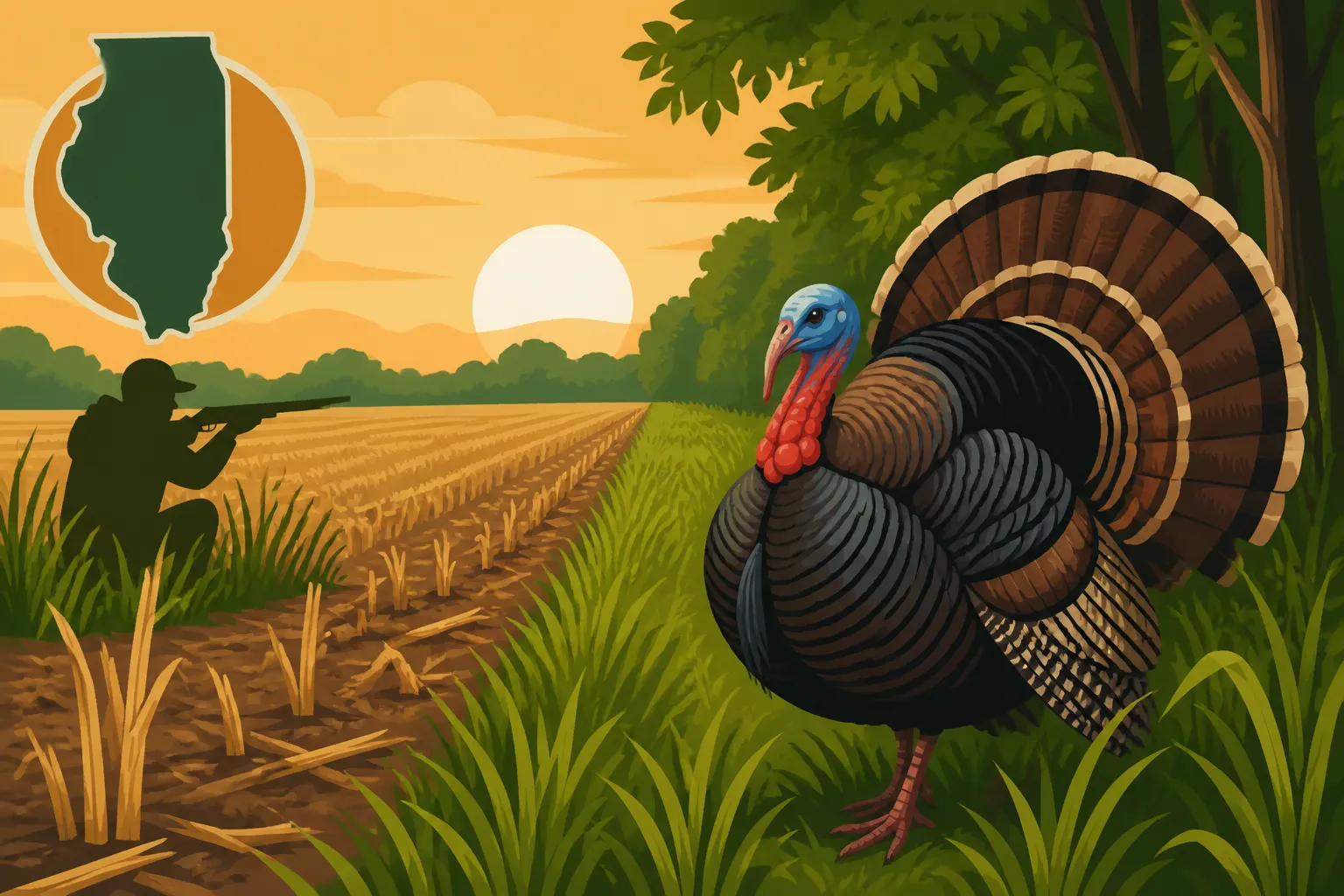
Farmland field edges, whether they border timber, fencerows, or creek bottoms, are prime real estate for wild turkeys for several compelling reasons. First and foremost, they offer a smorgasbord of food. After harvest, waste grain like corn and soybeans provides a consistent, high-energy diet throughout the fall and winter, and often lingers into the spring. As the weather warms, the edges also teem with insects, another crucial food source, especially for hens and their poults. Beyond food, these edges offer ideal strutting grounds for gobblers. The open visibility allows them to display to hens from a distance, feeling relatively secure while still having immediate access to thicker cover if danger arises. It's a perfect blend of safety and opportunity, creating natural transition zones where turkeys frequently move between feeding, roosting, and breeding activities.
However, this very appeal can be a double-edged sword for hunters. That same open visibility that makes a field edge attractive to a strutting gobbler also makes it a high-risk area for you. Turkeys here are incredibly wary, constantly scanning for threats. You're trying to fool an animal that relies heavily on its eyesight in an environment designed for clear sightlines. This means your approach, setup, and concealment strategies must be absolutely impeccable, accounting for every detail from your silhouette to the shadows you cast. It’s a game of chess, and the turkey often feels like it has the opening move.
Reading the Landscape: Identifying Key Edge Features
Not all field edges are created equal when it comes to turkey hunting. A featureless straight line between a cornfield and a woodlot might hold turkeys, but specific topographical elements and habitat changes will concentrate their movements and make your job much easier. Look for natural funnels like creek bottoms that cut into fields, drawing birds along a predictable path. Thick fencerows, especially those with mature trees or heavy brush, provide excellent cover and travel lanes that turkeys prefer over crossing wide-open spaces.
Timber fingers or isolated clumps of trees that extend out into a field are absolute gold. These act as natural staging areas where birds can feel secure before venturing into the open, or where a gobbler might strut, expecting hens to come to him. Power lines or utility easements can also be overlooked hotspots; the cleared ground beneath them often grows lush vegetation, attracting insects, and the lines themselves provide convenient roosting spots for turkeys that want a commanding view. Even subtle changes in elevation, like a slight rise in a field that offers a better vantage point, can be a magnet. Using tools like aerial maps, especially those found on apps like GoHunt, can help you identify these subtle but crucial features from the comfort of your home, saving you countless hours of in-field scouting.
Scouting and Pre-Season Preparation
Successful turkey hunting, especially on farmland edges, begins long before opening day. Your pre-season work will dictate your success more than any calling sequence or fancy shotgun. It’s about being a detective, piecing together the daily lives of these birds.
Locating Roosts and Travel Corridors
The first piece of the puzzle is finding where turkeys roost. In farmland areas, roost trees are often the tallest, most isolated trees or clusters of trees that stand proud above the surrounding landscape. They might be in a timber block bordering a field, along a creek bottom, or even a lone, massive oak in a fencerow. Turkeys will often roost near water, and on a calm evening, you can sometimes hear them fly up to their branches. The real magic happens at dawn. Get into position well before first light, listening intently for those initial tree yelps, clucks, and the unmistakable shock gobble that erupts as the sun peeks over the horizon. Identifying these roost sites gives you a massive advantage, as you know exactly where the birds start their day.
Once you know where they're roosting, you can start to map out their travel corridors. Observe how they descend from the roost and which paths they consistently take to reach the feeding grounds in the fields. Are they following a specific logging road, hugging the timber's edge, or crossing a particular low spot? These are your ambush points. Pay attention to droppings, tracks, and feather dustings under roost trees, as well as along the edges of fields. Fresh scratching in the leaf litter near a field edge indicates recent feeding activity. This meticulous observation is key to understanding their patterns before the pressure of hunting season even begins. Many hunters find success by utilizing early morning approaches to Roost Hunting Illinois Gobblers on these specific travel corridors.
Utilizing Technology for Farmland Scouting
In today's hunting world, technology is your best friend, especially when scouting vast Illinois farmlands. Forget just guessing; a good mapping application can be a game-changer. Platforms like GoHunt offer incredibly detailed aerial and topographic maps that allow you to virtually scout potential hotspots without ever stepping foot in the field. You can identify those crucial timber fingers extending into a bean field, pinpoint subtle creek drainages that turkeys might follow, or spot a hidden strutting zone on a slight rise in a pasture.
Using these digital tools, you can mark potential roost sites, ideal setup locations based on prevailing winds, and likely travel paths. You can also analyze historical satellite imagery to see how crop rotations might have changed the landscape over the years, informing where turkeys might feed or stage now. Imagine seeing a tight bottleneck of timber connecting two large fields, a perfect pinch point for an ambush. With a GoHunt subscription, you can drop a pin, plan your entry and exit routes, and even consider sun angles for your morning setup – all before you ever strap on your boots. This level of detail empowers you to make informed decisions, reducing guesswork and increasing your odds significantly.
Effective Calling Strategies for Field Edges
Calling a turkey in a wide-open farmland setting is a delicate dance. Overcalling can send a wary gobbler packing, but too little might not pique his interest. It's about balance, realism, and understanding the bird's mood.
Soft Calls and Patient Setups
On farmland field edges, turkeys are often more exposed and therefore more cautious. Blasting aggressive cutts and loud yelps might work in thick timber, but in open country, it can sound unnatural and put gobblers on high alert. Instead, lean into soft, subtle calling. Think quiet tree yelps as light breaks, soft clucks, and purrs that suggest contentment and a sense of security. A gobbler that hears a gentle, unassuming hen is more likely to investigate cautiously than one that's being screamed at. The goal is to make him believe a hen is close, but not in a rush, allowing his natural curiosity and breeding instinct to draw him in.
Patience is not just a virtue here; it's a necessity. Once you've made a few soft calls and gotten a response, resist the urge to keep hammering away. Let the woods breathe. Gobblers, especially older, wiser ones, will often hang up just out of sight, trying to get the hen to come to them. This is where your ability to remain silent, listen intently, and only call again sparingly – perhaps just a soft cluck or two – will pay off. Set up where you have good shooting lanes but excellent cover, and be prepared to wait for extended periods. Sometimes, the most effective call is no call at all, letting the gobbler's ego get the best of him. If you're looking for other calling methods, our guide on Rattling and Grunting in Illinois offers more insights into deer, but the principle of understanding animal behavior applies.
Decoy Placement and Realism
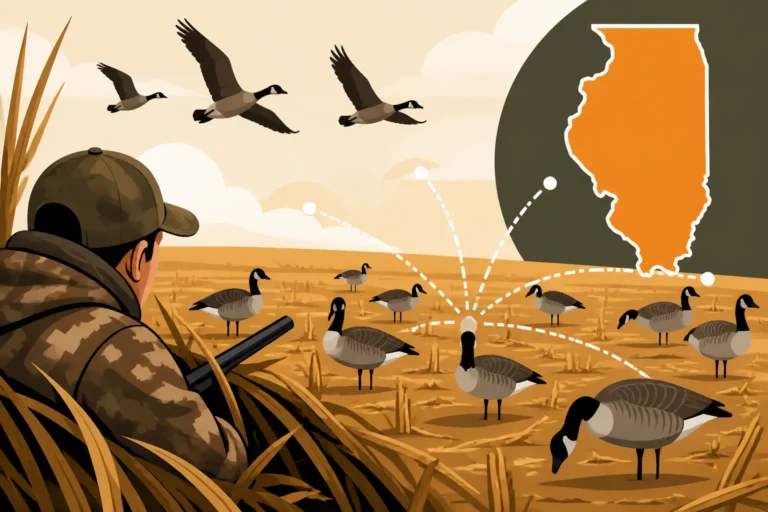
Decoys can be incredibly effective on field edges, drawing a gobbler's attention away from you and providing a visual confirmation of the hen he's been hearing. However, placement is everything. The general rule of thumb is to place your decoy(s) about 15-20 yards in front of your position, slightly off to one side. This ensures that when the gobbler comes in to investigate, he's within easy shooting range and his attention is focused on the decoy, not your blind. For open field edges, a single hen decoy in a breeding or feeding posture often works wonders, conveying a sense of calm and accessibility.
If you're feeling bold, adding a jake decoy can trigger a territorial response from a dominant gobbler, making him charge in aggressively to assert his dominance. Position the jake slightly behind the hen, as if he's trying to breed her. Realism is also crucial. Invest in quality, realistic decoys that don't shine or look unnatural in the sunlight. Avoid overly aggressive or stiff poses unless you know the birds in your area respond well to them. And always be mindful of other hunters; in areas with high pressure, some hunters opt to forgo decoys entirely to avoid drawing unintended attention. Our guide on Decoy Placement for Pressured Illinois Birds offers more specific advice tailored to wary turkeys.
Setting Up for Success: Blinds and Concealment
When hunting wide-open farmland, you simply can't rely on being invisible with just a little camouflage paint. Turkeys have exceptional eyesight, and any movement will be immediately picked up. This makes strategic concealment paramount.
Ground Blind Advantages in Open Country
For hunting turkeys on farmland field edges, a good ground blind can be your best friend. The advantages are numerous:
- Total Concealment: A ground blind completely breaks up your outline, allowing you to move, adjust your gun, and even stretch without being detected. This is a huge psychological relief, especially during long waits.
- Protection from Elements: Blinds offer shelter from wind, light rain, and direct sunlight, making your hunt more comfortable and allowing you to stay out longer.
- Mobility (Relatively): While not as mobile as run-and-gun tactics, modern pop-up blinds are relatively quick to set up and take down, allowing you to move to a new location if the birds shift their patterns.
- Youth Hunter Friendly: They're fantastic for introducing new hunters, especially kids, who might struggle to sit perfectly still for extended periods.
However, ground blinds aren't without their drawbacks. They can limit your field of view, requiring you to be extra vigilant and cautious when peeking out. They also need to be brushed in carefully to blend into the natural environment. Simply plopping a blind down in an open field without adding natural vegetation around it will scream "hunter" to any approaching bird. Gather corn stalks, tree branches, and tall grass to create a natural-looking hide. Always set up your blind well in advance of your hunt, preferably several days or even weeks, to allow turkeys to get accustomed to its presence. For more on using these hides, check out our insights on Using a Ground Blind on Illinois Public Land.
Natural Cover and Strategic Ambush Points
While a ground blind offers excellent concealment, sometimes the best setup is to blend seamlessly into the existing natural cover. On farmland edges, this might mean tucking yourself against a large, mature oak tree on the timber line, making sure you have a wide trunk to break up your silhouette. Look for dense brush piles, natural depressions in the terrain, or even overgrown fencerows that offer enough screening to hide your movements. The key is to find cover that's already part of the landscape, minimizing any disruption.
When selecting your ambush point, consider the sun's position. In the morning, you want the sun at your back, making it harder for turkeys to see into your shadowed position and potentially glaring in their eyes as they approach. Also, think about your shooting lanes. Can you get a clear shot if a gobbler approaches from any direction, or are there thick branches that will deflect your shot? Finally, consider your entry and exit routes. You want to be able to get to and from your spot silently and undetected, without spooking any birds in the process. Utilizing a combination of strategic natural cover and understanding turkey movement, as discussed in Hunting Illinois River Bottom Funnels or Setting Up Against a Big Oak, can significantly improve your chances.
Dealing with Pressured Birds and Unpredictable Conditions
Illinois farmland turkeys are often sharp, especially those that have made it through a few seasons. They've seen it all, heard it all, and they've developed a keen sense of self-preservation. Add in unpredictable weather, and you've got a real challenge on your hands.
Adapting to Changing Weather and Crop Rotations
The weather in Illinois can be a fickle beast, and spring turkey season is no exception. A warm, sunny morning might bring gobblers out strutting aggressively, but a sudden cold front or a day of steady rain can shut them down fast. Turkeys will often seek shelter in denser timber during heavy rain or wind, making field edge hunting less productive. After a significant rain, however, they might be drawn to newly exposed insects or puddles for drinking. Always check the forecast and be prepared to adapt your tactics. If it's windy, calling will be less effective, and turkeys will rely even more on their eyesight. Consider moving closer to their suspected locations or hunting tighter cover.
Crop rotations also play a huge role in turkey behavior. A field that was corn last year might be planted with soybeans this spring, or it could be a newly tilled, barren landscape. This directly impacts their food sources and travel patterns. Freshly tilled fields expose insects and worms, which can be a draw. Fields that were cut for silage might still have waste grain. Always scout the current conditions, even if you know the general area well. A field that held birds last year might be completely devoid of activity this season if the crop has changed dramatically. Flexibility and continuous scouting throughout the season are key to staying on top of these changes.
Mitigating Hunter Pressure on Public and Private Land
Hunter pressure is a universal challenge, but it feels particularly acute on accessible farmland edges in Illinois. Turkeys quickly learn the routines of hunters, becoming "call shy" or simply avoiding areas with human scent and activity. On public land, this means getting there early – often well before legal shooting hours – to beat other hunters to prime spots. A silent approach, walking in with minimal light and noise, is crucial. Focus on overlooked pockets of cover, smaller woodlots, or fencerows that other hunters might pass by, thinking they're too small or insignificant. Sometimes, the birds that survive are those that learn to use these less obvious spaces.
On private land, even if you have exclusive access, birds can still be pressured by neighbors, farmers working fields, or general human activity. If turkeys are continually hanging up just out of range, or they stop responding to calls, try switching up your tactics. Instead of aggressive calling, go completely silent for a while. Try using a fan or a full-strut gobbler decoy to draw them in visually if they're not vocal. Consider still-hunting along timber edges, slowly and quietly, trying to intercept birds as they move between feeding and roosting areas. Remember, the goal is to present a scenario that the turkey hasn't already encountered, making them drop their guard just long enough for you to get a shot. Our guide on Hunting Pressure on Illinois Public Land offers more strategies for dealing with crowded areas.
Turkey Calling Scenarios on Farmland Edges
| Scenario | Turkey's Behavior / Location | Recommended Calling Type | Decoy Strategy | Hunter Positioning | Key Takeaway |
|---|---|---|---|---|---|
| Morning Fly-Down | Gobbler on roost tree near edge | Soft tree yelps, clucks | Single hen (feeding/alert) | Close to roost, good cover, sun behind | Patience; let him come to the hen he hears. |
| Mid-Morning Strutting | Gobbler strutting in open field | Soft yelps, purrs, occasional cluck | Single hen or jake/hen | At edge of timber/cover, 15-20yds from decoy | Don't overcall; let visual draw him in. |
| Hung-Up Gobbler | Gobbler gobbling, not approaching | Muted clucks, purrs, silence | Breeding hen or no decoy | Well concealed, ready for long wait | Less is more; make him think you're losing interest. |
| Silent Gobbler | No vocal response, but sign present | Occasional soft yelp, wait | Single hen | Ambush point along travel corridor | Visual scouting, subtle calls; rely on movement. |
| Rainy/Windy Day | Birds seeking timber/shelter | Infrequent, louder (if needed) | No decoy or hidden hen | Deeper into timber, near edge | Adjust for visibility/audibility; focus on cover. |
Conclusion
Hunting turkeys on Illinois farmland field edges is a challenge that rewards patience, meticulous scouting, and adaptable tactics. These are cunning birds that thrive in environments where they can see danger coming from a mile away. By understanding their habits, leveraging modern scouting tools like GoHunt, mastering the art of soft calling and realistic decoy setups, and knowing when and how to conceal yourself effectively, you can turn those frustrations into unforgettable success stories. Remember, every hunt is a learning experience. Pay attention to what works and what doesn't, and you'll soon be calling in those wary farmland gobblers with confidence. For more general advice on hunting these birds, check out our comprehensive guide to Spring Turkey Hunting in Illinois.
Disclaimer
Please ensure you are aware of and comply with all current Illinois Department of Natural Resources (IDNR) hunting regulations, licensing requirements, and season dates before engaging in any hunting activities. Safety should always be your top priority in the field.