Hunting the Illinois Rut in Early November
The crisp air of early November brings a familiar electric buzz to the Illinois deer woods, a feeling every hunter knows well. It’s the time when mature bucks, often elusive and nocturnal for months, suddenly seem to lose their minds, throwing caution to the wind in pursuit of does. But let's be honest, while the rut is often touted as the "magical" time to hunt, it can also be incredibly frustrating when those big boys just aren't showing up as expected. This guide is dedicated to dissecting what actually happens during the Illinois rut in early November, offering detailed strategies and insights to help you capitalize on this fleeting, yet thrilling, period.
Understanding the Early November Rut in Illinois
Ah, early November in Illinois – the sweet spot, right? Everyone talks about it, dreams about it, and plans their precious vacation days around it. But what exactly makes this particular window so special, and why can it feel so unpredictable? It’s not just a switch that flips; it’s a dynamic period with distinct behavioral shifts that, once understood, can really refine your approach.
The Science Behind the Peak Rut
The primary driver for the rut is photoperiod, or the decreasing daylight hours. This environmental cue triggers hormonal changes in deer, signaling to does that it's time to be bred and to bucks that it's time to find them. While lunar phases, temperature, and barometric pressure can certainly influence the intensity of deer movement on any given day, the core timing of the rut remains remarkably consistent year after year, tied directly to the calendar and the sun. In Illinois, early November often sees the highest percentage of does coming into estrus, which in turn ignites the most aggressive breeding behavior from bucks. This means fewer does available and more competition among bucks, leading to increased daytime activity.
It’s not just about the big, mature bucks. Younger bucks, often called "satellites," are also on the move, constantly scent-checking and chasing, which can sometimes stir up the woods and inadvertently lead a bigger buck your way. But the focus in early November is truly on those prime breeding windows where a doe is actively receptive. Understanding these biological underpinnings helps us anticipate deer behavior rather than just reacting to it.
How Illinois Bucks Behave in Early November
During the pre-rut, bucks might be sparring and rubbing, but in early November, especially in the first couple of weeks, they shift into full-blown seeking and chasing mode. They're covering vast amounts of ground, tirelessly scent-checking established scrapes, cruising through bedding areas, and often just walking with their nose to the ground, looking for the tell-tale scent of an estrous doe. You’ll see them pop up in unexpected places, far from their typical core areas, simply because a doe led them there.
This is the phase where patience is paramount, but so is aggression in your strategy. Bucks are often less wary of human presence, or at least, their desire to breed overrides some of their innate caution. They can get fixated, almost tunnel-visioned, on a doe, which makes them vulnerable. We're talking about bucks moving at all times of the day, not just dawn and dusk. This is why an all-day sit can be so effective; you never know when that cruising buck might cut through your area looking for love. This heightened activity makes early November a prime time for hunters hoping to intercept a traveling giant.
Regional Rut Variations Across the State
While the general biological timing of the rut is consistent, local conditions can definitely influence what you see on the ground. Illinois is a long state, stretching from the dense timber of the Shawnee National Forest in the south to the rolling farmlands of the north. Weather patterns, deer density, and hunting pressure can create perceived variations.
For instance, in southern Illinois's more rugged terrain, like the Shawnee Hills Ridgeline Public Access, bucks might travel different types of corridors compared to their counterparts in the flat, agricultural lands of central Illinois, where deer might be working specific pinch points between woodlots or thick cover. Higher deer densities in certain counties might lead to more intense competition and visible chasing, whereas in areas with lower densities, bucks might have to cover even more ground to find a receptive doe. It's crucial to understand your specific hunting area. Are you in a county known for big bucks like Pike County, where "Why Pike County Produces So Many Trophy Bucks" is a common question, or are you in a more pressured zone? Keeping an eye on local conditions, from recent temperature drops to sudden shifts in hunting pressure, can help fine-tune your approach within the broader rut window.
Key Scouting and Preparation for Early November
You can't just show up in early November and expect magic, even during the rut. The most successful hunters have put in their time long before the season, understanding deer patterns and identifying key areas that become hotspots once the breeding frenzy begins. Early November success is built on intelligent scouting and meticulous preparation.
Pinpointing Crucial Rut Sign
By early November, you should be looking beyond just fresh rubs and scrapes. While those are always good indicators of buck presence, the rut shifts their purpose. Instead of just "making" sign, bucks are now checking sign, particularly scrape lines. Look for heavily used travel corridors connecting known bedding areas to potential feeding areas or doe bedding zones. These are the highways bucks use to search. Creeks and river bottoms often act as natural funnels, concentrating deer movement. If you're hunting in areas like the Illinois River Bottom Funnels, identifying these natural choke points is critical.
Muddy crossings, fresh tracks along field edges, and even sightings of multiple does together can signal areas of high doe activity, which, in turn, will attract bucks. Pay attention to those subtle trails that skirt the edge of thick cover—these are often buck travel routes used for scent-checking. Don't overlook old logging roads or clear-cut edges, as these can also become natural travel corridors for deer. The more you can identify where does are likely to be, the closer you are to intercepting a cruising buck.
Utilizing Technology for Rut Scouting
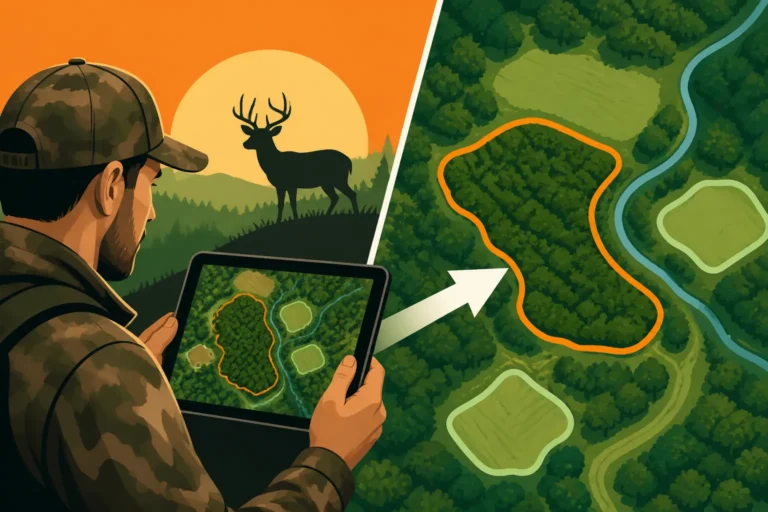
In today's hunting world, technology is an invaluable asset, not a crutch. Platforms like GoHunt, along with other mapping applications, can revolutionize your scouting efforts, especially for understanding terrain and identifying potential rut corridors. Before you even set foot in the woods, you can use these tools to analyze topo maps and aerial imagery, looking for natural pinch points, saddles, ridges, and creek crossings that will funnel deer movement. This is particularly helpful when Reading Aerial Photos for Southern Illinois Deer or any other part of the state.
GoHunt offers detailed public and private land boundaries, which is crucial when navigating unfamiliar territory. You can identify isolated pockets of public land surrounded by private farms, which often hold deer seeking refuge from pressure. Mark potential stand locations, escape routes, and even areas of thick cover that might serve as buck bedding. Trail cameras, deployed early, can also provide real-time intelligence on deer movement patterns, showing you which bucks are active and where. By combining digital mapping with on-the-ground recon, you can build a comprehensive picture of deer activity and create a strategic plan for early November. Don't forget to keep a log of deer sightings and weather conditions to identify patterns.
Setting Up Your Stand for Success
Stand placement during the rut is less about consistent feeding patterns and more about intercepting cruising bucks or those responding to calls. This often means setting up on travel corridors between bedding areas, along field edges, or in strategic funnels. Think about the prevailing wind directions for your chosen spots and how a buck might approach. During the rut, bucks are often less cautious about crossing open areas in daylight, but maintaining a scent advantage is always wise.
Consider setting up multiple stand locations to adapt to changing wind conditions or shifting deer activity. A good strategy is to have stands that cover different types of terrain – maybe one on a ridge overlooking a saddle, another in a creek bottom, and a third on a field edge near a bedding thicket. For instance, knowing how to approach and set up on a Southern Illinois ridgeline can be vastly different from setting a stand near a corn field. Make sure your entry and exit routes are stealthy and minimize disturbance to the area. Your goal is to be in position before daylight and remain undetected for as long as possible. Remember, a stand that was perfect in September might not be the ideal spot when bucks are actively searching for does in November.
Effective Hunting Strategies During the Peak Rut
When the rut is on in early November, the game changes. Gone are the days of strictly morning and evening hunts. Bucks are on the move, and your strategies need to reflect that heightened, often unpredictable, activity. This is the time to be aggressive, persistent, and adaptable.
All-Day Sits and Timing Your Movements
This is perhaps the most preached, yet often least practiced, strategy during the peak rut. Everyone talks about "all-day sits," but few actually commit. The truth is, during early November, the chances of a mature buck making a mistake in the middle of the day are significantly higher than at any other time of the season. Bucks will often cruise, chase, and breed throughout the day, especially if the weather is cool and crisp. Does often bed in thicker cover during midday, and bucks will relentlessly check these areas.
If you can tough it out in your stand from dawn till dusk, your odds go up exponentially. Pack plenty of snacks, water, and be prepared for long periods of quiet broken by sudden, intense action. Choose a comfortable stand and a location with good visibility. When you do need to move, make it count. Avoid unnecessary trips in and out of the woods, as each disturbance can push deer out of your area. Instead of going back to the truck for lunch, carry it with you. The effort of an all-day sit truly pays off when that buck you've been waiting for steps out at 11 AM or 2 PM.
Decoy and Calling Tactics That Work
Aggressive calling and decoy strategies can be incredibly effective during early November. Bucks are actively seeking and competing, making them more responsive to sounds and visuals that mimic other deer. Grunt calls, especially a tending grunt or a series of aggressive grunts, can provoke a response from a buck that thinks another buck is moving in on his territory or a hot doe. Learning the nuances of Rattling and Grunting in Illinois can give you a significant edge.
Rattling antlers, simulating a buck fight, can also draw in curious or competitive bucks. Start with lighter clashes, then escalate to more intense, drawn-out sequences, followed by moments of silence to listen for approaching deer. Combine rattling with grunts for a truly convincing setup. Doe decoys, especially an estrous doe decoy, can be deadly. Place them in an open area downwind from your stand, where an approaching buck will see it and circle downwind to scent-check. Adding a buck decoy can be risky, but if a big buck sees a rival, his aggression can override his caution. Always be mindful of your shooting lanes and approach angles when using decoys.
Still-Hunting and Driving During the Rut
While stand hunting is popular, still-hunting or carefully planned deer drives can be highly effective during early November, especially on larger tracts of public land. Still-hunting involves moving slowly and deliberately through the woods, taking a few steps, then pausing for several minutes to scan and listen. It's about hunting the deer rather than hunting a spot. This method works well in areas with diverse cover, where bucks might be bedded near does or actively cruising. It requires immense patience and keen observation skills, almost like becoming part of the landscape yourself.
Deer drives, especially smaller ones with three or four hunters, can also be productive. This strategy is about strategically pushing deer from bedding cover to standers positioned along escape routes or funnels. On public land, where deer often hide in thickets and inaccessible areas, a well-executed drive can stir up otherwise hidden bucks. If you're considering Deer Drives on Illinois Public Land, ensure everyone understands their role, safety is paramount, and you have clear communication. It's not about running deer aimlessly; it's about making them move predictably past a waiting hunter. This can be especially good on cold, blustery days when deer are less likely to move on their own.
Navigating Pressure and Public Land Challenges
Let's be real: hunting during the rut often means sharing the woods, especially on Illinois's public lands. While it's exciting to know deer are moving, dealing with other hunters and finding a piece of ground where you can effectively hunt can be a major headache. But with smart planning and a bit of determination, you can absolutely find success.
Finding Secluded Sanctuaries
The key to success on pressured public land, particularly during the peak rut, is to seek out those spots that other hunters overlook or are simply unwilling to reach. Deer quickly learn where the pressure is, and they'll adapt by seeking refuge in the nastiest, thickest, most difficult-to-access cover. This means looking for areas away from parking lots, main trails, and easily accessible ridge tops. Use mapping tools like GoHunt to identify small, isolated parcels of timber, dense creek bottoms, or steep, brushy slopes that might deter less determined hunters.
Sometimes, the best spots are just a little further in, requiring a longer walk or traversing some tough terrain. Think about using a canoe to access river bottoms or finding a hidden walk-in access point that isn't obvious from the road. The deer know these sanctuaries, and during the rut, bucks will often push does into these hidden pockets to breed. By putting in the extra effort to scout and reach these secluded areas, you increase your chances of finding unpressured deer and having a more natural hunting experience. It's all about Finding Ground Others Walk Past.
Adapting to Hunting Pressure
Hunting pressure isn't necessarily a bad thing, but it certainly changes deer behavior. During the rut, pressure can sometimes increase deer movement as bucks get bumped from one area to another. The challenge is anticipating how they will move. If you know hunters are regularly walking certain trails or driving certain ridges, position yourself on the downwind side of those pressure points, or along the escape routes deer are likely to take. Deer will often try to skirt around human activity, using natural cover and terrain to their advantage.
Consider hunting during weekdays if possible, when pressure tends to be lower. If you're on public land during a firearm season, remember that deer drives are more common, so understand how that might influence movement. Don't be afraid to adjust your strategy mid-hunt. If you're seeing a lot of human activity, it might be time to pack up and try a different, more remote location, or switch to a still-hunting approach to cover more ground quietly. Flexibility and observation are your best friends when dealing with pressure.
Legalities and Etiquette on Public Land
Hunting public land in Illinois comes with specific rules and unwritten codes of conduct. Always check the Illinois Department of Natural Resources (IDNR) site-specific regulations for the area you plan to hunt, as rules can vary greatly. Some areas might have specific check-in/check-out procedures, weapon restrictions, or even designated hunting zones. Familiarize yourself with Illinois Hunting Licenses and What They Cost and ensure all your permits are in order.
As for etiquette, always be respectful of other hunters. If someone is already set up in a spot, find another. Give ample space and avoid walking directly into another hunter's setup. Be mindful of noise, especially at dawn and dusk. When tracking a deer, if it goes onto adjacent private property, you generally need to seek permission from the landowner before retrieving it. Always follow blaze orange requirements during firearm seasons, even if you are archery hunting. By understanding and respecting both the law and your fellow hunters, you contribute to a positive and safe hunting environment for everyone.
Post-Harvest Considerations and Best Practices
Harvesting a buck during the Illinois rut in early November is a moment of triumph, a culmination of effort, patience, and strategy. But the hunt doesn't end when the shot breaks. The responsible hunter knows that proper tracking, recovery, and care of the animal are just as crucial as the shot itself.
Tracking and Recovery of Rutting Bucks
Rutting bucks, fueled by hormones and often not eating much, can be incredibly tough animals. Even a well-placed shot might not drop them instantly, and they can travel further than you'd expect, especially with an adrenaline surge. Give the animal time, particularly if you suspect a marginal hit. For a lung or heart shot, waiting 30 minutes to an hour is often sufficient. For a gut shot, waiting 4-6 hours, or even overnight if conditions allow (cool temperatures, no rain), is highly recommended. The last thing you want to do is push a wounded deer, making recovery almost impossible.
When you begin tracking, take your time. Look for blood, broken branches, disturbed leaves, and tracks. Mark the last known blood trail with flagging tape, toilet paper, or a small piece of cloth, then move slowly, looking for the next sign. If the blood trail peters out, expand your search in circles or grids. Think about where a wounded deer would naturally go: thick cover, water sources, or down a path of least resistance. Learning to effectively Blood Trailing After Dark in Illinois can be critical, but always prioritize safety and avoid disturbing other hunters.
Field Dressing and Meat Care
Once you've recovered your buck, proper field dressing and meat care are essential, especially since early November weather can be variable. In Illinois, while early November can bring cold snaps, it can also have surprisingly warm days. If temperatures are above 40°F, you need to field dress immediately to allow the carcass to cool down rapidly. Remove all internal organs, including the windpipe and esophagus, to prevent bacterial growth.
If you have a long drag ahead, consider quartering the animal in the field if regulations and personal capability allow. Getting the hide off and the meat cooled as quickly as possible is paramount to preserving meat quality. Once field dressed, transport your deer carefully, minimizing contamination. If you're going to a processor, make sure they are reputable. If you're doing it yourself, ensure you have clean tools and a sanitary workspace. Understanding how to properly Field Dressing a Deer in Cold Weather can save your venison, ensuring you get the best possible meat from your harvest.
Reporting Your Illinois Deer
In Illinois, reporting your deer harvest is not just a suggestion; it's a legal requirement. All deer harvested, regardless of season or weapon, must be reported to the Illinois Department of Natural Resources (IDNR) by 10 PM on the day of harvest. This data is critical for wildlife biologists to monitor deer populations, track harvest trends, and manage the herd effectively across the state.
You can report your harvest online through the IDNR website or via the official Illinois hunting and fishing mobile app. The process is straightforward, requiring information such as your permit number, the county of harvest, and the deer's sex and age (adult or fawn). Make sure you have your permit information readily available when you report. Failure to report your harvest can result in fines and other penalties, so don't let the excitement of a successful hunt make you forget this crucial step. Knowing how to use the Reporting a Deer Through Illinois's App makes this process quick and easy.
Comparing Rutting Buck Behavior and Corresponding Tactics
| Rut Phase (Early November) | Primary Buck Behavior | Key Hunting Tactics | Ideal Stand Location | Effective Calls / Decoys |
|---|---|---|---|---|
| Seeking Phase | Bucks actively cruising, scent-checking, covering ground. | All-day sits, still-hunting, glassing open areas. | Travel corridors, pinch points, funnels, field edges. | Grunts (seeking), occasional rattling. |
| Chasing Phase | Bucks pursuing does, often ignoring surroundings. | All-day sits, aggressive calling, using decoys. | Doe bedding areas, transition zones, funnels. | Aggressive grunts, rattling, doe bleats, doe decoy. |
| Breeding Phase | Bucks locked down with a doe, less mobile. | Still-hunting dense cover, methodical drives. | Thick cover, hidden pockets, remote sanctuaries. | Minimal calling, strategic still-hunting. |
Disclaimer: Hunting involves inherent risks, including injury and death. Always prioritize safety, follow all local, state, and federal regulations, and obtain proper licenses and permits. This guide provides general information and should not replace professional instruction or local wildlife agency guidelines. Hunting ethics and responsible wildlife management are paramount.