Predator Calling Illinois Fencerows at Dusk
There's a special kind of frustration that comes with trying to outsmart a predator. You hear them howling in the distance, you see tracks along a field edge, but when it comes to getting one to commit to a call, it can feel like they've got your number. Calling predators at dusk, especially along those classic Illinois fencerows, requires a blend of savvy, patience, and the right strategy. This guide will walk you through everything you need to know to turn those frustrating near-misses into successful encounters.
Understanding Illinois Fencerow Predators and Their Habits at Dusk
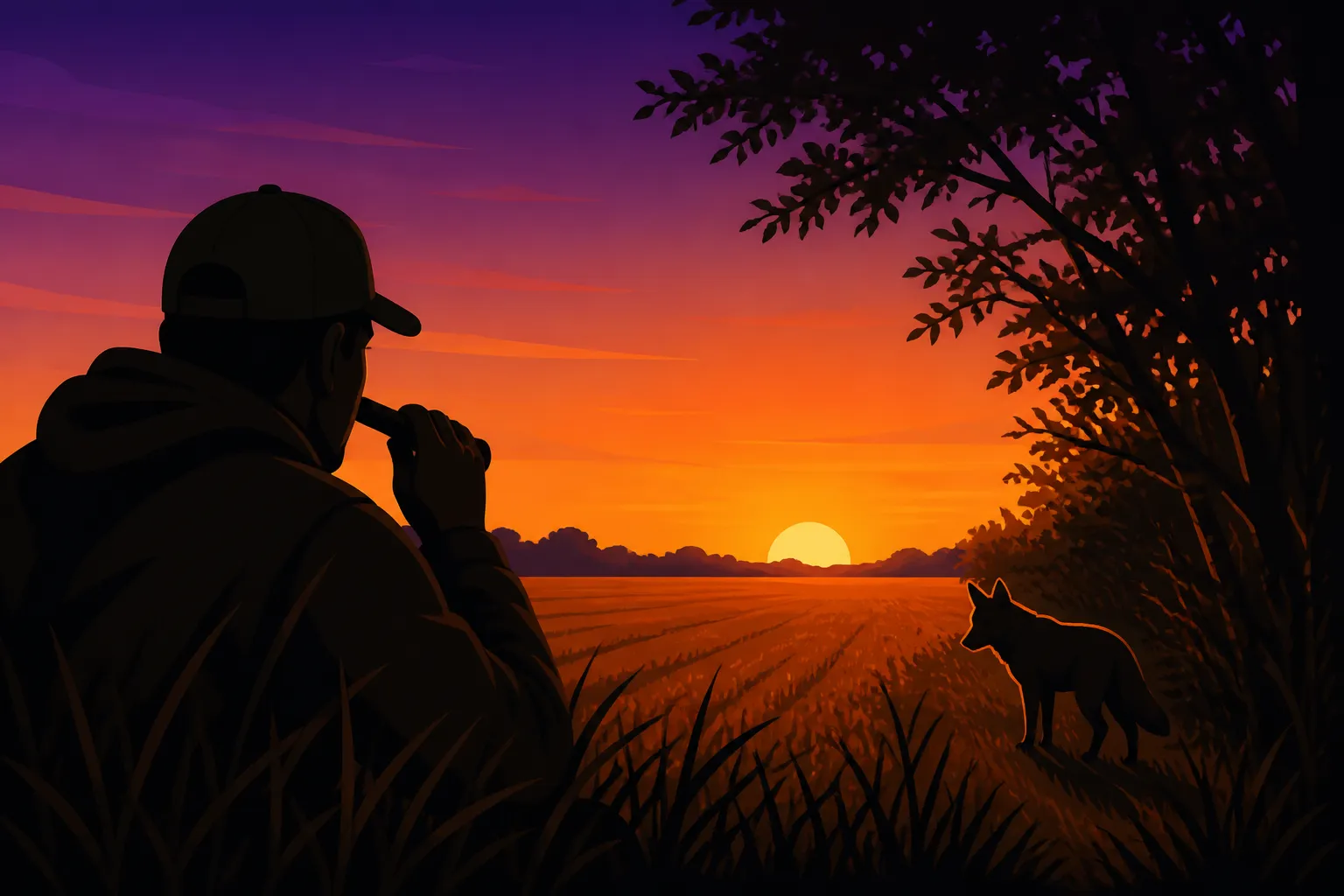
When the sun starts dipping below the horizon in Illinois, a whole new world of activity awakens in the rural landscape. Fencerows, those often-overlooked linear strips of cover, become bustling highways for predators transitioning from daytime hides to nighttime hunting grounds. Understanding who you're calling and why they use these features at dusk is the first step toward consistent success.
Primary Targets: Coyotes and Foxes
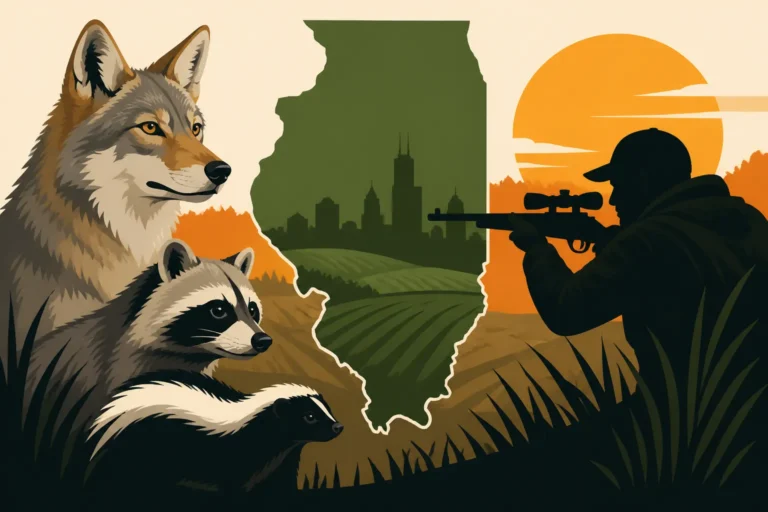
Illinois is home to a healthy population of both coyotes and red and gray foxes, all of whom are highly active during the twilight hours.
Coyotes, the ultimate opportunists, are incredibly adaptable. They're often most active during crepuscular periods – dawn and dusk – and throughout the night. A fencerow, to a coyote, isn't just a boundary; it's a travel corridor, a concealed path connecting bedding areas in woodlots to foraging grounds in crop fields. They'll use the low light of dusk to emerge from thicker cover, moving along these brushy lines with a predatory focus. They're looking for an easy meal, whether it's a rabbit, a vole, or even a deer fawn that's been separated from its mother. Their acute sense of smell and hearing make them formidable, and they learn quickly, so a predictable approach can lead to them giving you a wide berth. Many hunters have experienced the frustration of a coyote hanging up just out of range, having smelled or seen something that didn't quite add up.
Foxes, both red and gray, are a different challenge. Red foxes are often found in more open farmland areas, using fencerows for cover as they patrol for rodents, birds, and rabbits. They're generally shyer than coyotes and have smaller territories. Gray foxes, on the other hand, are more associated with timbered areas and heavy brush, and are notably more agile, even capable of climbing trees. Both species become highly active at dusk, capitalizing on the reduced light to ambush small prey that are also becoming more active. They're smaller targets, often more wary, and can be easily spooked by an aggressive call or a slight mistake in your approach. Their keen eyesight is particularly effective in low light, making stealth absolutely paramount when setting up on a fencerow at dusk.
Why Fencerows Are Prime Real Estate
Fencerows, whether they're old, overgrown lines of multiflora rose and hedge, or simply a ditch line with some scattered brush, offer an irresistible combination of features for predators, especially as daylight fades.
Firstly, they provide travel lanes and cover. Imagine being a coyote or fox crossing a wide-open cornfield or soybean stubble. You're exposed. A fencerow, however, offers a concealed path, allowing them to move undetected between different habitats. They can slip along these linear cover strips, using the brush, weeds, and small trees to break up their outline, making them incredibly hard for prey (and hunters) to spot. This concealment is vital at dusk when both predator and prey are becoming active, and the reduced light offers a strategic advantage.
Secondly, fencerows are often food-rich environments. These linear habitats frequently accumulate debris, offer nesting sites for small birds, and host thriving populations of rodents like voles and mice. Rabbits also love the dense cover of a fencerow, providing both shelter and readily available food. As dusk approaches, these smaller prey species become active, creating a natural buffet line for coyotes and foxes. The predators know this, and they'll actively patrol these lines, listening and sniffing for any sign of a meal.
Finally, fencerows can act as ambush points. The sporadic breaks, small pockets of thicker cover, or even a slight bend in the fencerow create perfect opportunities for a predator to lie in wait. They can use the cover to approach unsuspecting prey or to position themselves to investigate a call, giving them a sense of security while they assess the situation. The wind often swirls around these features, making it even harder for a predator to pinpoint your exact location by scent, though you should never rely on this as a primary defense. When scouting, pay close attention to the way the land connects these fencerows to larger blocks of timber or water sources, as these are often prime areas for predators to emerge. A good understanding of how to use tools like Reading Aerial Photos for Southern Illinois Deer can translate directly to scouting predator hot spots, too.
Gear and Setup for Effective Fencerow Calling
Hunting predators along Illinois fencerows at dusk isn't just about showing up with a call. It's about having the right tools for the job and setting yourself up for success the moment you step out of the truck. From the calls themselves to your personal concealment, every detail matters in these close-quarters encounters.
Essential Calling Equipment
When it comes to calls, you generally have two main choices: electronic callers or mouth calls. Both have their place, and many experienced hunters carry both.
Electronic Callers: These are incredibly versatile, offering a wide array of sounds from various distressed prey animals (rabbit, fawn, bird, rodent squeaks) to predator vocalizations (howls, barks, pup distress). The biggest advantage is that the sound source is away from you, drawing the predator's attention away from your exact location. This can be crucial when calling wary coyotes that might hang up. Many modern e-callers come with remote controls, allowing you to adjust volume and change sounds without moving. Some, like those from FOXPRO or Lucky Duck, are highly regarded for their sound quality and durability. The specific sounds you choose matter; a distressed cottontail or jackrabbit is a go-to, but don't hesitate to experiment with bird distress or even a fawn bleat, especially earlier in the season. Remember that Coyote Calling in Illinois Farm Country often requires a diverse sound library.
Mouth Calls: Hand calls, whether open reed, closed reed, or diaphragm calls, offer a level of realism and nuance that electronic calls sometimes lack. They allow you to add emotion, varying volume and pitch on the fly with incredible precision. The downside is that the sound originates directly from you, potentially drawing the predator's eyes directly to your position. However, for a more challenging hunt or a quick, stealthy setup, mouth calls are invaluable. They're lightweight, require no batteries, and can be used in any weather. Mastering a few key sounds, like a distressed rabbit or a rodent squeak, can be incredibly effective. Sometimes, that subtle, almost imperceptible squeak from a diaphragm call is all it takes to bring in a cautious fox that an electronic call might have overshot.
Consider using a decoy, especially a motion decoy. A small, fluttering feather or spinning tail decoy can provide that crucial visual distraction, convincing a hung-up predator that the distress call is real. Place it out in front of your shooting lane, 20-40 yards from your position, so the approaching animal focuses on the decoy rather than your hide.
Personal Gear and Safety Considerations
Your personal setup is just as critical as your calling device. Stealth, concealment, and safety are paramount when hunting predators at dusk.
Camouflage and Scent Control: In the low light of dusk, camo patterns that excel at breaking up your outline are key. Look for patterns with high contrast and good "open space" elements that blend with the natural shadows and sporadic cover of a fencerow. Avoid large, solid blocks of color. But even the best camo is useless if a coyote or fox smells you. Scent control is absolutely vital. Wear clean clothes, use scent-eliminating sprays, and store your hunting gear separately from anything with human odors. Approach your stand from a downwind direction, always.
Optics: Binoculars are indispensable for spotting approaching predators. In fading light, 8×42 or 10×42 binoculars with good light-gathering capabilities will help you pick up subtle movements. If legal and your budget allows, thermal or night vision optics can be game-changers for identifying animals in thick cover or after legal shooting light, particularly if you're pursuing Night Hunting Rules for Illinois Coyotes on private land where it's permitted. Always double-check current regulations for weapon-mounted lights or night vision.
Firearms/Archery: Choose a firearm appropriate for predators. For coyotes, popular choices include .223 Remington, .22-250 Remington, or 6mm ARC, offering flat trajectories and sufficient knockdown power. For foxes, smaller calibers like .17 HMR or .22 WMR are effective without excessive pelt damage. Shotguns loaded with buckshot can be devastating at closer ranges, especially if you anticipate brushy, close-in encounters common along fencerows. If using archery gear, a compound bow set up for deer hunting is usually sufficient, but ensure your arrows are tuned for accuracy and you can make ethical shots in low light. Always confirm legal firearms for hunting in Illinois and ensure you understand shot placement in low light conditions.
Wind Awareness: I can't stress this enough: always, always play the wind. Predators, especially coyotes, will circle downwind to scent-check the source of a call. Set up so the prevailing wind blows from the predator's likely approach direction towards you, but also consider thermals. At dusk, thermals often drop, pulling scent downwards and along the terrain. Position yourself so any thermals carry your scent away from where you expect animals to appear. Using a wind checker will be your best friend.
Calling Strategies for Illinois Fencerows at Dusk
Successfully calling predators from Illinois fencerows at dusk is a delicate dance between stealth, timing, and intelligent calling. It's not just about making noise; it's about creating a believable scenario that draws a wary animal into shooting range.
Approaching the Stand and Setup
The approach to your calling location is perhaps the most critical part of the entire hunt. Many hunts are won or lost before a single call is made.
Wind Direction is Paramount: I've said it before, and I'll say it again: always, always mind the wind. Your scent is your biggest enemy. Before you even leave the truck, check the wind direction using a reliable weather app or a simple wind checker. Plan your approach route to ensure you're walking into the wind, or at least crosswind, to prevent your scent from blowing into the area you intend to call. As you get closer to your setup, use a small bottle of powder or a milkweed pod to confirm subtle air currents. Remember that as the sun sets, thermals often begin to drop, causing air to flow downhill or into low-lying areas. This can drastically change the effective wind direction, even if the general forecast says otherwise.
Stealthy Approach: Move slowly and deliberately. Every rustle, every crunch of a leaf, can alert a nearby predator. Avoid breaking the skyline or silhouetting yourself against the fading light. Use natural cover to conceal your movement. Walk with your knees bent, placing your feet softly. If you're hunting along a fencerow that borders a field, try to stay low, below the level of the field, or use any available ditch lines or natural depressions. Pay attention to your shadow; as the sun sets, shadows lengthen dramatically, and you don't want yours waving across the field you're about to call.
Setting Up for Visibility and Shooting Lanes: Once you've chosen your calling spot, find a position that offers good visibility into the field and along the fencerow, but also provides concealment for you. A thick brush pile, the base of a large tree, or even a standing crop row can work. Ensure you have clear shooting lanes for both left and right, and especially out in front. Many predators will approach cautiously, often circling downwind, so anticipating their likely path is vital. Don't be afraid to clear a few small twigs or branches before you start calling, but do it quietly. For ideal success, setting up on a Brushy Fence Row at Dusk requires careful attention to these details.
Considering the Sun's Position: At dusk, the sun can be directly in your eyes or, more ideally, at your back, blinding any approaching animal. Try to position yourself so the sun is behind you, making it harder for predators to see you clearly as they look towards the call. This also illuminates the approaching animal, giving you a better view for identification and shot placement.
The Calling Sequence
Once you're set up, hidden, and have the wind in your favor, it's time to make some noise. But it's not just about blasting calls.
Start Soft, Gradually Increase Volume: Begin your calling sequence with soft, subtle distress calls. Imagine a lone rabbit or mouse caught off guard. This softer approach can pique the interest of close-by, wary predators without spooking them with an immediate, loud blast. After a few minutes, if nothing responds, gradually increase the volume. Mimic a more intense struggle. This progression creates a sense of urgency and draws in animals from further away.
Distressed Prey Sounds: Distressed rabbit calls are a perennial favorite and work well for both coyotes and foxes. Vary the pitch and cadence to sound natural – a frantic cry, followed by a series of whimpers, then back to a more intense squeal. Don't be afraid to mix it up. Bird distress calls, particularly those of a fledgling, can be deadly, especially if you're targeting foxes. Fawn bleats can be incredibly effective early in the season when fawns are still small and vulnerable. Experiment with a few different sounds during a stand to see what elicits a response.
Adding Predator Vocalizations: While distress calls are your bread and butter, adding coyote howls or barks after an initial prey call can sometimes seal the deal, especially for coyotes. A lone howl or two can serve as a challenge to an alpha male or pique the curiosity of a subordinate. However, use these sparingly and strategically. Too much predator vocalization can also warn off more timid animals or put smart coyotes on edge. Save howls for when you've exhausted distress calls or suspect a coyote is just out of range and needs a nudge to investigate.
Patience and Scanning: Predator calling is a waiting game. Typically, a calling stand should last 15-20 minutes, sometimes longer. The first few minutes are often the most productive, but don't give up early. After an initial series of calls, go silent for several minutes. Predators often move in quietly and slowly. During these silent periods, constantly scan your surroundings, paying particular attention to the fencerow, field edges, and any breaks in cover. Use your binoculars to pick apart distant shadows. Your eyes are your most important tool during this phase.
Typical Call Duration: Most callers recommend a sequence of 30-60 seconds of calling, followed by 3-5 minutes of silence. Repeat this pattern for the duration of your stand. However, be flexible. If you get a response, adjust your calls accordingly. If an animal is approaching rapidly, you might go silent to avoid spooking it or offer soft, enticing whimpers. If it hangs up, a single, sharp distress squeak or a subtle howl might tempt it closer.
Advanced Tips and Overcoming Challenges
Calling predators at dusk along Illinois fencerows isn't always straightforward. Smart, educated animals, coupled with environmental variables, can throw a wrench into even the best-laid plans. Knowing how to adapt and read the subtle cues of the landscape can significantly increase your success.
Reading the Landscape for Success
Understanding the nuances of the terrain beyond just the fencerow itself is key to consistent predator calling. Fencerows rarely exist in isolation; they connect different habitat types that predators rely on.
Connecting Fencerows to Other Habitats: A fencerow's value often increases when it connects to, or runs alongside, other prime predator habitat. Look for fencerows that lead into or out of dense woodlots, providing heavy cover for bedding. Check for fencerows adjacent to CRP fields, which offer excellent rodent and rabbit habitat. Creek bottoms, even dry ones, often have dense vegetation and serve as natural travel corridors, and a fencerow leading to or from one of these can be a goldmine. Using a mapping platform, maybe even the GoHunt app, helps you visualize these travel corridors and anticipate where a predator might emerge or how it might approach. Pay attention to how the fencerows intersect these features, as these intersections create natural pinch points. These are areas where animals are funneled through a smaller opening, making them ideal places to set up. Knowing how to scout for these areas is as important as any call you make. For instance, the same principles for Hunting a Funnel Between Two Woodlots apply when you're thinking about predator travel.
Identifying Pinch Points and Crossings: Predators, like any wild animal, will take the path of least resistance. Look for natural pinch points along fencerows where the cover narrows, or where a drain tile or small bridge forces animals into a predictable path. Also, identify areas where animals might cross an open field to access another block of cover. These crossing points, especially at dusk, are excellent places to set up an ambush. Look for worn trails or tracks in the mud or snow, indicating regular animal movement.
Impact of Recent Harvests on Cover: Illinois is agricultural country, and farming practices drastically alter the landscape. A standing cornfield provides incredible cover for coyotes, but once harvested, it becomes open stubble. A freshly cut soybean field offers little concealment. Pay attention to harvest schedules. If a field adjacent to your fencerow has just been cut, predators might shift their travel patterns to rely even more heavily on the remaining fencerow cover. Conversely, if corn has just been harvested, the newly exposed grain can attract rodents, in turn drawing predators out into the field more, potentially offering better sight lines for you. An area like a Clear-Cut Regrowth Edge can offer similar dynamics.
Dealing with Educated Predators
Illinois predators, especially in areas with significant hunting pressure, become "educated" quickly. They learn what calls mean, what a human silhouette looks like, and what smells to avoid. This means you need to evolve your tactics.
Varying Call Types and Sequences: Don't get stuck in a rut using the same distressed rabbit call every time. Change it up. If a particular sound isn't working, try a different distress call – a bird, a fawn, or even a rodent squeak. Many callers swear by using different types of calls (e.g., electronic then mouth call) within a single stand, or even between different stands. Vary your sequence, too. Instead of a typical 30-second call, 3-minute silence, try shorter bursts, longer silences, or even an erratic, panicked sequence. The goal is to present something new and unexpected. This is where a good resource for Predator Calling Southern Illinois Ridgelines might offer insights, even if the terrain is different, as the core principles of varying your approach remain.
Less Aggressive Calling: Sometimes, less is more. For highly pressured or educated predators, a loud, aggressive call might sound too artificial or too much like a trap. Try starting extremely soft, almost imperceptible, only gradually increasing volume if there's no response. A soft, pleading series of squeaks from a mouth call can often entice a cautious fox or coyote that has ignored louder electronic calls. Sometimes, one subtle whimper is all it takes to make them curious enough to come investigate.
Longer Silent Periods: Educated predators might approach very slowly, taking their time to assess the situation. If you're constantly calling, you might be calling over them as they're trying to sneak in. Incorporate longer silent periods into your sequence – 5, 7, or even 10 minutes of complete quiet, broken only by constant scanning. This gives cautious animals time to commit and move into range. Many a coyote has been spotted slipping in during a long quiet phase. Understanding the Hunting Pressure on Illinois Public Land is key here; highly pressured areas almost always require more patience and subtlety.
The Importance of Post-Shot Protocol
The shot isn't the end of the hunt; it's the beginning of the recovery. Especially at dusk, proper post-shot protocol is vital.
Waiting Before Recovery: If you make a shot and the animal doesn't drop immediately, resist the urge to rush in. This is even more crucial in low light. A wounded animal might run a short distance and then bed down, especially if it feels unpursued. Give it time – 15 to 30 minutes for a gut shot, or even longer for a marginal hit. This allows the animal to expire or stiffen, making recovery much easier.
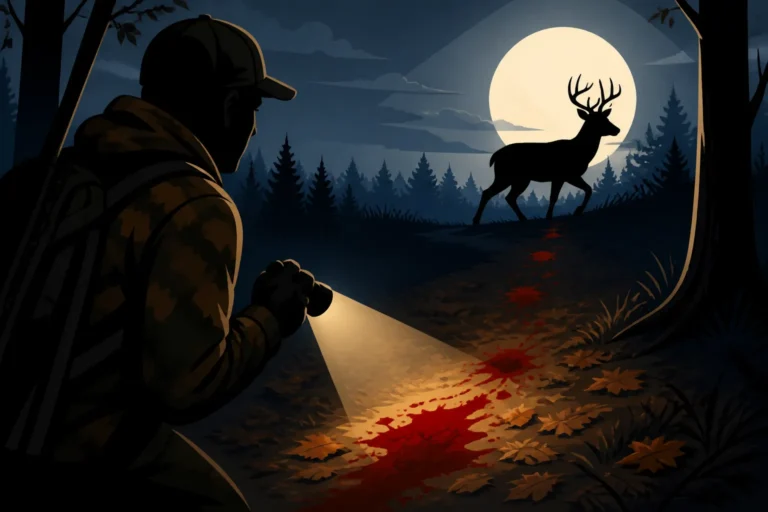
Tracking Tips, Especially in Low Light: Before you leave your stand, mark the exact spot where the animal was standing when you shot, and the direction it ran. Use a landmark, or even drop a piece of tape or a glow stick. When tracking, move slowly and look for blood, disturbed grass, or broken twigs. If you lose the trail, spread out and search in ever-widening circles. A good tracking light (headlamp with a red or green filter can preserve your night vision) is essential. If it's too dark to track effectively, mark the last known blood trail and come back at first light. Remember, Blood Trailing After Dark in Illinois can be challenging but rewarding if done correctly.
Safety When Approaching Downed Animals: Always approach a downed predator with extreme caution. Coyotes and foxes can be surprisingly resilient and can inflict severe bites even when seemingly incapacitated. Approach from behind, or from a safe angle, with your firearm ready for a follow-up shot. Never assume an animal is dead. Give it a gentle poke with a long stick or the barrel of your gun (from a safe distance) to ensure it's expired before you handle it.
Predator Calling Table: Popular Calls and Their Uses
| Call Type | Best For | Primary Sounds | Pros | Cons | Dusk Relevance |
|---|---|---|---|---|---|
| Distress Calls | Coyotes, Foxes | Rabbit, Fawn, Rodent | Universal appeal, triggers instinct | Can sound "canned" if overused (e-caller) | Draws hungry predators actively seeking food |
| Vocalizations | Coyotes | Howls, Barks, B/D Chirps | Challenges dominant males, piques curiosity | Can spook wary animals or dominant females | Can be used as a follow-up to check for distant coyotes |
| Bird Distress | Foxes, Coyotes | Crow, Blue Jay, Fledgling | Excellent for foxes, adds realism | Less common choice, may attract non-targets | Mimics common dusk activity, draws curiosity |
| Prey Movement | All Predators | Squeaker, Chirper | Mimics subtle prey, good for close-in | Limited range, requires good stealth | Excellent for close-range "stop-and-shoot" |
Disclaimer
Hunting is an inherently dangerous activity. Always prioritize safety, understand and follow all local, state, and federal hunting regulations, and be familiar with your equipment. This guide provides general information and recommendations, but individual situations may vary. Always verify current Illinois Department of Natural Resources (IDNR) regulations before heading afield, especially concerning night hunting rules or specific weapon requirements.