Predator Hunting in Illinois
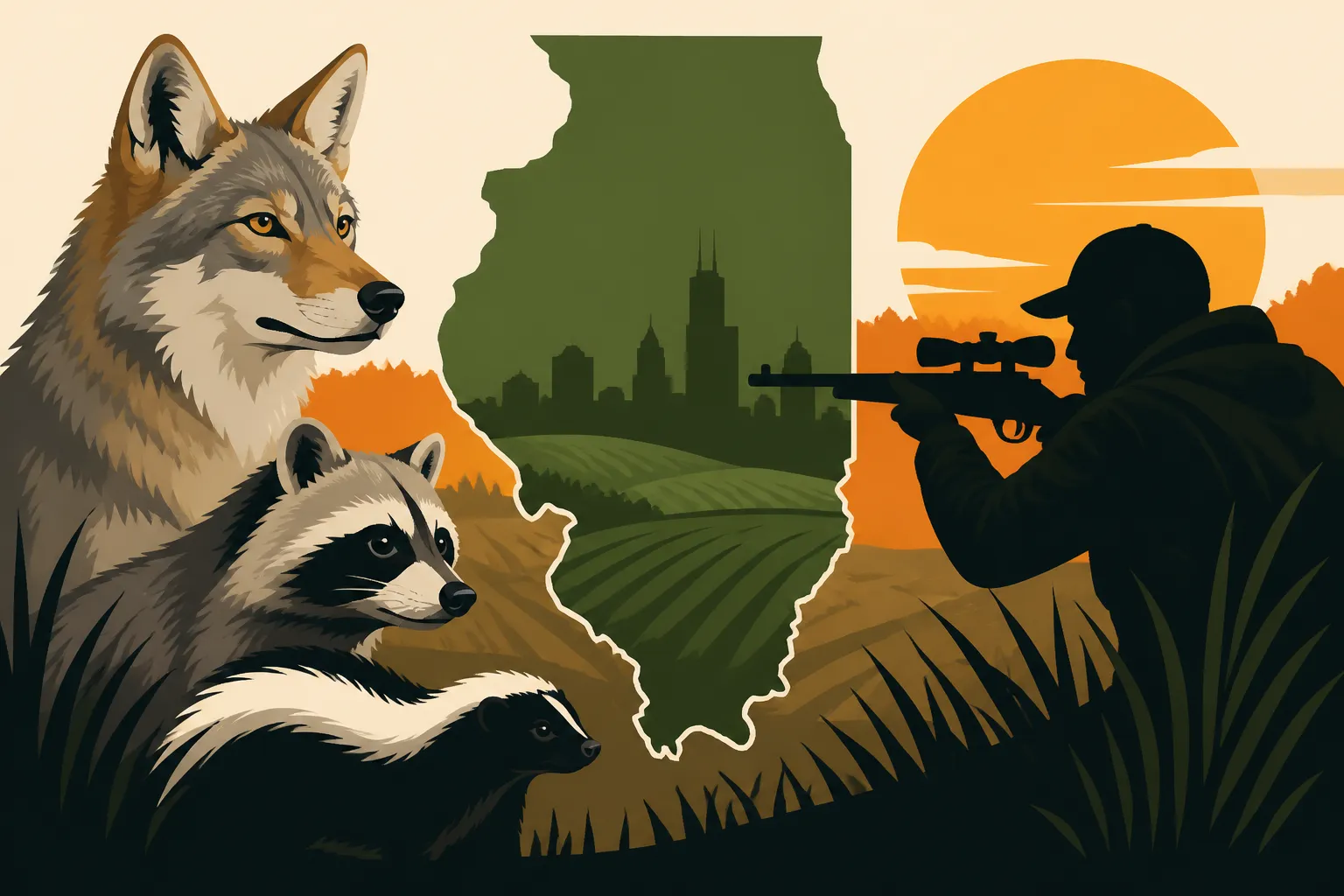
Predator hunting in Illinois can feel like a real chess match, especially with how smart and elusive our local coyotes and foxes can be. It’s not just about pulling a trigger; it’s about understanding animal behavior, the landscape, and the ever-changing regulations. If you've ever felt overwhelmed trying to piece together all the information needed to successfully hunt predators in the Land of Lincoln, you're not alone. This comprehensive guide is designed to cut through the confusion, offering a deep dive into everything you need to know to become a more effective and ethical predator hunter.
Understanding Illinois's Common Predator Species
Illinois is home to a diverse array of predators, each offering a unique challenge and requiring specific hunting strategies. While some are common across the state, others have more localized populations. Knowing your quarry is the first step toward success.
Coyote: The Primary Target
When most folks talk about predator hunting in Illinois, the coyote is usually the first animal that comes to mind. These highly adaptable canids have thrived in our varied landscapes, from the dense timber of Southern Illinois to the vast agricultural fields of the central and northern parts of the state. They’re intelligent, opportunistic hunters, and their numbers seem to be doing quite well across the state. Coyotes play a crucial role in managing populations of small game animals, but they can also pose threats to livestock and domestic pets, especially in rural-urban interfaces.
Hunting coyotes presents a unique thrill. Their keen senses of smell, sight, and hearing make them incredibly challenging to outsmart. You might encounter them as solitary hunters, but often they operate in small family groups, making a successful stand even more rewarding. Understanding their daily routines, travel corridors, and preferred hunting grounds—which can shift dramatically with food availability and human pressure—is key to consistent success.
For many hunters, the appeal of coyotes lies in the year-round hunting opportunity they provide, often extending the hunting season well beyond the traditional deer and turkey windows. Targeting them demands precision, patience, and a deep understanding of calling techniques that mimic distress sounds or other coyote vocalizations. Their resilience and intelligence mean that you'll rarely find two hunts that play out exactly the same way.
Red and Gray Foxes
Beyond coyotes, Illinois is also home to both red and gray foxes, offering additional opportunities for the dedicated predator hunter. Red foxes are perhaps the most iconic, with their rusty-red coats, white-tipped tails, and black "stockings." They are primarily found in open country, including farmlands, grasslands, and mixed woodland edges, often preferring areas with a mosaic of habitat types. Like coyotes, they are opportunistic, feeding on rodents, rabbits, birds, and even fruits and insects.
Gray foxes, on the other hand, are smaller and typically prefer denser, timbered habitats. They have a grizzled gray coat, a black-tipped tail, and often a reddish-brown coloration on their sides, neck, and legs. What makes the gray fox truly unique among North American canids is its ability to climb trees, a remarkable adaptation that allows them to escape predators or access den sites. Hunting both species requires a more subtle approach than coyote hunting, as they can be even warier and less prone to charging in blindly. Their smaller size also demands a different caliber choice for clean harvests.
While not as abundant as coyotes, both fox species provide exciting hunting experiences. Red foxes are masters of stealth, often circling downwind to pinpoint the source of a call, while gray foxes utilize thick cover to their advantage. Recognizing the subtle differences in their behavior and preferred habitats is critical. A setup that works perfectly for a red fox might be completely ineffective for a gray fox hidden in a tangled brush pile.
Illinois Bobcat Opportunities
The bobcat is another fascinating predator that has made a remarkable comeback in Illinois. Once scarce, their populations have rebounded significantly, leading to regulated hunting and trapping seasons in specific parts of the state. These beautiful, secretive felines are elusive and primarily nocturnal or crepuscular (active at dawn and dusk). They prefer dense cover, such as thick timber, brushy areas, and rocky outcrops, particularly in Southern and Western Illinois.
Hunting bobcats is not like hunting other predators. It requires immense patience, careful scouting, and often a bit of luck. They respond to different calling sequences, typically bird or rabbit distress calls, but often approach with extreme caution. The season is short, the permits are limited, and success rates are generally lower than for coyotes or foxes, making a harvested bobcat a truly prized trophy. Hunters must check the Illinois Department of Natural Resources (IDNR) regulations meticulously for open zones, permit applications, and reporting requirements, as these can change annually.
Their secretive nature means that many hunters go years without ever seeing one in the wild, let alone harvesting one. When considering Illinois's Recovering Bobcat Population, it's important to understand the conservation efforts that have allowed this species to thrive again. Ethical hunting plays a role in their continued management, ensuring healthy populations. Due to their protected status and specific season, securing a bobcat permit and successfully harvesting one is often considered the pinnacle of predator hunting in Illinois.
Regulations and Seasons for Illinois Predators
Navigating the rules and seasons for predator hunting in Illinois can be a bit like solving a puzzle, especially with different species having different requirements. It’s absolutely critical to stay informed, as regulations can shift, and ignorance is never an excuse for non-compliance.
General Hunting Regulations
Before you even think about hitting the woods, every hunter in Illinois needs to ensure they have the proper licenses. This typically means a valid Illinois hunting license and, depending on the species or method, potentially a Habitat Stamp or specific permits. You can purchase these through the Illinois DNR's online portal or at various vendors across the state. It’s always a good idea to carry physical or digital proof of your licenses and permits whenever you're afield. For a full breakdown, check out Illinois Hunting Licenses and What They Cost.
Beyond licensing, blaze orange requirements are often on the minds of predator hunters, especially when other seasons overlap. While predator hunting generally doesn't require blaze orange during dedicated predator seasons, if you're hunting predators during an open firearm deer season, for example, you absolutely must comply with the blaze orange mandates. Always double-check the current hunting digest. Another crucial aspect is landowner permission. If you're hunting private land, written permission from the landowner is highly recommended to avoid any legal issues, even if you know the person well. Understanding Illinois Trespass and Permission Law is non-negotiable before venturing onto private property.
The definition of "legal weapons" also needs attention. While most common hunting calibers are permitted for coyotes and foxes, there might be specific restrictions in certain areas or during certain seasons, especially regarding shotguns, rifles, and archery equipment. For instance, some public lands may have specific rules that differ from statewide regulations. Always consult the IDNR hunting digest for the most current information, which is updated annually and available on their website.
Specific Species Seasons and Bag Limits
This is where things can get a bit nuanced. Coyotes are truly the workhorse of Illinois predator hunting, with a remarkably long and often year-round season in many areas. Historically, they've been classified as an unprotected species, though there are specific hunting methods and restrictions, particularly regarding night hunting. There are no statewide bag limits on coyotes, allowing hunters flexibility.
Foxes (red and gray) generally have a more defined season, typically running from early November through late January or early February. Like coyotes, there isn't usually a statewide bag limit, but checking the annual digest is always prudent. The most restrictive seasons belong to bobcats. Illinois has a limited bobcat hunting season, usually in November and December, and only in certain zones. Permits are highly restricted and acquired through a lottery system, with very strict reporting requirements. Hunters are limited to one bobcat per permit, and there are specific tagging procedures to follow immediately after harvest.
| Species | Hunting Season (Approximate) | Night Hunting | Bag Limit | Notes |
|---|---|---|---|---|
| Coyote | Year-round | Yes | None | Check local ordinances & weapon rules |
| Red Fox | Nov – Jan/Feb | Yes | None | Specific start/end dates vary slightly |
| Gray Fox | Nov – Jan/Feb | Yes | None | Specific start/end dates vary slightly |
| Bobcat | Nov – Dec (Limited Zones) | No | 1 (Permit) | Lottery permit, mandatory reporting/tagging |
| Raccoon/Opossum | Nov – Jan | Yes | None | Often hunted with dogs |
| Skunk | Unprotected | Yes | None | No closed season, no bag limit |
Note: Always verify current season dates and regulations with the official Illinois DNR hunting digest before hunting.
Night Hunting Rules
Night hunting for predators is a hugely popular and effective method in Illinois, but it comes with a strict set of rules that you absolutely must understand. Generally, coyotes, foxes, raccoon, opossum, and skunk can be hunted at night. However, bobcats are explicitly excluded from night hunting. The use of artificial lights, including spotlights and thermal imaging devices, is typically permitted when hunting these species at night, but there are important nuances. You cannot use any artificial light to cast a beam onto a vehicle, residence, or livestock unless you have explicit permission.
Crucially, some public lands may have outright bans on night hunting, or specific restrictions on the types of lights or weapons allowed after dark. Always check with the specific site superintendent or the IDNR website for detailed rules for the area you plan to hunt. Night Hunting Rules for Illinois Coyotes covers this in much more detail, but a key takeaway is safety: be absolutely certain of your target and what lies beyond it, as visibility is severely limited. Using thermal or night vision requires a clear understanding of the target animal and the surroundings to ensure a safe shot.
Another critical point for night hunting is communication if hunting with a partner. Always know where your hunting companions are and use clear, agreed-upon signals. The thrill of a coyote responding to a call under the cover of darkness is unmatched, but it demands an even higher level of responsibility and adherence to safety protocols. Make sure your equipment is in top shape, especially your lights and batteries, as failure can quickly turn a fun hunt into a dangerous situation.
Calling and Decoy Strategies for Illinois Predators
Calling predators is an art form, a blend of understanding animal behavior, mastering different vocalizations, and knowing how to set up your stand effectively. It's often the most exciting part of predator hunting, as it brings the hunt to you.
Electronic Calls vs. Mouth Calls
The debate between electronic and mouth calls is a common one among predator hunters. Electronic calls, like those from Foxpro or ICOtec, offer a vast library of sounds, from various distress cries (rabbit, bird, fawn) to coyote howls, barks, and pup distress. They allow you to place the sound source away from your position, drawing the predator's attention to a different spot, which can be a huge advantage. They also provide consistent volume and tone, which can be hard to replicate with a mouth call. For beginners, an e-caller can simplify the process, letting them focus on scouting and setup. For advanced hunters, they allow for complex sequences and a broader range of sounds to mimic intricate scenarios.
Mouth calls, on the other hand, require more skill and practice but offer unparalleled flexibility in sound manipulation. You can change volume, tone, and cadence instantly, making your calling sequence incredibly dynamic and realistic. There’s something incredibly satisfying about bringing in a coyote purely with your own breath. Popular mouth calls include closed-reed and open-reed designs, each producing different sound qualities. Many seasoned hunters will carry both: an e-caller for initial sequences and distance, and a mouth call for subtle, close-range adjustments or when an e-caller battery dies. Mastering both types gives you the ultimate versatility in the field.
Regardless of the call type, variety is key. Predators, especially coyotes, can become call-shy in heavily hunted areas. Don't stick to just one rabbit distress call. Experiment with different prey animals, pup distress, or even territorial howls. The goal is to pique their curiosity or tap into their predatory instinct. For specific guidance, learning Coyote Calling in Illinois Farm Country or Predator Calling Southern Illinois Ridgelines will offer insights into tailoring your approach to the local terrain and animal behavior.
Decoy Usage for Coyotes and Foxes
Decoys can be a game-changer in predator hunting, especially when combined with effective calling. Their primary purpose is to give the incoming predator something visual to focus on, distracting them from your position and often drawing them closer for a better shot. For coyotes and foxes, popular decoys include realistic fur or feather flappers, often battery-operated, that mimic a struggling animal. Some hunters also use simple bits of fur on a stick or a full-body fox decoy to simulate a competing predator.
The placement of your decoy is critical. You want it far enough from your position (20-50 yards) to draw the predator's attention, but close enough for them to see it clearly. Position it slightly upwind or crosswind from your expected shot lane, so the animal is looking towards the decoy, not directly at you. Movement is key with decoys; the slightest twitch or flutter can make a huge difference in convincing a wary predator that what they're seeing and hearing is real. Many electronic calls come with integrated decoys or have ports for external ones.
While decoys are highly effective, they're not always necessary, and sometimes can even be counterproductive if a predator has learned to associate them with danger. In high-pressure areas, a subtle approach with just calling might be better. However, for most situations, especially during the breeding season when coyotes are territorial, or when attempting to draw in a curious fox, a well-placed, moving decoy significantly increases your chances of success by making your setup appear more realistic and compelling.
Stand Setup and Wind Awareness
No matter how good your calling or how realistic your decoy, a poor stand setup will spoil your hunt. The wind is perhaps the single most critical factor in predator hunting. Coyotes, foxes, and bobcats all have an incredible sense of smell, and they will circle downwind to scent-check the source of the call. Therefore, you must set up with the wind in your favor, typically blowing from the predator's expected approach direction towards you, or slightly quartering. This might mean setting up with the wind directly in your face or a crosswind that brings their approach into your shooting lane before they can get downwind of you.
Your position should also offer good visibility of the approach lanes while providing adequate concealment. Think about what a predator will see as it comes in. You want a clear shooting lane, but you don't want to be silhouetted against the sky. Sitting against a dense tree, a rock outcrop, or even a well-brushed-in ground blind can break up your outline. Remember to scan not just directly in front of you, but also to your sides and behind, as many wily predators will attempt to circle. For example, if you're in the southern parts of the state, understanding Wind and Thermals on a Southern Illinois Ridge can be invaluable, as terrain dictates air currents.
Always have a 360-degree awareness of your surroundings. Before you even sit down, mentally map out your shooting lanes and areas where a predator might approach undetected. Consider a secondary shooting position if the wind shifts or an animal gets past your primary field of view. A good stand setup minimizes your profile, maximizes your visibility of critical approach zones, and, most importantly, keeps your scent out of the predator's nose until it's too late for them to react.
Essential Equipment for Predator Hunting
Just like any specialized hunting pursuit, predator hunting benefits from the right gear. From your choice of firearm to your optics and camouflage, having the right tools can significantly increase your success rate and make your time in the field more comfortable and effective.
Firearm and Ammunition Choices
The most common firearms for predator hunting are rifles chambered in fast, flat-shooting calibers. For coyotes and foxes, anything from a .17 HMR or .22 WMR for smaller foxes, up to a .223 Remington (5.56 NATO), .22-250 Remington, or even a .204 Ruger, are popular choices. These calibers offer excellent velocity, minimal recoil, and the ability to make precise shots on relatively small targets, often at extended ranges. Ammunition selection is crucial too: opt for bullet designs that are designed for rapid expansion and energy transfer, minimizing pass-throughs and ensuring a humane kill, especially important for fur-friendly harvesting if that's your goal.
Shotguns are also very effective, especially in thick cover or when predators are coming in fast and close. A 12-gauge or 20-gauge shotgun loaded with coyote-specific loads (like #4 buckshot or T-shot) can be devastating at ranges up to 40-50 yards. Some hunters prefer shotguns during night hunting or when hunting with a partner, as they can be quicker to shoulder and acquire a moving target. The choice between a rifle and a shotgun often comes down to the terrain you’re hunting, the expected shot distance, and personal preference.
Remember to consider ethical shot placement. Aim for the vital zone behind the shoulder to ensure a quick, humane harvest. Practice with your chosen firearm and ammunition at various distances, including off-hand shots, as quick reactions are often necessary when a coyote suddenly appears. And always confirm that your chosen firearm and ammunition comply with all Illinois regulations, especially if hunting on specific public lands or during certain seasons.
Optics and Lighting for Day and Night
Good optics are non-negotiable for predator hunting. For daytime hunts, a quality rifle scope with variable magnification (e.g., 3-9x, 4-12x, or 4-16x) is ideal, allowing you to quickly acquire targets at different ranges. Clear glass is paramount for identifying your target quickly and accurately. Binoculars (8×42 or 10×42) are also essential for spotting distant animals, particularly when scouting or scanning an open field. They save you from constantly raising your rifle, which can spook wary animals.
Night hunting brings a whole new set of optical and lighting needs. Traditional spotlights, handheld or weapon-mounted, are commonly used, often with red or green filters to minimize spooking animals. Many modern predator hunters, however, are leveraging advanced technology. Thermal imaging scopes and binoculars have revolutionized night hunting, allowing you to detect the heat signature of an animal in complete darkness, through fog, or even light brush. Night vision devices (NVGs) also provide an advantage, amplifying ambient light to create a visible image. While these technologies represent a significant investment, they dramatically increase effectiveness and safety during nocturnal pursuits.
When using any form of lighting or advanced optics, safety remains the top priority. Always know what's beyond your target. With thermal and NVGs, it can be even harder to discern details of the background, so responsible shot angles and backstops are even more critical. Many night hunters also carry a powerful handheld flashlight for blood trailing or navigating out of the woods, in addition to their weapon-mounted lights or thermal/NVG devices.
Camouflage and Scent Control
Predators have incredibly sharp eyesight, especially coyotes and foxes. Effective camouflage is key to breaking up your human silhouette and blending into your surroundings. Earthy tones and patterns that mimic the local vegetation—whether it's open farmland stubble or dense timber—are best. Don't forget to cover exposed skin with gloves and a face mask or paint, as a human face stands out like a beacon. The pattern should match the general environment and change with the seasons; a green pattern in winter wheat might be just as bad as a snow camo in dry cornfields.
Scent control is arguably even more important than visual camouflage, especially for canids with their phenomenal noses. Any unnatural human scent – from laundry detergent to coffee breath – can alert a predator long before it comes into view. Start with scent-free laundry detergent for your hunting clothes. Use scent-eliminating sprays on your clothing and gear, and try to avoid strong-smelling foods or colognes before a hunt. Playing the wind correctly, as discussed earlier, is your ultimate scent control strategy, but minimizing your scent footprint in every way possible will only increase your chances.
Consider wearing rubber boots to avoid leaving human scent trails, especially when walking into your stand. Scent-absorbing layers can also help, although they are not a substitute for wind awareness. The more you can minimize your presence, both visually and olfactorily, the more likely a wary predator is to commit to your call and decoy setup. Remember, these animals survive by being paranoid, so every little bit of advantage you can gain will contribute to a more successful hunt.
Locating and Scouting Predator Hotspots
Finding where the predators live and travel is half the battle. Successful predator hunting isn't just about calling; it's about being in the right place at the right time. Illinois's diverse landscapes offer unique challenges and opportunities.
Reading the Landscape: Farm Fields to Timber
Illinois is a patchwork of agricultural fields, river bottoms, timber blocks, and rolling hills. Each landscape type presents different predator concentrations and travel patterns. In central and northern Illinois, vast farm fields dominate. Here, coyotes and foxes will often use fencerows, drainages, isolated woodlots, and field edges as travel corridors and hunting grounds. These linear features offer cover and often funnel game, making them prime spots for setting up. Learning Hunting Central Illinois Farmland Deer can give you insights into similar funneling concepts useful for coyotes. After crops are harvested, the remaining stubble and isolated cover can become critical habitat.
In southern Illinois, particularly in areas like the Shawnee National Forest, the landscape transitions to more rugged, timbered hills and deep creek bottoms. Coyotes and bobcats here will utilize ridge lines, saddles, thick clear-cuts, and river bottom funnels. Access to water and dense bedding cover is crucial. Scouting these areas means looking for natural pinch points where animals are forced to travel, such as a narrow neck between two hills or a crossing point on a creek. Hunting Shawnee Hills Ridgelines is a great resource for understanding how terrain influences animal movement in these regions.
River valleys, such as the Illinois River Valley and Mississippi River bottomlands, offer a mix of timber, marsh, and agricultural fields. These areas are incredibly rich in small game, attracting a high density of predators. Look for travel corridors along the riverbanks, sloughs, and patches of timber adjacent to fields. Understanding how predators move through these diverse environments is crucial. Sometimes, a predator will cross an open field quickly, while at other times it will hug a treeline for cover.
Sign Scouting: Tracks, Scat, and Trails
Just like with deer and other game, predator sign can tell you a lot about their presence and movements. Tracks are one of the most reliable indicators. Coyote tracks are typically more oval and symmetrical than domestic dog tracks, with visible claw marks and a clear "X" pattern between the heel pad and toes. Fox tracks are smaller, more delicate, and often appear in a straight line, as they tend to walk with a more precise gait. Look for these in mud, snow, or dusty trails. Learning to read Illinois Mud for Fresh Deer Movement can easily be applied to predator tracking.
Scat (feces) can also reveal what predators are eating and where they are spending time. Coyote scat often contains hair, bone fragments, and berries or seeds, depending on the season. It's usually rope-like and tapered at both ends. Fox scat is smaller and often more segmented. Finding fresh scat along trails or at crossroads indicates recent activity. Rubs or territorial markings are less common than with deer, but keen observers might notice scratched areas or raised patches of ground where predators have scent marked.
Dedicated scouting, even in the off-season, pays huge dividends. Use apps like GoHunt, which can help you identify potential travel corridors, pinch points, and cover based on aerial and topographical maps. Look for clusters of sign, not just isolated instances. If you find multiple tracks or scat piles along a game trail, you've likely found a recurring travel route. Pay attention to how the wind might typically blow through these areas, and start visualizing potential stand locations.
Public vs. Private Land Strategies
Hunting predators on public land in Illinois can be challenging due to increased pressure, but it's certainly possible. Public lands like State Fish and Wildlife Areas, State Forests, and portions of the Shawnee National Forest offer thousands of acres. On public land, you'll need to work harder to find less-pressured areas. This often means walking farther from access points, or hunting areas that are difficult to reach. Look for those hidden pockets of cover, thickets, or creek drainages that other hunters might overlook. For specific areas, consult Public Hunting Land in Illinois.
When hunting public land, it's also important to be aware of other hunters, especially during overlapping seasons. Blaze orange is paramount during deer seasons if you're not specifically exempted. Scouting before the season can help you identify prime locations and avoid crowded areas. Remember that rules for things like ground blinds, trail cameras, and vehicle access can vary significantly by public land site, so always check site-specific regulations.
Private land, if you can secure access, often offers less pressure and higher predator densities. Asking for permission from landowners is a time-honored tradition in Illinois. Farmers are often open to predator hunting, especially coyotes, due to livestock concerns or perceived impacts on deer and turkey populations. When asking for permission, be polite, respectful, and offer to share your contact information. Be prepared for rejections, but keep trying! Building relationships with landowners can provide invaluable hunting opportunities for years to come. Utilize mapping tools like GoHunt to identify property boundaries and landowner information (where available) to streamline your permission-seeking efforts.
Advanced Tactics and Considerations
Once you've mastered the basics of calling, setup, and equipment, it's time to refine your approach and think like a predator. Success in predator hunting often comes down to small details and adapting to ever-changing conditions.
Understanding Predator Behavior Through the Seasons
Predator behavior isn't static; it shifts dramatically throughout the year, driven by breeding cycles, food availability, and pup rearing. In late summer and early fall, coyotes and foxes are often focused on providing for growing pups. This can make pup distress calls or calls mimicking an injured fawn incredibly effective. They are often less wary during this time, driven by hunger.
As winter approaches, particularly during the late fall and early winter months, food sources become scarcer, making distress calls highly appealing. This is also when furbearers are at their prime, with thick, luxurious coats. The breeding season for coyotes typically peaks in January and February. During this time, territorial howls, female invitation howls, and even male challenge barks can be incredibly effective at drawing in aggressive males looking for a mate or to defend their territory. Hunting the Rut in Early November provides insights into similar breeding-driven behaviors in deer that apply to other species.
Spring brings the birthing of pups, and predators become very defensive of their den sites. Pup distress calls can again be effective, drawing out anxious parents. Understanding these seasonal shifts allows you to tailor your calling sequence and overall strategy for maximum effectiveness. You wouldn't use breeding calls in August, nor would you use pup distress calls in December if you're targeting a single, unattached male.
Dealing with Hunting Pressure
Illinois, with its significant hunting population, means that even predators on private land can become wary of human activity. Hunting pressure makes animals more cautious, more likely to circle downwind at extreme distances, and less likely to respond aggressively to calls. In high-pressure areas, subtlety is often your best friend. Instead of aggressive, high-volume calling, try softer, intermittent sounds. Less is often more.
Consider hunting during non-traditional times, such as mid-day, or during periods of inclement weather (light rain, snow, or high winds) when other hunters might be less active. These conditions can also mask your approach and scent. Vary your calling sequences; don't stick to the same two or three sounds. Introduce new distress calls or different vocalizations to keep predators guessing. Also, consider moving to new locations frequently. If you call from the same stand repeatedly, you'll quickly educate any predators in the area.
Another tactic for pressured animals is to move farther off the beaten path, especially on public land. Most hunters don't want to walk more than a mile. If you're willing to go deeper into cover, you'll often find less-pressured animals that are more responsive. This also means you'll need to carry more gear and be prepared for a longer drag if you're successful. The key is adaptation: if what you're doing isn't working, change it up. Predators are constantly adapting to humans, and successful hunters must do the same.
Safety and Ethics in Predator Hunting
Safety should always be your top priority, whether you’re hunting predators during the day or at night. The basic rules of firearm safety (treat every gun as loaded, never point at anything you don't intend to shoot, keep your finger off the trigger until ready to shoot, be sure of your target and what's beyond it) are paramount. When night hunting, this "be sure of your target" rule is exponentially more critical. Using thermal or night vision requires even greater caution because it can sometimes be difficult to distinguish between animal species or even a domestic animal from a wild one. Always scan your surroundings carefully before and after a shot.
Ethical considerations are also vital. Predator hunting, particularly for species like coyotes, can sometimes attract negative public perception. Conducting yourself ethically and responsibly can help counter this. This includes striving for quick, humane kills with appropriate calibers and shot placement. Do not waste the animal; if you're not keeping the fur, consider donating the carcass for scientific study or for use as bait where legal. Illinois Wildlife Violation Penalties are stiff, so know the law.
Respecting land boundaries, disposing of carcasses properly, and not leaving trash behind are all part of being a responsible hunter. If you're using electronic calls, ensure the volume isn't excessive or disturbing to nearby residents. By demonstrating respect for the animals, the land, and non-hunters, you contribute to a positive image of hunting in Illinois.
Processing and Utilizing Your Predator Harvest
After a successful hunt, the work isn't over. Knowing how to properly handle your harvest, whether for fur, meat, or disposal, is an important part of the hunting experience.
Field Dressing and Fur Care
If you plan to keep the fur of a coyote, fox, or bobcat, immediate and proper field dressing is crucial to preserve its quality. The sooner you get the hide off the animal and cool it down, the better. Start by making a cut from the chin down the belly to the vent, being careful not to cut into the muscle tissue or organs. Then, carefully skin the animal, separating the hide from the carcass. The "cased skin" method is typically used for furbearers, where the hide is peeled off like a sock, leaving the animal mostly intact.
Once skinned, the hide needs to be fleshed (removing all meat and fat) and then stretched and dried. This process is time-consuming but essential to prevent spoilage and ensure the fur is marketable. Tools like fleshing knives and stretching boards are invaluable. If you're new to fur handling, consider watching tutorials or even finding a local trapper or fur buyer who can offer guidance or process the fur for you. Remember, the value of furs fluctuates greatly based on market demand.
For animals where the fur isn't being kept, quick field dressing to remove the entrails will help cool the carcass, especially if you plan to keep the meat (some hunters eat coyote, though it's less common than other game). Even if not consumed, responsible disposal is key. Pack out what you pack in, and ensure any carcass is placed in an area that won't cause issues for landowners or other recreational users.
The Value of Furs and Hides
Historically, predator hunting and trapping in Illinois were often driven by the fur trade, with specific seasons set to ensure pelts were prime. While the market for wild furs has seen significant fluctuations over the decades, there's still a niche market and personal satisfaction in utilizing the entire animal. A well-prepared coyote or fox pelt can be sold to fur buyers, used for crafts, or simply kept as a trophy. Bobcat pelts, due to their limited availability and beauty, often command higher prices and are highly sought after by taxidermists and collectors.
The value isn't purely monetary; it's also about conservation and respect. Predators like coyotes were once heavily persecuted, but today, sustainable harvest helps manage populations and provides an opportunity for hunters to engage with wildlife in a unique way. By taking the time to properly process the fur, you honor the animal and gain a tangible reminder of your hunt. Even if you don't sell the fur, learning the skills of fleshing and stretching is a valuable part of hunting heritage.
The market for wild furs is unpredictable, influenced by fashion trends, international demand, and animal rights activism. However, there are dedicated buyers and fur auctions that operate in Illinois and surrounding states. Connecting with local trappers or fur associations can provide the most current information on market conditions and best practices for preparing your furs to maximize their value. Trapping Illinois Furbearers is a related topic that often overlaps with predator hunting when it comes to fur handling.
Donating or Disposing of Carcasses
If you choose not to keep the fur or meat, responsible carcass disposal is important. On private land, always discuss disposal with the landowner. They might prefer you bury the carcass, leave it in a discreet location for scavengers, or transport it off their property. Some hunters will quarter the animal and place it in trash bags for regular trash pickup, if local ordinances allow. Never leave carcasses in visible areas, near public trails, or where they might create a nuisance for others.
For public land, policies vary. Some sites may allow you to leave carcasses off-trail, deep in the woods, while others may require you to pack out all parts of the animal. Always consult the site-specific rules or contact the site superintendent to confirm. The goal is to minimize any negative impact on the environment or other recreational users.
Another ethical option is to donate the carcass or specific parts for scientific study. The Illinois Department of Natural Resources (IDNR) or local universities sometimes accept samples for disease monitoring (like rabies or mange in coyotes and foxes) or population research. This turns your harvest into a valuable contribution to wildlife management. While it might require a little extra effort, contributing to scientific understanding of these fascinating animals is a great way to give back to the resource.
Disclaimer
This guide is intended for informational purposes only and does not supersede or replace official regulations from the Illinois Department of Natural Resources (IDNR). Hunting laws and seasons can change annually, and it is the hunter's responsibility to review the current Illinois Hunting and Trapping Digest and any site-specific regulations before participating in any hunting activity. Always prioritize safety, ethics, and respect for wildlife and landowners.