What to Do If You See an Illinois Black Bear
Imagine you're out in the quiet Illinois woods, maybe scouting for deer or just enjoying a hike, and suddenly, you spot something large, dark, and decidedly not a whitetail. A black bear. It's a rare but increasingly possible sight in our state, and for many, the immediate reaction is a mix of awe and a little panic. What do you do? This guide is here to walk you through exactly that, helping you understand bear behavior, how to react in an encounter, and how to minimize future run-ins, ensuring both your safety and the bear's well-being.
Understanding Black Bears in Illinois
For generations, the idea of seeing a wild bear in Illinois was largely relegated to history books or tall tales from other states. Our state's landscape, primarily agricultural and heavily populated, seemed an unlikely home for these magnificent creatures. However, times are changing, and with healthier bear populations in neighboring states, the occasional wanderer is becoming a more common occurrence. It's a natural progression of wildlife expansion, but it does mean we, as outdoor enthusiasts and residents, need to be prepared.
Their Increasing Presence and History
Illinois hasn't had a resident black bear population since the 1800s, largely due to habitat loss and unregulated hunting. But don't let that fool you into thinking they're a myth. Over the past couple of decades, especially, sightings have been on the rise. These aren't new populations suddenly appearing out of nowhere; rather, these are typically young male bears dispersing from established populations in Wisconsin, Missouri, and even Kentucky. They're striking out to find new territories, food sources, and eventually, mates.
It's a testament to conservation efforts in surrounding states that these animals are thriving enough to expand their range. So, while it might feel like a startling new development for Illinois, it's really part of a broader ecological trend. The Illinois Department of Natural Resources (IDNR) closely monitors these sightings, and understanding their movements helps everyone adapt. If you're wondering about the specifics, you can learn more about Illinois's Occasional Black Bear Wanderers.
Typical Bear Behavior and Habitat
Most black bears are incredibly shy creatures, often more afraid of us than we are of them. They are omnivores, meaning their diet is incredibly varied, consisting mostly of berries, nuts, insects, roots, and sometimes carrion or small mammals. They are highly motivated by food, and this is where most human-bear conflicts begin – when bears associate humans or human dwellings with an easy meal.
In Illinois, these wandering bears tend to stick to the heavily timbered river bottoms, dense brush, and large public land tracts where they can find cover, water, and food. Areas like the Shawnee National Forest in Southern Illinois or the deep woods along the Mississippi and Illinois Rivers offer the kind of remote habitat these bears seek out. When they do cross into more open, agricultural areas, they often use fencerows and woodlots as corridors to move undetected. They're often most active at dawn and dusk, much like our whitetail deer, but can be out at any time if a food source is plentiful.
Dispelling Common Myths
It's easy to let Hollywood portrayals or sensational news stories paint a picture of bears as inherently aggressive, snarling beasts. But the reality, especially with black bears, is far different. Unlike their grizzly cousins in the western states, black bears are rarely predatory towards humans. Most defensive encounters are a result of a bear being surprised, feeling threatened, or protecting cubs. They're generally looking to avoid confrontation, not initiate it.
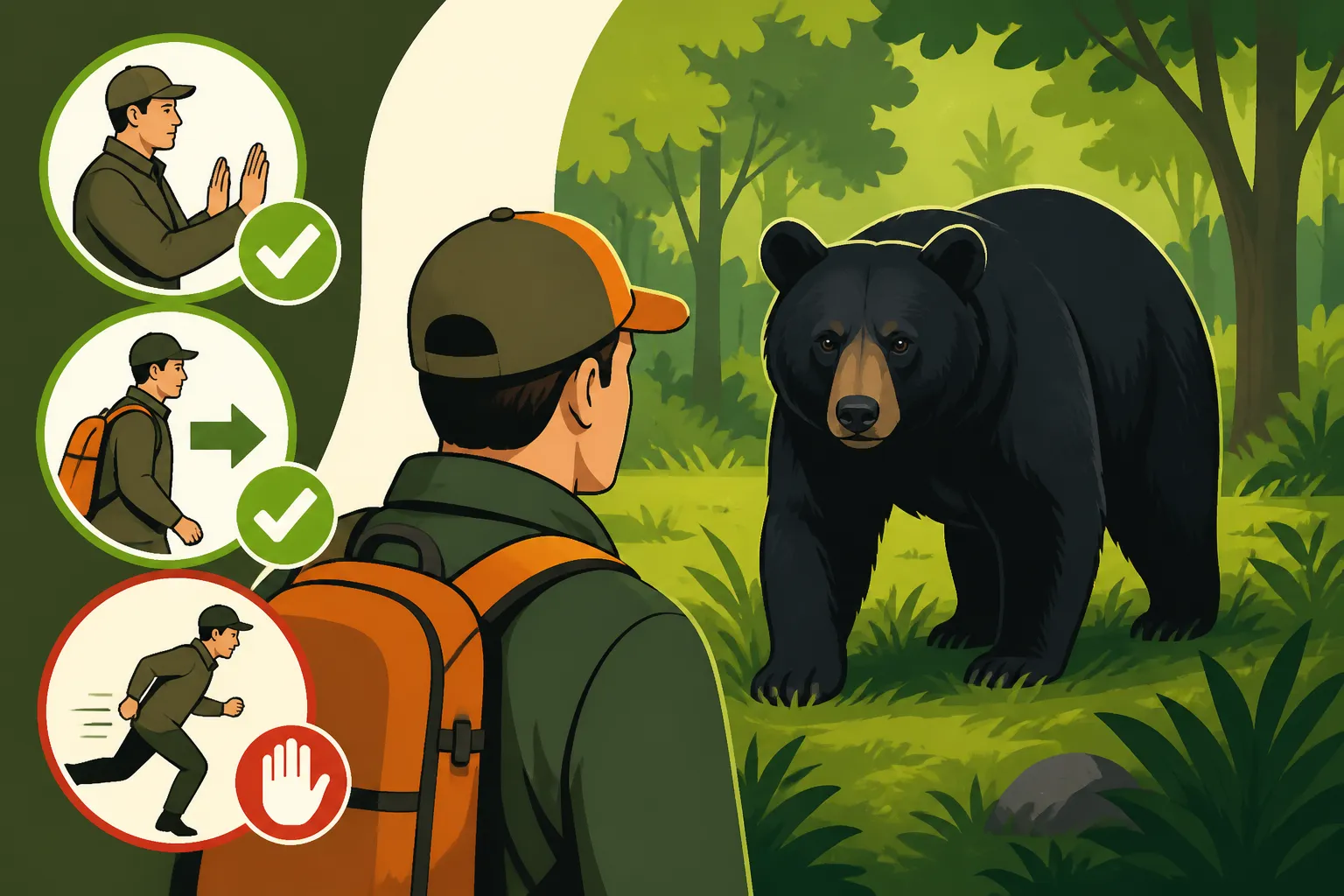
Another myth is that running will save you. For a black bear, running can trigger their chase instinct, and they can easily outrun you. Standing your ground and making yourself appear large is usually the better tactic. Understanding these fundamental behavioral traits is key to reacting appropriately and safely should you find yourself face-to-face with one of these magnificent, albeit often misunderstood, animals.
Immediate Steps During a Bear Encounter
Encountering a black bear can certainly get your heart racing, and it's totally normal to feel a jolt of fear or surprise. The most important thing is to keep your wits about you and remember that most black bear encounters don't result in any harm to humans. Your reaction in those first few moments can significantly influence the outcome, so let's break down the best course of action based on the situation.
If the Bear Hasn't Seen You
This is often the ideal scenario. You spot the bear first, and it's oblivious to your presence. Your absolute best bet here is to avoid contact altogether. Quietly and slowly back away, giving the bear a wide berth. Change your path to avoid approaching it further. Keep an eye on the bear, but don't stare directly at it, as direct eye contact can sometimes be perceived as a challenge.
The goal is to let the bear continue its activities undisturbed, allowing both of you to go your separate ways without incident. If you're hunting or scouting, you're likely already trying to be stealthy, which works in your favor here. Before heading out, utilizing mapping tools like GoHunt can help you identify dense cover or remote areas where bears might prefer to travel, allowing you to be extra cautious in those zones.
If the Bear Has Seen You Non-Aggressive
So, the bear has noticed you. It might stand on its hind legs to get a better look, or just watch you curiously. This isn't usually an aggressive act; it's simply trying to identify what you are. The key here is to make sure it understands you're human and not a threat or an easy meal.
First, do not run. As mentioned, this can trigger a chase response. Instead, make yourself look as large as possible. Raise your arms above your head, open your jacket, or stand on a rock or stump. Speak in a calm, firm voice. Say "Hey bear!" or "Go away, bear!" This helps it recognize you as human and signals that you're not afraid. Slowly back away, again, giving the bear plenty of space. Avoid direct eye contact. Keep moving diagonally away, giving it escape routes and showing that you're not pursuing it. This is about de-escalation and communication.
If the Bear Becomes Aggressive
This is the least common scenario, especially with black bears, but it's crucial to know what to do. Aggression can manifest in a few ways, and your response should differ.
If the bear is displaying defensive behavior – bluff charges (stopping short of you), huffing, jaw popping, swatting the ground, or laying its ears back – it's likely feeling threatened, perhaps you're too close to cubs or a food source. In this case, stand your ground, continue to speak loudly and aggressively, and be prepared to use bear spray if you have it (always carry it when in potential bear country, even in Illinois). If the bear makes contact, fight back vigorously, focusing on its face and snout.
If, in a very rare instance, the bear exhibits predatory behavior – a silent, stalking approach, head up, ears forward, no vocalization, often with a direct gaze, possibly at night – this is extremely serious. This bear views you as potential prey. In this highly unusual situation for a black bear, you must fight back immediately and aggressively using anything you have – rocks, sticks, your fists. Target the bear's face, eyes, and snout. Do not play dead. This is an animal that needs to understand you are not an easy meal.
For a quick summary of responses based on bear behavior, check out this table:
| Bear Behavior | Signs to Look For | Recommended Action |
|---|---|---|
| Curious | Standing on hind legs, sniffing the air, looking at you, may slowly approach. | Talk calmly, back away slowly, make yourself seem large (raise arms). Avoid direct eye contact. Give it space. |
| Defensive | Head lowered, ears back, huffing, jaw popping, swatting ground, bluff charges (stopping short), snorting. | Stand your ground, speak loudly and aggressively, be prepared to use bear spray. Never run. If actual physical contact is made, fight back vigorously, focusing on the bear's face/snout. |
| Predatory | Silent approach, stalking, no vocalization, direct gaze, may attempt to circle you. Extremely rare for black bears. | Fight back immediately and aggressively with anything you have (rocks, sticks, fists). Do not play dead. Aim for the bear's face, eyes, and snout. |
Remember, while the possibility of an aggressive encounter exists, it is incredibly rare with black bears. Most encounters are resolved peacefully by following these guidelines. Staying calm and making informed decisions are your best tools.
Preventing Bear Encounters
While knowing how to react to a bear encounter is vital, the best defense is a good offense – meaning, avoiding the encounter altogether. Bears, particularly young males wandering into Illinois, are often just looking for food and a place to feel safe. Minimizing attractants and making your presence known are key strategies to keep both bears and humans out of trouble.
Proper Food Storage and Waste Management
This is, hands down, the most crucial aspect of bear encounter prevention. Bears have an incredible sense of smell and are opportunistic eaters. Anything that smells remotely like food is a potential buffet for them. This includes your picnic lunch, the garbage can, pet food, and even birdseed.
If you're camping, never leave food, cooking utensils, or trash unattended. Use bear-resistant containers or hang food from a tree branch at least 10 feet off the ground and 4 feet from the trunk, away from your tent. Clean all cooking areas thoroughly. At home, secure your trash cans with latches or keep them in a garage or shed until collection day. Feed pets indoors and remove pet food bowls promptly after they've eaten. Even barbecue grills should be cleaned thoroughly after use and stored in a secure location. A little extra effort here goes a long way in preventing a bear from learning that human areas equal easy meals.
Staying Safe While Hiking and Camping
When you're out in the woods, especially in areas where bears have been sighted or where there's dense cover like you might find during Scouting Illinois Public Land Before Season, it's wise to take precautions. The first rule: make noise. Talk loudly, sing, or carry a bell. This gives any hidden wildlife, including bears, a chance to hear you coming and move away before you surprise them. Surprising a bear, especially a sow with cubs, is one of the quickest ways to provoke a defensive reaction.
Hike in groups whenever possible; larger groups tend to be noisier and appear more formidable to wildlife. Keep dogs leashed, as an off-leash dog can provoke a bear and bring it back to you. Be aware of your surroundings, scan ahead, and look for signs of bear activity like scat, claw marks on trees, or overturned rocks. And, as mentioned before, always pack out all your trash, including food scraps. Remember, you can't hunt these animals in Illinois, so being extra careful is key, as you'd learn about other species in Game You Cannot Hunt in Illinois.
Bear-Proofing Your Property
If you live in an area where bear sightings are becoming more frequent, or near large tracts of timber like in the Shawnee Hills or along major river systems, taking steps to "bear-proof" your property is a smart move. This goes beyond just securing trash. Consider removing bird feeders during months when bears are active (spring through fall), as seeds are a high-calorie attractant. If you have fruit trees, pick ripe and fallen fruit regularly.
Gardens, compost piles, and even beehives can draw bears in. Electric fences can be an effective deterrent for gardens or beehives. Ensure sheds and garages are securely latched, especially if they contain food, pet food, or even scented items like air fresheners or candles. Think like a bear: what smells appealing and looks accessible? Eliminating those temptations is the best way to keep them moving on and away from your home. Apps like GoHunt can even help you identify potential travel corridors for wildlife on your property or nearby, allowing for targeted bear-proofing efforts.
Reporting Bear Sightings in Illinois
Seeing a black bear in Illinois isn't just a cool story for your hunting buddies or family; it's a vital piece of information for wildlife management. The Illinois Department of Natural Resources (IDNR) relies on public reporting to track the movements of these wanderers, understand their presence, and ultimately, manage any potential conflicts with humans. Your report contributes directly to our collective knowledge about these rare visitors.
Why Reporting is Crucial
The IDNR doesn't currently consider Illinois to have a breeding population of black bears, but rather a transient one, made up primarily of young males passing through. Each sighting helps biologists piece together migration patterns, understand how far these bears travel from neighboring states, and identify potential habitat corridors they're utilizing. This data is essential for proactive management and developing public education campaigns. Without accurate reporting, the IDNR can't effectively monitor the situation, potentially leading to more human-bear conflicts as the number of sightings slowly increases.
Furthermore, a timely report allows wildlife officials to investigate if a bear is exhibiting unusual or aggressive behavior, or if it's becoming habituated to human food sources. Early intervention can often prevent a minor issue from escalating into a dangerous situation for both the bear and the community. This process is detailed further when we look at How Illinois Tracks Wandering Bear Sightings.
How and Where to Report
If you see a black bear, your first point of contact should be the Illinois Department of Natural Resources. You can contact your local IDNR district wildlife biologist, or call the IDNR main office during business hours. For sightings outside of normal hours, especially if there's an immediate concern for public safety or if the bear is in an unusual location (like a suburban area), you should also contact your local law enforcement agency. They can then coordinate with IDNR officials.
It's tempting to snap a quick photo or video, and if you can do so safely and from a distance, that can be helpful. However, never approach a bear solely for a picture. Safety always comes first. Once you're in a safe location, make the call. Remember, while you might use resources like GoHunt to plot hunting strategies, the IDNR is the official authority for wildlife sightings and management.
What Information to Provide
When you report a bear sighting, the more detail you can provide, the better. Here's a checklist of key information that will assist wildlife officials:
- Exact Location: Be as precise as possible. GPS coordinates from your phone or a mapping app are ideal. If not, note the nearest road, cross-street, or landmark.
- Date and Time of Sighting: This helps establish a timeline for the bear's movements.
- Description of the Bear: Estimate its size (cub, juvenile, adult), approximate weight, color (most are black, but some can be brown or cinnamon), and any distinguishing marks.
- Bear's Behavior: Was it feeding, resting, moving quickly, or acting aggressively? Was it alone or with cubs? This is critical for assessing risk.
- Direction of Travel: Which way was the bear heading? This helps officials predict its likely next moves.
- Photographs or Video (if safe to obtain): Visual evidence can confirm identification and provide valuable context.
Providing clear and accurate information ensures that IDNR officials can respond appropriately and efficiently. Your willingness to report these sightings plays a huge role in the ongoing effort to understand and coexist with these animals.
Living in Bear Country: Long-Term Considerations
While Illinois might not be traditionally considered "bear country," the reality is that the occasional black bear is now part of our state's diverse wildlife landscape. This means that hunters, campers, hikers, and even rural residents need to adapt their habits and mindset. Coexisting with large carnivores, even shy black bears, requires an ongoing commitment to responsible practices and community education.
Educating Yourself and Your Community
Knowledge is your best tool when it comes to wildlife. Understanding bear behavior, their seasonal habits, and what attracts them helps everyone make informed decisions. Share the information you've learned here with your friends, family, and neighbors, especially if you live in areas prone to sightings, such as regions near the Shawnee National Forest Hunting or along major river systems. Many local extension offices or conservation groups might offer presentations on bear awareness if interest grows in a specific area.
Encourage children to learn about wildlife safety and respect. The more people who understand the simple rules of bear safety and attractant management, the safer our communities and our wildlife will be. This proactive approach ensures that a bear's presence is viewed as a natural curiosity, rather than a cause for panic or conflict. Familiarizing yourself with state regulations, which often require specific licenses or certifications like those covered in Illinois Hunter Education Requirements for other game, helps reinforce a respectful approach to all wildlife.
Minimizing Attractants Around Your Home
We've covered some specifics, but it bears repeating: consistency is key. A bear that gets one easy meal from your garbage can is a bear that will likely return. They are incredibly intelligent and have excellent memories when it comes to food sources. This means every resident in a potential bear area needs to be diligent, not just occasionally.
This includes securing beehives with electric fencing, maintaining clean bird feeders (or removing them during active bear seasons), regularly cleaning barbecue grills, and ensuring all pet food and livestock feed is stored in bear-resistant containers. Even things like outdoor freezers or refrigerators in unsecured garages can become targets if a bear detects a scent. The goal is to make your property as uninteresting to a bear as possible, encouraging them to find natural food sources away from human habitation.
Coexisting with Wildlife
Ultimately, seeing a black bear in Illinois is a sign of a healthy ecosystem and a reminder of nature's resilience. While it requires us to adjust our habits slightly, it's a small price to pay for the return of such an iconic species. It's an opportunity to learn more about our wild neighbors and appreciate the richness they bring to our landscapes.
The IDNR's approach, outlined in resources like Why Illinois Bears Have No Open Season, emphasizes that these are protected animals in Illinois, and they are not to be pursued or harassed. This respect extends to understanding that we share the landscape. Using resources like the GoHunt app to plan your outings can help you identify remote areas where wildlife may be less disturbed, promoting coexistence. By taking simple, preventative measures and knowing how to react responsibly, we can ensure that both humans and these wandering black bears can safely share our beautiful state. When considering any hunting activity, it's always wise to check on the latest regulations, including those on Illinois Hunting Licenses and What They Cost, to ensure you're fully prepared and compliant.
Disclaimer
This guide provides general information and best practices for encountering black bears in Illinois. Wildlife behavior can be unpredictable, and individual situations may vary. Always prioritize your safety and the safety of others. Consult the Illinois Department of Natural Resources (IDNR) or local law enforcement for the most current and specific guidance regarding bear sightings and wildlife regulations in Illinois.