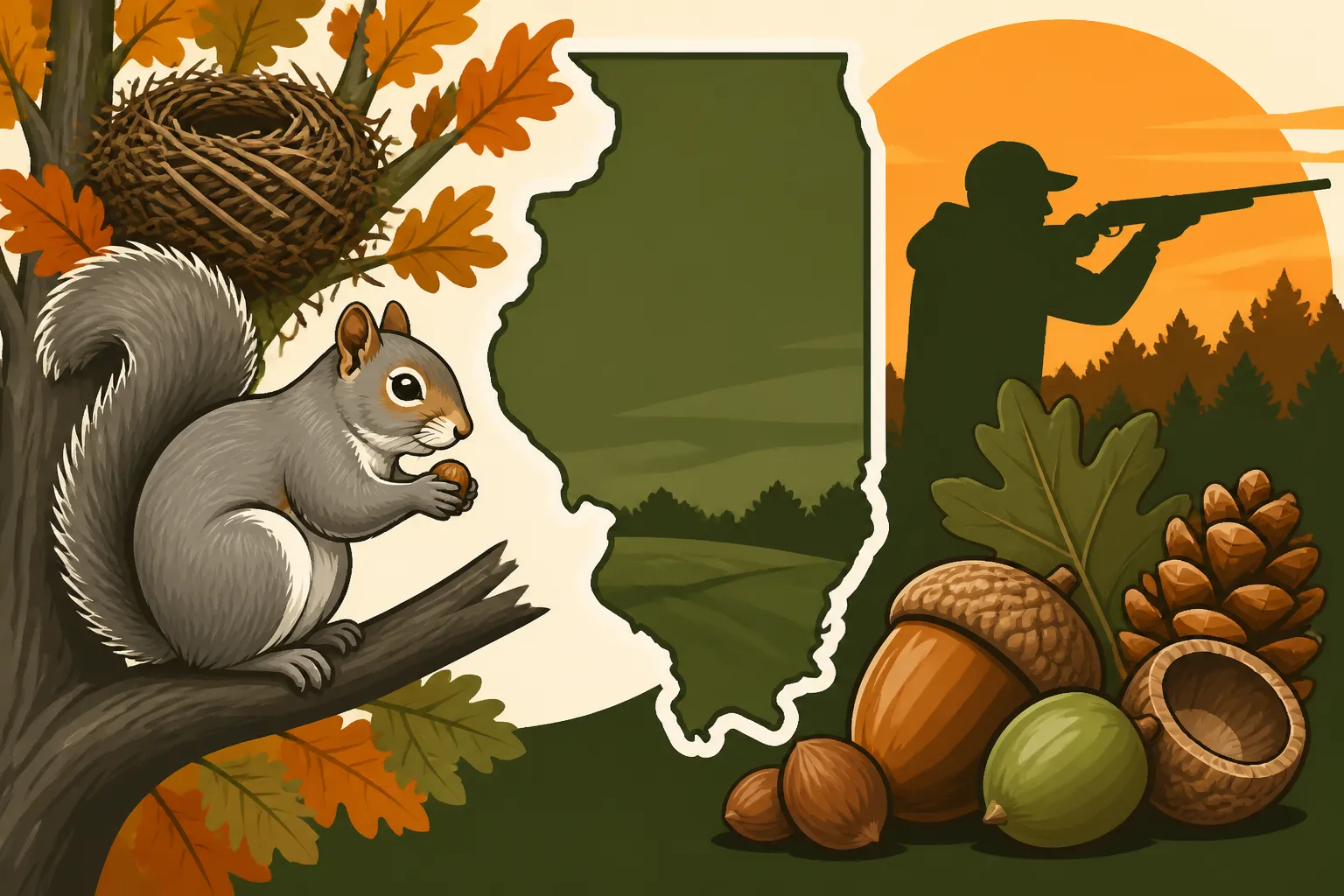
Illinois Squirrel Nest Counts and Mast Crops
It's always a bit of a mystery, isn't it? You walk through the woods in Illinois, and some years it feels like squirrels are practically raining from the trees, while other years, you're lucky to kick up a couple. This kind of variability isn't just random; it's deeply tied to the natural rhythms of the forest, particularly the availability of food. Understanding squirrel nest counts and the ever-important mast crops can give you a significant edge, not just as a hunter, but as anyone who enjoys observing Illinois's abundant wildlife. This guide will walk you through what these ecological indicators mean, how to interpret them, and what they tell us about the health and abundance of our furry tree-dwelling friends.
The Connection Between Mast Crops and Squirrels
If you spend any time in the Illinois woods, you've probably heard the term "mast crop." It's one of those phrases that veteran hunters toss around, and for good reason: it’s the absolute lynchpin of healthy wildlife populations, especially for squirrels. Think of mast as nature's pantry, and for squirrels, it's pretty much all-you-can-eat, or feast-or-famine, depending on the year. The availability of these critical food sources dictates not only how many squirrels you'll see scampering through the branches but also their overall health and reproductive success.
When the acorns and hickory nuts hit the ground in abundance, you'll witness a cascade of positive effects. Squirrels, being opportunistic and industrious, will go into overdrive, burying nuts for the lean winter months. This preparedness directly influences their ability to survive the cold, often harsh Illinois winters. Without a sufficient cache, many simply won't make it. But beyond survival, a robust mast crop fuels reproduction, leading to larger and more frequent litters in the following spring. Conversely, a poor mast year sends ripples through the squirrel population, often resulting in lower numbers and smaller, less healthy animals. It’s a classic boom-and-bust cycle, intimately tied to the forest's productivity. If you're looking to hunt squirrels, knowing what kind of mast year you're in can drastically change your approach, especially when hunting Squirrel Hunting Illinois Bottomland Hardwoods.
What Are Mast Crops, Anyway?
Let's break down what we mean by "mast crops" because it's not just one thing. Broadly, mast refers to the fruits, nuts, seeds, and berries produced by woody plants. We typically categorize it into two main types: hard mast and soft mast.
Hard Mast: This is the big one for squirrels, especially in Illinois. Hard mast includes nuts like acorns (from oak trees), hickory nuts, walnuts, and pecans. Oaks and hickories are king here. White oaks produce a less tannic, sweeter acorn that deer and squirrels devour quickly, while red oaks produce acorns with more tannins that are often cached and eaten later into the winter. Shagbark and pignut hickories offer high-calorie kernels that are worth the effort for a squirrel to crack open. These hard, nutritious morsels are critical for putting on fat reserves that sustain squirrels through winter.
Soft Mast: While hard mast gets most of the glory for squirrels, soft mast also plays a role, particularly in the warmer months. This includes berries and fruits like wild grapes, mulberries, black cherries, and even seeds from various trees. Soft mast is a vital food source in spring and summer, helping to nourish adult squirrels and their young before the hard mast starts to drop in the fall. While not as calorie-dense for winter storage as hard mast, it contributes significantly to overall squirrel health throughout the year. The variety of trees producing mast in a given area offers a more stable food source, as different species might perform better or worse in varying weather conditions each year.
How Mast Influences Squirrel Survival and Reproduction
The relationship between mast crops and squirrel populations is direct and dramatic. Imagine a year where the oak and hickory trees are absolutely loaded, their branches heavy with nuts that eventually carpet the forest floor. This is a squirrel's dream scenario.
Direct Impact on Winter Survival: In years of abundant hard mast, squirrels can spend their fall days in a frenzy of activity, not just eating but burying countless nuts. These hidden caches are their lifeline during the unforgiving Illinois winter. When the snow flies and temperatures plummet, having a reliable food source buried nearby means the difference between life and death. Without this stored energy, squirrels face starvation and increased vulnerability to predators as they spend more time searching for meager scraps. You'll see fatter, healthier squirrels entering the winter, better equipped to withstand the cold and energy demands.
Impact on Breeding Success and Litter Size: The effects of a good mast crop extend well beyond winter survival. A healthy, well-fed female squirrel coming out of winter is much more likely to have a successful breeding season in the spring. Abundant food means she can produce larger litters, and her young will have a better chance of survival, growing quickly on available soft mast and early nuts. Conversely, a poor mast year can mean fewer successful pregnancies, smaller litters, and higher mortality rates for young squirrels. The biological reality is that a squirrel's body won't prioritize reproduction if its own survival is in question. This is why you often see a lag effect: a bumper mast crop one fall often translates into a noticeable increase in squirrel numbers the following year, after that successful breeding season.
Understanding Illinois Squirrel Nest Counts
Beyond just observing the ground for nuts, another crucial indicator of squirrel activity and population density is their nests. If you've ever paid attention while walking through an Illinois woodlot, you've undoubtedly spotted those tell-tale leaf nests high in the branches. While they might seem like simple bundles of leaves, they actually provide valuable clues about how many squirrels are calling that particular patch of timber home. Both biologists and savvy hunters use nest counts as a way to gauge local populations. They don't give an exact "one nest equals one squirrel" figure, but they offer a solid proxy for activity and density, especially when combined with other observations. Knowing how to read these signs can give you a clearer picture of the squirrel population trends, complementing broader data like the Illinois squirrel population estimate.
The Science Behind Nest Counts
Squirrels, particularly fox and gray squirrels, use a few different types of homes. The most obvious and easiest to count are their leaf nests, sometimes called "dreys." These are constructed high in trees, usually in a fork or crook of branches, from leaves, twigs, and bark. They serve as temporary shelters, nurseries for young, and sometimes a quick hideaway from predators. While squirrels also use den trees – hollows or cavities in older trees – these are much harder to spot from the ground.
The best time for accurate leaf nest counts is typically in the late fall or winter, after the leaves have fallen from the trees. Without the dense canopy, these globular nests become much more visible against the stark branches. Biologists might set up transects or grid systems in a woodlot and count every visible nest within a defined area. While a single squirrel might use multiple leaf nests throughout the year, and nests can persist for a couple of seasons, the sheer number of active-looking nests (those that appear well-maintained or recently constructed) provides a strong correlation to the number of squirrels in the vicinity. It’s not an exact census, but it’s an effective relative index – more nests generally mean more squirrels.
How Hunters Can Use Nest Counts
For us hunters, nest counts aren't just for the biologists; they're a fantastic, free scouting tool. Before opening day, or even during the season, taking the time to observe nest activity can guide your hunting efforts directly.
Scouting Tool for Individual Woodlots: Head into your favorite public or private hunting spots. Take your binoculars and scan the canopy, especially in deciduous timber. Areas with a high concentration of leaf nests are telling you something important: squirrels are frequenting this area. These aren't just random nests; they indicate consistent use and likely good habitat.
Identifying High-Density Areas: When you find a section of timber that's riddled with nests, you've likely found a squirrel hotspot. This could be due to a particularly good mast-producing stand of oaks, proximity to water, or perhaps excellent den tree availability that supplements the leaf nests. These areas are worth spending more time in, as your chances of encountering squirrels are significantly higher. When planning your hunt, consider using mapping apps like GoHunt that offer detailed aerial views. These tools can help you identify dense timber stands or areas with larger, older trees that might hold more den cavities, even before you set foot in the woods. Look for changes in canopy texture or areas that seem particularly dense, as these could be squirrel magnets.
Complementing Visual Sightings: Combine your nest count observations with actual sightings. If you see many nests and you're kicking up squirrels during scouting trips, you've hit the jackpot. If you see plenty of nests but few squirrels, it might indicate recent hunting pressure, a temporary shift in food source, or perhaps an older, less active population. This combined approach gives you the most accurate picture of what to expect when you head out with your shotgun or .22. It's all about piecing together the puzzle of the forest.
Interpreting the Data: What Good Mast and Many Nests Mean
Now we're getting to the exciting part – putting it all together. Observing both the mast crop and the squirrel nests isn't just about collecting data; it's about interpreting that data to make informed decisions for your hunting strategy and to simply understand the natural world around you. When you combine your observations of what's falling from the trees with what's built in the branches, you gain a powerful predictive tool. Different regions of Illinois, from the dense timber of Shawnee National Forest in the south to the scattered woodlots of Central Illinois farmland, can experience varying mast crops, so local observation is key.
What a Good Mast Year Looks Like for Squirrels (and Hunters)
A "good mast year" is a phrase that brings a smile to any squirrel hunter's face. It signifies abundance, health, and usually, a whole lot of activity in the woods.
Signs of a Strong Mast Crop: You'll know it when you see it. The forest floor, especially under oak and hickory trees, will be littered with acorns and nuts. In some years, you can literally scoop them up by the handful. Look for freshly dropped, clean nuts, not just old, weathered shells. You might also notice squirrels spending more time on the ground, burying nuts, rather than just scrambling in the canopy. This intense foraging and caching behavior is a clear indicator that they're stocking up for winter.
Implications for Squirrel Distribution: In a year with heavy mast, squirrels tend to be more spread out. Since good food is abundant across a wider area, they don't have to concentrate in just a few prime spots. This can make them a bit harder to pattern, as they might be feeding in areas you wouldn't typically expect. However, it also means that the overall population is thriving, leading to more bushytails throughout the season. These squirrels are well-fed, energetic, and generally more visible. A healthy population from a good mast year means more squirrels are around for the entire hunting season, from the early days when How Early Season Squirrels Give Themselves Away to the colder late season.
Better Over-Winter Survival and Robust Populations: As discussed, the bounty of a good mast year directly translates to fatter, healthier squirrels entering winter. This higher survival rate means more breeding adults come spring, leading to larger and more frequent litters. By late summer and early fall, you'll see a noticeable increase in young-of-the-year squirrels, identifiable by their smaller size and often more naive behavior. For hunters, this translates to a more target-rich environment and generally a more successful season.
When Mast Crops Fail: Adjusting Your Strategy
Unfortunately, not every year is a bumper crop. Sometimes, late frosts, heavy rains during pollination, or insect infestations can decimate a mast crop, leading to what's known as a "poor mast year." This presents a different set of challenges and requires a different hunting approach.
Signs of a Poor Mast Year: The most obvious sign is a scarcity of nuts on the ground. You'll walk through areas that typically produce piles of acorns and find very few, or mostly diseased and undeveloped ones. Squirrels will be noticeably less active on the forest floor, and instead, you might see them foraging more aggressively for alternative food sources like pine cones, bark, or even digging up old caches from previous years. They might appear thinner and more skittish.
Squirrels Congregating in Specific Areas: In lean years, squirrels will concentrate in the few areas where food is available. This could be an isolated grove of red oaks that managed to produce, a stand of black walnuts, or even venturing into agricultural fields to feed on corn or soybeans. Your job as a hunter is to find these isolated food pockets. This means more intensive scouting to locate those rare productive trees. A specific small woodlot with a couple of mast-producing trees might be dead in a good mast year, but a goldmine in a poor one, as squirrels from surrounding areas flock to it.
Increased Competition and Vulnerability: When food is scarce, competition among squirrels increases. This can lead to more aggressive behavior and a higher stress level for the animals. They'll also be forced to spend more time exposed, searching for food, making them more vulnerable to predators like hawks, owls, and coyotes. For hunters, this often means squirrels are more wary and harder to approach, but finding their concentrated food sources can make for a very productive hunt. You'll need to be more patient and stealthy.
Here’s a quick overview of how mast crop years can impact both squirrels and your hunting plans:
| Feature | Good Mast Year | Poor Mast Year |
|---|---|---|
| Forest Floor | Littered with acorns, hickory nuts | Sparse, few viable nuts; more old shells |
| Squirrel Activity | Busy burying nuts, energetic, widespread | More frantic searching, often in trees; more concentrated |
| Squirrel Health | Fat, robust, higher survival rate into winter | Thinner, stressed, lower winter survival |
| Population Trends | Increase in numbers the following year, larger litters | Decrease in numbers, smaller litters, higher mortality |
| Hunting Distribution | More spread out across the landscape, consistent activity | Concentrated in specific, isolated food sources |
| Hunting Challenge | Easier to find overall, but potentially less concentrated | Harder to find, but can be very productive if you find concentrations |
| Typical Squirrel Behavior | Active on ground, less wary due to abundance | More wary, less time on the ground, more competitive |
Understanding these patterns allows you to adapt. In a year of plenty, you might focus on wider areas, covering more ground, knowing squirrels are generally abundant. In a lean year, you'll narrow your focus, scouting meticulously for those crucial food magnets, and be prepared for more cautious squirrels. Regardless of the year, the Illinois woods are a fascinating place to observe these dynamics.
Disclaimer
This article is for general informational purposes only and does not constitute professional advice. Laws, prices and regulations vary by location and change over time. Consult a qualified professional for guidance on your specific situation.