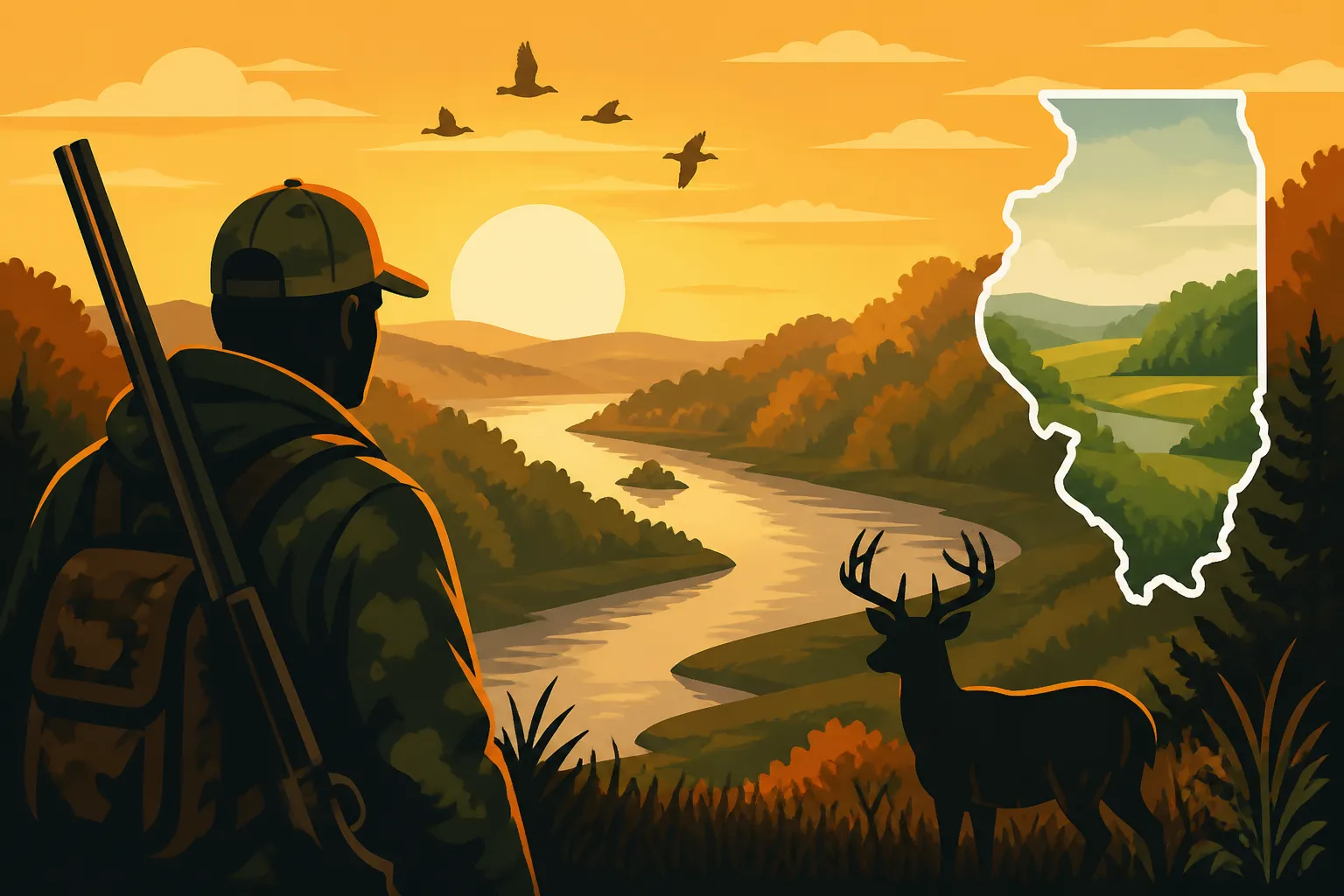
Hunting the Rock River Valley
Hunting the Rock River Valley presents a unique set of challenges and rewards for those willing to learn its nuances. This isn't your typical vast timber block or endless prairie; it's a dynamic mosaic of flowing water, fertile agricultural fields, and fragmented woodlands, demanding a flexible approach from any hunter. If you've ever felt overwhelmed trying to decipher prime whitetail bedding areas amidst standing corn or locate duck blinds along winding river bends, this guide is for you. We'll delve deep into strategies, regulations, and essential scouting techniques to help you unlock the valley's full hunting potential.
Understanding the Rock River Valley's Unique Ecosystem
The Rock River Valley, stretching from Wisconsin down through northwestern and north-central Illinois, is a distinct ecological region that profoundly impacts its wildlife. It's a place where the forces of water and land constantly intertwine, creating a rich tapestry of habitats that attract a wide array of game species. Understanding this unique interplay is the first step toward becoming a successful hunter here.
The River's Influence on Habitat and Wildlife
The Rock River itself is the lifeblood of the valley, carving a path through the landscape and influencing everything around it. Its presence creates corridors of timber, often denser and wetter than surrounding upland areas, which serve as critical travel routes and cover for deer, turkeys, and furbearers. These riparian zones also foster diverse vegetation, from towering cottonwoods and silver maples to thick underbrush, providing essential food and bedding. The river's oxbows, backwaters, and sloughs are magnets for waterfowl, offering both feeding grounds and sanctuary during migration. Hunters often find that game movement, especially deer, is heavily dictated by the river's bends and associated drainages, which act as natural funnels or barriers. The fluctuating water levels, particularly in spring and fall, can significantly alter access and animal patterns, making adaptability a key trait for hunters in this region.
Beyond direct habitat, the river's influence extends to the microclimates and soil types, contributing to the agricultural richness of the surrounding land. This abundance, in turn, fuels robust wildlife populations. Deer, in particular, thrive on the combination of dense river bottom cover and the endless buffet provided by nearby farm fields. Turkeys utilize the river corridors for roosting and spring strutting, while migratory birds follow the waterway as a natural highway on their journeys. Ignoring the river's direct and indirect impact on game behavior is a mistake many newcomers make; savvy hunters learn to "read" the river and its adjacent lands as one interconnected system.
Blended Landscapes: Agriculture Meets Timber
What truly sets the Rock River Valley apart is its "blended landscape." This isn't vast, unbroken forest or wide-open prairie. Instead, you'll find a patchwork quilt of productive agricultural fields – corn, soybeans, and alfalfa – interspersed with mature timber blocks, smaller woodlots, brushy fencerows, and the aforementioned river bottomlands. This diverse mix creates an ideal environment for edge-loving species like white-tailed deer, pheasants, and rabbits. Deer can bed in the thermal cover of a dense cedar thicket or a mature oak stand, then easily slip out into a standing cornfield for an evening meal.
This blending of habitats presents both opportunities and challenges. Opportunities arise from the sheer abundance of food and cover in close proximity, leading to healthier game populations. The challenge, however, is that game animals often use these distinct habitats interchangeably throughout the day, depending on pressure, weather, and time of year. A buck might spend the night feeding in a soybean field, bed down in a small woodlot bordering it during the day, and then use a brushy fencerow to travel to a more secluded timber block when pressure mounts. Understanding these transitions and identifying key pinch points where different cover types meet is crucial. Hunters must think beyond just one type of habitat and consider how all these elements connect.
Key Game Species in the Valley
The Rock River Valley supports a strong population of several popular game species, each thriving on the region's diverse habitats. White-tailed deer are undoubtedly the main attraction for many hunters, with the rich agricultural lands providing excellent nutrition, leading to healthy body weights and impressive antler growth in many areas. The mix of riverine cover and scattered timber offers ample hiding spots, making for challenging but rewarding hunts. You'll find good numbers of both does and bucks throughout the region.
Wild turkeys also have a solid foothold, particularly in areas with mature timber for roosting and open fields for strutting and bugging. While not as consistently dense as some of Illinois's heavily timbered southern counties, good pockets of birds exist, offering exciting spring and fall hunting opportunities. Waterfowl hunting can be exceptional, with the Rock River serving as a significant flyway. Mallards, wood ducks, and various diving ducks utilize the river, its backwaters, and flooded timber, especially during peak migration. Canada geese are also prevalent, often feeding in agricultural fields near the river.
Beyond the big game and waterfowl, the Rock River Valley offers excellent small game opportunities. Rabbit populations flourish in the brushy fencerows and thickets, while squirrel hunting is popular in the mature timber stands. Pheasants, while less common than in historic times, can still be found in remnant grassland patches and are often stocked on public lands. Coyotes are also abundant, preying on smaller game and offering year-round hunting for those interested in predator control. This variety means that a hunter willing to adapt their approach can find success across multiple seasons.
Navigating Public Hunting Opportunities in the Rock River Valley
Illinois is known for being a state with significant private land ownership, and the Rock River Valley is no exception. However, that doesn't mean public land hunting is impossible. With diligent scouting and a smart approach, you can find rewarding opportunities. The key is understanding where these public lands exist, how they're managed, and how to effectively navigate them.
State Fish and Wildlife Areas in the Region
The Illinois Department of Natural Resources (IDNR) manages several State Fish and Wildlife Areas (SFWA) and State Parks with hunting access within and adjacent to the Rock River Valley. These areas are invaluable resources for public land hunters, but they often come with specific site-specific regulations that differ from statewide rules. It's imperative to consult the IDNR's hunting information for each specific site you plan to visit. Websites like Illinois State Fish and Wildlife Areas provide excellent starting points for researching these locations. Some popular examples in or near the valley might include Big Bend SFWA, Franklin Creek State Natural Area, or Lowden-Miller State Forest.
These areas vary significantly in size, habitat, and available game. Some might be primarily timbered, offering good deer and turkey hunting, while others might feature extensive marshland or river frontage, making them waterfowl hotspots. Many SFWAs are managed for multiple species, requiring hunters to be aware of overlapping seasons and specific permit requirements. Often, special lottery drawings or check-in/check-out procedures are in place to manage hunter pressure and collect harvest data. Expect to encounter other hunters, especially during peak seasons, but remember that the sheer size of some of these areas often allows for pockets of solitude if you're willing to walk further or hunt smarter. Don't assume all public land is equal; research each one thoroughly.
Identifying Less-Pressured Public Pockets
Hunting public land in Illinois, especially in more populated regions like parts of the Rock River Valley, often means dealing with significant hunter pressure. The common frustration is showing up to a prime spot only to find multiple trucks already parked. However, with a strategic mindset, you can identify less-pressured pockets where game animals feel more secure. This usually involves thinking differently than the average hunter. Start by studying aerial maps, like those available on platforms such as onX Hunt. Look for areas that are difficult to access – perhaps requiring a longer walk, crossing a creek, or navigating dense, uninviting cover. Bucks, in particular, will gravitate towards these sanctuaries once hunting season begins.
Don't just focus on the "pretty" spots. Sometimes the thickest, nastiest, briar-choked cover holds the most animals simply because it's too much effort for most hunters to penetrate. Consider hunting areas that are small and overlooked, such as small isolated woodlots that might be part of a larger SFWA but are separated by fields. These can act as crucial travel funnels or staging areas. Moreover, pay attention to prevailing winds and access points; many hunters will enter from the easiest access with the wind in their face. By planning a more circuitous route that puts the wind in your favor for your hunt and minimizes disturbance, you can often reach areas before others or approach them from unexpected directions. Patience and a willingness to explore off the beaten path are your best allies in finding these hidden gems. Utilizing digital tools and good old-fashioned boots-on-the-ground scouting are critical for this.
General Rules and Regulations for Public Land
Hunting on any public land in Illinois means adhering to a specific set of rules, which can include both statewide regulations and site-specific addendums. It's not enough to simply have your Public Hunting Land in Illinois license and tags; you must understand the nuances of the area you intend to hunt. For instance, while some public lands might allow archery hunting throughout the statewide season, others might have specific open dates or require a special permit drawing. Firearm seasons, particularly for deer, often have very limited access or designated hunting zones.
Always double-check blaze orange requirements, which can vary not only by season (e.g., firearm deer season) but also by site, especially if concurrent hunting activities are taking place. Restrictions on ATV use, camping, and the placement of permanent treestands or ground blinds are also common. While some areas might permit temporary stands, many prohibit leaving any equipment overnight or require stands to be clearly tagged with your IDNR customer number. Violations of these rules can lead to fines, loss of hunting privileges, and even confiscation of equipment. Your best defense is a thorough review of the current IDNR hunting guide and any specific site brochures or online information for your chosen area. Ignorance of the law is never an excuse.
Strategies for Deer Hunting the Rock River Valley
Deer hunting in the Rock River Valley is a unique experience, blending elements of agricultural hunting with the challenges of riverine timber. Success here often hinges on understanding how deer utilize the fragmented habitat and travel between food and cover. It's not about finding one perfect spot, but rather deciphering the network of pathways and bedding areas these adaptable animals use.
Adapting to Farm Fields and Woodlots
The Rock River Valley is dominated by agricultural fields – corn, soybeans, winter wheat – interspersed with relatively small, often isolated woodlots. This creates an "edge habitat" paradise for deer, but it also means their patterns can shift dramatically based on crop cycles. Early season archery hunters might find deer pouring into standing soybean fields in the evenings, but once those beans yellow and are harvested, the deer will shift their focus, often to acorns or green browse in the timber. Standing cornfields, especially during the early firearm season, can become virtually impenetrable fortresses for deer, offering both food and unparalleled security. Hunting these areas often means adapting your strategy not just season to season, but week to week. For specific tactics, consider insights from Hunting Central Illinois Farmland Deer.
When corn is standing, consider hunting the narrow strips of timber or fencerows that run between fields. These become critical travel corridors as deer move from deep cover to feeding areas. Once fields are cut, deer lose that immense cover, and their movement becomes much more predictable, often focusing on the remaining timber blocks and seeking out any late-season food sources like brassicas, leftover corn, or winter wheat. Setting up on field edges or in small woodlots adjacent to active agriculture, always with the wind in your favor, can be highly effective. Understanding when and why deer use certain fields or woodlots is far more important than simply setting up on the most obvious food source.
Utilizing River Bottom Travel Corridors
The Rock River itself, along with its numerous tributaries and drainage ditches, creates a natural network of travel corridors that deer rely on heavily. These river bottoms often consist of dense, often swampy timber, thickets, and brushy banks that provide excellent cover and relatively low human disturbance, even on public land. Deer will use these corridors to travel significant distances between bedding areas and feeding grounds, especially during the rut when bucks are actively cruising. Look for signs like rubs, scrapes, and well-worn trails running parallel to the water's edge or along small ridges and benches within the bottomlands.
Identifying pinch points and funnels within these river systems is a highly effective strategy. A narrow strip of dry ground between a swampy section and an open field, a natural bottleneck where the river bends sharply, or a small tributary crossing are all prime locations for an ambush. Bucks, particularly during the rut, will utilize these features to funnel does and scent check for receptive females. While these areas can be challenging to hunt due to dense cover, mosquitoes, and potentially difficult access, they often hold mature deer that have learned to avoid more accessible spots. Don't be afraid to get your feet wet or push through thick brush to reach these overlooked river bottom gems.
Rut Tactics Specific to the Valley
The Illinois rut is legendary, and the Rock River Valley offers prime opportunities during this exciting period, typically peaking in early to mid-November. Bucks become more active, less cautious, and are constantly on the move, searching for does. Your strategies should shift from food-focused to travel-corridor and bedding-area focused. Rather than simply sitting on a food plot, consider setting up near known doe bedding areas or along primary travel routes that bucks will use to scent-check for estrus females. Ridges, creek bottoms, and timbered fencerows that connect larger blocks of timber become hotspots.
Calling can be very effective during the rut here. Soft grunts can attract curious bucks, especially younger ones, while rattling can entice a dominant buck looking for a fight. However, always be mindful of other hunters, especially on public land. Combining calls with a decoy can also be a potent strategy, particularly in more open woodlots or field edges where a buck can see the decoy from a distance. The key is to be mobile, adaptable, and patient. Don't be afraid to move your setup if the action isn't there, or if you identify fresh sign that suggests deer are using a different area. Hunting all day, especially during the core rut hours of late morning and early afternoon, dramatically increases your odds of encountering a cruising buck.
Waterfowl Hunting Along the Rock River
The Rock River is a significant artery in the Mississippi Flyway, attracting a wide variety of waterfowl during their annual migrations. For waterfowlers, understanding the specific dynamics of this river system is paramount to consistent success. It's a challenging but deeply rewarding experience for those who put in the effort.
Key Waterfowl Species and Migration Patterns
The Rock River sees a diverse influx of waterfowl, with mallards and wood ducks being primary targets for many hunters. Wood ducks are often abundant in the early season, frequenting the timbered backwaters and sloughs, while mallards dominate the middle and late parts of the season, often feeding in flooded fields or resting on main river stretches. Divers like canvasbacks, redheads, and scaup also utilize the deeper, wider sections of the river, especially further north or in larger pooled areas. Canada geese are consistently present throughout the valley, often feeding in harvested corn or soybean fields, sometimes far from the water's edge.
Migration timing is key, and it's heavily influenced by weather patterns to the north. Colder temperatures and strong fronts pushing down from Wisconsin and Minnesota often signal fresh pushes of birds. Early season in September might be good for local wood ducks and teal, while October sees more mallards and early geese. The real peak often occurs in November and December, when large numbers of ducks and geese seek refuge from increasingly frigid conditions further north. Staying informed about Illinois Waterfowl Zones and Seasons and watching weather forecasts is essential. Scout frequently to identify current flight patterns and feeding preferences, as birds will shift their habits based on available food and water.
Decoying and Blind Setups on the River
Successful decoying on the Rock River requires a nuanced approach, often adapting to water levels, current, and target species. For mallards and other puddle ducks in the main river or sloughs, a U-shaped or J-hook spread, with the open end facing into the wind, often works well. This creates a landing zone for incoming birds. Don't be afraid to mix in some dabbler decoys (pintails, widgeon) to add realism. For geese, large field spreads are often necessary when they're feeding in agriculture, but smaller "loafing" spreads can work near water.
Blind setups are equally critical. Along the main river, permanent or semi-permanent blinds built into the bank or on small islands are common, especially on private land or leased access points. On public access points, layout blinds or natural blinds brushed into existing vegetation are often the best options. When hunting flooded timber or backwater sloughs for wood ducks, concealment is paramount. Hunters often stand or sit against large trees, relying on natural cover to break up their outline. Whatever your setup, ensuring you are completely concealed and that your decoys look natural are the two most important factors for success. Remember, ducks and geese have excellent eyesight.
Public Water Access and Considerations
Accessing the Rock River for waterfowl hunting, particularly on public stretches, presents unique challenges. Unlike vast impoundments, the river is linear, often narrow, and lined by private property. While the riverbed itself is typically public up to the ordinary high-water mark, accessing it and hunting from it can be tricky. Public boat launches are available in many towns along the river, providing a starting point. From there, hunters might navigate by boat to suitable sections, always being mindful of private land boundaries and respecting landowners.
Hunting from shore on public land often means searching for areas where public property (like a State Fish and Wildlife Area) directly abuts the river. These spots are often heavily pressured. Consideration must also be given to safety on the river. Currents can be strong, especially after heavy rains, and navigating in the dark to a blind location requires extreme caution. Always wear life jackets, have proper navigation lights, and be aware of other river users, including boaters and other hunters. Familiarize yourself with all local boating and hunting regulations, and consider scouting by boat during the off-season to identify potential hunting locations and access points.
Small Game and Upland Bird Hunting in the Region
While deer and waterfowl often grab the headlines, the Rock River Valley still offers fantastic opportunities for small game and upland bird hunters. These pursuits provide a different pace and often a more interactive experience, perfect for those who enjoy working with dogs or simply exploring the subtle corners of the landscape.
Rabbit and Squirrel Hunting in the Timber and Brush
Rabbit hunting thrives in the Rock River Valley's dense fencerows, brushy creek bottoms, and early successional growth areas. Cottontails love thick cover that provides both food and protection from predators. Look for briar patches, honeysuckle thickets, and overgrown field edges. Hunting with beagles is a classic and highly effective method, as the dogs can push rabbits out of seemingly impenetrable cover. Without dogs, hunters can still find success by slowly still-hunting these thick areas, often jumping rabbits as they move. Early morning or late afternoon, when rabbits are most active, are prime times. Remember to check Illinois Small Game Season Rules for specific dates and bag limits.
Squirrel hunting for both fox and gray squirrels is excellent in the mature hardwood timber that lines the river and forms larger woodlots. Fox squirrels prefer more open timber with nut-bearing trees like oaks and hickories, often near field edges. Gray squirrels tend to favor denser, contiguous timber. Early season squirrel hunting, before the leaves fully drop, can be challenging due to visibility but rewarding as squirrels are very active. Later in the season, once leaves are down, spotting them becomes easier. Listen for the rustle of leaves, the cutting of nuts, and watch tree limbs for movement. A good pair of binoculars can be invaluable for spotting squirrels high in the canopy. Still-hunting slowly through a timber stand, or simply sitting quietly near a cluster of oak or hickory trees, are both effective methods.
Pheasant and Quail Opportunities
While Illinois isn't the pheasant mecca it once was, the Rock River Valley still offers some localized opportunities, particularly on public lands managed for upland game or through put-and-take programs. Ring-necked pheasants thrive in dense grassland cover, CRP fields, and brushy field edges, and while these habitats are less abundant than in the past, pockets still exist. Many State Fish and Wildlife Areas (SFWAs) actively manage habitat for pheasants and often conduct pheasant releases, especially during special youth hunts or during the main season. Hunters often rely on flushing dogs or pointing breeds to locate and hold these wily birds.
Bobwhite quail, while having suffered significant population declines across Illinois, can still be found in limited numbers in the Rock River Valley. They prefer a mix of open woodland, dense brush, and overgrown field edges, often in coveys. Finding wild quail usually requires extensive scouting and often involves working with well-trained bird dogs. The key is to locate areas with diverse, interconnected habitat, offering food, nesting cover, and escape routes. Always confirm specific site regulations for pheasant and quail hunting, as access can be limited or require special permits.
Fall Turkey Prospects
Fall turkey hunting in the Rock River Valley offers a different challenge than the spring gobbler season. Instead of locating strutting toms, fall hunting often revolves around breaking up flocks and calling birds back in. Turkeys in the fall are typically found in larger family groups or bachelor groups of jakes and adult gobblers. They frequent areas with abundant mast crops (acorns, hickory nuts) and often roost in mature timber along river corridors or in larger woodlots.
A common tactic is to locate a flock, then attempt to scatter them. Once the birds are dispersed, position yourself in a concealed spot and begin making soft "assembly" calls – lost yelps and kee-kees – to draw them back together. Young birds, especially, are susceptible to this tactic. Hunting near known roost sites or feeding areas can also be productive, particularly in the early morning or late afternoon. While fall turkey hunting is often less popular than spring, it can be a highly rewarding and challenging pursuit for those willing to learn the unique behaviors of fall flocks.
Securing Private Land Access and Building Relationships
Given the prevalence of private land in the Rock River Valley, gaining permission to hunt can dramatically increase your opportunities and success. However, it's a process that requires patience, respect, and a willingness to build genuine relationships with landowners.
The Art of Knocking on Doors in Farm Country
For many hunters, the idea of "cold calling" on a landowner feels intimidating, but it's often the most direct path to private land access. Before you knock, do your homework. Use mapping apps like onX Hunt to identify potential properties with good habitat, and try to learn the landowner's name if possible. Approach homes neatly dressed, during reasonable hours (not early morning or late evening), and always be polite and respectful, regardless of the outcome. Start the conversation by introducing yourself, stating your purpose clearly, and immediately offering to show proof of your hunting license and insurance. This demonstrates professionalism and responsibility.
Many landowners have had negative experiences with hunters in the past, so establishing trust is paramount. Be prepared for rejection, but don't take it personally. If they say no, thank them for their time and move on. If they're hesitant, ask if you can leave your contact information in case they change their mind or need help with anything in the future. Remember, it's not just about the hunt; it's about showing you're a responsible, courteous individual who respects their property. Sometimes, it takes multiple attempts or even a year or two of occasional check-ins before a landowner feels comfortable granting permission. For more specific advice, see Getting Private Land Permission in Illinois.
Offering Assistance and Building Trust
One of the most effective ways to secure hunting permission, and to maintain it, is to offer something in return. Farmers and landowners are busy people, and they often appreciate help with tasks around the property. This could be anything from helping mend fences, clear brush, or check on livestock. In the Rock River Valley, offering to help with planting or harvesting small food plots, or even just keeping an eye on their property for trespassers, can be a huge asset. This approach shifts the dynamic from simply asking for something to offering a mutually beneficial relationship.
Once you have permission, go above and beyond to be a good steward. Respect all boundaries, close gates, don't litter, and drive slowly on farm roads. Share your harvest with the landowner if appropriate, and always thank them profusely. A handwritten thank-you note after your hunt goes a long way. Building trust takes time and consistent effort, but the rewards—exclusive access to prime hunting ground and often a friendship with the landowner—are well worth it. Think of it as an ongoing relationship, not a one-time transaction.
Understanding Illinois Trespass and Permission Law
Navigating private land means having a clear understanding of Illinois's trespass and permission laws. In Illinois, it is illegal to hunt on private land without the landowner's or tenant's permission. While verbal permission is legally sufficient, it's always a good idea to get written permission, especially if you're going to be hunting a large tract or have complex arrangements. This protects both you and the landowner. Illinois law also dictates that if land is marked with "No Trespassing" signs or purple paint on trees or posts, it is considered posted, and entry is prohibited without permission. However, even if land is not explicitly marked, you still need permission to hunt.
Retrieving game that crosses onto private land without permission can also be a tricky legal area. While most landowners are understanding about retrieving a downed animal, you should always attempt to contact them first. Do not enter private land without permission, even to retrieve game, as this constitutes trespassing. Familiarize yourself thoroughly with Illinois Trespass and Permission Law to avoid any legal issues and ensure you are always hunting ethically and within the bounds of the law. Responsible behavior is not only legal but crucial for maintaining positive hunter-landowner relations in the long run.
Essential Gear and Scouting for the Rock River Valley
Hunting in the Rock River Valley demands a specific approach to both gear and scouting. The varied terrain and habitat mean you can't just rely on a one-size-fits-all strategy. Being prepared and thoroughly understanding your hunting area are critical components of success.
Topographical Maps and Digital Scouting Tools
In a region with such a diverse and fragmented landscape, detailed mapping is your best friend. Traditional topographical maps are excellent for understanding elevation changes, creek drainages, and the lay of the land, which are vital for predicting deer movement and understanding thermals. However, digital scouting tools have revolutionized this process. Apps like onX Hunt and GoHunt provide aerial imagery, property lines (crucial for private land and public land boundaries), land ownership information, and various map layers that can highlight critical features. These tools allow you to scout from your couch, identifying potential bedding areas, travel corridors, water sources, and pinch points before you ever set foot in the woods. Specifically, using onX Layers for Illinois Land Status can help clarify public vs. private boundaries with ease.
Before a hunt, spend hours digitally analyzing your chosen area. Look for patterns, identify potential stand locations, and plan your entry and exit routes based on prevailing winds. You can mark waypoints for fresh sign, historical deer sightings, or potential ambush spots. While digital scouting is incredibly powerful, it's a supplement, not a replacement, for boots-on-the-ground reconnaissance. The information gathered digitally helps you focus your real-world scouting efforts, making them much more efficient and productive.
Seasonal Scouting and Sign Reading
Effective scouting in the Rock River Valley is an ongoing, year-round process. What deer are doing in September will be vastly different from their patterns in November or December.
- Post-Season (January-March): This is arguably the most critical time to scout. With leaves off the trees, visibility is at its best. Focus on finding shed antlers, which often indicate buck bedding areas. Look for heavy trails, old rub lines, and historical scrape locations. Understanding how deer navigated the pressure of the previous season can reveal hidden sanctuaries.
- Pre-Season (April-August): As green-up occurs, focus shifts to identifying new food sources like early browse, agricultural crops, and mineral licks. Use trail cameras to monitor activity and get an idea of the bucks in the area. Pay attention to how deer move through different crop stages.
- In-Season (September-December): During the hunt, fresh sign becomes paramount. Look for new rubs, active scrapes, fresh tracks in mud, and recent droppings. These indicate current deer movement and preferences. Don't be afraid to adjust your stand location or hunting strategy based on what the deer are telling you with their sign.
Learning to "read" the sign correctly is an art. A single rub might mean little, but a line of heavy rubs leading to a bedding area is gold. A cluster of fresh scrapes indicates a buck actively working an area. Understanding the difference between old and new sign, and interpreting what it means for deer behavior, is key to consistent success.
Waders, Boats, and Other Specialized Equipment
Hunting the Rock River Valley often requires specialized gear, particularly if you plan to access river bottoms or hunt waterfowl.
- Waders: Breathable chest waders are essential for anyone venturing into the often-swampy river bottoms for deer or traversing shallow sloughs for waterfowl. They allow you to cross small creeks, navigate muddy terrain, and retrieve downed game without getting soaked and cold. Insulated waders are a must for late-season hunts.
- Boats: A small jon boat, canoe, or kayak can be invaluable for accessing areas along the Rock River that are otherwise difficult to reach. They provide silent transport, allow you to deploy decoys, and are necessary for retrieving waterfowl from open water. Ensure your boat is properly equipped with safety gear, including lights if you plan to operate in low light conditions.
- Optics: High-quality binoculars (10×42 or 12×50) are crucial for glassing fields and river banks, especially when trying to spot deer far out in agricultural fields or identifying ducks on the water. A spotting scope can be useful for long-range observation.
- Thermacell/Insect Repellent: Don't underestimate the insect pressure, especially during early archery season and in the wetlands. A good insect repellent or a Thermacell device can make your hunt infinitely more comfortable.
- Waterproof Gear: Given the proximity to the river and the unpredictable Illinois weather, waterproof outer layers (jacket, pants) are non-negotiable for staying dry and warm.
Investing in the right gear not only enhances your comfort but can also significantly expand your hunting opportunities in this diverse landscape.
Overcoming Common Challenges and Maximizing Success
Every hunting area presents its unique set of challenges, and the Rock River Valley is no different. From managing hunter pressure to adapting to unpredictable weather, success often comes down to how well you anticipate and react to these variables.
Dealing with Hunting Pressure
One of the biggest frustrations for hunters, especially on public land in the Rock River Valley, is dealing with other hunters. Hunter pressure can change game behavior overnight, making previously productive spots go cold. Deer, in particular, will become nocturnal or retreat to the thickest, most inaccessible cover when pressure mounts. The key to overcoming this is to think like a pressured animal.
- Hunt Mid-Week: If possible, avoid weekends, especially during firearm seasons. Mid-week hunts often see significantly less pressure.
- Go Deeper: Most hunters won't walk more than a quarter to half-mile from an access point. If you're willing to walk a mile or more into thick cover, you'll often find less-pressured animals.
- Hunt the Nastiness: As discussed earlier, thick, briar-choked cover that most hunters avoid is often where pressured deer hide. Don't shy away from these areas; they can be goldmines.
- Scout Smarter: Use your mapping tools and boots-on-the-ground scouting to identify escape routes, security cover, and bedding areas where deer will go when pushed. Set up on these ambush points.
- Hunt During Off-Peak Hours: While the rut might warrant all-day sits, consider hunting the midday lull for deer, or later into the morning for ducks after the early flight. Many hunters leave early, opening up opportunities.
Being adaptable and patient, and willing to put in the extra effort, will often set you apart from the casual hunter and lead to more success.
Weather Adaptations and River Conditions
Weather in Illinois, particularly in the river valleys, can be incredibly unpredictable and demands adaptability from hunters. Temperature swings, sudden cold fronts, heavy rains, and even early snowfalls can all impact game behavior and hunting conditions.
- Cold Fronts: For deer, a sharp drop in temperature often triggers increased movement as they need to feed more to fuel their metabolism. This can be a prime time to hunt, especially if it follows a period of warm weather.
- Rain and Snow: Light rain can actually be good for deer hunting, as it dampens sound and covers human scent. Heavy rain, however, usually sends deer to thick cover. Snowfall can be a blessing, revealing fresh tracks and making blood trailing easier, but also increasing visibility for deer.
- Wind: High winds can make treestand hunting dangerous and make it difficult to hear approaching game. It also makes waterfowl wary. On very windy days, focus on sheltered areas like the leeward side of ridges or deep creek bottoms for deer. For waterfowl, strong winds can push birds lower, but also make decoying more challenging.
- River Levels: For waterfowl hunters especially, fluctuating river levels are a constant concern. High water can flood timber, creating new hunting opportunities, but also making navigation difficult and hiding traditional access points. Low water can leave ducks high and dry, concentrating them in smaller pools or making them abandon the river altogether. Always check river gauges and forecasts before a water-based hunt.
Being prepared with appropriate clothing, extra layers, and waterproof gear is crucial. And always, always be willing to adjust your plans based on what Mother Nature throws your way.
Ethical Considerations and Local Courtesy
Hunting in the Rock River Valley, like anywhere else, requires a strong commitment to ethical conduct and local courtesy. This isn't just about following the law; it's about being a good ambassador for hunting.
- Respect Landowners: This cannot be stressed enough. Whether you have formal permission or are just crossing their property to access public land, treat every landowner with the utmost respect. Leave gates as you found them, pick up any trash, and always thank them. This helps preserve future hunting opportunities for everyone.
- Respect Other Hunters: On public land, you will encounter other hunters. Be courteous, give them space, and avoid disrupting their hunt. Communication goes a long way. If you see someone set up in an area you were planning to hunt, find another spot.
- Game Recovery: Make every effort to recover any animal you shoot. This means having good blood-trailing skills, a tracking light for after dark if needed, and the willingness to spend hours searching. Blood Trailing After Dark in Illinois can provide some vital tips. Wounding an animal and not recovering it is a failure of ethical hunting.
- Clean Harvests: Strive for clean, humane shots. Know your weapon, practice regularly, and understand your ethical range limits.
- Know the Rules: Ignorance is not an excuse. Familiarize yourself with all statewide and site-specific regulations. This includes bag limits, hunting hours, and legal methods.
By upholding these principles, you not only ensure a positive personal hunting experience but also contribute to the positive public perception of hunting in the Rock River Valley and beyond.
| Public Hunting Area Example | Primary Game Species | Key Features / Terrain | Typical Access Challenges |
|---|---|---|---|
| Big Bend State Fish & Wildlife Area | Deer, Turkey, Waterfowl | Timbered river bottoms, open fields, Rock River frontage | Can be crowded; river access varies with water levels |
| Franklin Creek State Natural Area | Deer, Turkey, Squirrel | Steep bluffs, ravines, dense hardwoods, creek frontage | Hilly terrain, physical demands; limited parking |
| Lowden-Miller State Forest | Deer, Turkey, Squirrel | Extensive mature timber, rolling hills | Large area requires significant walking; multiple entry points |
| Dixon Waterfowl Refuge (Special hunts) | Waterfowl, Pheasant | Managed wetlands, crop fields, limited upland cover | Highly regulated, permit-based; very competitive draw |
| Morrison-Rockwood State Park | Deer (archery), Squirrel | Timbered parkland, lake frontage | Specific archery-only zones; visitor activity |
Disclaimer
This article is for general informational purposes only and does not constitute professional advice. Laws, prices and regulations vary by location and change over time. Consult a qualified professional for guidance on your specific situation.