Food Plots on Illinois Private Land
For many Illinois hunters with access to private land, the dream isn't just to hunt deer, but to truly manage and enhance their property to consistently attract and hold quality animals. It's a frustrating reality when you own a piece of ground, put in the effort, but deer seem to just pass through, heading to greener pastures – or better food, in this case. This comprehensive guide will walk you through everything you need to know about establishing and maintaining effective food plots on your Illinois private land, transforming your hunting property into a deer magnet.
Why Food Plots Matter on Private Land in Illinois
Owning or leasing private hunting land in Illinois offers incredible opportunities, but it also comes with the responsibility and the desire to make that land as productive as possible. Food plots are one of the most powerful tools in your arsenal for doing just that, going beyond merely planting a few crops.
Attracting and Holding Game
Think about it: deer are constantly looking for two things – food and cover. While your timber or CRP fields provide excellent bedding, if the groceries aren't consistently available or desirable, those deer will simply move to where they are. Food plots act like a billboard, signaling to every deer in the area that your property is a prime feeding location. This isn't just about drawing deer from afar, but also about holding them once they arrive. A well-designed food plot provides a reliable, high-quality food source that can keep deer on your property, reducing their need to wander onto neighboring parcels.
It's particularly impactful for properties that might be surrounded by less managed land or properties that are smaller in acreage. On a 40-acre tract in a sea of row crops, a diverse, lush food plot can be the oasis that keeps deer coming back day after day. This isn't just for deer, either. Turkeys, rabbits, and even pheasants will utilize these plots, adding to the overall wildlife value and hunting opportunities on your land. Hunting Small Private Tracts in Illinois can be greatly enhanced by strategic food plot placement.
When you start seeing bucks you've never encountered before showing up on your trail cameras, or a local matriarch bringing her fawns to feed consistently, you’ll understand the true value. These plots create routine, and routine creates predictability, which is a hunter's best friend. They transform your property from a drive-through diner into a full-service, five-star restaurant for local wildlife.
Supplementing Natural Forage
Illinois is blessed with rich soils and abundant natural forage, but even the best natural habitat has its limitations. Seasonal changes, agricultural cycles, and even timber management practices can create "food deserts" or periods of nutritional stress for deer. For example, after the corn and soybeans are harvested in the fall, those massive food sources vanish overnight, leaving deer scrambling.
This is where a thoughtful food plot strategy shines. By planting cool-season annuals like winter wheat, oats, or brassicas, you can provide crucial nutrition during the lean late fall and winter months, when natural browse is scarce. These plots can also offer a vital protein boost in late spring and early summer, aiding in antler development for bucks and milk production for lactating does. Consider the difference a strong nutritional foundation makes to Illinois Deer Antler Growth Timeline and overall herd health.
Supplementing natural forage isn't just about quantity; it's about quality and diversity. A mix of clover, chicory, and brassicas provides a different nutritional profile than acorns or soybean stubble. This varied diet contributes to healthier deer with stronger immune systems and better reproductive success. It's about giving them every advantage to thrive, which in turn, means more robust and resilient deer for your hunting season.
Ethical Considerations and Wildlife Health
Beyond hunting success, food plots contribute significantly to wildlife health and ethical land management. Providing consistent, high-quality food reduces stress on the local deer herd, especially during harsh winters or periods of drought. It's a proactive step in stewardship, ensuring your property supports a healthy population year-round.
When discussing herd health, it's also important to touch upon the potential for disease. While food plots concentrate animals, which can theoretically increase disease transmission, healthy, well-nourished animals are often more resilient. Furthermore, responsible plot management, such as avoiding overly high deer densities by managing harvest, and rotating plot locations, can mitigate some risks. Always stay informed on Illinois Wildlife Disease Monitoring in your area.
For many, planting food plots is part of a deeper connection to the land and its wildlife. It’s an investment in the future of the local ecosystem, a way to give back to the animals that provide so much enjoyment. It feels good to know you're not just taking from the land, but actively improving it for generations of wildlife and hunters to come.
Choosing the Right Spot for Your Illinois Food Plot
Location, location, location! Just like real estate, the success of your food plot hinges greatly on where you decide to put it. Simply carving out a square in the middle of a field isn't always the best approach. You need to think like a deer and consider what will make them feel secure and comfortable using your plot.
Soil Conditions and Testing
This is arguably the most overlooked, yet critical, step. You wouldn't build a house on a poor foundation, and you shouldn't plant a food plot in bad soil. Illinois soils vary dramatically, from the rich black dirt of central Illinois farmlands to the more acidic, rocky soils of the Shawnee Hills in the south. Without knowing your soil's pH and nutrient levels, you're essentially guessing, and that usually leads to subpar growth and wasted money.
Start by collecting soil samples from your proposed plot locations. You can get soil test kits from your local University of Illinois Extension office, or many farm co-ops offer the service. The results will tell you exactly how much lime, nitrogen, phosphorus, and potassium your soil needs to support the specific plants you intend to grow. It's worth every penny. For instance, clover thrives in a pH of 6.0-7.0, while brassicas can tolerate slightly more acidic conditions. If your soil is too acidic (common in timbered areas), adding lime is crucial and often takes months to fully impact the pH.
Ignoring soil testing is a common pitfall. Many hunters just spread some seed and hope for the best, only to be disappointed by spindly, unhealthy plants that deer ignore. Investing in a soil test is the first, most fundamental step toward a thriving food plot that genuinely attracts and nourishes deer. It lays the groundwork for all your efforts.
Sunlight Requirements
All plants need sunlight, and food plot forages are no exception. Most popular food plot species, especially annuals like corn, soybeans, and brassicas, require a minimum of 6-8 hours of direct sunlight per day to grow vigorously. Perennials like clover and chicory can tolerate slightly less, but still benefit immensely from ample sun.
When scouting potential plot locations, pay close attention to the tree canopy and any taller vegetation that might cast shade. A small clearing in a dense timber stand might seem appealing for security, but if it only gets a couple of hours of dappled sunlight, your plot will likely struggle. Use an aerial map tool like onX Hunt to visualize canopy cover and identify open areas, or visit your property at different times of the day to observe sunlight patterns. You might be surprised how much shade certain trees cast.
Consider the aspect of slopes as well. North-facing slopes often receive less direct sunlight than south-facing ones, especially in the winter. While a completely open field might be too exposed for deer to feel comfortable feeding during daylight, a plot on the edge of a woodlot or a natural opening in the timber that receives plenty of sun can be a perfect compromise, offering both food and nearby cover.
Proximity to Cover and Water
Deer are creatures of habit and security. A fantastic food plot in the middle of an open field might attract nocturnal visitors, but if you want deer to feed during legal shooting hours, they need to feel safe. This means positioning your plots close to thick cover – dense timber, brushy fencerows, CRP fields, or natural draws that offer escape routes. Deer love to stage in cover just before entering a food source, observing their surroundings.
Think about how deer will approach and exit the plot. Do they have a clear path from their bedding area to the food, protected by natural terrain or vegetation? Using a mapping app like GoHunt can help you visualize travel corridors and bedding areas in relation to your proposed plot. An L-shaped plot, or a plot with an irregular edge, can provide more "edge" for deer to feel secure along, versus a perfect square.
Access to water is also a significant factor, especially in drier periods or areas. While deer can get a lot of moisture from lush forage, a nearby creek, pond, or even a low, marshy area can make your plot even more attractive, particularly in the warmer months. Deer don't want to travel far for their basic needs, so consolidating these resources makes your property a one-stop shop for them. Reading Aerial Photos for Southern Illinois Deer can help you identify these crucial elements.
Selecting the Best Plants for Illinois Deer and Other Game
Once you've got your location and soil sorted, it's time for the fun part: choosing what to plant! Illinois offers a fantastic growing environment for a wide array of food plot species, each with its own benefits and challenges.
Cool Season vs. Warm Season
Understanding the difference between cool-season and warm-season plants is fundamental to a successful year-round food plot strategy.
-
Cool-Season Plots: These are planted in late summer or early fall (August-September in Illinois) and provide forage through the fall and into winter. They thrive in cooler temperatures and can often handle light frosts. Common cool-season plants include:
- Clover: A perennial legume that provides high protein, typically planted in spring or late summer. It can last for several years with proper management.
- Chicory: A perennial herb that grows deep taproots, making it drought-tolerant. It's highly palatable and high in protein.
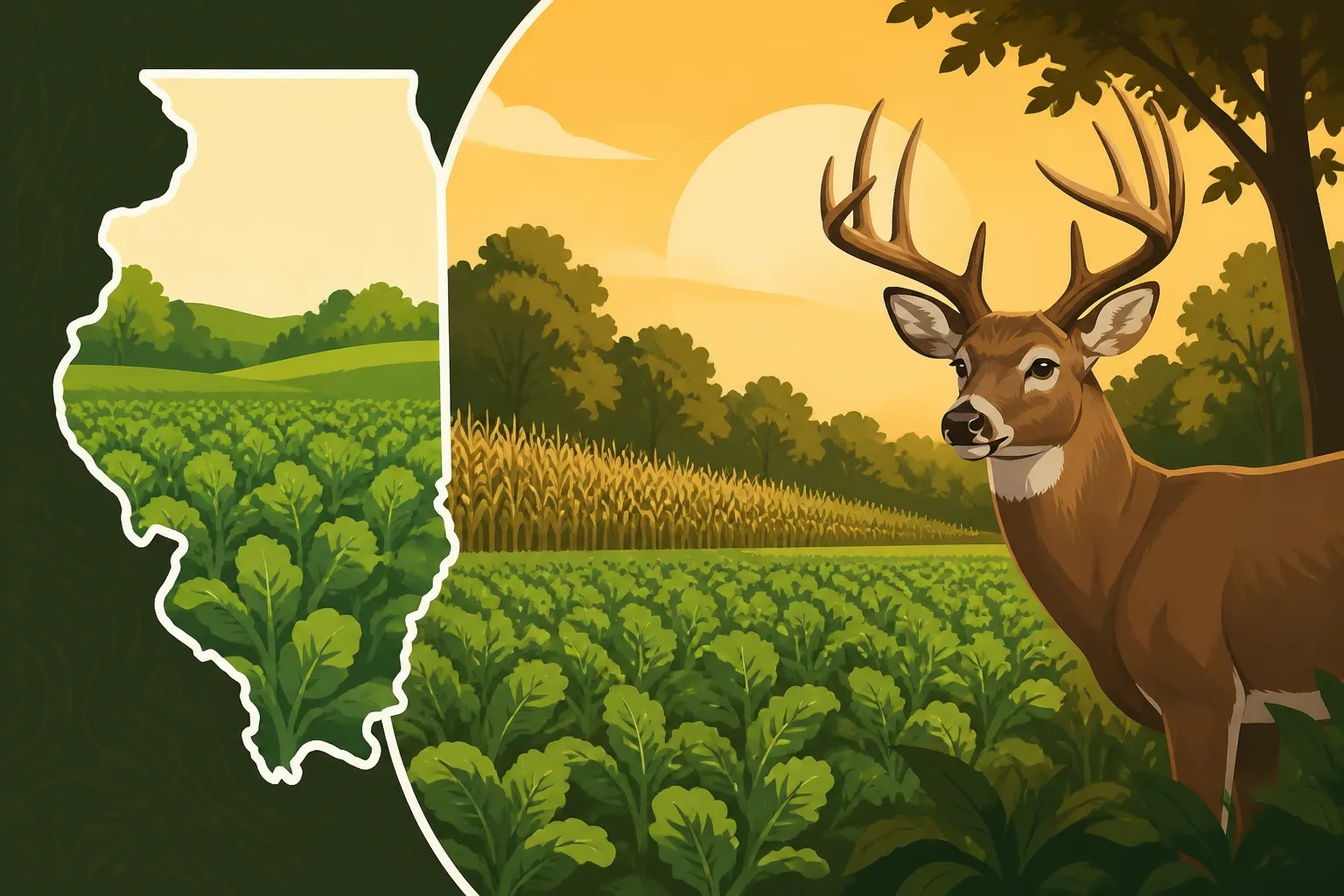
- Brassicas (Rape, Turnips, Radishes, Kale): These annuals are incredible attractants, especially after a few hard frosts convert their starches to sugars, making them incredibly sweet and irresistible to deer.
- Winter Wheat, Oats, Cereal Rye: These annual grains are easy to grow, provide quick forage, and are excellent "nurse crops" for establishing clover. They offer early season attraction and can hold deer even after heavy pressure.
Cool-season plots are absolutely critical for providing Late-Season Food Sources for Illinois Whitetails when other natural foods diminish. They can be a lifesaver for deer during the harsh Illinois winters.
-
Warm-Season Plots: These are planted in late spring or early summer (May-July in Illinois) once soil temperatures are consistently warm. They provide forage throughout the summer and early fall, offering crucial nutrition during antler growth and fawn development. Common warm-season plants include:
- Soybeans: A high-protein, highly attractive annual. Deer will browse the leaves throughout summer and consume the beans in fall and winter.
- Corn: A classic annual that provides high-energy carbohydrates, especially valuable in late fall and winter. Best for larger plots as deer can quickly consume smaller ones.
- Grain Sorghum (Milo): A drought-tolerant annual that provides food and cover, often used in drier areas or as a screening crop.
- Sunflowers: While primarily grown for doves, deer will browse the leaves and sometimes eat the seeds.
A balanced approach often involves having both cool-season and warm-season plots, or rotating them, to provide a consistent food supply throughout the year. This strategy can significantly boost the overall Illinois Deer Herd Size and health on your property.
Annuals vs. Perennials
The choice between annuals and perennials depends on your goals, budget, and time commitment.
-
Annuals: These plants complete their life cycle in one growing season and must be replanted each year.
- Pros: Offer quick growth, often provide a massive surge of nutrition, and allow for flexibility to change plantings year to year. Excellent for specific seasonal attraction (e.g., brassicas for late season, corn/soybeans for fall).
- Cons: Require yearly investment in seed, fuel, and labor for planting.
- Examples: Corn, soybeans, winter wheat, oats, brassicas.
-
Perennials: These plants live for multiple years, returning each season from the same rootstock.
- Pros: Lower long-term maintenance once established, provide consistent food over several years, and can save significant time and money on yearly planting.
- Cons: Can be slower to establish, require good weed control in the first year, and might need occasional mowing or herbicide application for optimal performance.
- Examples: Clover (most varieties), chicory, alfalfa.
Many hunters find success with a mix: a large perennial plot for consistent year-round nutrition and smaller annual plots dedicated to specific seasonal draws. For instance, a main clover plot might be surrounded by smaller strips of brassicas for fall hunting or corn for winter food.
Specific Plant Recommendations
Here's a quick look at some top performers for Illinois food plots:
| Plant Type | Season | Annual/Perennial | Key Benefits | Considerations |
|---|---|---|---|---|
| Clover | Cool/Warm | Perennial | High protein, soil builder, low maintenance (after establishment), drought tolerant, good for Deer Density by Illinois Region. | Needs good weed control initially, sensitive to low pH. |
| Chicory | Cool/Warm | Perennial | Deep taproot (drought tolerant), high protein, deer love it. | Can bolt (flower) in hot weather, benefits from mowing. |
| Brassicas | Cool | Annual | Incredible late-season draw, high energy, tolerates frost. | Deer may take time to adapt, needs good soil fertility. |
| Winter Wheat | Cool | Annual | Easy to grow, quick establishment, early season draw. | Less protein than clover, might be over-browsed if small. |
| Soybeans | Warm | Annual | High protein, high energy, summer browse & fall/winter beans. | Heavily browsed by deer, may need electric fence on small plots. |
| Corn | Warm | Annual | High energy, excellent late-season food source. | Needs larger plots to withstand browsing, requires significant fertilizer. |
| Oats | Cool | Annual | Fast growing, good early season attraction, great nurse crop. | Can winterkill in harsh Illinois winters. |
When selecting seeds, consider local conditions and consult reputable wildlife seed companies. Some even offer specific blends designed for different soil types or hunting goals.
Practical Steps for Establishing and Maintaining Your Food Plot
Now that you know the 'why' and 'where,' let's get into the 'how.' Establishing a successful food plot involves several key steps, from initial clearing to ongoing management. Don't rush these, and remember that patience and persistence are your best friends.
Site Preparation: Clearing and Tilling
Before you even think about dropping a seed, the ground needs to be ready. This often means clearing existing vegetation, especially if you're transforming an overgrown area or a section of timber. For smaller plots, a powerful brush hog, chainsaw, and maybe a stump grinder might be sufficient. For larger plots, you might need a tractor with a bush hog, disc, or even a dozer if there's significant timber or brush to clear.
Once cleared, the goal is to create a clean, level seedbed. This typically involves several passes with a disc or tiller. The aim is to break up compacted soil, incorporate organic matter, and create a fine, loose soil structure. If you've been doing your soil testing, this is also the stage where you'd spread any recommended lime. Remember, lime takes time to work into the soil and adjust the pH, so ideally, it's applied months before planting.
For those without heavy equipment, don't despair! "No-till" or "minimum-till" options are increasingly popular. This often involves applying a glyphosate-based herbicide to kill all existing vegetation, waiting for it to die back, and then broadcasting seed directly onto the dead thatch. While it saves on equipment, precise timing and careful herbicide application are crucial for success. These methods work particularly well for establishing clovers or cereal grains.
Planting Techniques
How you plant depends largely on the seed type and your equipment.
- Broadcasting: This is the simplest method, involving scattering seeds over the prepared seedbed. For small plots, a hand-spreader or ATV-mounted spreader works well. After broadcasting, light disking or cultipacking is often necessary to ensure good seed-to-soil contact. This is crucial for germination. Many small-seeded varieties like clover and brassicas are ideal for broadcasting.
- Drilling: Using a seed drill plants seeds at a precise depth and spacing. This method is highly efficient, conserves seed, and typically results in better germination and stand establishment. However, drills require a tractor and are a significant investment, often shared among hunting clubs or rented. Larger seeds like corn and soybeans are best planted with a drill or planter.
- Cultipacking: Regardless of your planting method, cultipacking after planting is highly recommended, especially for broadcasting. A cultipacker presses the seeds firmly into the soil, ensuring optimal seed-to-soil contact, which is vital for moisture uptake and germination. If you don't have a cultipacker, dragging a section of chain-link fence or even an old bedspring can serve a similar purpose on a smaller scale.
Timing is paramount. For cool-season plots, aim for late August to mid-September in Illinois to allow plants to establish before winter. For warm-season plots, plant after the last frost, typically late April to early June, once soil temperatures are consistently above 60 degrees Fahrenheit. Always check specific seed package recommendations for ideal planting depths and dates.
Fertilization and Weed Control
Fertilization, guided by your soil test, provides the necessary nutrients for robust plant growth. Without adequate fertilizer, even the best seed in the perfect spot will struggle. Apply fertilizers according to the soil test recommendations, typically at planting or shortly after germination. For perennial plots like clover, top-dressing with a phosphorus and potassium fertilizer (e.g., 0-20-20) in the fall or early spring can significantly extend the plot's life and productivity.
Weed control is the ongoing battle for any food plot manager. Weeds compete with your desired forage for sunlight, water, and nutrients, quickly choking out young plants.
- Pre-emergent Herbicides: Some herbicides can be applied before seeds germinate to prevent weed growth, but careful selection is needed to ensure it doesn't harm your food plot species.
- Post-emergent Herbicides: These are applied after plants have emerged. Selective herbicides, such as clethodim for grass control in broadleaf plots (like clover), or specialized broadleaf herbicides for clover or chicory, are invaluable. Always read labels carefully and ensure they are safe for your specific food plot crop.
- Mowing: For perennial plots like clover, periodic mowing can help suppress weeds and encourage new, tender growth. Mowing should generally occur before weeds go to seed, but avoid cutting too low, especially in dry conditions.
- Crop Rotation: For annual plots, rotating crops can help manage specific weed pressures and diseases over time, as well as balance soil nutrients.
Consistent vigilance is key. A small weed problem can quickly become an overwhelming invasion if ignored, turning your beautiful food plot into a patch of undesirable vegetation.
Long-Term Management and Monitoring
Food plots aren't a "plant it and forget it" endeavor. Ongoing management ensures they remain productive and attractive to deer year after year.
- Monitoring: Regularly scout your plots. Are deer browsing them heavily? Are weeds creeping in? Are there signs of nutrient deficiencies (yellowing leaves, stunted growth)? Trail cameras are invaluable for monitoring deer usage, helping you understand peak feeding times and the specific animals using your plots. This data can inform your hunting strategy, especially if you're trying to target specific Best Illinois Counties for Big Bucks or understand the local Illinois Buck Age Structure.
- Soil Re-testing: Re-test your soil every 2-3 years to see how your amendments and cropping have affected nutrient levels and pH. This allows you to adjust your fertilization strategy.
- Winter Protection: For late-season plots, consider leaving some standing corn or other tall crops nearby to provide thermal cover, especially important in fields exposed to harsh winter winds.
- Plot Rotation: If you have multiple plots, rotate your annual plantings. For example, plant corn in one plot one year, then switch to soybeans or brassicas the next. This helps prevent nutrient depletion, reduces pest and disease buildup, and gives you flexibility.
- Adjusting to Browsing Pressure: If deer are annihilating your plots before they can get established, you might need to increase plot size, plant more browse-tolerant varieties, or even consider temporary fencing (like a simple electric fence) to allow young plants to mature. On smaller properties, Entry Routes Through Standing Corn can make a difference in how deer use a plot.
Successfully managing food plots on your private Illinois land is a continuous learning process. Each year brings new challenges and opportunities, but with a solid foundation in soil health, strategic placement, and diligent care, you can create a truly exceptional hunting property that benefits both you and the local wildlife.
Disclaimer
This article is for general informational purposes only and does not constitute professional advice. Laws, prices and regulations vary by location and change over time. Consult a qualified professional for guidance on your specific situation.