Marion County Public Land Access
Trying to pin down reliable public hunting land in a specific county like Marion can feel like searching for a needle in a haystack, especially when you're used to hearing about the big names like Shawnee National Forest or the Illinois River bottomlands. It’s frustrating when you just want to know where you can legally and effectively pursue game without traveling for hours, and then you face limited information. This guide aims to cut through that confusion, providing clear, actionable insights into accessing and hunting public lands within Marion County, Illinois, so you can spend less time guessing and more time in the woods.
Understanding Marion County's Hunting Landscape
Marion County, located in south-central Illinois, might not be as famous for its vast public hunting acreage as some other parts of the state, but it certainly holds potential for the diligent hunter. What it lacks in sheer public land volume, it often makes up for in diverse habitats and proximity to agricultural fields, which can concentrate deer, turkeys, and small game. The landscape here is a mix of tillable ground, scattered woodlots, creek bottoms, and some larger timber tracts, creating a mosaic that can be very attractive to wildlife.
The Mix of Agriculture and Timber
Imagine driving through Marion County – you'll see endless corn and soybean fields, the lifeblood of this region's agriculture. But interspersed among these fields are vital pockets of timber, often following creek drainages or encompassing small, isolated hills. These woodlots and riparian corridors are absolute magnets for deer, providing cover, bedding areas, and travel routes. Turkeys will also utilize these areas, especially where mature trees offer good roosting spots. The key frustration for many hunters is figuring out where these timbered areas are accessible to the public, rather than being locked up in private ownership. This mix, while excellent for game, often means public parcels are smaller and more fragmented, demanding a more strategic approach to scouting and hunting.
Game Species You'll Encounter
Marion County is primarily known for its healthy populations of white-tailed deer and wild turkeys. Deer thrive on the agricultural bounty, growing big and healthy, while turkeys find ample forage and roosting cover. Beyond the big two, you can expect to find good numbers of squirrels, especially fox and gray squirrels in the mature timber. Rabbits are common in brushy fencerows and thickets. Pheasants and quail, while not as prevalent as in historical times, can occasionally be found in suitable grassland or cover areas, particularly around public lands that focus on upland game habitat. Waterfowl opportunities are generally more limited to local ponds and small impoundments, rather than major river systems. Understanding which species are most abundant can help you narrow down your focus when scouting different public access points.
Key Public Land Opportunities in Marion County
While Marion County isn't brimming with thousands of acres of contiguous public hunting grounds, it does offer some valuable spots if you know where to look and how to approach them. These areas often require a bit more legwork and prior research than sprawling national forests, but the reward can be less pressure and quality hunting.
Stephen A. Forbes State Recreation Area
This gem is arguably the largest and most significant public hunting destination within Marion County. Illinois State Park Hunting often includes areas like Forbes, which are managed for both recreation and hunting. Located northeast of Salem, Forbes encompasses a large lake and surrounding timbered hills, bottomlands, and some open fields. This diverse habitat makes it a prime location for deer, turkey, and small game. However, its popularity also means it can see significant pressure, especially during opening weekends or peak rut for deer.
- Understanding the Terrain: The terrain at Forbes ranges from fairly flat bottomlands along the lake's fingers to steeper, timbered ridges. Deer often bed on these ridges, slipping down into the creek bottoms and fields to feed. Turkey love to roost in the mature hardwoods around the lake and along the larger creek systems. You’ll find a mix of oak, hickory, and maple, providing varied food sources throughout the seasons. The key is to find those overlooked pockets or areas that require a longer walk, as many hunters stick close to parking areas.
- Navigating Access Points: Forbes has multiple access points around the lake and along its perimeter roads. Parking lots are generally well-marked. However, don't just stop at the first trail you see. Utilizing mapping tools like onX Hunt can be incredibly beneficial here, allowing you to see the lay of the land, identify potential pinch points, food sources, and most importantly, discern public from adjacent private property lines. This digital scouting can save you hours of aimless wandering and help you plan your entry and exit routes strategically.
- Specific Regulations and Site Permits: Like many state-managed areas, Stephen A. Forbes State Recreation Area may have specific site regulations that differ slightly from statewide rules. These often involve special permit requirements, check-in/check-out procedures, or designated hunting zones for specific species or seasons. Always check the current Illinois Department of Natural Resources (IDNR) site-specific regulations for Forbes before you hunt. These can change year to year, so don't rely on old information.
Other Smaller State or Conservation Areas
Beyond Forbes, Marion County has a few smaller conservation areas or lake properties that might offer limited hunting opportunities, typically focused on waterfowl, dove, or small game. These smaller parcels often fly under the radar for big game hunters but can be perfect for a quick squirrel hunt or a day chasing rabbits.
- Identifying Micro-Opportunities: Sometimes, small, unnamed parcels managed by local conservation districts or even IDNR can provide excellent hunting, precisely because they are not well-known. These might be small wooded plots donated for conservation or strips of land along utility easements or old railroad beds. This is where tools like GoHunt or onX Hunt really shine. Their detailed plat maps and public land layers can highlight these overlooked "micro-opportunities" that might not even be listed on official IDNR hunting access maps. You can literally scroll through the county, looking for green patches (public land) surrounded by private ground.
- The Value of Local Knowledge: While digital tools are powerful, don't underestimate the value of local knowledge. Sometimes, a general store owner, bait shop proprietor, or even a casual chat with a local farmer can reveal these smaller, less-pressured areas. They might point you to a small public easement you never knew existed or suggest an area that typically holds good numbers of rabbits or squirrels. Just remember to always verify any information with current IDNR regulations and map data.
Navigating Access Challenges and Maximizing Success
Hunting public land in Marion County comes with its own set of challenges, from deciphering boundaries to managing hunting pressure. Overcoming these obstacles requires a blend of preparation, smart scouting, and a willingness to adapt.
Digital Scouting and Mapping Tools
In a county with fragmented public land, your smartphone or GPS device loaded with mapping software is your best friend. Gone are the days of relying solely on paper maps, though a good paper map for backup is always wise.
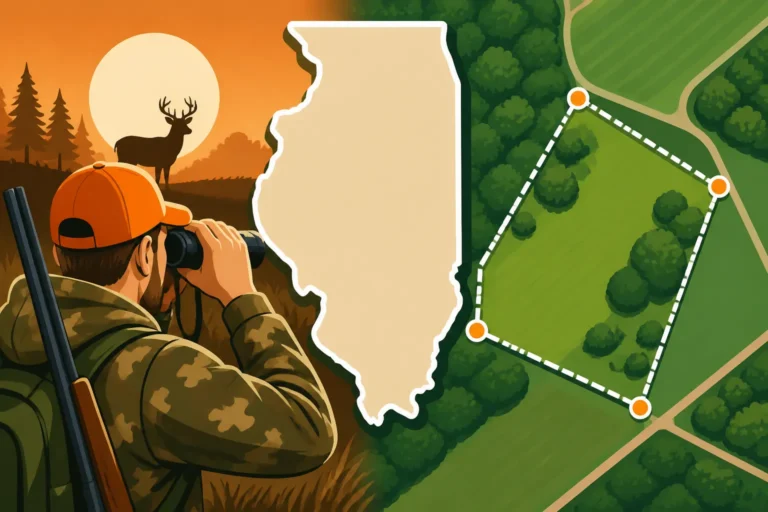
- Leveraging onX Hunt: Programs like onX Hunt are game-changers for identifying public versus private land boundaries down to the property line. This is crucial in Marion County, where a small woodlot might be half public, half private. With onX Hunt, you can clearly see property ownership, helping you avoid accidental trespassing—a critical concern when Illinois Trespass and Permission Law is strictly enforced. Beyond boundaries, these apps allow you to mark potential stand locations, food sources, bedding areas, and travel corridors, creating a virtual scouting report before you ever set foot in the woods. You can analyze topography, identify potential funnels between woodlots or across fields, and even locate water sources.
- Utilizing GoHunt for Broader Planning: While onX is excellent for granular, in-the-field navigation, platforms like GoHunt can offer broader analytical tools, sometimes providing insights into harvest data, habitat types, and even drawing odds for specific permit areas (though this is more relevant for lottery-based hunts, less so for general over-the-counter access). Using both in conjunction can give you a comprehensive picture, from macro-level planning to micro-level execution. This dual approach allows you to scout the entire county from your couch, identifying potential hidden gems.
- Interpreting Aerial Imagery: Zooming in on aerial imagery is key. Look for subtle changes in timber density, clear-cuts, old logging roads, or thickets that might provide sanctuary for deer. Identify areas where different habitat types meet, like where a dense cedar thicket borders a mature oak stand—these ecotones are often wildlife hotspots. The more you "read" the landscape from above, the more efficient your in-person scouting will be.
On-the-Ground Scouting Techniques
Digital scouting is a powerful start, but there's no substitute for boots on the ground. This is where you confirm your theories and find the fresh sign that tells you where the animals are right now.
- Pre-Season Reconnaissance: Before the season opens, make several trips to your chosen public land parcels. Look for deer trails, rub lines, scrape activity, and turkey droppings or feather piles. Pay close attention to food sources—are the acorns dropping? Are there browse lines on specific plants? Note where deer are entering and exiting fields, especially if they are coming from a public timber block into private agriculture. Remember, Scouting Illinois Public Land Before Season is crucial to understanding current patterns.
- Seasonal Adaptations: Hunting patterns can change drastically throughout the season. Early season deer might be focused on abundant summer food sources, while late-season deer will gravitate towards persistent food, like standing beans or corn left unharvested, or specific mast crops. Turkeys will also shift their routines from breeding season patterns to fall flocking behaviors. Your scouting should be dynamic, adapting to the time of year and available forage. For example, if you're hunting during the early archery season, focus on green food sources and natural browse. Come late fall, shift your attention to hard mast or remaining agricultural fields.
- Finding Unpressured Pockets: Public land, by its nature, attracts hunters. To find success, you often need to find areas that other hunters overlook. This might mean walking an extra half-mile, crossing a creek, or navigating a thick, nasty briar patch. Sometimes, the nastiest cover holds the biggest bucks precisely because most hunters avoid it. Look for areas that require a bit more effort to reach—a small point of timber surrounded by fields, a hidden bench on a ridge, or a thicket along a river bend. These are the places where deer and turkeys feel secure.
Managing Hunting Pressure
Pressure is a fact of life on public land. However, you can use it to your advantage.
- Understanding Hunter Behavior: Most public land hunters stick to the easiest access points and don't venture far from their vehicles. Knowing this, you can plan to hunt deeper into an area or explore overlooked corners. During opening days, expect competition, especially at popular spots within Stephen A. Forbes State Recreation Area. If you can, save your deepest penetration for weekdays or later in the season when crowds thin out.
- Using Pressure to Your Advantage: Sometimes, hunting pressure pushes deer from easily accessible private land onto public tracts that offer thicker cover. If you see a lot of activity on surrounding private properties, focus your efforts on the thickest, most secluded parts of adjacent public land, especially those with good escape cover. Deer will seek sanctuary, and if public land offers that, they will use it. Conversely, if you notice an area is getting hammered, be ready to move and find another spot. Having multiple scouted locations on hand is a critical strategy.
Important Regulations and Considerations for Marion County
Hunting in Illinois means adhering to state regulations, but also being aware of site-specific rules that can apply to public lands in Marion County. Ignorance of the law is no excuse, and staying informed is part of being a responsible hunter.
Statewide Regulations That Apply
Before you even step foot in Marion County, make sure you're up to date on all general statewide Illinois hunting regulations. These include everything from Illinois Hunting Licenses and What They Cost to species-specific season dates and bag limits.
- License and Permit Requirements: You'll need a valid Illinois hunting license and a State Habitat Stamp. For deer and turkey, specific permits are required. Make sure you have the correct archery, firearm, or muzzleloader permits for the species and season you are pursuing. Always carry proof of your license and permits while afield. Buying a License on Illinois's Online Portal is the easiest way to ensure you're compliant.
- Blaze Orange Requirements: During Illinois firearm deer seasons, blaze orange requirements are in effect for all hunters, even if you're bowhunting concurrently or pursuing small game. Always confirm the current regulations, but typically you need to wear an outer garment of solid blaze orange (or blaze pink) that covers a minimum of 400 square inches, with at least 100 square inches visible on both the front and back, and a blaze orange or pink cap. This is for safety and is non-negotiable.
- Legal Weapons: Understand the legal weapons for each season. For instance, during the firearm deer seasons, Illinois allows shotguns, muzzleloaders, and specific straight-wall cartridge rifles. Archery season permits bows and crossbows. Make sure your equipment meets the legal definitions and requirements. For example, knowing Crossbow Rules During Illinois Archery Season is important if you choose to use one.
Site-Specific Rules and Check-In Procedures
Public lands managed by the IDNR, like Stephen A. Forbes State Recreation Area, often have their own set of rules on top of statewide regulations. These are designed to manage hunting pressure, protect resources, and ensure safety.
- Mandatory Check-In/Check-Out: Many state sites require hunters to check in before hunting and check out afterward, even if you didn't harvest anything. This data helps the IDNR manage populations and understand hunter effort. This might involve an electronic kiosk, a physical sign-in sheet, or even an online portal. Always verify if your chosen area requires this. Failure to check in or out can result in citations or loss of hunting privileges.
- Restricted Areas: Even within a designated public hunting area, certain zones might be off-limits for hunting due to safety concerns (e.g., near campgrounds, boat launches, or residential areas) or for wildlife sanctuary purposes. These are usually clearly marked on site maps or with signage. Pay attention to these boundaries when planning your hunt.
- Specific Species or Season Closures: While Marion County is generally open for common game, some smaller public parcels might have closures for certain species or during specific seasons to protect fragile populations or manage usage. For instance, a small area might only be open for archery deer and closed for firearm or turkey hunting. Always consult the most current public hunting guide for that specific site.
Respecting Private Land Boundaries
Given the fragmented nature of public land in Marion County, respecting private land boundaries is paramount. Accidental trespassing is a serious issue that can lead to legal trouble and damage the reputation of all hunters.
- Using Technology: This is where onX Hunt and similar apps are invaluable. Having property lines displayed on your device with your live GPS location is the best way to ensure you stay on public ground. Set up boundary alerts on your app so you're warned if you get too close to a private parcel.
- Physical Markers: While apps are great, always look for physical boundary markers too, such as fences, signs, or changes in habitat. If you're unsure, err on the side of caution and back away. It's always better to be safe than sorry.
- Retrieving Game: Even if you legally shoot an animal on public land, if it runs onto private property, you generally need permission from the landowner to retrieve it. Know Retrieving Game From Private Land in Illinois rules. It's a good practice to identify adjacent landowners during your scouting and, if possible, politely introduce yourself and ask for permission before the season, just in case.
Hunting in Marion County's public lands offers rewarding experiences for those willing to do their homework and adapt their approach. By understanding the landscape, leveraging modern tools, and adhering to regulations, you can successfully pursue game in this often-overlooked part of Illinois.
Marion County Public Land Hunting Reference Table
Here's a quick overview of key considerations when planning your hunt in Marion County:
| Aspect | Description | Important Notes |
|---|---|---|
| Primary Public Land | Stephen A. Forbes State Recreation Area | Offers diverse habitat (timber, fields, lake), good for deer, turkey, small game. Can experience high pressure. |
| Other Access | Smaller conservation areas, local lake properties, unlisted IDNR parcels | Often smaller, less pressured. May be focused on specific game like waterfowl or small game. |
| Primary Game Species | White-tailed Deer, Wild Turkey, Squirrel, Rabbit | Deer and turkey thrive on agriculture/timber mix. Squirrels and rabbits are common in woodlots/thickets. |
| Best Scouting Tools | onX Hunt, GoHunt, IDNR Website maps | Essential for identifying public/private boundaries, topography, and potential game habitat. Use aerials for virtual scouting. |
| Site-Specific Rules | Check-in/check-out requirements, restricted areas, specific season dates/limits | ALWAYS consult current IDNR site regulations for Stephen A. Forbes and any other areas. Regulations can change annually. |
| Statewide Regulations | Valid hunting license, State Habitat Stamp, species permits, blaze orange rules, legal weapons | Ensure all licenses and permits are current. Adhere to blaze orange during firearm seasons. |
| Private Land Boundaries | Critical concern due to fragmented public land. | Use GPS apps with property lines (e.g., onX Hunt) to prevent trespassing. Seek permission for game retrieval if needed. |
| Managing Pressure | Hunt deeper, explore overlooked pockets, adapt to weekday hunting. | Most hunters stick to easy access. Pressure can push deer into thick public cover. |
| Habitat Type | Mixed agriculture, woodlots (oak, hickory, maple), creek bottoms, some grasslands | Diverse habitat supports various game. Focus on edges where different habitat types meet. |
Disclaimer
This article is for general informational purposes only and does not constitute professional advice. Laws, prices and regulations vary by location and change over time. Consult a qualified professional for guidance on your specific situation.