Rabbit Hunting Thick Illinois Brush
If you've ever tried to chase down cottontails in Illinois, you know the frustration of watching a rabbit vanish into a wall of briars, honeysuckle, or tangled downed timber. It feels like they're laughing at you from the impenetrable fortress of thick cover they call home. This guide is all about equipping you with the knowledge, gear, and tactics to confidently tackle those challenging environments and put more rabbits in your vest.
Understanding Illinois's Thick Cover for Rabbits
Illinois might be known for its vast farmlands, but don't let that fool you. Our state is crisscrossed with dense, brushy areas that are absolute havens for cottontail rabbits. Understanding why they prefer these spots and what kind of cover you'll face is the first step to a successful hunt.
Why Rabbits Love Dense Brush in Illinois
Rabbits are prey animals, and their entire survival strategy revolves around concealment and quick escapes. Thick brush offers them precisely what they need: an intricate network of escape routes, a barrier against predators like coyotes and hawks, and often, a convenient food source all in one place. These dense areas provide both bedding and feeding grounds, meaning rabbits don't have to venture far from safety. They can literally spend their entire day within a few yards of the thickest briar patch, feeling secure from above and below.
Furthermore, these thickets often retain moisture and offer shelter from harsh winds or extreme cold, making them comfortable year-round. Think about the stark difference between a rabbit exposed in an open field and one nestled deep within a gnarly honeysuckle patch. The sense of security in dense cover is paramount, and it's why you'll find them there even when other areas might offer more readily available food. It's a trade-off they're hardwired to make, prioritizing safety above all else.
Common Types of Thick Cover You'll Encounter
In Illinois, "thick brush" isn't just one thing; it's a tapestry of diverse, challenging vegetation. You'll find everything from tangled multi-flora rose bushes that grab at your clothes with thorny fingers, to vast mats of invasive honeysuckle creating a dense understory in otherwise open timber. Creek bottoms are often choked with briars, wild grapevines, and fallen trees, forming nearly impenetrable walls. Fencerows, especially older ones, are often overgrown with small trees, shrubs, and briars, creating linear superhighways of cover that rabbits love to travel. Even on farmland, unharvested standing corn or soybean fields that have gone to seed can provide incredibly dense cover late in the season. Each type presents its own unique challenge and requires a slightly different approach.
Consider also the edges of old pastures that have grown up, abandoned farmsteads, or even fringes of public hunting areas. These spots, often overlooked by deer hunters, are prime rabbit habitat. Areas recovering from timber harvest can also be incredibly dense with new growth, saplings, and briars. Before you head out, familiarize yourself with the terrain you'll be hunting, perhaps by using a mapping tool like GoHunt to identify these prime, dense areas from an aerial perspective.
The Challenges of Hunting Dense Rabbit Habitat
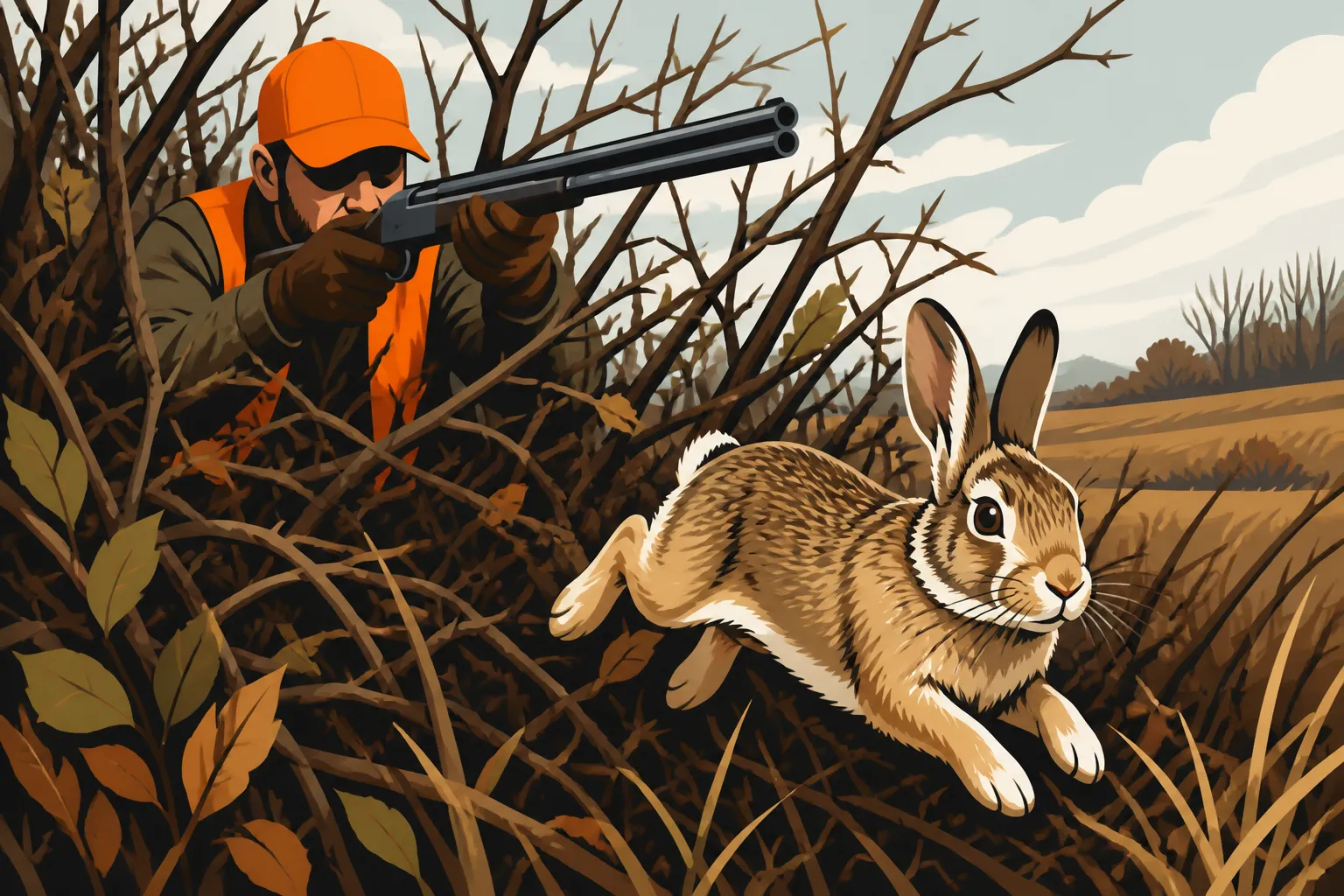
Hunting rabbits in thick brush is not for the faint of heart, nor for the underprepared. The most immediate challenge is simply moving through it. You'll get snagged, scratched, and poked. Visibility is severely limited, making it tough to spot a rabbit until it's practically underfoot, and even harder to get a clean shot when it bolts. The thick vegetation can deflect pellets, making effective range much shorter than in open fields. Communication with hunting partners can be difficult, and keeping track of dogs becomes a constant concern.
Another major frustration is losing sight of a flushed rabbit almost immediately. They don't run in straight lines through dense cover; they zig and zag, diving back into the thickest part of the brush in a blink. This makes quick, decisive shooting absolutely critical. Furthermore, retrieving a downed rabbit from a thorny thicket can be as challenging as the hunt itself, often requiring careful navigation through nasty vegetation. It's an environment that demands patience, toughness, and a good dose of strategic thinking.
Essential Gear and Preparations for Thick Brush
You wouldn't head into a blizzard without a warm coat, and you shouldn't tackle thick Illinois brush without the right gear. Being properly equipped not only makes the hunt safer and more comfortable but significantly increases your chances of success.
Shotguns and Ammunition Choices
When you're hunting rabbits in thick brush, the encounters are almost always fast, close, and fleeting. This isn't the place for long-range precision. A fast-handling shotgun is paramount. Most rabbit hunters opt for a 12 or 20 gauge, but a 16 or 28 gauge can also be excellent choices. The key is balance and maneuverability. You need to be able to shoulder and swing the gun quickly in tight quarters. Open chokes like improved cylinder or modified are ideal, as they provide a wider pattern at close ranges, increasing your chances of connecting with a rapidly moving target. For ammunition, load up with #6 or #7.5 shot. These smaller shot sizes create a dense pattern that's effective on rabbits, even if only a few pellets connect due to vegetation interference. Heavier loads with larger pellets might be overkill and open up your pattern too much at the close ranges typical in brush.
For those considering newer options, some hunters are experimenting with straight-wall cartridge rifles in Illinois, but for rabbits, the shotgun is still king due to the quick, chaotic nature of the shots. The wide pattern of a shotgun, even with small shot, offers the best chance to connect with a rabbit that bursts out of cover and dives back in almost immediately. Think about the speed of presentation – a short-barreled pump or semi-automatic shotgun can be brought to bear much faster than most rifles in a dense environment.
Protective Clothing and Footwear
This cannot be overstated: wear appropriate protective clothing. Briars, thorns, and sharp twigs will tear through regular hunting pants and jackets like tissue paper. Invest in heavy-duty, briar-resistant pants or chaps. Carhartt offers some durable options, as do dedicated hunting brands like Dan's Hunting Gear or Filson. A thick, brush-resistant jacket or vest is also crucial. Beyond protecting your body, this clothing will help you push through dense cover with less resistance, conserving energy. Don't forget a good pair of leather gloves, preferably with gauntlets to protect your wrists, and a blaze orange hat for safety. Eye protection is also a must to shield your eyes from whipping branches.
Your footwear also needs to be up to the task. Waterproof, ankle-supporting boots are essential. You'll be crossing wet areas, climbing over downed timber, and pushing through muddy spots. A good pair of well-fitting boots will prevent blisters and provide the stability needed on uneven, tangled terrain. Think about waterproof materials and sturdy soles that can grip slick logs or muddy banks. You'll be on your feet for hours, often in challenging conditions, so comfort and protection are paramount.
Tools for Navigation and Game Retrieval
When you're deep in a thicket, it's incredibly easy to get disoriented. A reliable GPS device or a mapping app like GoHunt on your smartphone is invaluable. Download offline maps before you go, as cell service can be spotty in some remote Illinois areas. Mark your starting point and any key features like roads, trails, or your vehicle. This tool will not only help you navigate but also to mark spots where you've had success or noticed fresh sign, which can be useful for future hunts. Learning to use these tools for scouting Illinois public land before season can make all the difference.
Retrieving a downed rabbit from a thorny patch can be a real pain. A pair of game shears or a sturdy knife can be helpful for clearing a path to your game if it's deeply embedded in thick brush. A small game vest or a durable game bag is also essential for carrying your harvest comfortably and cleanly. Some hunters even carry a small, collapsible fishing gaff or a long stick with a hook to pull rabbits out of hard-to-reach places without tearing up their hands. Having a small first-aid kit with bandages and antiseptic wipes is also a wise precaution for those inevitable scratches and scrapes.
| Essential Gear for Thick Brush Rabbit Hunting | Description | Why It's Important |
|---|---|---|
| Shotgun (12/20 Ga.) | Fast-handling pump or semi-auto with open choke | Quick shots, wide pattern in dense cover |
| Ammunition (#6 or #7.5 shot) | Smaller shot sizes for dense patterns | Increases hit probability on fast-moving rabbits |
| Briar-Resistant Pants/Chaps | Heavy-duty, thorn-proof material | Protection from scratches, tears, and discomfort |
| Thick Hunting Jacket/Vest | Durable, blaze orange, weather-resistant | Body protection, visibility, warmth |
| Leather Gloves (gauntlet style) | Protects hands and wrists from thorns | Prevents cuts and scrapes when pushing through brush |
| Eye Protection | Clear or amber shooting glasses | Shields eyes from whipping branches and debris |
| Waterproof Boots | Ankle support, good traction | Comfort, stability, and dry feet in varied terrain |
| GPS/Mapping App (GoHunt) | Offline maps, marking waypoints | Navigation, preventing getting lost, recording successful spots |
| Game Vest/Bag | Durable, easy to clean | Hands-free transport of harvested rabbits |
| Small First-Aid Kit | Bandages, antiseptic wipes | Addresses minor injuries from thorns and falls |
Effective Strategies for Flushing and Shooting Rabbits
Hunting thick brush is often a game of persistence and precision. You won't be glassing rabbits from a distance; you'll be putting in the legwork to kick them out of their hiding spots and making quick, decisive shots.
Solo Hunting Tactics in Thick Cover
Hunting rabbits alone in thick brush requires a methodical approach. Instead of trying to cover vast areas, focus on systematically working small, isolated patches of cover. Think of it like a grid search. Move slowly, deliberately, and be prepared for a rabbit to burst out at any moment. Pause frequently for a few seconds; sometimes, a rabbit will hold tight, then break cover once it thinks you've passed. These pauses can often trigger a flush. When you approach a thicket, try to anticipate where a rabbit might run to and position yourself for a quick shot. Walk around the edges first, then systematically crisscross the interior.
One effective technique is to walk into the wind, or at least crosswind, if possible. While rabbits don't have the best sense of smell, it can sometimes play a role. More importantly, it keeps the wind in your face for scent control if other game might be around, and it can sometimes carry the sound of a rustling rabbit towards you. Pay close attention to any subtle signs – a twitch of an ear, a patch of fur, or fresh tracks in the mud, especially if you're Reading Illinois Mud for Fresh Deer Movement, similar principles apply to rabbit sign. These small clues can tell you where to focus your efforts. A patient, slow, and observant hunter will often be more successful than one who crashes through the cover blindly.
Hunting with Dogs: A Game Changer
There's no denying it: a good rabbit dog, particularly a beagle, is an absolute game-changer when Running Beagles on Illinois Cottontails in thick brush. Dogs can penetrate cover that hunters can't, sniffing out rabbits and, most importantly, driving them out into the open or along predictable escape routes. A dog's persistent barking and baying as it trails a rabbit is music to a hunter's ears, signaling where the action is. When a rabbit is being chased by a dog, it often runs in circles, allowing hunters to position themselves strategically to intercept it. This requires good communication among hunters and a deep trust in your dog's ability.
When hunting with dogs, position hunters on the downwind side of the thicket or along known escape corridors like fencerows or trails. The dogs will work through the cover, pushing rabbits towards the waiting guns. It's crucial to have hunters spaced out safely, clearly defining shooting lanes. Training your dogs to be "brush dogs" that aren't afraid to dive into the nastiest stuff is key. They need to be relentless and have excellent recall, especially when out of sight. A GPS collar on your dog can also be a lifesaver, allowing you to track their movement and locate them if they get too far ahead or become lost in the dense foliage.
Post-Flush Shot Placement and Follow-Up
When a rabbit bursts from thick cover, you often have only a split second for a shot. The key is quick target acquisition and a smooth swing. Don't try to track it too long; get on it, swing through, and pull the trigger. Aim for the front half of the rabbit for a clean kill. Due to the limited visibility and rapid movement, many shots will be taken instinctually. Don't be afraid to take a follow-up shot if the first one misses or doesn't bring the rabbit down cleanly. Having an extra shell ready in your gun is always a good idea.
Sometimes, a rabbit will be hit but not instantly incapacitated, diving back into the thick cover. If this happens, mark the spot where you last saw it with a mental note or by throwing a hat or a piece of blaze orange clothing nearby. Then, approach cautiously and systematically search the area. A dog can be invaluable for finding a wounded rabbit that has crawled into heavy cover. Remember, ethical hunting means doing everything you can to recover any game you shoot. Understanding the behavior of a wounded rabbit – often trying to hide in the densest spot – can aid in your search.
Safety and Ethics When Hunting Thick Brush
Hunting in thick brush presents unique safety challenges. Prioritizing safety, respecting the land, and adhering to legal requirements are paramount for a responsible hunt.
Prioritizing Hunter Safety in Dense Environments
Visibility is severely compromised in thick brush, making hunter safety an even greater concern than in open terrain. Always wear plenty of blaze orange, even if not legally required for rabbit hunting. The more visible you are to your companions, the better. Communicate constantly, especially if you're hunting in a group. Use whistles or verbal commands to indicate your position and direction of travel. Never shoot at sound or movement; always be 100% certain of your target and what lies beyond it. The thick cover can obscure fences, rocks, or even other hunters.
When moving through dense areas, keep your shotgun's safety on until you're ready to shoot. Always control the muzzle, pointing it in a safe direction, typically up or down, never towards another person. Be extra cautious when climbing over fallen logs or pushing through heavy vegetation, as a slip or stumble could lead to an accidental discharge. It's also wise to ensure everyone in your party has taken an Illinois Hunter Education Requirements course, as it covers crucial safety protocols for various hunting scenarios.
Respecting Land and Wildlife
Whether you're hunting public land or private property, showing respect for the environment and wildlife is non-negotiable. Always pack out everything you pack in, leaving no trash behind. If you're on private land, obtain clear permission beforehand and stick to the areas the landowner has designated. Understand Illinois Trespass and Permission Law thoroughly. Many landowners appreciate hunters who help manage rabbit populations, but it’s vital to maintain a good relationship. This often means being mindful of fences, crops, and livestock.
Beyond respecting property, ethical hunting involves proper game handling. Field dress rabbits quickly and cleanly to ensure good meat quality. Don't waste any part of the animal. If you harvest more rabbits than you can use, consider donating them. Be aware of Illinois Small Game Season Rules and bag limits to ensure you're hunting legally and sustainably. We want to ensure healthy rabbit populations for generations to come, and that starts with responsible hunting practices today.
Legal Considerations for Rabbit Hunting in Illinois
Before heading out, always consult the current Illinois Department of Natural Resources (IDNR) regulations for rabbit hunting. These regulations cover season dates, daily bag limits, possession limits, and legal hunting hours. Typically, the season runs from early November through early February, but specific dates can vary annually and by zone. Always ensure your hunting license and habitat stamp are current; you can check details on Illinois Resident License Options or Illinois Nonresident License Options. Some areas, particularly certain public lands, may have additional site-specific rules or restrictions, so always check those before you go.
Knowing the law is crucial. For instance, understanding the minimum age for unsupervised hunting in Illinois, or the rules regarding cross-bows during the archery deer season versus small game. While small game seasons are often more forgiving than big game, ignorance of the law is never an excuse. Staying informed ensures a safe, legal, and enjoyable hunting experience for everyone.
Disclaimer
The information provided in this guide is for general informational purposes only and does not constitute legal advice. Hunting regulations, seasons, and licensing requirements can change. Always consult the most current Illinois Department of Natural Resources (IDNR) regulations and local ordinances before engaging in any hunting activities. It is the individual hunter's responsibility to know and obey all applicable laws.