Illinois Carcass Movement Restrictions
It's incredibly frustrating when you've had a successful hunt, only to be hit with a wave of anxiety about whether you're handling your deer carcass correctly. The rules around transporting game in Illinois, especially with the ongoing concerns about Chronic Wasting Disease (CWD), can feel like a minefield. This comprehensive guide is here to untangle those regulations, helping you understand Illinois's carcass movement restrictions so you can focus on enjoying your hard-earned venison without the worry of breaking the law or contributing to disease spread.
Understanding Why Carcass Movement Matters in Illinois
When you're out in the field, the last thing you might be thinking about is how a deer's bones or brain matter could be a vector for disease. But in Illinois, where wildlife management is a serious business, understanding carcass movement restrictions is absolutely critical. These aren't just arbitrary rules; they're in place for very important ecological and public health reasons.
The Threat of Chronic Wasting Disease CWD Spread
Chronic Wasting Disease (CWD) is a devastating neurological disease that affects deer, elk, and moose. It's always fatal, and unfortunately, there's no vaccine or treatment. What makes CWD particularly concerning is that it's caused by abnormal proteins called prions, which can persist in the environment for years, making it incredibly difficult to eradicate once it takes hold. Imagine a deer herd in a specific area being decimated, not by hunters or predators, but by an unseen enemy that lingers in the soil and plants. That's the nightmare scenario wildlife biologists are working to prevent.
Illinois has been battling CWD since its first detection in Boone County in 2002, and the disease continues to pose a significant challenge. The Illinois Department of Natural Resources (IDNR) works tirelessly to monitor its spread, and part of that effort relies heavily on responsible hunter behavior. If you've ever wondered why IDNR asks you to submit deer for testing or why certain counties have special rules, CWD is almost always at the heart of it.
How CWD Travels Through Carcasses
One of the primary ways CWD prions spread is through direct animal-to-animal contact, but also through contaminated environments. When a CWD-infected deer dies, its carcass, especially the brain, spinal cord, lymph nodes, and spleen, contains high concentrations of these prions. If a hunter harvests an infected animal and then transports the entire carcass, or even just certain parts, across county lines or to an area where CWD is not yet prevalent, they could inadvertently introduce the disease to a new, healthy population.
Consider a scenario where you harvest a deer in a CWD-positive county, field dress it, and then transport the head, spine, and hide to your processing facility or taxidermist several counties away. If any contaminated material were to flake off or be left behind, say in the bed of your truck or at the processing site, it could become a source of infection for other deer. This is precisely why restrictions focus on preventing the movement of high-risk tissues. The goal is to contain the disease in areas where it's already established and protect the health of deer herds elsewhere in the state.
Illinois's Proactive Approach to Disease Management
The Illinois Department of Natural Resources (IDNR) has a robust strategy for managing CWD, which includes extensive monitoring, research, and, critically, regulations for hunters. They've established specific CWD Management Zones – counties where the disease has been detected and where targeted surveillance and management efforts are concentrated. This focused approach allows them to track the prevalence and spread of the disease more effectively.
For hunters, this means there are specific rules about how you can process and transport deer harvested in these zones. It's not about making things harder; it's about minimizing the risk. The IDNR also relies on hunters to participate in CWD surveillance by submitting deer for testing, particularly those harvested in or near affected counties. This data is vital for understanding How Many Deer Have Tested CWD-Positive in Illinois and for informing future management decisions. Organizations like GoHunt often share updates on CWD zones and testing requirements, making it easier for hunters to stay informed.
Navigating Illinois's CWD Zone Carcass Regulations
The patchwork of CWD regulations can be confusing, especially if you hunt in multiple counties or plan to process your deer at home. The key is to know your location relative to the designated CWD counties and understand what parts of the deer are considered high-risk for prion transmission.
Identifying the CWD-Positive Counties
Illinois has identified numerous counties as part of its CWD Management Zone. These aren't static; they can change as the IDNR continues its surveillance and as the disease either spreads or is contained. It's imperative that before you head out, you check the most current map of Illinois's Chronic Wasting Disease Zone on the IDNR website. Knowing whether you're hunting in a CWD county or a clean county dictates how you'll handle your deer carcass.
For instance, counties like Boone, Winnebago, McHenry, and Stephenson in northern Illinois have been considered ground zero for the disease for many years, but the disease continues its slow march southward, impacting new areas. This means a county that was "clean" last year might have new regulations this season. An app like GoHunt often integrates these boundary lines, giving you real-time information in the field. Always double-check with the official IDNR sources to be absolutely sure.
Rules for Deer Harvested Within a CWD County
If you are fortunate enough to harvest a deer within a CWD-positive county, there are specific guidelines you must follow regarding carcass transport. The general rule of thumb is to remove all high-risk parts before transporting the carcass out of that county. This means:
- Field Dressing: You can field dress the deer on site, removing the internal organs. This is standard practice for most hunters.
- Head and Spinal Column: If you plan to take the deer out of a CWD county, the head (which includes the brain) and spinal column must remain in the county of harvest. This means either leaving them on site, or taking them to a CWD sampling station or a licensed processor within that county.
- Antlers: Antlers, if removed from the skull plate (e.g., shed antlers or cut off the skull cap), can be transported freely. Skull plates with antlers still attached, if cleaned of all brain matter and tissue, are usually permissible, but always confirm the latest regulations for absolute clarity.
- Hides: Hides are generally permissible to transport, but again, ensure they are free of any muscle tissue or brain matter.
The goal is to leave the parts with the highest concentration of prions within the CWD management zone. This helps prevent the inadvertent spread to healthy deer populations elsewhere. Many counties within the CWD zone offer facilities for hunters to deposit heads for CWD testing, which is a great way to comply and contribute to data collection. You can find locations for Illinois CWD Testing for Hunters on the IDNR website.
Transporting Carcasses Out of a CWD County
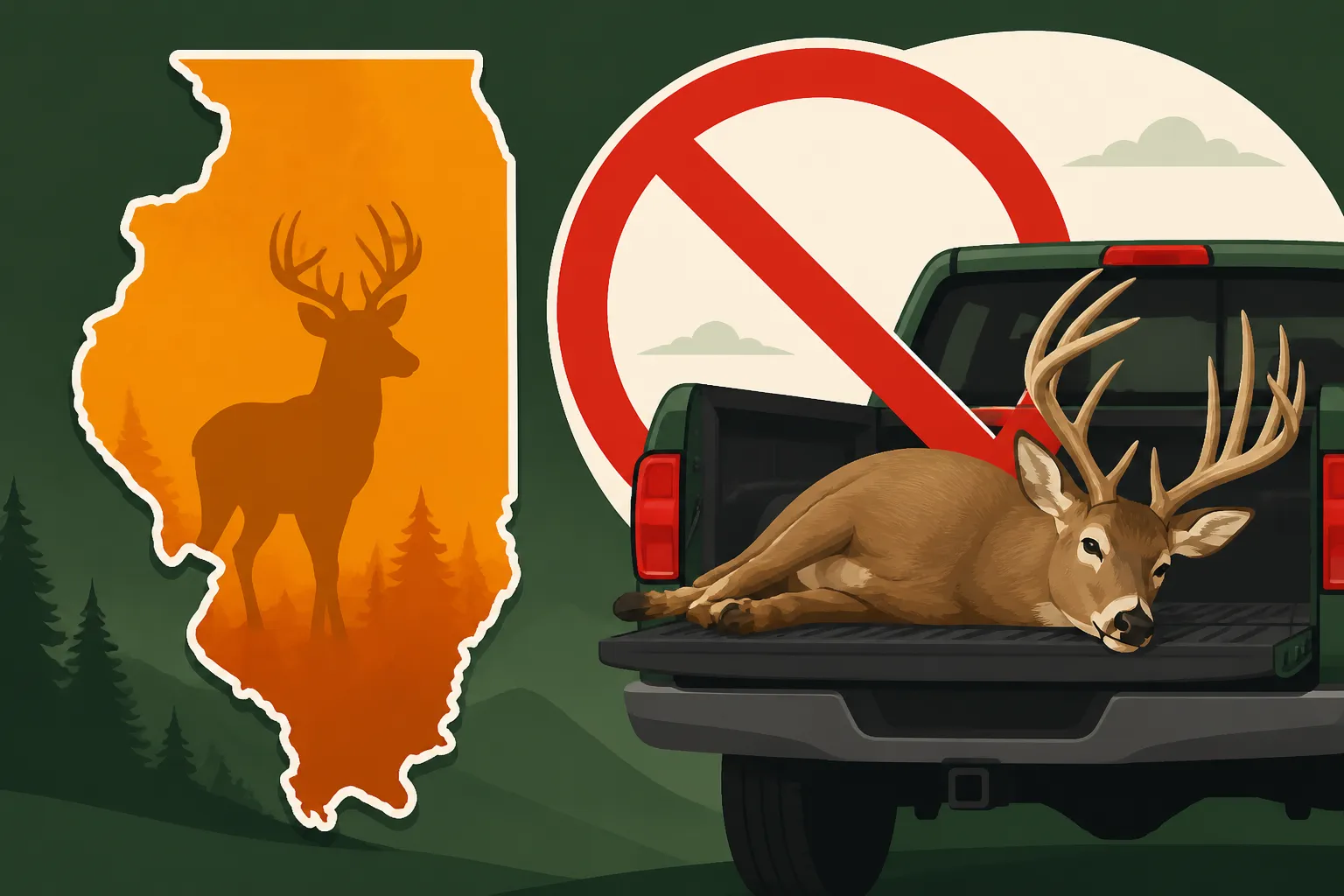
This is where many hunters face confusion and potential pitfalls. If you harvest a deer in a CWD county and intend to take any part of it out of that county, certain parts are strictly prohibited from crossing the county line. The intent is to stop the geographical spread of prions.
Here's a breakdown of what can and cannot be transported out of a CWD county:
| Permitted for Transport Out of CWD County | Restricted for Transport Out of CWD County |
|---|---|
| Deboned meat (boneless cuts) | Whole carcass, or any parts of the carcass containing the brain or spinal column (except as noted below) |
| Antlers (if skull plate is removed) | Skull plates with antlers attached (unless all brain tissue is completely removed, i.e., "clean") |
| Clean skull plates (no brain or neural tissue) | Heads (unless submitted to a CWD sampling station or taxidermist within the CWD county, or transported directly to a CWD certified facility) |
| Hides (without head or spinal column attached, and free of muscle or brain matter) | Spinal columns |
| Capes (without skull or spinal column attached, and free of muscle or brain matter) | Eyes |
| Teeth | Lymph nodes, spleen |
| Finished taxidermy products | Any other neurological tissues (e.g., cerebellum) |
This table highlights the emphasis on preventing the movement of parts known to harbor high concentrations of CWD prions. If you're planning to take your deer to a processor, make sure they are aware of the CWD restrictions, especially if they are located outside the CWD management zone. Some processors in non-CWD counties will only accept deboned meat from CWD-affected areas. If you're processing it yourself at home, ensure all restricted parts are disposed of properly within the CWD county. For more detailed information on specific areas, the IDNR's interactive map tool or a resource like GoHunt can be invaluable.
Preparing and Transporting Your Deer Carcass Responsibly
Beyond just the CWD restrictions, proper preparation and transportation are essential for both legal compliance and ensuring the quality of your venison. Nobody wants spoiled meat or a citation because of improper handling.
Field Dressing at the Harvest Site
Field dressing your deer immediately after harvest is a universally recommended practice, regardless of CWD zones. It helps cool the carcass quickly, which is vital for preserving meat quality, especially in warmer temperatures. When you field dress, you remove the internal organs, which are generally low-risk for CWD transmission, but still need proper disposal.
If you're in a CWD county, leaving the gut pile at the harvest site is usually permissible and, in fact, often encouraged to keep potentially infected organs within the county of origin. Ensure that you do this away from public view and in a location where scavengers can clean it up naturally. After field dressing, you'll want to take steps to further cool the carcass if ambient temperatures are high. This might involve packing the cavity with ice or using a game bag to allow for airflow. Remember that a properly handled deer makes for much better eating later on. You might find more helpful tips in a guide on Field Dressing a Deer in Cold Weather, which offers advice applicable year-round.
Permitted Parts for Transport
When it comes to transporting your deer, especially across county lines or out of a CWD zone, understanding what's allowed is paramount. As discussed, deboned meat is almost universally accepted for transport. This means removing all bones and processing the meat into cuts like steaks, roasts, or grind before moving it. This is the safest way to ensure compliance and avoid any issues.
Other permitted parts often include cleaned skull plates, antlers, and hides, but with very specific caveats. A "cleaned skull plate" means all brain matter and soft tissue must be completely removed. This usually involves boiling or pressure washing the skull cap. Antlers that are completely detached from the skull are also fine. If you plan to make a European mount, you'll need to clean the skull meticulously or take it to a taxidermist within the CWD county of harvest to ensure proper processing and disposal of brain matter. Keep in mind that a cape, if removed cleanly without any part of the skull or spine attached, is generally permissible for transport to a taxidermist. The rule of thumb is: if it could harbor CWD prions (brain, spinal cord, lymph nodes), it needs to stay or be meticulously cleaned in the CWD zone.
Safe Handling and Disposal of Remains
Proper disposal of any restricted carcass parts is just as important as knowing what you can transport. If you've harvested a deer in a CWD county and removed the head or spine, these parts must be left within that county. This can mean burying them deeply (if on private land with landowner permission), taking them to a designated CWD collection site, or utilizing a licensed taxidermist or processor within the CWD county who is equipped to handle and dispose of CWD-risk materials correctly.
Never simply discard restricted carcass parts along a roadside or in an unapproved location. This not only is illegal but directly undermines efforts to control CWD. For internal organs removed during field dressing, leaving them at the kill site is generally acceptable. However, for high-risk parts like the head or spinal column, a more controlled disposal method is crucial. When working with your deer, especially if you're Butchering a Deer at Camp, always practice good hygiene. Wear gloves, clean your tools thoroughly, and wash your hands. This protects both you and helps prevent any potential spread of CWD or other pathogens.
Practical Tips for Illinois Hunters
Successfully navigating Illinois's hunting landscape, especially with CWD in the picture, requires a bit of foresight and planning. Don't wait until you have a deer on the ground to figure out the rules.
Planning Ahead with Maps and Resources
The best defense against confusion is a good offense of preparation. Before you even set foot in the woods, consult the latest CWD zone maps from the IDNR. These are updated regularly, so last year's map might not be accurate this year. Use tools like the GoHunt app or the IDNR website to pinpoint where you'll be hunting and determine if it falls within a CWD Management Zone. This immediate knowledge will dictate your strategy for carcass handling.
It’s also wise to scout out potential CWD sampling stations or approved processors in advance, especially if you plan to hunt in a CWD county. Knowing exactly where you can drop off a head for testing or take a carcass for processing before you go hunting can save you a lot of stress after a successful harvest. Remember that Mandatory Testing Inside an Illinois CWD County might also be a factor depending on specific regulations that year, so be prepared for those requirements.
Working with Processors and Taxidermists
Your relationship with your deer processor and taxidermist is key, especially when dealing with CWD zones. Before your hunt, discuss the carcass movement restrictions with your chosen professionals. Ask them if they accept deer from CWD counties and what their specific requirements are. Some processors in non-CWD counties will only accept deboned meat from CWD zones, while others may have special protocols in place.
For taxidermy, if you want a shoulder mount, the cape can typically be transported, but the skull must be left behind or meticulously cleaned of all brain matter and tissue within the CWD county. Your taxidermist will be able to guide you, but it’s your responsibility as the hunter to ensure the regulations are met. A good taxidermist will often have facilities or a network to handle parts from CWD zones responsibly. Communication is critical to avoid any misunderstandings or violations.
Understanding Exceptions and Special Circumstances
While the rules are generally clear, there can be some nuances or special circumstances. For example, some CWD counties might have specific "drop-off" points during firearm seasons for hunters to leave heads for testing. Always check the specific county regulations and statewide proclamations for the most current information. The IDNR website is your ultimate authority.
Another scenario might involve a deer harvested on the very edge of a CWD zone. In these cases, it's always best to err on the side of caution and treat the carcass as if it came from the CWD zone to avoid any potential issues. Also, be aware of rules regarding Cervid Carcass Movement, particularly if you're a nonresident hunter returning to another state, as other states often have their own restrictions on importing deer harvested from CWD-positive areas in Illinois. It's not just Illinois's rules you need to know, but also those of your destination state if you're traveling across state lines. The overall Illinois Deer Season Structure Explained is a good read to ensure you're compliant with all general hunting laws too.
Common Misconceptions and Legal Implications
The world of CWD can sometimes feel shrouded in mystery, leading to misunderstandings that can have serious consequences. Clearing up these myths and understanding the legal ramifications of non-compliance is essential for every responsible hunter.
Debunking CWD Myths
There are many misconceptions floating around about CWD. One common myth is that CWD is only a problem in northern Illinois, and that hunters in central or southern Illinois don't need to worry about it. While the highest prevalence is indeed in the north, the disease is slowly spreading. Remember, it only takes one infected animal moved unknowingly to start a new outbreak. The story of How CWD Spread From Boone County serves as a stark reminder of how quickly it can disseminate.
Another myth is that field dressing is enough to eliminate all CWD risk from a carcass. While field dressing removes most of the non-nervous system organs, the brain and spinal cord are the highest-risk tissues and remain in the carcass unless specifically removed. Simply gutting a deer doesn't make it safe for unrestricted transport from a CWD zone. It's crucial to understand that CWD is not a bacterial or viral infection that can be "cooked out" or disinfected easily. Prions are extremely hardy and resistant to many conventional decontamination methods, which is why physical removal and containment of high-risk tissues are so vital.
Penalties for Non-Compliance
Ignoring carcass movement restrictions is not just an oversight; it's a violation of Illinois hunting regulations and can carry significant penalties. These can range from substantial fines to the forfeiture of your hunting license and equipment. Wildlife conservation laws are taken very seriously, and violations related to disease management are often met with strict enforcement.
Imagine having a successful hunt, only to have your venison confiscated, receive a hefty fine, and lose your hunting privileges because you didn't properly handle a deer from a CWD county. It's a risk simply not worth taking. The IDNR isn't trying to make your hunting experience harder; they're trying to protect the state's deer herd, which is a valuable resource for all hunters. Being a responsible hunter means doing your part to comply with these rules. If you're ever unsure, contact the IDNR directly for clarification before taking any risks.
The Role of Hunter Education and Compliance
Ultimately, the success of Illinois's CWD management strategy hinges on informed and compliant hunters. Hunter education courses in Illinois cover ethical hunting practices and game handling, but with evolving disease concerns, it's important to stay current. The IDNR constantly updates its website and publishes guides, and staying abreast of these changes is a part of being a good steward of wildlife.
By adhering to carcass movement restrictions, participating in CWD testing when requested, and properly disposing of high-risk parts, you're actively contributing to the health of Illinois's deer herd and the future of hunting in the state. This collective effort is critical in slowing the spread of CWD and mitigating its impact. So, the next time you're planning your hunt, whether you're Scouting Illinois Public Land Before Season or getting ready for the rut, make sure understanding and complying with carcass movement rules is at the top of your checklist. It's not just about getting the buck, it's about protecting the resource for generations to come.
Disclaimer
Please note: Hunting regulations and disease management protocols can change. Always consult the official Illinois Department of Natural Resources (IDNR) website or contact them directly for the most current and specific information before your hunt.