Illinois Coyote Hunting Season Rules
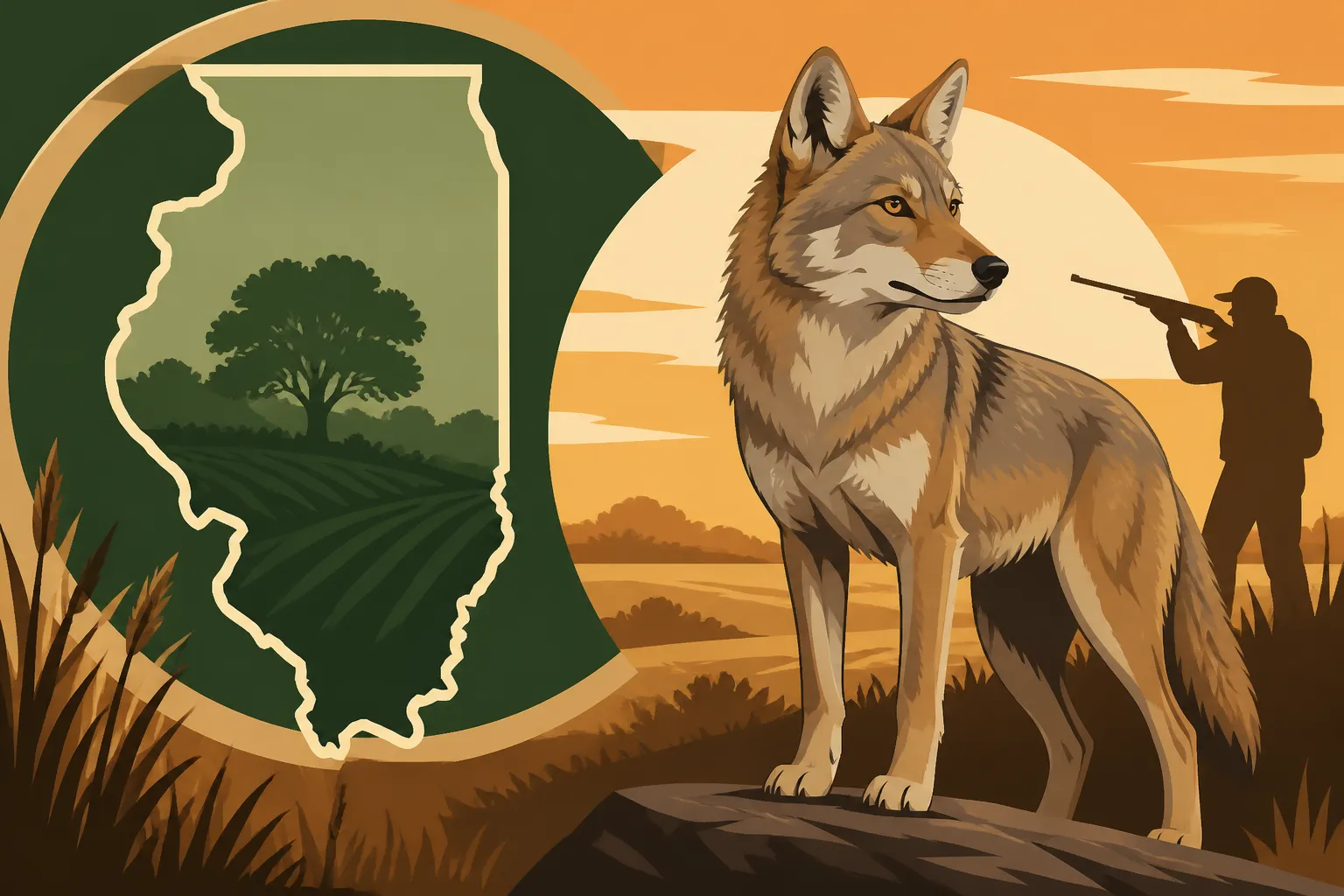
The persistent yips and howls of coyotes can be a real nuisance for many Illinois landowners and hunters, especially when they're getting a little too comfortable around homes or impacting local deer and turkey populations. If you've been wondering how to legally and effectively manage these cunning predators, you're in the right place. This comprehensive guide will walk you through all the ins and outs of Illinois's coyote hunting season rules, from permits and legal methods to the nuanced regulations for day versus night hunting, helping you understand how you can responsibly pursue these challenging animals.
Understanding Illinois Coyote Regulations: Year-Round Opportunity
Unlike most game species in Illinois that have very specific, often short, hunting seasons, coyotes offer a remarkably open opportunity for hunters. This is largely due to their status as a furbearer that is not protected in the same way deer or turkeys are, and their prolific nature.
General Open Season and Methods
One of the biggest takeaways for anyone interested in coyote hunting in Illinois is that there isn't a "season" in the traditional sense. Coyotes can be hunted year-round, 365 days a year. This continuous open season reflects the Illinois Department of Natural Resources' (IDNR) management approach, which acknowledges the robust and widespread coyote population across the state. They are incredibly adaptable animals, thriving in everything from dense timber to sprawling agricultural fields and even suburban fringes.
When it comes to legal hunting methods, you have a fair amount of flexibility. For firearms, centerfire rifles, shotguns, and handguns are all generally permitted. This means you can use your favorite deer rifle for longer shots in open country, a shotgun with buckshot for closer encounters in thick cover, or even a pistol if you prefer that challenge. Rimfire rifles, like a .22LR or .17 HMR, are also legal and can be excellent choices for less destructive harvests, especially if you're planning to keep the pelts. Archery equipment, including bows and crossbows, is also a legal method for hunting coyotes. While trapping coyotes requires a separate furbearer trapping license, directly hunting them with a firearm or bow falls under general hunting regulations. This wide range of allowable methods gives hunters the freedom to choose what best suits their individual preferences, hunting style, and the terrain they'll be covering.
Daytime vs. Nighttime Hunting Rules
While coyotes can be hunted year-round, there's a crucial distinction that dramatically changes the rules: whether you're hunting during the day or at night. Many hunters find that coyotes are most active during low-light conditions, making night hunting particularly effective, but it comes with its own set of specific regulations that you absolutely need to understand to stay legal and safe.
During standard hunting hours, which are typically defined as one half-hour before sunrise to one half-hour after sunset, you can hunt coyotes just like any other game animal, assuming you have the proper licenses. There are no additional lighting or special equipment requirements beyond what you'd use for daytime hunting. This is where most hunters start, often using calling tactics during the early morning or late evening pushes when coyotes are naturally on the move.
Nighttime hunting for coyotes is where things get a bit more nuanced. In Illinois, hunting furbearers, including coyotes, at night is generally permitted only on private property with landowner permission. This isn't something you can do on most public lands. The landowner permission isn't just a courtesy; it's a legal requirement, and having it in writing is always a good idea. The primary reason for these stricter rules at night is safety. Shooting in the dark carries inherent risks, and the IDNR aims to mitigate these by limiting night hunting mostly to controlled private land environments where landowners can be fully aware of and approve the activity. It's a huge difference from hunting during daylight hours when visibility is much better, and knowing your backdrop is far easier. This distinction means if you're serious about targeting coyotes under the stars, your primary focus should be securing good private land access. For a related challenge, understanding the rules for "Night Hunting Rules for Illinois Coyotes" is essential reading.
Specific Equipment and Lighting Regulations for Night Hunting
Once you've secured that crucial private land access for night hunting, understanding the specific equipment and lighting regulations is your next step. The rules here are designed to balance hunter effectiveness with public safety and fair chase principles.
Legal Lights and Thermal/Night Vision Devices
For night hunting coyotes, the use of artificial lights is permitted, but there are some important considerations. Generally, red and green colored lights are commonly used and explicitly allowed for night hunting furbearers. These colors tend to be less alarming to coyotes and can help preserve your night vision. White lights, while they illuminate more, can sometimes be too bright and spook wary coyotes. While you can use white lights, many experienced night hunters prefer the colored options for their practical advantages.
Beyond traditional spotlights, the advancements in optics have opened new doors. Thermal imaging devices and night vision scopes are now legal for hunting coyotes and other furbearers at night in Illinois. These technologies offer a significant advantage, allowing hunters to detect body heat or amplify ambient light, making it much easier to spot coyotes in complete darkness or dense cover. However, always double-check the latest IDNR regulations, as technology rapidly evolves, and laws can be updated to reflect these changes. It's an investment, but for dedicated night hunters, gear like a quality thermal monocular or a dedicated night vision scope can be a game-changer for "Hunting Illinois's Year-Round Feral Hogs" or coyotes.
Vehicle-Related Restrictions and Safety
When it comes to vehicles, the rules get even more stringent, primarily due to safety concerns and preventing illegal spotlighting of protected game. It is strictly prohibited to shoot any wildlife, including coyotes, from a vehicle on or across a public road, highway, or right-of-way in Illinois. You must be off the road, and if you're using a vehicle to access a hunting spot, you need to be out of the vehicle and stationary before taking a shot.
Furthermore, shining a light from a vehicle to locate any wild animal, whether a furbearer or not, is generally restricted. While you can use artificial lights to hunt coyotes on private land at night, you cannot drive around shining a spotlight from your vehicle on public roads or even private roads if the intent is to locate game to shoot. The spirit of the law is to prevent careless shooting from public thoroughfares and to maintain an ethical distance from road hunting practices. Safety must always be paramount. Night hunting, by its very nature, limits visibility, so having a clear understanding of your target, your backstop, and anything beyond it is absolutely critical. Never shoot unless you are 100% certain of your target and what lies behind it. The risk of misidentification or a stray bullet impacting unintended areas is significantly higher in the dark, making responsible practices even more important.
Landowner Permission and Public Land Access for Coyotes
Where you choose to hunt coyotes will heavily influence your strategy and success. Illinois offers both private and public land opportunities, but each comes with its own set of challenges and rules.
Hunting Coyotes on Private Land
For most successful coyote hunters in Illinois, private land is the key. Illinois is a "permission required" state, meaning you cannot hunt on private property without the express permission of the landowner. This isn't just good manners; it's the law. For night hunting, as discussed, this permission is even more critical and legally mandated. Building relationships with landowners can unlock prime hunting spots, especially those experiencing issues with coyotes preying on livestock or small game, or simply being a nuisance. Farmers, in particular, are often receptive to hunters willing to help manage coyote populations, especially in areas with high deer and turkey numbers where coyotes can be a significant predator of fawns and poults.
When seeking permission, be respectful, presentable, and clear about your intentions. Offer to share any game, help with chores, or simply be a responsible presence on their land. Many landowners appreciate a hunter who is transparent about their methods, especially concerning night hunting and the use of lights. Utilizing modern mapping tools, such as the ones offered by GoHunt, can be incredibly beneficial for identifying property boundaries, understanding land ownership, and even finding potential access points to properties that might otherwise seem inaccessible. This digital assistance allows you to approach landowners with informed questions and show them you've done your homework. Always carry proof of permission, ideally written, when hunting private land. For more insights on this, read up on "Illinois Trespass and Permission Law".
Coyote Hunting on Illinois Public Lands
While private land offers the most flexibility, there are opportunities to hunt coyotes on "Public Hunting Land in Illinois". However, hunters need to be aware that public land typically comes with more restrictions. While the statewide year-round season for coyotes applies, individual state parks, Fish and Wildlife Areas (FWAs), and national forests often have site-specific rules that supersede or add to the general statewide regulations.
These site-specific rules might include:
- Weapon Restrictions: Some public lands may restrict certain firearms or require specific shot types.
- Hunting Hours: While statewide rules allow night hunting on private land, very few, if any, public lands permit night hunting for furbearers. Always check specific site regulations.
- Access Limitations: Certain areas might be closed to hunting during specific times or for other management purposes.
- Permit Requirements: Some public sites may require an additional site-specific permit or check-in/check-out system, even for coyotes.
Before heading out to any public land, it is absolutely essential to check the IDNR's website for that specific site's regulations, or call the site office directly. Don't assume that what's legal statewide is legal everywhere. Public lands can also experience higher hunting pressure, making coyotes warier and harder to call in. Effective "Scouting Illinois Public Land Before Season" is crucial to find less pressured areas and identify coyote travel corridors, den sites, or feeding areas, even if you're not targeting deer. This might mean walking further, utilizing topographical maps, and looking for subtle sign that other hunters overlook.
Integrating Coyote Hunting with Other Seasons and Strategies
Coyote hunting can be a standalone pursuit, but it also integrates well with other hunting seasons, offering additional opportunities to thin predator numbers.
Coyote Hunting During Deer and Turkey Seasons
One of the most common ways hunters encounter and harvest coyotes is incidentally during other open seasons, particularly during deer and turkey seasons. If you hold a valid hunting license and a Habitat Stamp, and you are legally hunting deer or turkey, it is generally permissible to harvest a coyote if the opportunity arises. This is a fantastic way to contribute to predator control while pursuing your primary game.
However, a few critical points need to be remembered:
- Primary Game Focus: Your primary focus should still be on the game animal for which you hold a permit. While a coyote might present itself, ensure it doesn't distract from your main objective, especially if you have limited tags.
- Blaze Orange Requirements: If you are hunting during any of Illinois's firearm deer seasons, you are legally required to wear blaze orange. This applies even if you are primarily focused on coyotes but are in the field during a firearm deer season. Always review "Illinois Blaze Orange Requirements" for specific details.
- Weapon Restrictions: Ensure your weapon is legal for the primary season you are hunting. For example, if you are archery hunting deer, you can harvest a coyote with your bow. If you are firearm hunting deer, ensure your firearm meets the legal requirements for "Legal Weapons During Illinois Firearm Season".
Many hunters have success calling for deer or turkeys and inadvertently bringing in a curious coyote. While it might be frustrating if you're waiting for a trophy buck or a gobbler, it's a chance to manage local predator populations.
Calling Tactics and Best Times to Hunt
Successful coyote hunting often revolves around effective calling. These intelligent animals respond well to a variety of calls that mimic distress or territorial challenges.
- Distress Calls: Rabbit, rodent, and fawn distress calls are highly effective. Coyotes are opportunistic predators, and the sound of an injured animal signals an easy meal. Vary the volume and cadence to make it sound realistic.
- Howls and Barks: These calls can challenge a territorial coyote, especially during breeding season (typically late winter/early spring). A lone howl, challenge howl, or even pup distress calls can elicit a response. For specific methods, "Coyote Calling in Illinois Farm Country" offers practical advice for one of the state's most common habitats. If you're hunting more rugged terrain, tactics found in "Predator Calling Southern Illinois Ridgelines" might be more suitable.
The best times to hunt coyotes align with their natural activity patterns. Dawn and dusk are prime times when they are most actively hunting, making these periods ideal for calling. However, coyotes are also active throughout the night, which is why night hunting can be so productive. In particular, cold weather, especially after a fresh snowfall, often brings coyotes out in search of food. The snow can make tracking easier and coyotes more visible against the white backdrop, and the cold weather increases their caloric needs, making them more responsive to distress calls. Understanding "How Many Coyotes Illinois Has" can provide context for why these hunting opportunities are so prevalent.
Licenses, Permits, and Harvest Reporting
Understanding the administrative side of coyote hunting in Illinois is just as important as knowing the on-the-ground tactics. The good news is that it's relatively straightforward.
Required Licenses for Coyote Hunting
To hunt coyotes in Illinois, whether you're a resident or a nonresident, you will need a few key documents:
- Illinois Hunting License: This is your basic license to hunt any game in the state. Residents and nonresidents will purchase different versions.
- Illinois State Habitat Stamp: This stamp is required for anyone hunting in Illinois, regardless of species. The funds generated from these stamps go directly towards habitat restoration and preservation efforts across the state.
These two items, purchased together, typically cover your legal basis for hunting coyotes with a firearm or archery equipment. You can purchase these licenses through the Illinois DNR's online portal, at many sporting goods stores, or at IDNR offices. It's always a good idea to purchase them well in advance of your hunt and carry proof of purchase, whether a physical card or a digital copy on your phone. For a full breakdown of costs and options, consult "Illinois Hunting Licenses and What They Cost".
It's important to clarify that while coyotes are classified as furbearers, you do not need a specific Furbearer Permit to hunt them with a firearm or bow. The Furbearer Permit is primarily for trapping furbearers, and that requires a separate set of regulations and a different license. So, if you're planning to call them in and shoot them, your standard hunting license and habitat stamp are what you need.
No Harvest Reporting for Coyotes
One unique aspect of coyote hunting in Illinois, compared to regulated game species like deer and turkey, is that there is no mandatory harvest reporting requirement. Once you've successfully harvested a coyote, you do not need to check it in, report it online, or call it in to the IDNR.
This difference stems from the IDNR's management approach to coyotes. Unlike deer and turkeys, where population management relies heavily on harvest data, coyotes are managed more as an unprotected furbearer with a robust population. The year-round season and lack of reporting reflect the state's stance that hunters' efforts contribute to general population control, without needing precise numbers for species-specific management goals or quotas. While this simplifies the process for hunters, it also means that accurate statewide coyote harvest numbers are not readily available in the same way deer or turkey harvest numbers are.
Knowing these rules ahead of time means less administrative burden and more time focusing on what you love to do: being out in the Illinois wilds.
| Regulation Aspect | Daytime Coyote Hunting | Nighttime Coyote Hunting |
|---|---|---|
| Season | Year-round | Year-round |
| Hours | ½ hour before sunrise to ½ hour after sunset | ½ hour after sunset to ½ hour before sunrise |
| Location | Public & Private Land (with permission) | Private Land ONLY (with explicit permission) |
| Required Licenses | Hunting License + Habitat Stamp | Hunting License + Habitat Stamp |
| Artificial Lights | Not typically used for hunting, no restrictions | Permitted (red/green popular, thermal/night vision) |
| Vehicle Use | Cannot shoot from vehicle/public road | Cannot shoot from vehicle/public road; cannot spotlight from vehicle on public roads. |
| Blaze Orange | Required if other firearm seasons (e.g., deer) are open | Not typically required (unless specific conditions apply) |
| Harvest Reporting | Not required | Not required |
Disclaimer
Please remember that hunting regulations can change. Always consult the most current Illinois Department of Natural Resources (IDNR) hunting regulations and site-specific rules before heading afield. This guide is for informational purposes only and should not be considered a substitute for official legal documentation.