Illinois First Firearm Weekend Dates
The anticipation leading up to Illinois's first firearm deer season is a unique blend of excitement and a little bit of stress. Many hunters find themselves anxiously awaiting the precise dates, which often feel like they shift slightly each year, making it tricky to firm up work schedules, family plans, and scouting trips. This guide is here to cut through that confusion, giving you a crystal-clear understanding of when the first firearm weekend typically falls, why those dates matter, and how to effectively plan your hunt for maximum success.
Understanding the Illinois First Firearm Season Dates
For many deer hunters in Illinois, the first firearm season isn't just another hunting opportunity; it's practically a holiday. It's a cherished tradition, a chance to gather with friends and family, and often the most anticipated deer hunt of the year. Knowing the exact dates is absolutely paramount for planning, from requesting time off work to coordinating with your hunting party and ensuring all your gear is prepped.
Annual Timing and Structure
Illinois's first firearm deer season is traditionally held over three days, almost always falling on the Friday, Saturday, and Sunday before Thanksgiving. This places it squarely in the middle of November, a time when deer activity is often at its peak during the rut. While the Illinois Department of Natural Resources (IDNR) officially announces the dates well in advance, usually months prior, it's easy to lose track. Generally, you can count on it being the second or third full weekend of November. This fixed structure provides a consistent window for hunters to target, but it also means intense pressure during those three days. It's a short, but often sweet, window of opportunity.
The specific dates do indeed shift annually based on the calendar, but that mid-November slot remains constant. For example, if November 1st falls on a Tuesday, the first firearm season might start around the 18th. If November 1st is a Friday, it could start much earlier, around the 8th. Always double-check the official IDNR hunting guide for the exact dates each year, but that "weekend before Thanksgiving" rule of thumb is a solid starting point for mental planning. Understanding the broader Illinois Deer Season Structure Explained can provide even more context for how this particular season fits into the larger hunting calendar.
Why These Dates Are Crucial for Hunters
The timing of the first firearm season is not accidental; it's strategically placed during a biological prime time for whitetail deer. This period often coincides with the peak of the breeding season, or rut, in many parts of the state. Bucks are actively seeking does, moving more during daylight hours, and are generally less cautious than at other times of the year. This increased daytime movement significantly boosts success rates for hunters, making these three days incredibly productive.
Beyond the deer biology, these dates are crucial for practical reasons. It's a short, intense season, which means every hour in the field counts. Hunters who work or have other commitments need these precise dates to secure vacation time, arrange child care, or plan travel to their hunting grounds. Missing even one day can feel like a missed opportunity given the high potential. Moreover, coordinating with friends and family for group hunts, especially popular Deer Drives on Illinois Public Land, absolutely hinges on everyone knowing the exact weekend. It’s not just about the hunt; it’s about the tradition and camaraderie that these specific dates facilitate.
Planning Your Hunt Around the First Firearm Dates
Once you know those critical first firearm weekend dates, the real planning begins. It's not enough to just show up with your gear; successful hunting, especially during such a high-stakes, high-pressure season, requires meticulous preparation. Think of it like a chess game: you need to anticipate the deer's moves, but also the moves of other hunters, and be ready for whatever Illinois weather throws your way.
Permit Applications and Deadlines
Securing your firearm deer permit is the first and arguably most critical step. Illinois operates on a lottery system for firearm permits, especially for highly sought-after counties. Applications typically open in late spring or early summer, with a firm deadline usually in August or early September. Missing this deadline means you're likely out of luck for the initial drawing and will have to rely on leftover permits, which are far more limited in choice. For non-residents, the challenge is even greater, as Illinois Nonresident Firearm Deer Permit Cost can be substantial, and permits are allocated on an even more competitive basis.
My advice? Mark these application deadlines on your calendar now. Don't wait. Use tools like the GoHunt platform or similar mapping apps to confirm county quotas and application periods. You'll need to specify your desired county and season (first firearm, second firearm, or muzzleloader-only) when you apply. It's a competitive process, particularly for prime counties known for big bucks, so applying early and having a backup county in mind is always a smart play. The IDNR website is your ultimate source for these dates and the application portal.
Scouting and Prep Before the Season
With the season dates locked in, your off-season and pre-season scouting becomes invaluable. While you can't scout with a firearm, you can spend significant time on your chosen hunting ground observing deer patterns, identifying bedding areas, checking out food sources like acorn flats or standing crop fields, and locating travel corridors. For instance, if you're Hunting Central Illinois Farmland Deer, you might focus on field edges, creek bottoms, and small woodlots. Knowing exactly where deer are moving and feeding before hunting pressure starts is a huge advantage.
Consider setting up trail cameras. Even in the weeks leading up to the season, cameras can provide real-time intelligence on deer activity, showing you which bucks are in the area and their movement patterns. Remember to check regulations on trail cameras on public land, as rules can vary. This pre-season intel, combined with insights from tools like GoHunt that overlay public and private land boundaries, can drastically improve your chances. You can read more about effective Scouting Illinois Public Land Before Season to refine your approach and find those overlooked spots.
Weather Considerations for Mid-November
Mid-November in Illinois can be a real mixed bag when it comes to weather, and it can dramatically impact deer behavior and your hunting comfort. You could experience anything from crisp, sunny days in the 40s or 50s, to bitterly cold temperatures, freezing rain, or even early snow. Deer activity often surges right before or after a cold front, as they try to feed heavily. A sudden drop in temperature can get deer on their feet, especially older bucks.
Being prepared for all conditions is non-negotiable. Layers are your best friend. Invest in good quality waterproof and insulated outerwear, warm boots, and appropriate gloves. Nothing ends a hunt faster than being uncomfortably cold and wet. Pay attention to wind direction, too, as a strong northerly wind can significantly change how deer move and where they seek shelter. Checking detailed forecasts in the days leading up to the hunt, and even during the hunt with portable weather apps, allows you to adjust your strategy and gear accordingly.
Navigating Permit Logistics and Weapon Choices
Once you've got your permits and the season is approaching, it's critical to ensure you're fully compliant with all the regulations. The Illinois firearm season has specific rules regarding the types of weapons allowed, which can sometimes be a point of confusion for new hunters or those accustomed to different state regulations.
Securing Your Firearm Deer Permit
As mentioned, the primary way to get a permit for the first firearm season is through the lottery system, which opens in late spring. It’s essential to apply for the correct county and season. If you miss the lottery, the IDNR typically conducts several rounds of over-the-counter (OTC) sales for leftover permits. These are first-come, first-served, and popular counties sell out very quickly. For example, some of the top-producing counties often have no leftover permits at all. Always check the IDNR website for detailed information on permit availability and sales dates. You’ll need a valid Illinois hunting license and habitat stamp before purchasing any deer permits.
It's a good idea to consider your second and third county choices carefully during the application process. While everyone dreams of hunting in counties known for trophy bucks, expanding your options can increase your chances of drawing a permit. If you're hunting with a group, ensure everyone has their permit secured for the same county and season. There’s nothing worse than showing up for opening day only to find out someone in your party doesn’t have the proper tag. The Illinois Resident Firearm Deer Permit Cost is relatively affordable, but nonresident costs are much higher, making securing that permit even more crucial.
Legal Weapons During First Firearm Season
Illinois has specific rules about what you can legally use to harvest deer during the firearm seasons. Generally, this includes shotguns, muzzleloaders, and certain straight-walled cartridge rifles. High-powered centerfire rifles, common in many other states, are not legal for deer hunting in Illinois, except for those specifically designated straight-wall cartridges.
Here's a quick breakdown:
| Weapon Type | Minimum Caliber/Gauge | Key Considerations |
|---|---|---|
| Shotguns | 12, 16, or 20 gauge | Must use a slug; no buckshot. |
| Muzzleloaders | .45 caliber or larger | Can be used during firearm seasons or the special muzzleloader-only season. |
| Straight-Wall Cartridge Rifles | Minimum .30 caliber; case length 1.16 to 1.80 inches. | Examples: .450 Bushmaster, .350 Legend, .44 Magnum, .45-70 Gov't. |
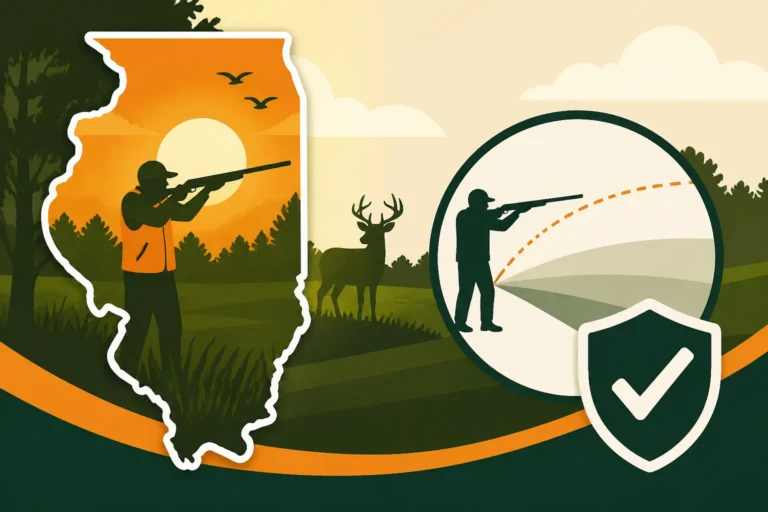
This is where the nuances matter. For straight-wall cartridge rifles, common calibers like .223 or .30-06 are not legal. You must use a straight-wall cartridge. This is a point of confusion for many new hunters, so always verify your firearm and ammunition are compliant. If you're debating between ammunition types, a guide on Choosing Between Slugs and Straight-Wall Rifles can offer more insights. The intent behind these rules is safety, particularly given Illinois's highly populated nature and prevalence of flat, open farmlands. Make sure your weapon is sighted in and you've practiced extensively with the ammunition you'll be using.
Maximizing Your Chances During the First Firearm Weekend
With the dates set, permits in hand, and weapon ready, the final piece of the puzzle is your in-the-field strategy. The first firearm weekend in Illinois is a unique beast, with high deer activity often balanced by significant hunting pressure. Being smart about how and where you hunt can make all the difference.
Hunting Pressure and Public Land Strategy
Illinois public lands, especially popular State Fish and Wildlife Areas or portions of the Shawnee National Forest, can see considerable hunting pressure during the first firearm weekend. This isn't necessarily a bad thing, as other hunters can move deer, but it does mean you need a strategy to differentiate yourself. Don't just hunt the easy-to-access areas near parking lots; these spots get hit hard and deer quickly learn to avoid them.
Consider venturing deeper into public tracts. Use mapping apps like GoHunt to identify remote corners or difficult-to-access pockets that other hunters might overlook. Often, deer will retreat to these thicker, harder-to-reach cover areas once the shooting starts. Identifying these sanctuary zones and figuring out entry and exit routes without disturbing them can be a game-changer. Also, pay attention to terrain features like deep ravines, thick cedar thickets, or swamps. These can hold deer that have been pushed from more open areas. Even if you're Hunting the Second Firearm Season in December, these tactics for avoiding pressure can be beneficial.
Key Deer Movement During Mid-November
As previously touched upon, the first firearm season typically coincides with the peak of the rut in Illinois. This means bucks are often on their feet, actively scent-checking scrapes, following does, and challenging rivals. Food sources, while important, may take a backseat to breeding activity for mature bucks during this intense period. Focus your efforts on known travel corridors, pinch points, and areas where does congregate.
Consider setting up near bedding areas, especially during midday, as bucks will often cruise through these areas looking for receptive does. Morning and late afternoon hunts are still prime, but don't discount those mid-day hours during the rut. If you're on private land, understanding Scrape Lines Along a Logging Road or travel routes between timber blocks and fields can be incredibly effective. Rattling and grunting can also be highly effective during this time, drawing in curious or aggressive bucks. Learning Rattling Volume in Thick Cover for your specific hunting area can be a valuable skill to practice.
Post-Harvest Reporting and Carcass Rules
Successfully harvesting a deer during the first firearm season is a fantastic accomplishment, but your responsibilities don't end there. Illinois requires all harvested deer to be reported. This typically needs to be done online or via phone by 10:00 PM on the day the deer was harvested. The IDNR app (often called the "Go Outdoors Illinois" app) usually provides a convenient way to do this right from the field. You'll need your permit number and specific harvest details, like county and date.
Furthermore, be aware of carcass movement restrictions, especially if you hunt in an Illinois Chronic Wasting Disease (CWD) county. To prevent the spread of CWD, there are strict rules about moving deer carcasses out of CWD-positive counties. Generally, only deboned meat, skull caps (with antlers attached if applicable), and clean hides can leave a CWD county. Always check the latest IDNR regulations for the specific county you're hunting in to avoid any issues. For more details on the process, refer to Illinois Deer Reporting Requirements. Ensuring you comply with these rules is vital for responsible hunting and disease management.
Disclaimer
The information provided in this guide is for general informational purposes only and is not a substitute for official regulations. Always consult the current year's Illinois Department of Natural Resources (IDNR) hunting regulations and official website for the most accurate and up-to-date rules, dates, and permit requirements before planning and executing your hunt. Hunting regulations can change annually.