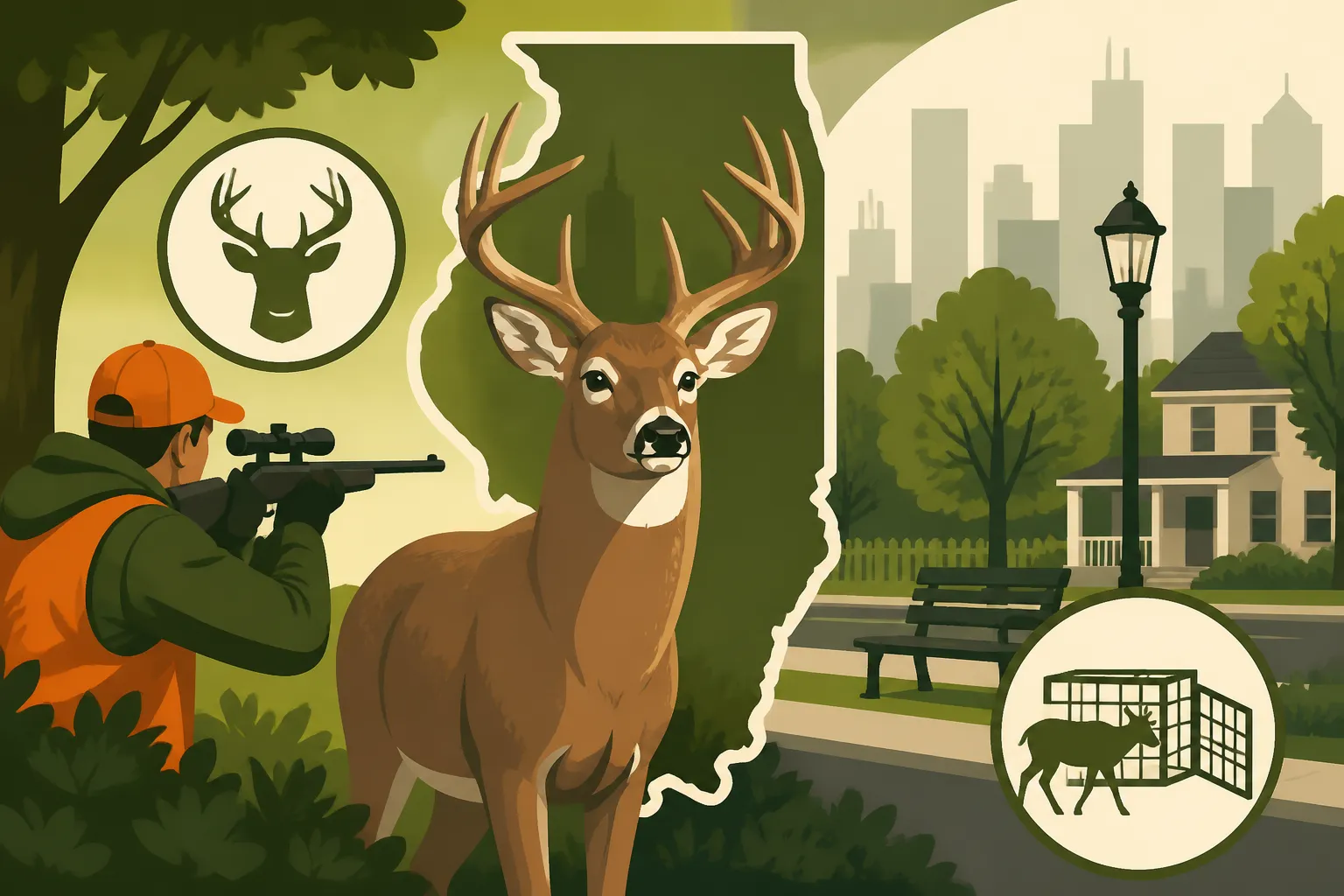
Illinois Urban Deer Control Programs
It's a familiar sight across Illinois: a beautiful, majestic white-tailed deer stepping out from a tree line, gracefully munching on someone's prize-winning hostas, or worse, darting across a busy road right into the path of an oncoming car. The truth is, while we love seeing wildlife, deer populations in many of our suburban and urban areas have simply exploded, leading to a host of headaches for homeowners, drivers, and local governments alike. This guide dives deep into the complex world of Illinois urban deer control programs, exploring why these issues arise, what strategies are being used, and how you, as a resident or interested hunter, can understand or even get involved.
The Growing Challenge of Urban Deer in Illinois
Deer are incredibly adaptable creatures, and while we often think of them roaming vast forests, they've found a surprising paradise right alongside our subdivisions and city parks. This proximity, however, isn't always harmonious, leading to significant conflicts and frustrations for residents.
Why Deer Thrive in Suburban Environments
The suburban landscape, with its manicured lawns, lush gardens, and ample green spaces, is a veritable buffet for white-tailed deer. Unlike their rural counterparts, urban deer face very few natural predators. Coyotes are certainly present, but their impact on a robust deer herd within city limits is often minimal compared to wolves or cougars found in other regions. This lack of natural checks allows deer populations to grow unchecked, sometimes to unsustainable levels.
Beyond the reduced predation, our backyards offer an endless supply of high-calorie food. Ornamental shrubs, fruit trees, vegetable gardens, and even discarded birdseed provide an easily accessible and nutrient-rich diet, far superior to the sometimes sparse browse of deep woods, especially in winter. Think of that perfect row of daylilies or those newly planted arborvitae – to a hungry deer, it's a five-star dining experience. And because these areas often have strict firearm discharge ordinances, traditional hunting pressure, which helps regulate rural herds, is largely absent. This creates safe havens where deer can feed, bed, and reproduce with relative impunity. It's a perfect storm for population booms, especially in areas like DuPage County or parts of the Illinois River Valley that border natural areas.
Common Conflicts and Frustrations for Residents
The consequence of a thriving urban deer population often lands squarely on the shoulders of local residents. One of the most common complaints is widespread property damage. Homeowners invest significant time, money, and effort into their landscaping, only to wake up and find their carefully cultivated flowers, shrubs, and even young trees completely decimated overnight. Imagine spending an entire Saturday planting a new garden, only for a family of deer to treat it as an all-you-can-eat buffet by Monday morning. It’s incredibly frustrating and often costly to replace or protect these investments.
Perhaps even more critically, the increased density of deer in populated areas leads to a dramatic rise in deer-vehicle collisions. Anyone who drives regularly in the outer suburbs or even through park districts knows the sudden, heart-stopping fear of a deer leaping into the road. These collisions not only cause extensive damage to vehicles but can result in serious injuries or even fatalities for drivers and passengers. The Illinois Department of Transportation (IDOT) records thousands of these incidents annually, a stark reminder of the danger. Furthermore, there's a growing concern about the potential spread of diseases like Lyme disease, carried by ticks that deer host, and even more recently, Chronic Wasting Disease (CWD), which can be exacerbated by high deer densities. For communities within Illinois's Chronic Wasting Disease Zone, controlling deer numbers isn't just about property damage; it's about managing a serious wildlife health crisis.
Understanding Illinois's Approach to Urban Deer Management
Addressing the complex issue of urban deer requires a collaborative effort, and in Illinois, the process is primarily overseen by state agencies working with local municipalities. It’s not a simple one-size-fits-all solution, as each community faces unique challenges and possesses different resources.
The Role of the Illinois Department of Natural Resources (IDNR)
The Illinois Department of Natural Resources (IDNR) plays a pivotal role as the primary governing body for wildlife management across the state, including urban deer. They establish the overarching regulations and guidelines for any deer control programs implemented by local governments, ensuring that methods are humane, safe, and effective. Municipalities can't just decide to start culling deer on their own; they must apply for specific permits from the IDNR.
The IDNR's philosophy in these situations is generally to help communities manage wildlife populations to a level that minimizes human-wildlife conflict while still respecting the animals. They provide technical assistance, offer guidance on best practices, and evaluate proposed programs based on factors like public safety, cost-effectiveness, and the specific goals of the municipality. This means that if a village in Lake County is experiencing high deer-vehicle collisions, the IDNR will work with them to develop a plan that addresses that specific issue, perhaps by reducing the deer density in key areas. Their expertise is crucial in navigating the biological, social, and political complexities of these programs. Hunters interested in participating in regulated programs often start by looking into the IDNR's resources, sometimes even using platforms like GoHunt to track down permit application windows or relevant program details.
Local Control Programs: Methods and Implementation
Once a municipality has identified a significant urban deer problem and received initial guidance from the IDNR, they can implement various control methods. The choice of method often depends on factors such as budget, public acceptance, safety considerations, and the specific characteristics of the area (e.g., population density, amount of open space).
The most common and often publicly accepted method is controlled archery hunting. This involves recruiting qualified, vetted archers to hunt in designated areas, typically forest preserves, large parks, or undeveloped tracts where firearms would pose a safety risk. These hunts are strictly regulated with specific zones, safety protocols, and often require archers to pass proficiency tests. Another method, often reserved for more severe overpopulation issues or areas where archery isn't feasible, is sharpshooting. This involves professional contractors, often law enforcement or trained wildlife specialists, who discreetly remove deer using firearms, typically at night or during off-hours when public spaces are closed. This method is highly effective but can be more controversial due to public perception. Less common these days are trap-and-euthanize programs, and experimental methods like fertility control are being explored, though they are very costly and complex for widespread use. Each program requires a meticulous plan for implementation, including how deer will be processed, often with meat donated to local food banks, ensuring the animals are not wasted.
Specific Examples of Illinois Urban Deer Control Programs
Across Illinois, communities grappling with dense deer populations have tried a variety of approaches, each with its own set of successes and challenges. Understanding these methods in practice helps illustrate the complexities involved in urban wildlife management.
Archery-Based Programs: How They Work
Many Illinois communities have found success with archery-based deer control programs. These programs often recruit experienced archers, typically volunteers, to hunt in specific, pre-approved zones within municipal or park district lands. Imagine a large forest preserve just outside of Springfield; it's too close to homes for firearms, but has plenty of deer. A controlled archery program can be a perfect fit. Participants are usually required to attend an orientation, pass a shooting proficiency test, and strictly adhere to program rules, which often include specific hunting hours, designated stand locations, and mandatory harvest reporting.
Safety is paramount. These programs mandate significant safety zones around residential areas, schools, and walking paths. Archers often hunt from elevated treestands to ensure arrows are directed downward, minimizing risk. The goal isn't just to reduce deer numbers but to do so safely and with minimal disruption to other park users. For hunters, it's a unique opportunity to help their community while pursuing their passion, often within areas not open to traditional hunting. Finding information on these special permits can sometimes be challenging, but resources like GoHunt or local park district websites are usually the best places to start looking for application details or general Illinois hunting season structure. This form of controlled hunting, especially in the context of Hunting Illinois's Long Archery Season, demonstrates how traditional methods can be adapted to modern challenges.
Sharpshooting Operations: Precision and Controversy
When archery programs aren't sufficient, or when safety concerns prohibit even controlled archery in certain areas, some municipalities turn to sharpshooting operations. These are typically carried out by professional wildlife contractors or law enforcement personnel who are highly trained in precision shooting and humane euthanasia. The operations are usually conducted at night or in very early morning hours, often when public lands, parks, or even golf courses are closed, to ensure public safety and minimize public visibility.
Sharpshooting is highly efficient at reducing deer numbers quickly in targeted areas. The deer harvested through these programs are almost always processed, and the venison is donated to food banks or other charitable organizations, ensuring the meat doesn't go to waste. However, sharpshooting can be more controversial than archery programs. Some members of the public have strong objections to the killing of deer, regardless of the method, and the covert nature of the operations can sometimes fuel distrust if not handled with clear public communication. Despite the controversy, for areas with extremely high deer densities and significant public safety concerns like Illinois Deer Vehicle Collisions, it can be an indispensable tool for achieving immediate and substantial population reduction.
Case Studies: Successes and Challenges in Illinois Towns
Many Illinois communities have navigated the complexities of urban deer management, with varying degrees of success. For example, communities in DuPage County, such as Oak Brook and Hinsdale, have long implemented archery programs in their forest preserves and larger park areas. These programs have seen consistent deer harvests, helping to stabilize populations over the years and reduce property damage complaints. The success often hinges on strong volunteer participation and clear communication with residents about the necessity and methods of the program.
Conversely, some smaller towns might struggle with the resources needed to implement large-scale programs, or face intense public opposition that makes any culling politically difficult. In such cases, non-lethal methods like fencing or repellents become the primary, albeit often less effective, tools. The City of Evanston, for example, has explored various non-lethal options, but even with those efforts, deer conflicts persist. These case studies highlight that there's no magic bullet; successful urban deer control requires a tailored approach, consistent effort, and often, a willingness to adapt strategies based on community feedback and ongoing deer population trends. The challenge often lies in finding a balance between effectiveness, cost, and public acceptance, and programs need to be flexible, much like hunters must be flexible when Scouting Illinois Public Land Before Season for deer.
How Communities and Citizens Can Engage
Urban deer management isn't just about what the IDNR or local governments do; it's also about community involvement and the actions of individual citizens. Public engagement is crucial for the success and public acceptance of any deer control program.
Public Involvement and Communication
One of the biggest hurdles for any urban deer control program is public perception. Deer are beautiful animals, and the idea of reducing their numbers, especially in a seemingly idyllic suburban setting, can be upsetting to many. This is why transparency and active public involvement are absolutely critical. Municipalities and park districts that successfully manage deer populations often do so by holding numerous public meetings, conducting resident surveys, and establishing citizen advisory committees. These forums allow residents to voice their concerns, ask questions, and understand the rationale behind the proposed management strategies.
Clear and consistent communication from local authorities is paramount. Explaining the data—the number of deer-vehicle collisions, the extent of property damage, the potential for disease transmission, and the overall Illinois Deer Population Estimate in the area—helps residents understand the necessity of these programs. When the community feels heard and informed, they are far more likely to support or at least tolerate the difficult decisions that sometimes need to be made. Without this foundation of trust and understanding, even the most scientifically sound programs can face significant backlash and fail to achieve their objectives.
Individual Actions to Mitigate Deer Issues
While large-scale control programs address the broader population, individual homeowners also have a role to play in mitigating deer issues on their own property. One of the most effective strategies is deer-resistant landscaping. While no plant is entirely "deer-proof" to a truly hungry deer, certain species are far less appealing. Opting for plants like ornamental grasses, ferns, or highly scented herbs instead of hostas, daylilies, or young fruit trees can significantly reduce browsing damage.
Fencing is another highly effective, though sometimes costly, solution. A fence at least 7-8 feet high is generally required to deter deer, though even a shorter, double-layered fence or electric fencing can be effective in certain situations. Repellents, both commercial and homemade (like those containing rotten eggs or hot pepper), can also offer temporary relief, but they require consistent reapplication, especially after rain. Most importantly, it is crucial to never feed deer. While it might seem like a kind gesture, feeding deer concentrates them in one area, increases the risk of disease transmission (like CWD), makes them less wary of humans, and exacerbates property damage in the long run. By taking these individual steps, combined with understanding local programs and keeping up with resources from organizations like GoHunt for broader wildlife management information, residents can contribute to a healthier balance between wildlife and community life.
| Control Method | Pros | Cons | Typical Cost (per deer) | Public Perception (General) |
|---|---|---|---|---|
| Archery Programs | Cost-effective (volunteer-based), quiet, can be publicly accepted. | Slower population reduction, limited to suitable areas, hunter recruitment needed. | $100 – $300 | Generally positive/neutral |
| Sharpshooting | Highly effective, rapid population reduction, precise targeting. | High cost, public controversy, requires specialized contractors. | $300 – $1,000+ | Often negative/controversial |
| Trap-and-Euthanize | Can be effective in small, isolated areas, humane. | Labor-intensive, high stress on deer, public controversy. | $200 – $600 | Mixed/often negative |
| Fertility Control | Non-lethal, humane, addresses root cause (reproduction). | Extremely high cost, complex to administer, long-term effect, not widely proven. | $1,000 – $3,000+ | Generally positive |
| Fencing/Exclusion | Effective long-term solution for specific areas, non-lethal. | Very high initial cost, visually intrusive, not feasible for large areas. | Variable (per linear foot) | Generally positive |
| Repellents | Easy to apply, non-lethal, low initial cost. | Requires frequent reapplication, limited effectiveness, can be costly over time. | Low (per bottle) | Generally positive |
Disclaimer
The information provided in this article is for general guidance and informational purposes only. While every effort has been made to ensure accuracy, hunting regulations and wildlife management practices in Illinois are subject to change. Always consult the official Illinois Department of Natural Resources (IDNR) website or contact local authorities for the most current rules, regulations, and program details before engaging in any hunting or wildlife management activities.