Illinois Elk Hunting Status
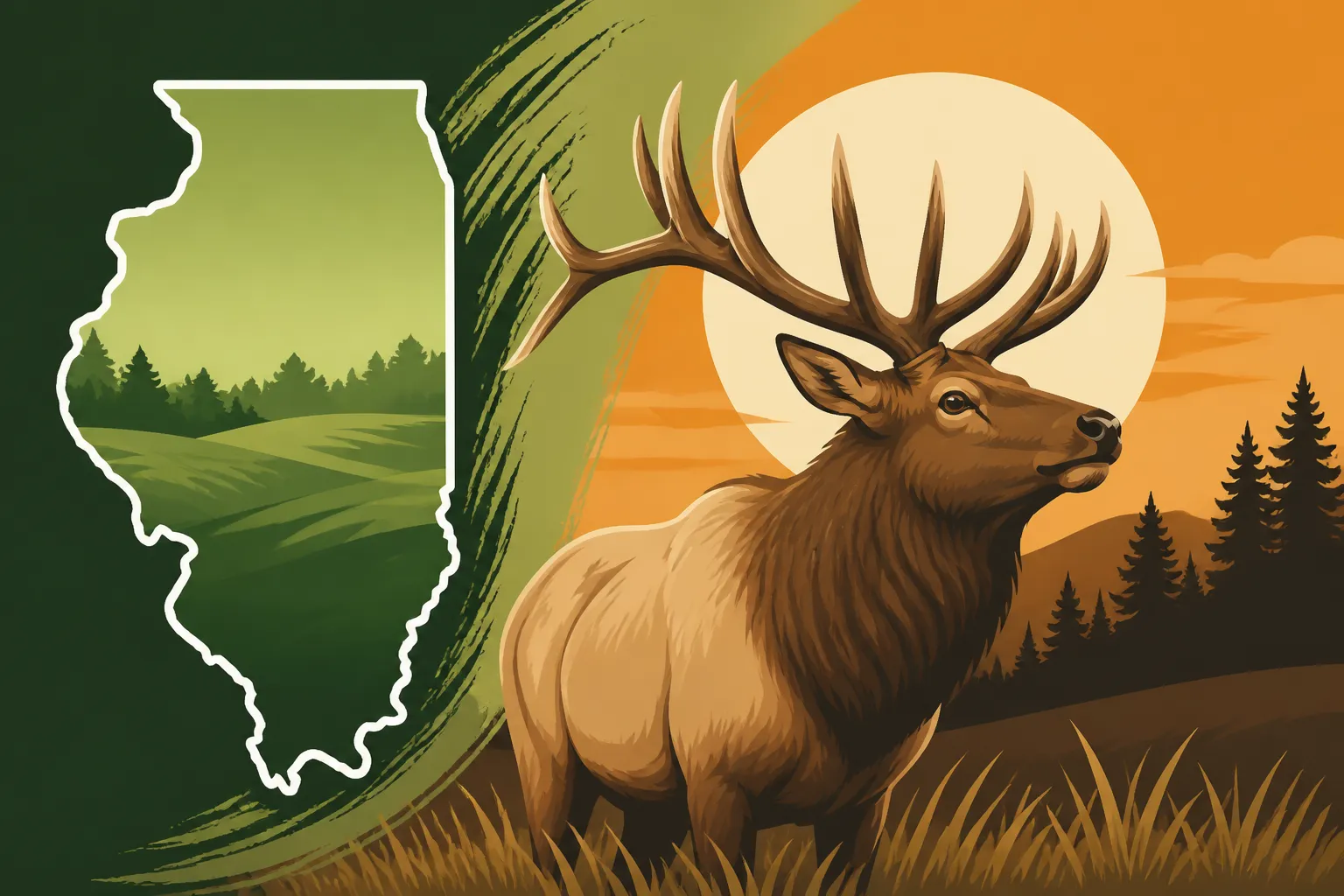
It’s a natural dream for many hunters across the Midwest: the majestic bugle of an elk echoing through the timber, the sheer size of a bull moving through the woods. But if you’re an Illinois hunter, you’ve likely faced the disappointing reality that while our state boasts incredible deer and turkey hunting, elk are simply not on the menu. This guide dives deep into the history, present status, and future possibilities of elk in Illinois, explaining why there's no hunting season for these magnificent animals here.
The Vanished Giants: Illinois's Historical Elk Presence
Illinois wasn't always a state devoid of wild elk. In fact, these magnificent animals once roamed our prairies and woodlands freely, playing a vital role in the ecosystem and the lives of early inhabitants. Understanding their history helps us grasp why their absence is so keenly felt today.
Pre-Settlement Abundance and Range
Before European settlement transformed the landscape, elk, specifically the Eastern elk subspecies (Cervus canadensis canadensis), were widespread across what is now Illinois. Imagine vast herds grazing in the tallgrass prairies, their presence shaping the plant communities, and then moving into the dense oak-hickory forests for shelter and forage. They were a significant part of the megafauna, alongside bison and black bears, dominating the landscape for thousands of years. Early Native American tribes, like the Illiniwek, relied on elk for sustenance, hides, and tools, integrating them deeply into their culture and survival strategies. Their range wasn't limited to one corner; historical accounts and archaeological evidence suggest they could be found from the northern savannas down to the southern river bottoms, essentially wherever suitable habitat existed.
The Disappearance of Elk from Illinois
Unfortunately, the story of elk in Illinois follows a pattern familiar to many large game species in the expanding American frontier. The rapid westward expansion of settlers brought intense pressure on wildlife populations. Unregulated hunting, driven by both subsistence needs and market hunting for meat and hides, decimated herds. Elk were large, relatively slow-moving targets, and their meat was highly prized. This, coupled with widespread habitat destruction as prairies were plowed for agriculture and forests were cleared for timber and settlement, pushed the species to the brink. By the late 1800s, the Eastern elk was considered extirpated from Illinois, meaning it no longer existed as a wild, breeding population within the state. The last confirmed wild elk sighting in Illinois is generally believed to have occurred in the 1850s, a stark reminder of how quickly human activity can alter the natural world.
Illinois Elk Today: A Landscape Without a Season
Fast forward to today, and the dream of an Illinois elk season remains just that – a dream. While other states have successfully reintroduced elk and established hunting opportunities, Illinois's landscape is different, and its current wildlife management strategy reflects that reality.
Why There's No Open Season
The simple truth is that Illinois does not have a self-sustaining wild elk population. There are no established herds roaming our public or private lands in numbers that would support a hunting season. The few elk that are sighted in Illinois are almost invariably transient individuals that have wandered in from neighboring states with active elk reintroduction programs, or sometimes, escaped captive animals. Because these animals are so rare and are not part of a stable, wild population, they are fully protected under Illinois law. There are no permits, no special seasons, and absolutely no legal means to hunt an elk in Illinois. It’s a bit disheartening for a hunter to realize this, especially when you see the success stories elsewhere, but it's a necessary wildlife management stance to protect any potential wanderers. In essence, they are treated much like other protected, non-game species, or extremely rare visitors, similar to how Illinois handles very infrequent sightings of black bears. If you're wondering about other game you cannot hunt, explore our guide on Game You Cannot Hunt in Illinois.
Occasional Sightings and Migratory Wanderers
Despite the lack of a resident population, the occasional sighting of an elk in Illinois still ignites excitement and sometimes confusion among the public and wildlife officials alike. These wanderers are typically young bulls dispersing from established herds in states like Wisconsin, Michigan, or Missouri. For instance, northern Illinois might see an elk from Wisconsin, while southern parts of the state could encounter one from Missouri or Kentucky.
These sightings are rare, often occurring in remote areas, or surprisingly, near suburban fringes before the animal moves on. It's a surreal experience to see such a large animal where it's not expected, and it usually prompts calls to the Illinois Department of Natural Resources (IDNR). While thrilling, these isolated individuals are not indicative of a growing population. They are simply explorers, often solitary, searching for new territory and mates, and usually, they either return to their home state, find suitable habitat elsewhere, or unfortunately, succumb to hazards like vehicle collisions. The IDNR tracks these sightings closely as part of their broader Illinois Wildlife Disease Monitoring efforts and for general population trends in neighboring states.
Comparison to Neighboring States with Elk Seasons
It's easy to look across the state line with a bit of envy when you consider what our neighbors have. States like Kentucky, Michigan, Missouri, Pennsylvania, and Wisconsin have all undertaken successful elk reintroduction programs and, as a result, now offer limited but highly coveted elk hunting opportunities.
Take Kentucky, for instance, which initiated its elk restoration program in 1997. Today, it boasts one of the largest elk herds east of the Mississippi River, with thousands of animals, and conducts an annual lottery for hunting permits. Missouri, too, has a growing elk population in its southeastern Ozarks, offering hunting permits after a reintroduction program that started in 2011. Even Wisconsin, directly north of us, has an expanding elk herd that now supports a limited hunting season.
These states often have expansive public land areas, such as national forests or large tracts of managed timber, that provide the extensive habitat and forage elk require. They also made significant commitments to managing these herds, including managing disease risks like those associated with Illinois's Chronic Wasting Disease Zone, which is a significant consideration for any large cervid population. This stark contrast highlights the challenges and opportunities Illinois faces if it ever were to consider a similar path. While GoHunt is an excellent resource for learning about these opportunities, it's a constant reminder of what Illinois currently lacks.
Here's a quick comparison of Illinois to some neighboring states regarding elk:
| Feature | Illinois | Kentucky | Missouri | Wisconsin |
|---|---|---|---|---|
| Wild Elk Population | None (occasional wanderers) | ~16,000+ (Largest East of MS) | ~300+ (Growing) | ~500+ (Growing) |
| Hunting Season | No | Yes (lottery) | Yes (lottery) | Yes (lottery) |
| Reintroduction Program | No (considered/discussed) | Yes (Started 1997) | Yes (Started 2011) | Yes (Started 1995) |
| Primary Habitat | Primarily agricultural/urban | Appalachian Mountains | Ozark Highlands | Northern Forests |
| Status | Extirpated / Protected | Restored / Huntable | Restored / Huntable | Restored / Huntable |
The Dream of Return: Elk Restoration in Illinois
The question of whether Illinois could or should reintroduce elk is a complex one, with passionate arguments on both sides. It's a discussion that surfaces periodically among wildlife enthusiasts, conservationists, and hunters who yearn for the return of this magnificent animal to our state's ecosystem.
Arguments For and Against Reintroduction
Bringing elk back to Illinois would certainly have some compelling benefits. Ecologically, elk are a native species, and their return could help restore historical grazing patterns, promote biodiversity, and fill a niche in the ecosystem. From a human perspective, a thriving elk herd could boost eco-tourism, drawing visitors for wildlife viewing, photography, and eventually, regulated hunting. Just imagine the economic impact of a successful elk hunt lottery, similar to what Kentucky experiences, generating revenue for conservation efforts, local businesses, and rural communities. For hunters, it would represent a remarkable new big game opportunity, offering a different challenge than White-Tailed Deer Across Illinois.
However, the arguments against reintroduction are equally significant and often center on practical realities. A major concern is habitat. While Illinois has some substantial tracts of forest, particularly in the Shawnee National Forest, much of the state is heavily fragmented by agriculture and urban development. Elk require large, contiguous blocks of habitat, and competition for space with our robust Illinois Deer Population Estimate could be an issue. Crop damage is another huge worry for farmers, as elk can decimate fields, leading to significant financial losses and strained landowner relations. Disease transmission, especially chronic wasting disease (CWD), which is a persistent concern with our deer herd, is a massive hurdle. Introducing a new cervid population could exacerbate CWD issues or introduce new diseases, creating unforeseen challenges for Illinois's Chronic Wasting Disease Zone. Furthermore, public safety concerns, particularly regarding vehicle collisions with such large animals, would need to be thoroughly addressed.
Challenges and Hurdles to Reintroduction
Beyond the basic pros and cons, several significant challenges stand in the way of any potential elk reintroduction in Illinois. First and foremost is securing adequate, high-quality habitat. This isn't just about total acreage, but about connectivity and minimizing human-wildlife conflict. Finding large enough tracts that can support a viable elk population without constantly running into residential areas or valuable agricultural land is incredibly difficult in a state as developed as Illinois.
Another major hurdle is public acceptance and political will. Any reintroduction program would require broad support from landowners, farmers, hunters, and the general public. Educating stakeholders about the benefits and addressing their concerns about potential negatives, like crop damage or disease, would be a monumental task. The cost of a reintroduction program, including sourcing animals, veterinary care, monitoring, and ongoing management, would also be substantial, requiring significant state funding or private partnerships.
Even if all these stars aligned, the process of establishing a new herd is incredibly long-term, often spanning decades. It requires careful planning, scientific expertise, and a sustained commitment from the IDNR and the state government. While the idea of Illinois Elk Restoration Debate is certainly alive in conversations, turning that dream into a reality is a monumental undertaking with many complex layers to peel back.
Encountering a Wild Elk in Illinois: What to Know and Do
While a hunting season for elk in Illinois might be a distant dream, the possibility of encountering a wild elk, however rare, is real. Knowing how to react in such a situation is crucial for both your safety and the welfare of the animal.
Reporting Sightings to IDNR
If you are fortunate enough to spot an elk in Illinois, the most important thing you can do is report it to the Illinois Department of Natural Resources (IDNR). This is critical data for wildlife biologists. They track these movements to understand where these animals are coming from, what routes they're taking, and if there's any pattern to their presence.
To report a sighting, contact your local IDNR office or call the IDNR Wildlife Division. Try to gather as much information as possible: the exact location, the time and date of the sighting, the number of animals, their size (calf, cow, bull), and any distinguishing features or behavior. Photos or videos, taken safely and from a distance, are also incredibly helpful. This kind of data helps the state understand regional movements and any potential disease vectors, which is also a concern for our general Illinois Wildlife Disease Monitoring.
Legal Protections for Elk in Illinois
It's absolutely vital to remember that any wild elk you encounter in Illinois is a fully protected animal. This means it is illegal to harass, pursue, injure, or harvest an elk in Illinois. There is no open season, and doing so would result in significant legal penalties, including substantial fines and potential jail time, much like those outlined in Illinois Wildlife Violation Penalties.
While the sight of a magnificent elk might stir a hunter's instincts, it's essential to respect the law and the animal's protected status. Observe from a distance, do not approach, and do not attempt to feed it. These are wild animals, and like What to Do If You See an Illinois Black Bear, maintaining a respectful distance ensures your safety and prevents the animal from becoming habituated to humans, which can lead to negative outcomes for the elk. Enjoy the rare opportunity to witness such a creature, but always prioritize its well-being and adhere to state regulations.
Disclaimer
Please note: Hunting regulations and wildlife status can change. Always consult the latest Illinois Department of Natural Resources (IDNR) regulations and official publications before participating in any hunting activities or making decisions based on wildlife information. This content is for informational purposes only and does not constitute legal advice or an endorsement of specific actions.