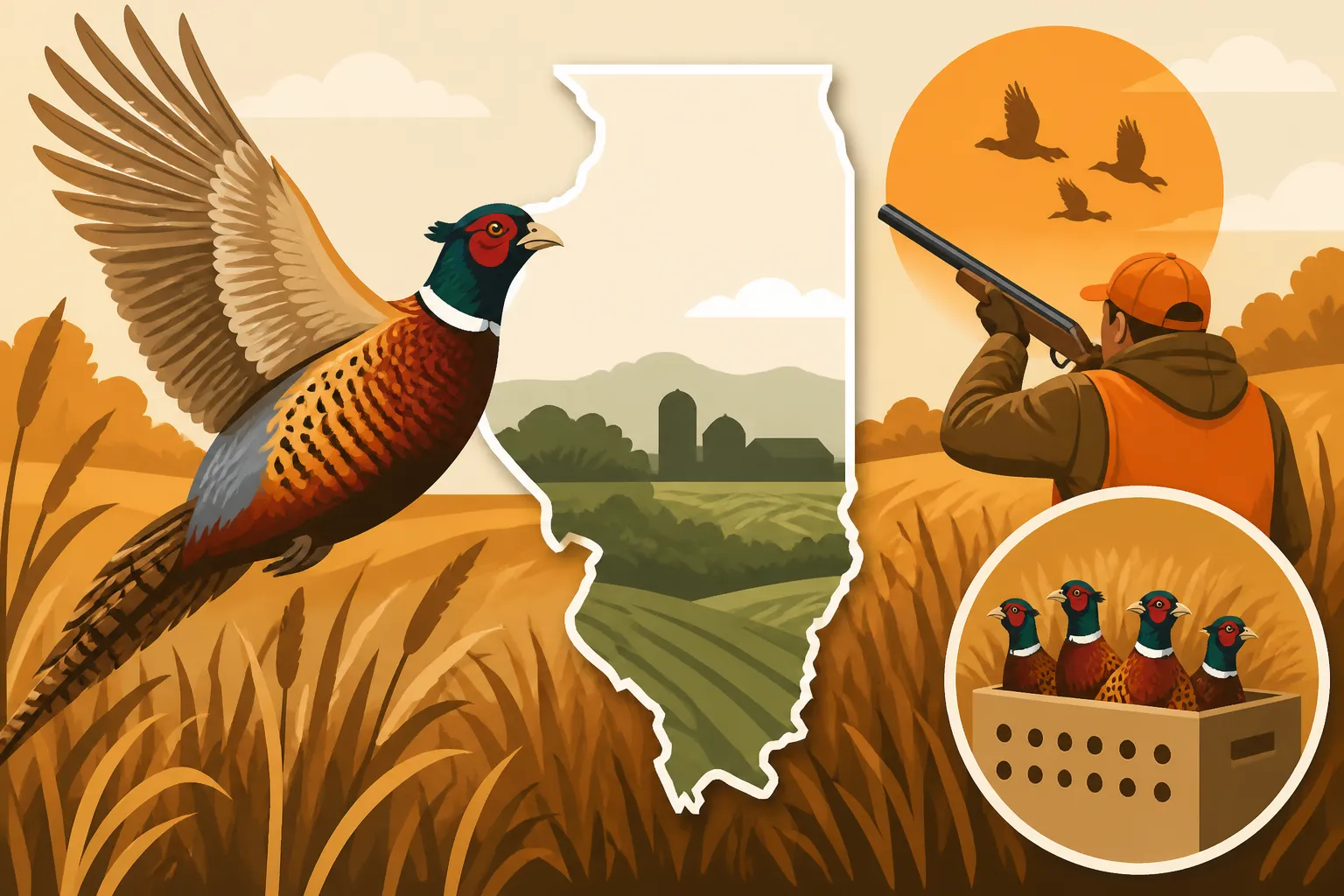
Illinois Pheasant Season and Stocking
Oh, the pheasant. For so many of us Illinois hunters, the very word conjures images of vibrant colors bursting from cover, the whir of wings, and the thrill of a good dog on point. But let's be honest, those classic scenes of wild pheasants are increasingly hard to come by in our state. It's a real frustration for hunters who remember a different era, or for those new to the sport hoping to experience it. This guide is going to walk you through the realities of Illinois's pheasant season today, how the stocking program works, and give you practical advice to make the most of your hunting opportunities, whether you're chasing a wild flush or a stocked bird.
The Legacy of Pheasant Hunting in Illinois
It’s easy to look at pheasant hunting today and feel a twinge of nostalgia for what once was. Illinois has a rich history with ring-necked pheasants, but like many things in the outdoors, it's a story of change and adaptation. Understanding this past helps us appreciate the present and look toward the future.
A Look Back at Wild Pheasant Populations
Back in the day, Illinois was a pheasant hunter's paradise. The landscape, particularly across the central and northern parts of the state, was a mosaic of small farms, fencerows, pastures, and diverse crop rotations. This habitat mix provided everything a pheasant needed: dense nesting cover in hayfields and grasslands, ample food in grain crops, and secure winter cover in brushy draws and undisturbed patches. It wasn't uncommon for farmers and hunters to encounter robust populations of wild pheasants, and the season was a highly anticipated event. Local stories from our grandfathers often speak of filling limits without having to travel far from home. This was the golden age of pheasant hunting in Illinois, where the birds truly thrived in harmony with agricultural practices that were less intensive and more diversified.
The Decline and What Caused It
Sadly, that golden age didn't last. The decline of wild pheasant populations in Illinois is a complex issue, primarily rooted in the drastic changes to our agricultural landscape over the past several decades. The shift towards large-scale, monoculture farming practices, particularly the vast expansion of corn and soybean fields, eradicated much of the critical habitat pheasants rely on. Fencerows were removed to create larger fields, pastures were converted, and diverse hayfields became a rarity. This meant less nesting cover, fewer winter roosting areas, and a fragmented food supply. Factors like increased use of pesticides and herbicides also played a role, reducing the insect populations crucial for pheasant chick survival. For a deeper dive into this disheartening trend, check out our guide on Why Wild Pheasants Faded From Illinois. Hunters often feel this loss acutely, as finding a truly wild bird now feels like discovering a hidden treasure rather than a common occurrence. It's a tough pill to swallow, knowing what we once had.
Understanding Illinois's Pheasant Season Structure
Given the changes in wild bird populations, Illinois has adapted its hunting regulations to manage remaining wild populations and to provide opportunities through extensive stocking programs. It's not the same as it used to be, but it still offers a chance to experience the thrill of the hunt.
Key Dates and Regional Variations
Illinois's pheasant season is primarily divided into two main categories: the statewide upland game season for wild birds and the specific seasons for Controlled Pheasant Hunting (CPH) areas where stocked birds are released. The statewide upland game season for pheasants typically opens in early November and runs through early January, usually coinciding with seasons for rabbits and quail. Daily bag limits are generally two roosters, and possession limits are four. However, on the CPH areas, the season dates are usually shorter, often running from late October through mid-January, with specific days of the week designated for hunting. These CPH areas have their own daily and possession limits, which can be more generous due to the nature of stocked birds. It's absolutely crucial to check the current Illinois Department of Natural Resources (IDNR) hunting digests every year, as dates, bag limits, and specific site regulations can change. What applies to a farmer's field in Livingston County for wild birds might be completely different from what you'll find at a managed site like Saybrook.
Permit Requirements and Hunter Education
To hunt pheasants in Illinois, whether wild or stocked, you'll need a valid Illinois hunting license and a State Habitat Stamp. If you're planning on hunting one of the CPH areas, you'll also need a special CPH permit for that specific site, which must be reserved in advance through a lottery or first-come, first-served process. These permits often come with a fee. For anyone born on or after January 1, 1980, completing a hunter education course is mandatory before you can purchase an Illinois hunting license. It’s a foundational requirement designed to ensure safety in the field. This requirement isn't just a bureaucratic hurdle; it teaches critical safety practices that are especially important when hunting in groups or on public land, which is often the case with stocked pheasant hunts. You can learn more about this by reading up on Illinois Hunter Education Requirements. Don't forget, these permits are site-specific, and you can't just show up to a CPH area without one; that's a surefire way to be turned away and waste a day.
Illinois's Pheasant Stocking Programs
Since wild pheasant populations have diminished, the Illinois Department of Natural Resources (IDNR) has put a significant effort into stocking programs to ensure hunters still have opportunities. These programs are a lifeline for many who want to chase pheasants.
How Stocking Works and Where Birds Are Released
The IDNR operates several Controlled Pheasant Hunting (CPH) areas across the state, designed specifically for releasing pen-raised pheasants to provide hunting opportunities. The process is pretty straightforward: pheasants are raised in captivity and then released into designated hunting fields on specific dates throughout the season. Hunters apply for permits for these sites, typically through an online lottery system well in advance of the season, or on a first-come, first-served basis for remaining spots. The goal isn't to re-establish wild populations, but to offer a "put-and-take" hunting experience.
These sites are strategically located across the state, often at popular public hunting grounds. You'll find these programs at locations like Jim Edgar Panther Creek State Fish and Wildlife Area, Wayne Fitzgerrell State Recreation Area, and Ramsey Lake State Park, among others. Each site has its own unique layout, but they all share the common characteristic of managed habitat designed to hold released birds for a reasonable amount of time. If you're looking for specific locations, our resource on Illinois Pheasant Stocking Locations can be a great starting point for your planning.
The Role of Public vs. Private Land in Stocking
The stocking efforts in Illinois primarily focus on these public Controlled Pheasant Hunting areas. On these sites, the IDNR manages the stocking schedule, habitat, and hunter access. This means you'll be hunting alongside other permit holders, and while the birds are there, they've often been exposed to human activity, making them somewhat predictable but still challenging. It's a very social hunting experience, often with multiple groups working different sections of the field.
On private land, the situation is different. While the IDNR's focus is on public sites, many private landowners or hunting clubs also stock pheasants on their properties. These might be dedicated pheasant preserves that charge a fee, or private farms where landowners release birds for their own hunting or for friends. The advantage here is often less pressure and more control over the hunting experience. However, it requires a different kind of access, usually through membership, direct landowner permission, or paying for a guided hunt at a preserve. The key difference is that wild pheasants are few and far between on both public and private lands now; the vast majority of pheasant hunting opportunities in Illinois stem from these crucial stocking programs, making them the backbone of the sport in the state.
Here's a quick look at the typical permit and season details for CPH areas:
| Aspect | Statewide Upland (Wild) | Controlled Pheasant Hunting (Stocked) |
|---|---|---|
| Season Dates | Early Nov – Early Jan (approx.) | Late Oct – Mid Jan (site-specific, often limited days/week) |
| Daily Bag Limit | 2 Roosters | Varies by site, often 2-3 birds (roosters or hens allowed depending on site) |
| Possession Limit | 4 Birds | Varies by site |
| Permit Required | Illinois Hunting License + Habitat Stamp | Illinois Hunting License + Habitat Stamp + Site-Specific CPH Permit |
| Reservation | Not required | Required, usually via online lottery or first-come, first-served |
| Hunter Density | Generally low, if wild birds found | Moderate to high, specific hunting blocks assigned |
| Bird Origin | Wild-hatched | Pen-raised, released on hunting days |
| Cost | License/Stamp fees | License/Stamp fees + CPH permit fee (typically $20-$30 per permit) |
Hunting Strategies for Stocked Pheasants
Hunting stocked pheasants is a unique experience compared to pursuing wild birds. You're not necessarily looking for natural food sources or remote cover. Instead, you're focusing on where the birds were released and how they react to pressure.
Best Tactics for Public Release Sites
On public CPH areas, you're often hunting fields specifically designed to hold pheasants, usually a mix of standing corn, sorghum, switchgrass, and other dense cover. The birds are typically released just before or on the morning of the hunt. They tend to stick to the thickest cover available, but they also learn quickly to run from pressure.
The key to success here often lies in teamwork and strategic movement. A line of hunters, spaced 20-30 yards apart, slowly walking through the cover is the most effective method. This keeps the birds moving ahead of the line, eventually forcing them to flush. Don't be afraid to push through the thickest stuff; that's where the pheasants will be hunkered down. Pay close attention to corners, fence lines, and any changes in vegetation density. Birds that are pressured will often try to sneak out the sides or double back, so having "blockers" on the ends of your line can be incredibly helpful. Using mapping tools like GoHunt can be invaluable here to understand the field layout and plan your push efficiently, identifying key escape routes or dense patches of cover the birds might favor. Being persistent and walking every inch of cover, even areas that look sparse, can pay off with a late flush. Remember, these birds are not as cunning as their wild counterparts, but they still offer a challenging and fun hunt.
Working Dogs and Group Hunts
While you can certainly hunt stocked pheasants without a dog, bringing a well-trained bird dog significantly increases your chances of success and, frankly, the enjoyment of the hunt. Dogs, especially pointing breeds like German Shorthaired Pointers or flushing dogs like English Springers, are invaluable for finding birds hidden deep in cover and, critically, for retrieving downed birds. Without a dog, many pheasants, even if hit, can disappear into thick cover, leading to lost game.
When hunting in a group with dogs, communication is paramount. Hunters need to stay aware of the dog's position and respect the point or flush. If you have multiple dogs, ensure they work together effectively and don't interfere with each other. Group hunts are common on CPH areas, fostering a great sense of camaraderie. Splitting into smaller groups or working different sections of the field can also be effective, especially if you have a larger party. It's an excellent opportunity to introduce new hunters to the sport or to enjoy a day afield with friends and family. A well-executed group hunt, with a few good dogs, truly embodies the spirit of traditional upland hunting, even if the birds are pen-raised. This social aspect is a huge draw for many hunters. Our article on Running Pointing Dogs on Illinois Pheasants offers more insights into maximizing your canine companion's effectiveness.
Pheasant Hunting Gear and Essential Preparations
Having the right gear isn't just about comfort; it's about safety, efficiency, and increasing your chances of success in the field. Pheasant hunting, especially in the thick cover often found in Illinois, requires specific equipment.
Shotgun and Ammunition Choices
For pheasants, a 12-gauge or 20-gauge shotgun is typically the firearm of choice. Many hunters prefer a pump-action or semi-automatic for quick follow-up shots, while others stick to the classic over-and-under or side-by-side. The key is to use a shotgun you're comfortable and proficient with. As for choke, an Improved Cylinder or Modified choke is usually ideal, providing a good pattern at the typical flushing ranges of 20-40 yards. Tighter chokes can be too restrictive and result in "blown up" birds at close ranges, while too open a choke might not provide enough density for clean kills at longer distances.
Ammunition-wise, lead shot is generally legal for upland game in Illinois. Many hunters opt for 2 ¾ inch shells loaded with #4, #5, or #6 shot. Number 5 shot is often considered the sweet spot, offering a good balance of pellet count and penetration for pheasants. Carrying enough shells is crucial; a typical day might see you shoot anywhere from a handful to a couple of boxes, depending on how many birds you put up and how well you're shooting. Always check the specific site rules for CPH areas, as some might have regulations on shot size or type, though this is rare for pheasant. For those who also pursue other small game, remembering the Illinois Small Game Season Rules is always a good idea to ensure your load is appropriate.
Clothing, Boots, and Safety
Pheasant hunting means walking through some seriously dense and often thorny cover. Good quality clothing is not just recommended; it's essential. Briar-proof pants or chaps are a game-changer, protecting your legs from thorns, sharp stubble, and general abrasion. A durable hunting coat or vest, ideally with a game bag on the back, is also a must. Layering your clothing is always wise, as you'll be exerting yourself, and temperatures can vary throughout the day.
Your boots are perhaps the most critical piece of gear. They need to be waterproof, comfortable, and offer good ankle support for navigating uneven terrain. Many hunters favor knee-high rubber boots or sturdy leather hiking boots. Blisters can ruin a hunt faster than anything, so ensure your boots are well broken in.
Safety, as always, is paramount. Illinois law requires hunters (except waterfowl, archery deer/turkey, and crow hunters) to wear at least 400 square inches of solid blaze orange on their outermost garment above the waist, and a blaze orange cap or hat. This is vital for visibility, especially on busy public CPH areas. Eye protection and hearing protection are also highly recommended. Always treat every firearm as loaded, know your target and what's beyond it, and never point a gun at anything you don't intend to shoot. Having a whistle can also be useful for communicating with your hunting partners or dog in dense cover, especially when the wind is up.
The Future of Pheasant Hunting in Illinois
While wild pheasant populations may not return to their historical highs, there's still hope and opportunity for pheasant hunters in Illinois. It requires understanding where to focus our efforts and how conservation plays a vital role.
Conservation Efforts Beyond Stocking
Stocking programs are crucial for providing immediate hunting opportunities, but they don't address the root cause of the wild pheasant decline: habitat loss. Thankfully, dedicated conservation groups and programs are working to reverse this trend on a broader scale. Organizations like Pheasants Forever are actively involved in habitat restoration projects across Illinois, focusing on planting native grasses, creating pollinator habitats, and re-establishing fencerows and other diverse cover that benefits pheasants and many other wildlife species.
Programs like the Conservation Reserve Program (CRP) through the USDA also incentivize landowners to take marginal agricultural land out of production and plant it with grasses and other beneficial cover. These efforts, though slow and often localized, are vital for creating pockets of habitat where wild pheasants can potentially thrive again. As hunters, supporting these organizations and advocating for habitat-friendly land use policies is just as important as buying our hunting licenses. These long-term investments in the landscape are what will truly shape the future of upland hunting in Illinois. Learning about Pheasant Hunting Illinois Grassland can provide more insights into the type of habitat these birds need.
Maximizing Your Experience in a Changing Landscape
The reality is that Illinois pheasant hunting today is largely a "put-and-take" experience on controlled sites, supplemented by very limited opportunities for wild birds. Accepting this reality and adjusting your expectations is key to maximizing your enjoyment. Don't go into a CPH hunt expecting a vast, untouched wilderness experience with cunning wild birds. Instead, embrace it for what it is: a fun, social hunt that provides good dog work and a chance to put some delicious game birds in the freezer.
Make sure to plan ahead. Use resources like the IDNR website and mapping platforms like GoHunt to scout CPH areas, understand their layouts, and identify potential hunting strategies before you even arrive. Consider booking permits with friends or family; the camaraderie of a group hunt is often as rewarding as the birds you bag. And above all, enjoy the process. Enjoy watching your dog work, the crisp autumn air, the fellowship of other hunters, and the sudden explosive flush of a pheasant. Even if it's a stocked bird, that burst of color and the sound of wings are still pure magic.
Disclaimer
Please remember that hunting regulations, season dates, and permit requirements are subject to change. Always consult the most current Illinois Department of Natural Resources (IDNR) hunting digests and regulations before planning any hunting trip. This guide is for informational purposes only and does not supersede official state regulations.