Year-Round Booking for Illinois Hog Hunts
The frustration of dealing with wildlife damaging crops or property is something many Illinois landowners and even hunters who witness the destruction can understand. Feral hogs are a particular nuisance, causing widespread ecological and agricultural damage across parts of our state. Thankfully, Illinois offers a unique and highly effective solution: year-round hunting for these destructive animals. This guide will walk you through everything you need to know about booking an Illinois hog hunt any time of year, helping you contribute to managing their populations while enjoying an exciting hunt.
Why Feral Hogs are an Illinois Hunting Priority
Unlike most game animals in Illinois, feral hogs aren't considered a native species. They are an invasive problem, and the Illinois Department of Natural Resources (IDNR) treats them as such. They root up fields, destroy valuable habitat, compete with native wildlife for food, and can even spread diseases. This isn't just a minor inconvenience; it's a serious threat to agriculture and biodiversity in areas where they establish populations. Because of this, they're classified as an unprotected species, meaning there's no closed season, no bag limit, and no special permits required to hunt them on private land with landowner permission. This distinction makes year-round hunting a critical management tool.
The Ecological Impact of Feral Swine
You really can't overstate the damage these critters do. Imagine walking into a pristine woodlot or a freshly planted field only to find it looks like someone took a rototiller to it. That's the work of feral hogs. Their incessant rooting for food disturbs soil, damages native plants, and can even contribute to erosion. They'll eat just about anything – acorns, crops, eggs from ground-nesting birds, even fawns and small mammals. This puts immense pressure on native wildlife like our deer and turkey populations by destroying their food sources and habitat. The IDNR actively encourages their removal, and hunters play a vital role in that effort. It's a true public service, in my opinion, to get out there and help control these invasive populations. We have a detailed look at Feral Swine Sightings in Southern Illinois if you're curious about where they're most prevalent.
The Agricultural Nightmare They Create
For farmers, feral hogs are an absolute nightmare. They devastate corn, soybean, and other crop fields, turning months of hard work into financial losses overnight. Fences are no match for a sounder of determined hogs. They'll bust through, under, or over anything in their path to get to a food source. Beyond direct crop destruction, their rooting can damage irrigation systems, contaminate water sources, and even make fields impassable for heavy machinery. When you hear about Crop Damage Hogs Cause in Illinois, it's not just a few plants here and there; it can be tens of thousands of dollars in losses for a single farmer. This is why landowners are often highly motivated to allow hunting access for hogs, sometimes even year-round, when they might be hesitant for deer or turkey.
Leveraging the Year-Round Opportunity
The year-round nature of Illinois hog hunting on private land is a game-changer for hunters. It means you don't have to wait for specific seasons, navigate lottery systems, or worry about overlap with other hunts. You can tailor your hunt to the weather, your schedule, and the most effective methods available. This flexibility is a huge advantage, especially for those looking to try different hunting techniques or simply get more time afield.
Understanding Illinois's Year-Round Hog Rule
It's crucial to grasp the specifics of Illinois's Year-Round Hog Rule on Private Land. Essentially, on private property, if you have explicit permission from the landowner, you can hunt feral hogs 365 days a year. There are no limits on how many you can harvest, and you don't need a special permit beyond your regular hunting license and habitat stamp. This freedom allows for incredibly diverse strategies, from daytime stalking in cooler weather to night hunting with thermal optics, which is a tactic gaining significant popularity. Always confirm you have proper permissions and understand any local ordinances, but the statewide rule is very clear: hogs are fair game.
Advantages of Off-Season Hog Hunting
One of the biggest advantages of year-round hog hunting is the ability to chase them when other game seasons are closed. This can be fantastic for hunters who want to stay sharp, try new gear, or simply enjoy the outdoors without the pressure of deer or turkey season. Imagine heading out in the dead of winter when deer hunting is done, or during a slow period in the summer. You might encounter fewer other hunters, especially on private ground, and the focus is solely on the hogs. This also opens up opportunities for practicing your tracking skills, learning new terrain, or honing your shooting abilities in a low-pressure environment. It's truly a unique offering for Illinois hunters.
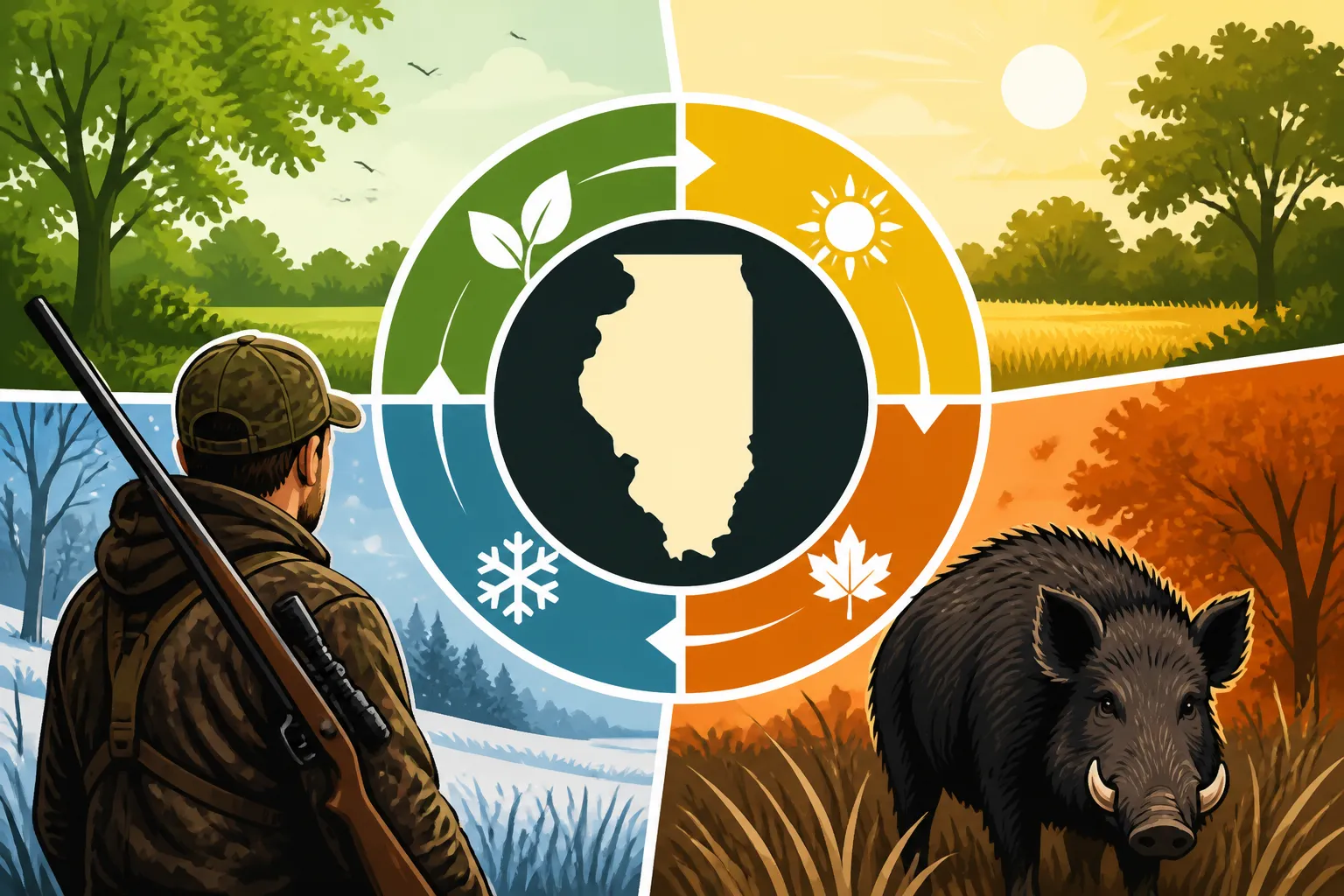
| Season | Typical Weather & Conditions | Common Hunting Methods | Potential Advantages |
|---|---|---|---|
| Spring | Mild to warm, often wet, new growth provides cover. | Spot-and-stalk, still-hunting, thermal night hunts. | Hogs moving towards new green-ups; fewer leaves for visibility early. |
| Summer | Hot, humid, thick foliage, hogs often nocturnal. | Thermal/night hunting, stand hunting near water/food. | Peak crop damage makes landowners eager; hogs concentrated near water. |
| Fall | Cools down, crops harvested, mast crops (acorns) drop. | Stand hunting, still-hunting, dog drives, thermal. | Excellent visibility after leaf-drop; hogs feeding heavily on acorns. |
| Winter | Cold, sometimes snow, minimal cover, hogs seek food/shelter. | Still-hunting, tracking in snow, thermal/night hunting. | Hogs stand out against snow; less cover for hogs; strong feeding patterns. |
Best Times to Book for Specific Strategies
While you can hunt hogs year-round, certain times of the year lend themselves better to specific hunting methods and can increase your chances of success. Understanding these seasonal nuances can help you decide when to book your guided hunt or plan your self-guided adventure.
Summer Night Hunting with Thermal Optics
When the Illinois summer hits with its oppressive heat and humidity, feral hogs often become primarily nocturnal. This is where thermal imaging technology really shines. Hunting at night with thermals allows you to capitalize on their nighttime movements to and from feed fields or water sources. Many guides and outfitters specialize in Night Hunting Hogs With Lights on Private Land or thermal hunts during these hot months because it's so effective. The hogs are active, the fields are being hit hard, and the thrill of spotting them through a thermal scope under the stars is an experience unlike any other. If you're looking for a guided experience focused on this high-tech approach, summer is often the sweet spot.
Fall and Winter Stalking and Stands
As autumn arrives and the crops come out of the fields, visibility in Illinois woodlots and timber improves dramatically. Hogs will transition from feeding heavily in standing crops to scavenging leftovers and focusing on mast crops like acorns. This makes fall and winter fantastic for traditional spot-and-stalk or stand hunting strategies. With less foliage, you can see farther and track movements more easily. In winter, especially with snow on the ground, hog sign becomes incredibly obvious, allowing you to track fresh activity right to their bedding areas or feeding zones. A hunt during the cooler months can also offer a more comfortable experience than the sweltering summer heat.
Spring and Early Summer Dog Drives
For hunters who enjoy a more active and fast-paced style, spring and early summer can be excellent for dog drives. While not every outfitter offers this, some specialize in using well-trained hog dogs to locate, bay, and sometimes catch hogs. This method is often employed in thicker cover where visibility is limited, pushing the hogs out into more open areas or holding them at bay for a shot. It's a high-energy hunt that requires good communication and teamwork, often culminating in a close-quarters encounter. If this sounds like your style, ask about dog-drive availability when inquiring about hunts. You can also explore Dog-Drive Hog Guide Services for more information on this exciting approach.
Finding and Booking an Illinois Hog Hunt
Securing access to private land for hog hunting is key, whether you're going guided or trying to go it alone. Because hogs are such a problem, many landowners are open to hunters. However, connecting with them, especially for non-residents, can be challenging. This is where guide services and online platforms come in handy.
Connecting with Outfitters and Landowners
If you're looking for a guaranteed opportunity and professional assistance, booking with an Illinois outfitter is your best bet. Many outfitters have established relationships with landowners and access to properties with known hog populations. They handle scouting, stand placement, and often provide gear like thermal optics for night hunts. Look for outfitters that specifically mention hog hunting on private land. Some hunting marketplaces, like BookYourHunt, can be a great resource for finding reputable guides that offer these types of hunts. You can often filter by species, location, and even specific hunting methods, making it easier to find exactly what you're looking for. These platforms often list Thermal-Assisted Hog Guide Packages or other specialized hunts.
For those considering a self-guided hunt, securing landowner permission is paramount. Knocking on doors, attending local community events, or even reaching out to farmer's cooperatives can sometimes yield results. Emphasize your desire to help control the hog population and your commitment to responsible, ethical hunting.
What to Look for When Booking an Outfitter
When you're ready to book an Illinois hog hunt, especially if you're coming from out of state, asking the right questions is crucial. Here are some things to consider:
- Experience with Hogs: Does the outfitter specifically focus on hogs, or is it an add-on? You want someone who truly understands hog behavior and hunting strategies.
- Land Access: How much private land do they have access to? Is it actively managed for hog control?
- Methods Offered: Are you looking for thermal hunts, dog drives, or traditional stand hunting? Make sure their offerings match your interest.
- Success Rates: While no hunt is guaranteed, ask about typical success rates and what "success" means to them (e.g., shot opportunity, harvest).
- Inclusions: What's included in the price? Weapons (if needed for thermal), lodging, meals, transportation? Be clear on all costs upfront.
- References: Always ask for references from past hog hunting clients.
- Licensing & Insurance: Ensure they are properly licensed (if required for their operations) and carry adequate insurance.
Websites like GoHunt, which often have sections dedicated to hunting regulations and outfitters, can be useful for research and finding contact information for various services across Illinois. Don't be afraid to compare a few different options before making a decision. Remember that a hog hunt, even if it's year-round, still offers the thrill of the chase and the satisfaction of contributing to conservation efforts.
Considering Year-Round Logistics
Booking year-round means you need to consider the practicalities for different seasons. For summer hunts, hydration and insect repellent are absolutely critical. For winter, layering up for extreme cold is a must. Travel plans might also be affected by weather, especially if you're flying into Illinois. Consider the condition of rural roads for access, which can vary wildly depending on rainfall or snow. Outfitters will often advise on necessary gear and clothing, so pay close attention to their recommendations for the time of year you choose. It's also a good idea to familiarize yourself with Hunting Illinois's Year-Round Feral Hogs if you plan to hunt extensively.
Disclaimer
This article is for general informational purposes only and does not constitute professional advice. Laws, prices and regulations vary by location and change over time. Consult a qualified professional for guidance on your specific situation.