Mississippi Palisades Bluff Country Deer
Hunting the steep, broken terrain of Mississippi Palisades State Park for whitetail deer can feel like deciphering an ancient map, full of hidden contours and subtle signs that challenge even seasoned hunters. This guide will help you understand the unique bluff country environment, develop effective scouting strategies, and employ successful hunting tactics to consistently find deer in this rugged corner of Illinois.
Understanding the Unique Terrain of Mississippi Palisades Bluff Country
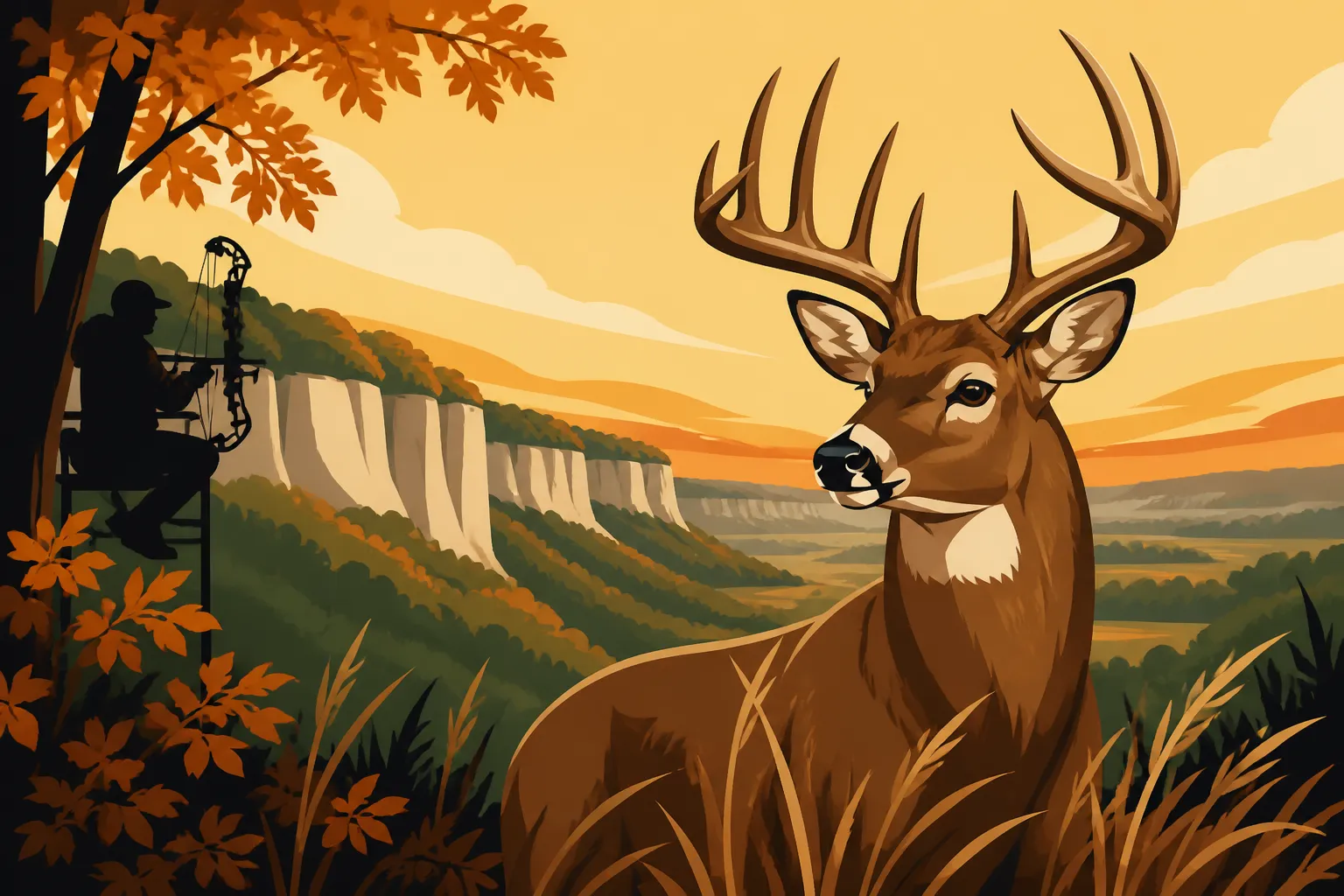
The Mississippi Palisades State Park, nestled along the mighty Mississippi River in Carroll County, offers a hunting experience unlike much of the flat, agricultural land Illinois is famous for. Here, the landscape dramatically transforms into towering limestone bluffs, deep ravines, and densely timbered hillsides that plunge down to the river. This isn't your typical central Illinois woodlot; it's a world of challenging ascents, treacherous descents, and winds that play tricks on your senses.
The sheer topography dictates everything about deer movement. Whitetails here are masters of elevation, using the steep bluffs and drainages to their advantage for cover, bedding, and travel. Instead of simply crossing open fields, they'll navigate benches, saddles, and dense cedar thickets clinging to the hillsides. Understanding these micro-movements is crucial. You'll often find deer bedding on sun-drenched benches halfway up a bluff, catching thermals rising in the morning and settling in the evening, all while keeping an eye on the river valley below.
The timber composition also shifts from the typical oak-hickory stands found elsewhere. While you'll still find plenty of hardwoods, the bluffs are often punctuated by dense stands of cedar and other evergreens, offering year-round thermal and visual cover. These thickets become key bedding areas, especially during harsh winter weather or intense hunting pressure. The presence of varied mast crops along with browse on different elevation levels means deer have diverse food sources, but they'll always factor in accessibility and security when choosing where to feed.
Scouting Strategies for Bluff Country Whitetails
Scouting in Mississippi Palisades bluff country requires a blend of advanced e-scouting and diligent on-the-ground effort. You can't just walk in blindly; the terrain will exhaust you, and you'll likely bump more deer than you find. A strategic approach is vital to uncover the secrets these bluffs hold.
Digital Reconnaissance Before You Go
Before you even step foot in the woods, leverage digital mapping tools. Platforms like onX Hunt are invaluable for dissecting this complex terrain from the comfort of your home. You can zoom in on contour lines, identifying subtle benches, saddles, and steep drop-offs that might indicate natural travel corridors. Look for areas where the contour lines are tighter, indicating steeper terrain, and then areas where they widen slightly, suggesting a bench or flatter section that deer might use as a bedding area or staging point. Pay close attention to how finger ridges extend from the main bluffs and connect to lower elevations; these often serve as natural highways for deer moving between bedding and feeding areas.
Another crucial aspect of e-scouting is identifying potential access points and planning your routes. With such steep terrain, choosing the path of least resistance for your entry and exit is paramount, both for your safety and to minimize disturbing deer. Use satellite imagery to spot logging roads, old two-tracks, or even faint trails that might offer easier travel. Also, look for distinct timber changes, like a patch of dense evergreens on a south-facing slope, which could be a prime cold-weather bedding site. Mark these points on your app, creating a virtual blueprint for your physical scouting efforts. The more detailed you are with your digital maps, the more efficient and effective your actual boots-on-the-ground scouting will be. This detailed e-scouting can also help you predict how wind and thermals will behave, which is critical for stand placement in this broken terrain, as discussed in Wind and Thermals on a Southern Illinois Ridge.
On-the-Ground Clues and Micro-Terrain Features
Once you've done your digital homework, it's time to hit the bluffs. Physical scouting is where you confirm your theories and discover the subtle nuances that maps can't always reveal. When you're physically scouting in bluff country, your focus shifts to finding definitive deer sign and understanding how deer are using the micro-terrain features. Look for heavily used deer trails that run along benches or cut across steep slopes, connecting different elevation levels. These aren't always obvious paths; sometimes, they're just faint depressions in the leaf litter. Pay attention to rub lines and scrape activity, especially along ridge tops or at the mouths of ravines, which can indicate primary travel routes for mature bucks.
Don't overlook the importance of water sources, especially during dry periods. While the Mississippi River itself is a huge water body, small springs or seepages high up in the bluffs can be magnets for deer. Look for muddy tracks around these spots. Furthermore, search for hidden food sources like persimmon trees, honeysuckle thickets, or specific acorn-producing oaks that might not be visible from above. Deer in pressured public land areas, which the Palisades certainly are, often seek out these less obvious food plots. Finally, take note of any human activity, like old campsites or hiking trails. Deer will often shy away from these areas or use them primarily under the cover of darkness. Finding ground that others walk past is a key strategy here, and it often means delving deeper into the nastiest terrain.
Comparing Scouting Methods for Bluff Country
To help you visualize the advantages of different scouting approaches in the rugged Mississippi Palisades, here's a comparison:
| Method | Pros | Cons | Best For |
|---|---|---|---|
| E-Scouting | Saves time and energy; identifies hidden terrain features; access planning | Doesn't show fresh sign; satellite imagery can be outdated; no smell/sound | Initial planning, understanding topography, identifying potential hotspots |
| Boots-on-the-Ground | Confirms fresh sign; finds subtle micro-terrain features; confirms access | Physically demanding; time-consuming; risk of disturbing deer; weather-dependent | Verifying e-scouting theories, finding current deer patterns, checking wind/thermals |
| Trail Cameras | Provides intelligence on deer movement times; low impact once placed | Can be stolen/vandalized; requires physical checks; limited field of view | Confirming deer presence, identifying specific bucks, understanding nocturnal movement |
Hunting Tactics Tailored for Mississippi Palisades
Successfully hunting deer in Mississippi Palisades Bluff Country requires adapting your tactics to the terrain and the behavior of the deer it shelters. This isn't a place for casual hunting; it demands patience, persistence, and a keen understanding of how whitetails navigate elevation.
Strategic Stand Placement and Entry/Exit Routes
Stand placement in bluff country is paramount, and it revolves around understanding wind and thermals. The wind behaves erratically in these deep ravines and along steep bluffs. Mornings often see thermals rising, carrying your scent upwards, while evenings see them falling, pushing your scent down into the valleys. You must play these thermals and the prevailing wind to your advantage. A stand placed on a mid-bluff bench might be perfect for an evening hunt as thermals fall, but disastrous in the morning as they rise. Consider hunting the Hunting Shawnee Hills Ridgelines for similar reasons.
When setting up, look for subtle benches or saddles that act as natural funnels or pinch points. Deer will often travel these features to avoid steep climbs or dense thickets. A stand overlooking a well-used trail on a bench that connects two larger bluffs or overlooks the mouth of a ravine can be highly productive. For those willing to pack it in, a mobile setup with a lightweight treestand and climbing sticks, similar to tactics for Treestand Setups in Shawnee National Forest, can be incredibly effective, allowing you to adapt to changing deer patterns or wind conditions. Always have a clear, quiet entry and exit route that keeps you out of known bedding areas and downwind of where you expect deer to be. Using an app like onX Hunt to mark these routes can be a game-changer for stealthy access in the pre-dawn dark or post-sunset twilight.
Still-Hunting and Ground Blind Strategies
While treestands are common, the broken terrain of the Palisades also lends itself well to still-hunting or using ground blinds. Still-hunting, which involves moving slowly and deliberately through the woods, pausing frequently to observe and listen, can be incredibly effective in dense bluff country cover. The constant elevation changes and thick vegetation provide natural concealment, allowing you to slip through areas where deer feel secure. Focus on areas with varied topography and dense patches of evergreens, moving into the wind or crosswind, and utilizing every piece of cover. This method is particularly effective during the rut when bucks are cruising for does, moving more frequently throughout the day.
For those who prefer a more static approach but want to avoid the complexities of hanging a stand on steep ground, ground blinds can be an excellent option. When using a ground blind on Illinois public land in the Palisades, prioritize natural concealment. Set your blind up against a large rock, a downed tree, or within a dense thicket of cedars, taking care to brush it in thoroughly. Focus your blind placement near pinch points, staging areas adjacent to bedding, or along trails that connect food and cover. The key is to break up your silhouette and minimize movement. Ground blinds also offer an advantage during inclement weather, providing shelter from the biting winds or cold rain that can sweep through the river bluffs. This is especially true when implementing a Cold-Weather Sitting Strategy in Illinois.
Dealing with Pressured Deer in Bluff Country
Public lands like Mississippi Palisades inevitably see hunting pressure, which means the deer, especially mature bucks, become incredibly wary. They learn quickly to avoid open areas during daylight and to rely heavily on the steepest, nastiest terrain for security. Your strategy needs to reflect this. Don't be afraid to hike farther and climb higher than most hunters are willing to go. Often, the best spots are found deep in the roughest ravines or on isolated benches that take significant effort to reach. Finding Ground Others Walk Past is a principle that applies perfectly here.
Consider hunting during the week rather than on weekends, and during less popular seasons or periods, like the late archery season. During Hunting the Late-Season December Lull, deer are focused heavily on food and thermal cover, which can lead to predictable patterns if you've done your scouting. Be exceptionally scent conscious; use scent control sprays, store hunting clothes separately, and play the wind religiously. Vocalizations like grunt calls or rattling, particularly during Rattling and Grunting in Illinois, can work, but use them sparingly and authentically, as pressured deer are quick to identify unnatural sounds. Patience and persistence are your greatest allies when pursuing pressured deer in this challenging landscape.
Gear Considerations for Rugged Bluff Country
Hunting Mississippi Palisades Bluff Country isn't just a mental and tactical challenge; it's a physical one. The right gear can make or break your hunt, ensuring both your success and your safety in this demanding environment.
Footwear and Clothing for Demanding Terrain
Your footwear is arguably the most critical piece of gear for bluff country. You need boots that provide exceptional ankle support, aggressive traction for steep, slippery slopes, and waterproof protection for crossing wet ravines or walking through snow. Investing in high-quality, broken-in hiking boots or mountain hunting boots designed for rugged terrain will prevent twisted ankles and keep your feet dry and comfortable. Look for features like stiff midsoles for stability on uneven ground and durable outsoles with deep lugs for grip on loose rock and mud.
For clothing, layering is key. The elevation changes and physical exertion of climbing can cause your body temperature to fluctuate dramatically. Start with a moisture-wicking base layer, add insulating layers like fleece or down, and top it with a durable, windproof, and waterproof outer shell. Choose quiet fabrics that won't rustle loudly as you move through thick brush. Blaze orange is often required during firearm seasons, so ensure your outer layers meet Illinois's blaze orange requirements. Remember, you'll be exerting yourself, so choose layers that allow for ventilation and can be easily shed or added as your activity level and the weather change.
Essential Safety Equipment for Steep Environments
Safety in bluff country cannot be overstated. Always hunt with a buddy if possible, and always let someone know exactly where you're going and when you expect to return. A fully charged cell phone is a must, but understand that service can be spotty in deep ravines. Carry a map and compass as a backup, even if you rely on a GPS device or mapping app like onX Hunt.
Beyond communication, pack essential safety items. A high-quality headlamp with extra batteries is crucial for navigating in the dark. A basic first-aid kit, a whistle, and a fire starter could be lifesavers in an emergency. If you're using a treestand, a full-body harness is non-negotiable. The steep terrain often means a fall could be severe, so take every precaution. Consider carrying a short length of sturdy rope for hauling gear or assisting in tricky situations. The physical demands mean you should also carry plenty of water and high-energy snacks, even for what seems like a short hunt. Being prepared for unexpected situations is just as important as being prepared for the shot.
Disclaimer
This article is for general informational purposes only and does not constitute professional advice. Laws, prices and regulations vary by location and change over time. Consult a qualified professional for guidance on your specific situation.