Illinois Posted Land Rules
Navigating the world of hunting in Illinois can sometimes feel like walking a tightrope, especially when it comes to understanding where you can and cannot legally set foot. Many hunters, particularly those new to the state or exploring new areas, grapple with the anxiety of inadvertently trespassing on private land. This comprehensive guide aims to strip away that confusion, explaining Illinois's posted land rules so you can hunt with confidence and respect for both the law and private property owners.
Understanding the "Posted" Sign in Illinois
When you're out scouting or walking to your stand, seeing a "No Trespassing" sign can instantly trigger a moment of panic. What exactly does that sign mean in the eyes of Illinois law, especially for hunters? It’s more than just a polite request; it’s a legal declaration from the landowner. In Illinois, posting land is a clear and unequivocal way for property owners to notify the public that access is restricted and unwanted. For hunters, this translates directly to a strict "hands off" policy.
The Clear Message of "No Trespassing"
A "No Trespassing" sign isn't merely decorative; it serves as a formal legal notice. When a property is properly marked, it removes any ambiguity about whether or not entry is permitted. It means the landowner has taken the necessary steps to inform anyone approaching their property that they do not have consent to enter. This is crucial for hunters because ignorance of the sign is not a valid defense if you're caught on posted land. Whether you're tracking a wounded deer, retrieving a downed duck, or simply trying to find a shortcut, if the land is posted, you must consider it off-limits without explicit permission. This concept underpins all Illinois Trespass and Permission Law.
The Importance of Respecting Private Property
Beyond the legal ramifications, respecting posted land is a fundamental pillar of ethical hunting. Landowners put those signs up for a variety of reasons: privacy, safety, liability concerns, or simply because they want to manage their property exclusively. When hunters disregard these signs, it damages the reputation of the entire hunting community. It makes landowners less likely to grant permission in the future, even to responsible hunters. Cultivating a positive relationship with private landowners is vital for maintaining access to quality hunting grounds in a state like Illinois, where private land constitutes the vast majority of huntable acreage. Every time a hunter disregards a posted sign, it makes it harder for everyone else to secure permission to hunt, eroding trust between landowners and the hunting public.
The Legal Requirements for Posting Land in Illinois
It’s not enough for a landowner to just scribble "No Hunting" on a piece of cardboard. Illinois law outlines specific requirements for how property must be posted to make it legally enforceable. Understanding these requirements can help you, as a hunter, discern legitimate posted land from less formal (though still important to respect) warnings.
Specifics of Posted Signs
For land to be considered legally "posted" against trespassing for hunting, fishing, or trapping in Illinois, the signs must meet certain criteria. They typically need to be conspicuous and placed at intervals that clearly delineate the property boundaries. The law often specifies that signs should be placed at corners and at reasonable intervals along all property lines, usually no more than a certain number of feet apart (historically, this has been 200 yards or less, but always check current statutes for precise distances). These signs generally must be printed with language indicating that hunting, fishing, or trespassing is prohibited, and often include the landowner's name.
Here's a breakdown of common posting requirements:
| Aspect | Legal Requirement (General) | Practical Application for Hunters |
|---|---|---|
| Visibility | Signs must be conspicuous and legible. | Look for clear, easily readable signs, even from a distance. |
| Placement | At property corners and along boundaries at specified intervals (e.g., every 200 yards). | If you see one sign, assume the entire boundary is marked. |
| Content | Must state "No Trespassing," "No Hunting," "No Fishing," "No Trapping," or similar. | Any variation of these indicates restricted access. |
| Size/Material | Usually no specific size, but durable materials like metal or laminated plastic are common. | Focus on the message, not necessarily the type of sign. |
| Landowner Name | Often includes landowner's name and contact information, though not always legally required. | A good sign if you want to try Asking an Illinois Farmer for Permission. |
It's important to remember that even if a sign isn't perfectly compliant with every single letter of the law, if it clearly communicates that entry is unwelcome, it's best to err on the side of caution and stay out. The spirit of the law is clear: if a landowner doesn't want you there, you shouldn't be there.
Fencing and Natural Boundaries as Indicators
Beyond physical signs, sometimes fencing or natural boundaries can also serve as an indicator of private property, even if they aren't explicitly "posted" according to legal definition. A well-maintained fence, for instance, often denotes a property line. While a fence alone might not carry the same legal weight as a properly placed "No Trespassing" sign for a criminal trespass charge, it should absolutely signal to a hunter that they are approaching someone else's property. Using tools like onX Hunt or GoHunt can be incredibly helpful here. These apps overlay property lines onto topographical maps, allowing you to instantly see whose land you're on and who owns adjacent parcels. This technology is a game-changer for avoiding unintentional boundary crossings, especially when Reading Aerial Photos for Southern Illinois Deer or navigating dense timber. Always cross-reference what you see on the ground with your GPS app to be absolutely sure of your location relative to property lines.
The Harsh Realities: Consequences of Hunting Posted Land
Hunting on posted land without permission isn't just a minor infraction; it can lead to serious legal and personal repercussions. Many hunters underestimate the severity of these consequences until it's too late. Being aware of the potential penalties should reinforce the importance of always securing proper access.
Legal Penalties and Fines
Trespassing for hunting, fishing, or trapping in Illinois is typically classified as a misdemeanor, but the penalties can vary depending on the circumstances, such as whether it's a first offense, if property damage occurred, or if there were aggravating factors. Fines can range from hundreds to thousands of dollars. You could also face potential jail time, though this is less common for a simple trespass unless repeated or combined with other offenses. Furthermore, being convicted of hunting on posted land without permission can lead to the forfeiture of your hunting license and privileges for a period of time, effectively taking you out of the woods for seasons to come. This loss of privilege can be one of the most disheartening consequences for a dedicated hunter.
Loss of Hunting Privileges and Equipment
Beyond fines and potential jail time, the Illinois Department of Natural Resources (IDNR) takes trespass violations very seriously. A conviction can result in a mandatory suspension of your hunting, fishing, and trapping licenses and permits. This isn't just for a single season; it can be for multiple years. Imagine missing several deer seasons because of one poor decision. In some cases, your hunting equipment, such as your firearm or bow, could also be confiscated. This is a significant loss, both financially and emotionally. The IDNR maintains records of these violations, and they can impact your ability to obtain licenses or permits in other states as well, due to interstate wildlife violator compacts. It's a black mark that follows you.
Damaged Reputation and Loss of Future Access
Perhaps less tangible but equally damaging is the blow to your personal reputation and the broader hunting community's image. Word travels fast in rural areas. If you're known as someone who doesn't respect private property, it becomes nearly impossible to gain permission to hunt on private lands in that community ever again. Landowners talk to each other, and a bad reputation can spread quickly. This can be devastating in areas where private land offers prime hunting opportunities, like Hunting Central Illinois Farmland Deer. This kind of behavior not only hurts you but also makes it harder for other law-abiding hunters to secure permission, as landowners become warier of all hunters. Upholding ethical conduct, including strict adherence to property boundaries, is crucial for preserving the future of hunting access.
Smart Strategies for Legally Accessing Private Land
The thought of navigating posted land can be daunting, but with the right approach and a commitment to ethical hunting, you can still find fantastic opportunities on private property. The key is to be proactive, respectful, and persistent.
Research and Reconnaissance
Before you even step foot near a potential hunting spot, do your homework. Modern technology has made this easier than ever. Utilize online mapping tools like onX Hunt or GoHunt, which allow you to view property boundaries, landowner names, and aerial imagery. This helps you identify parcels that might be suitable for hunting and more importantly, who owns them. Finding Illinois Property Lines through these apps is invaluable for planning your approach and ensuring you don't inadvertently wander onto restricted areas. Look for smaller, unposted tracts adjacent to public land or larger parcels that might seem less desirable to others but hold hidden potential. Sometimes, a small, overlooked woodlot can be a whitetail haven.
Once you have landowner information, you can research them or simply prepare for a polite introduction. Drive or walk the perimeters of public lands to identify adjacent private properties. Look for signs of activity, or lack thereof, which might indicate whether the land is actively hunted or managed. Scouting Illinois Public Land Before Season is also a great time to observe nearby private parcels from a distance and note their characteristics.
The Art of Asking for Permission
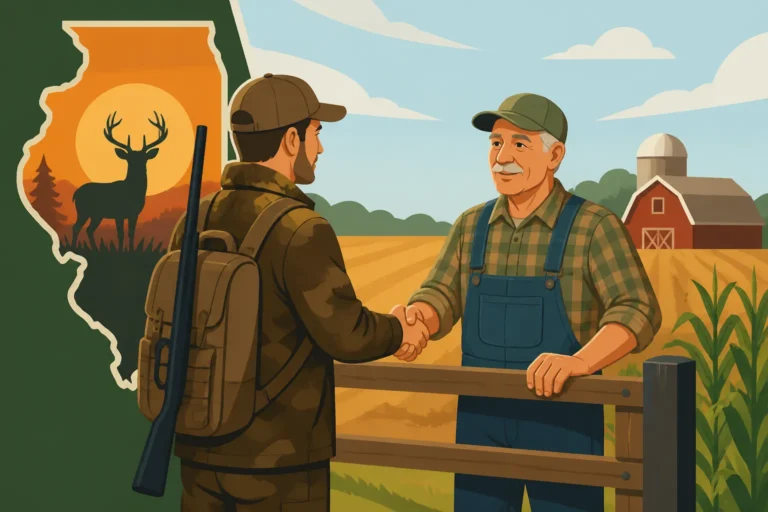
This is where the rubber meets the road. Simply knocking on a farmer's door can feel intimidating, but a respectful, well-prepared approach significantly increases your chances of success.
When you approach a landowner:
- Be respectful and polite: Introduce yourself, state your purpose clearly, and ask if they allow hunting.
- Dress appropriately: Don't show up in muddy hunting clothes. A clean, presentable appearance leaves a better first impression.
- Offer to help: Ask if there are any chores you could assist with, like fixing fences, clearing brush, or helping with harvest. This isn't a bribe; it's a genuine offer to build a relationship.
- Be specific about your intentions: Let them know what you want to hunt (deer, turkey, Squirrel Hunting Illinois Bottomland Hardwoods, etc.), when you plan to hunt, and how you will access the property. If you're specific about your plans, it shows you've thought it through and are serious.
- Offer references: If you have previous landowners who can vouch for your responsible behavior, offer their contact information.
- Provide your contact information: Give them your phone number and email so they can reach you.
- Respect "No": If they say no, thank them for their time and move on. Don't argue or try to persuade them. A polite rejection leaves the door open for a future request.
Many landowners appreciate the direct approach and the opportunity to vet who is on their property. Some might prefer Do You Need Written Permission in Illinois? in writing, which is always a good idea to confirm expectations and responsibilities on both sides.
Cultivating Long-Term Relationships
Gaining permission is often just the first step. The real success lies in nurturing that relationship. Always follow through on any promises you made. Report back on your hunts, offer some of your harvest, and continue to offer help throughout the year. If you notice a broken fence, a gate left open, or anything that might be a concern, let the landowner know. Be a good steward of their land, pick up any trash you find (even if it's not yours), and always leave things better than you found them. Remember, landowners are granting you a privilege, not a right.
By consistently demonstrating respect, responsibility, and gratitude, you'll not only secure hunting access for yourself but also help foster a positive image for all hunters in Illinois. It's about building trust, one landowner at a time. And sometimes, those small, private tracts can offer some of the best hunting experiences you'll ever find.
Disclaimer
This article is for general informational purposes only and does not constitute professional advice. Laws, prices and regulations vary by location and change over time. Consult a qualified professional for guidance on your specific situation.