Predator Calling Southern Illinois Ridgelines
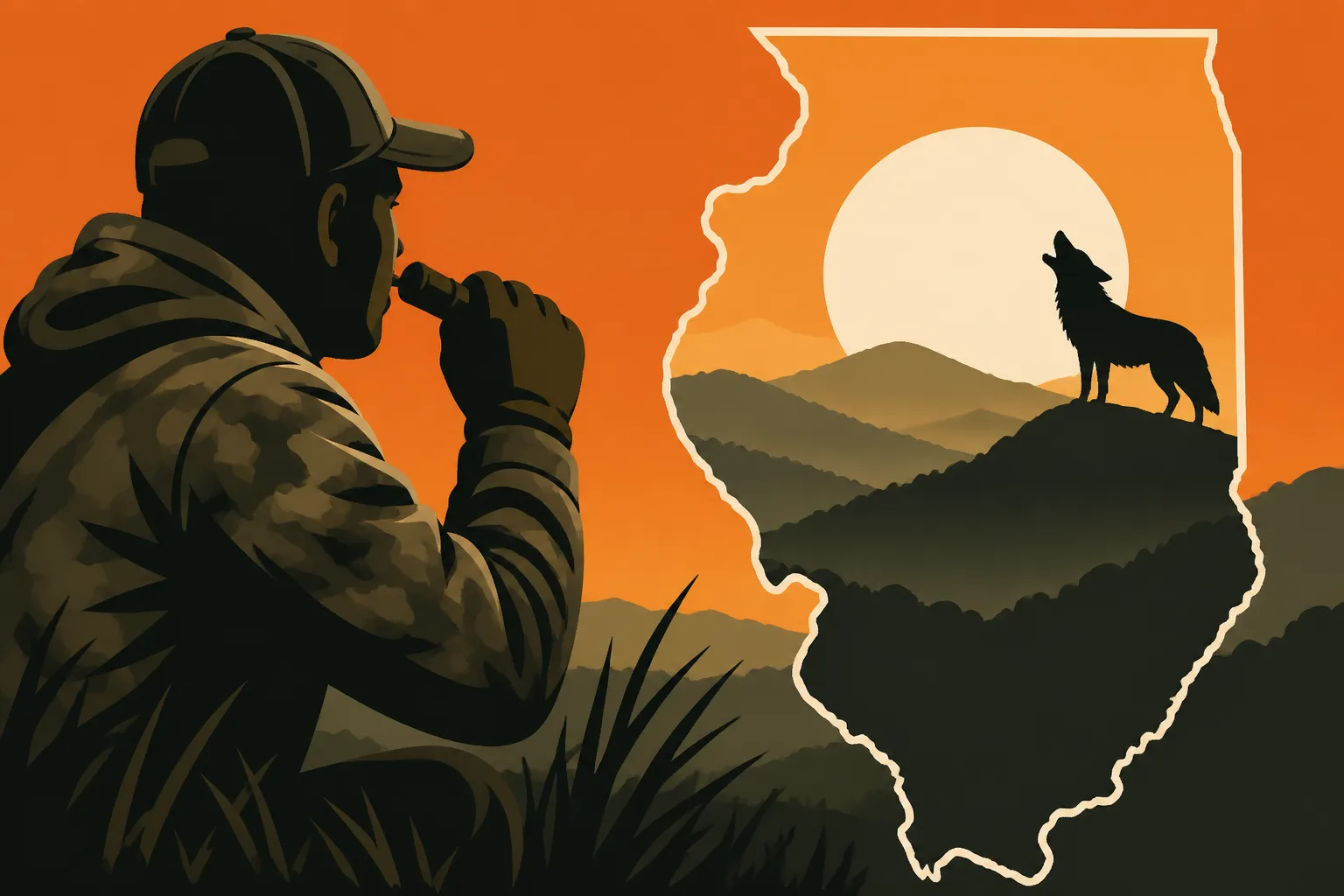
Hunting predators on the rugged ridgelines of Southern Illinois presents a unique set of challenges, from navigating steep terrain to outsmarting animals that have grown accustomed to human presence. The dense timber, deep hollows, and often unpredictable winds demand a thoughtful, patient, and adaptable approach. This guide is designed to cut through the guesswork, offering veteran strategies and local insights to help you consistently call in coyotes, bobcats, and foxes in this beautiful yet demanding landscape.
Understanding the Southern Illinois Landscape and Prey
Southern Illinois is a stark contrast to the flat farmlands of the central and northern parts of the state. It's a land of rolling hills, deep ravines, thick timber, and rocky outcrops, all part of the larger Shawnee Hills region. This diverse environment significantly influences predator behavior and, consequently, your hunting strategies.
Topography and Vegetation Challenges
The terrain itself is perhaps the biggest factor to contend with when predator hunting in Southern Illinois. You're dealing with elevations that, while not mountains, are certainly enough to challenge your stamina and dictate travel routes for both you and the game. Ridgelines here often drop sharply into creek bottoms or hollows, creating natural funnels and pinch points. The vegetation varies from mature hardwoods like oak and hickory to dense cedar thickets and brushy undergrowth, especially in areas that have been timbered or are recovering from disturbance. This heavy cover provides excellent concealment for predators, making visual confirmation difficult and demanding precise shot placement when an opportunity arises. The sheer scale of the Shawnee National Forest, for instance, means that there's ample room for coyotes, bobcats, and foxes to roam, making localizing them a key challenge. Navigating these areas requires sturdy footwear, a good understanding of contour maps, and often, a willingness to hike far from easy access points to find less pressured animals.
Primary Predator Species and Their Habits
When you're calling on Southern Illinois ridgelines, you're primarily targeting coyotes, bobcats, and occasionally red and grey foxes. Each species has distinct habits that influence how you should call and set up. Coyotes are the most numerous and widespread. They're opportunistic predators, intelligent, and highly adaptable, often traveling along ridge tops, old logging roads, and through saddles to cover ground efficiently while scent-checking for prey or other coyotes. You'll find them almost everywhere, from the deepest timber to the edges of agricultural fields that push into the hills. Bobcats, while present, are much more elusive. They prefer dense cover, rocky outcroppings, and areas with plentiful small game. They're not as vocal as coyotes, and often respond to calls more cautiously, preferring to circle downwind and investigate from a safe distance before committing. Foxes, both red and grey, are also inhabitants of these hills. Red foxes often frequent the more open areas or field edges adjacent to timber, while grey foxes are masters of dense brush and can even climb trees. Understanding these preferences helps tailor your calling sequence and setup. If you're specifically targeting a bobcat, for example, you might focus your efforts near rock formations or particularly thick cedar groves.
How Food Sources Influence Predator Movement
Just like any other wildlife, predator movement in Southern Illinois is heavily dictated by food sources. The hardwood ridges provide consistent mast crops, primarily acorns, which attract deer, turkeys, and small game like squirrels and rabbits. These smaller animals are the bread and butter for coyotes and foxes. In years with good mast crops, you'll find predators concentrating in timbered areas where prey is abundant. Conversely, in poor mast years, predators might move more towards agricultural interfaces, feeding on rodents in fields or even preying on livestock if available. The presence of deer also means a reliable food source for coyotes, especially fawns in the spring and any injured or sick deer throughout the year. Knowing the local conditions – whether it's a good acorn year or if certain fields have recently been harvested – can give you crucial clues about where predators will be spending their time, allowing you to position your setup more strategically. Early season, when small game like young rabbits and squirrels are active, can be a great time to use distress calls, as predators are actively hunting them.
Essential Gear for Ridgeline Predator Hunting
Successful predator calling on Southern Illinois ridgelines hinges not just on technique, but on having the right tools for the job. The rugged environment, combined with the wary nature of these animals, means your gear needs to be reliable, effective, and tailored to the conditions.
Electronic Callers vs. Hand Calls
Choosing between an electronic caller and hand calls is a fundamental decision, and many experienced hunters carry both. Electronic callers, like those from Foxpro or ICOtec, offer a vast library of sounds, from various distress calls (rabbit, fawn, bird) to territorial howls and pup distress. They allow you to project sound at higher volumes and from a distance, keeping human movement and scent away from the primary calling location. This is particularly advantageous on windy ridgelines where sound needs to carry over long distances or through dense timber. Many modern e-callers can be operated remotely, allowing you to place the speaker in an ideal position to draw attention while you remain concealed. However, they require batteries, can be heavy, and their electronic nature might make some hunters feel less connected to the hunt.
On the other hand, hand calls are lightweight, battery-free, and offer an incredible degree of nuance and control that an electronic call can't fully replicate. A skilled caller can adjust pitch, volume, and rhythm on the fly, mimicking the subtle distress of a rabbit or the sharp squall of a dying bird with remarkable realism. Open-reed calls are versatile, allowing for a wide range of sounds, while closed-reed calls are often easier for beginners to master specific distress sounds. Many hunters will start a stand with an electronic call to establish presence and then switch to a hand call for close-in coaxing or to add realism when an animal hangs up. The ability to make soft, pleading chirps or whimpers with a hand call can often be the final convincing touch for a wary bobcat or a coyote that's circling downwind. For a comprehensive look at how different calling methods apply, check out Coyote Calling in Illinois Farm Country, which offers insights transferable to various terrains.
Firearm and Ammunition Selection
The choice of firearm and ammunition is critical for clean, ethical harvests on ridgelines. Given the potential for shots from close range to well over 200 yards, especially across hollows or down long draws, accuracy and sufficient knockdown power are paramount. Centerfire rifles are a popular choice, with calibers like .223 Remington, .22-250 Remington, and .204 Ruger being excellent options. These cartridges offer flat trajectories, high velocity, and minimal recoil, making precise shot placement easier. Use bullets specifically designed for varmints or predators, which are typically lighter and fragment rapidly upon impact, minimizing ricochet potential in rocky or timbered areas.
Shotguns, particularly 12-gauge or 20-gauge, loaded with buckshot (like #4 Buck or even larger T-shot for coyotes) or specialized predator loads, are also highly effective, especially in dense cover where shots are likely to be up close and fast. The pattern of a shotgun offers a greater margin of error at close range. For hunting where the target might be a bobcat or fox at closer distances in thick brush, a shotgun can be an unbeatable choice. Remember, understanding Illinois's legal firearms for deer hunting also provides good context for other game, though predator rules can differ. Always double-check current regulations before heading afield.
Optics, Lighting, and Other Crucial Accessories
Beyond calls and firearms, a few other accessories are non-negotiable for successful and safe ridgeline predator hunting. High-quality optics are essential. A good pair of binoculars (8×42 or 10×42) will help you scan distant slopes and pick apart dense cover for a subtle flicker of movement. A rifle scope with variable magnification (e.g., 3-9x, 4-12x) allows for quick adjustments from close to distant targets. For those who hunt after legal shooting light, red or green predator lights are indispensable. These lights typically have adjustable brightness and beam patterns, allowing you to scan for eye shine without spooking animals as easily as a white light would. Always be aware of Night Hunting Rules for Illinois Coyotes if you plan to hunt after dark, as specific regulations apply.
A comfortable, supportive backpack is also vital for carrying your gear, water, and any harvested game. The rugged terrain means you'll be covering ground, so a pack that distributes weight well will make a huge difference. Don't forget a rangefinder, especially if you're using a rifle, to accurately gauge distances across varying topography. Lastly, a sturdy bipod or shooting sticks will provide a stable shooting platform, which is absolutely critical for precision shots in the field. Having these tools readily accessible and knowing how to use them efficiently under pressure can turn a missed opportunity into a successful harvest.
Effective Calling Strategies for Southern Illinois Ridgelines
Calling predators effectively on Southern Illinois ridgelines is an art form that blends sound selection, volume control, and strategic timing. The goal is to paint a realistic audio picture that draws curious, hungry, or territorial animals into range, all while accounting for the tricky acoustical properties of hilly, timbered terrain.
Aggressive vs. Subtle Calling Sequences
The type of calling sequence you employ—aggressive or subtle—often depends on the time of year, weather conditions, and the known pressure level in your hunting area. Aggressive calling typically involves loud, intense distress sounds, often interspersed with coyote howls or barks. This approach is excellent for covering a lot of ground acoustically, signaling to distant animals that there's an easy meal or an intruder in their territory. It works well on cold, still mornings when sound travels far, or in areas with lower hunting pressure. For instance, a series of screaming rabbit distress calls followed by a challenge howl can really get a coyote's attention and draw them in quickly. However, aggressive calling in highly pressured areas, common on some public lands, can often put animals on high alert, causing them to hang up or even skirt around your position from a distance.
Subtle calling, on the other hand, involves softer, more pleading distress calls, whimpers, or rodent squeaks. This is particularly effective for wary predators, those that have been called before, or during milder weather when animals might be less desperate. It also excels when targeting bobcats, which are naturally more cautious. Starting with soft sounds and gradually increasing volume or intensity, if no response is noted, can be a great way to "test the waters" without overcommitting. Imagine a soft cottontail distress call, barely audible, as if a small animal is struggling nearby. This can entice a cautious bobcat to slowly creep in, relying more on its excellent hearing and stealth to locate the source. Sometimes, the quieter you are, the more likely you are to bring in a truly wild, unpressured animal.
Timing and Duration of Calls
The timing and duration of your calling sequences are just as crucial as the sounds themselves. Generally, a calling stand on a ridgeline should last anywhere from 15 to 30 minutes, sometimes longer in areas known for holding bobcats, as they are notoriously slow responders. The first few minutes are often the most critical; if an animal is close and eager, it will likely show itself quickly. Start your sequence with a minute or two of continuous calling, then intersperse it with periods of silence. These silent gaps are vital because they give animals time to respond and move in. Often, a coyote will use these breaks to close the distance, thinking the danger has passed or that it can sneak in for a closer look.
Varying your call patterns is also important. Don't just play the same sound on repeat for 20 minutes. Mix it up: two minutes of rabbit distress, a minute of silence, then a few bird distress chirps, another minute of silence, perhaps a pup whimper, and so on. This creates a more dynamic and realistic scenario, mimicking the ebb and flow of a real struggle. Pay close attention to the wind, as well. Early mornings or late evenings are often the best times, as winds tend to be calmer, allowing sound to travel farther and predator activity to be higher. For more on how wind impacts hunting, see Wind and Thermals on a Southern Illinois Ridge. Always be prepared for an animal to appear at any moment, especially during those silent pauses.
Understanding Call Volume and Direction
On ridgelines, call volume and direction are critical due to the undulating terrain. Sound travels differently over hills and through dense timber compared to open fields. When you're set up on a ridge, your call often projects down into the hollows and up the opposing slopes. Using too low a volume might not reach distant animals, while too high a volume could "blow out" close-in predators, making them wary. A good rule of thumb is to start at a moderate volume and increase it if you don't get a response after several minutes. Always consider the wind; call into the wind so that your scent carries away from your calling, but be mindful that the sound also travels with the wind, so it might need to be louder to reach animals downwind.
Directing your call is also key. If you're using an electronic caller, consider placing it 30-50 yards in front of your position, slightly off to one side. This draws the predator's attention to the call, not directly to you. It also means that when they approach the sound, they'll often expose themselves broadside or slightly quartering away, offering a better shot opportunity. Additionally, if you're on a point or a saddle, direct your call down into the draws or hollows where animals might be bedded or traveling. The topography of Southern Illinois means that animals often use these natural corridors. For detailed scouting strategies, including understanding how to use aerial photos to identify these corridors, consider exploring Reading Aerial Photos for Southern Illinois Deer, as many of these principles apply equally to predator movement.
Setting Up for Success: Stands, Wind, and Concealment
A well-executed calling sequence is only as good as your setup. On Southern Illinois ridgelines, where visibility can be limited and predators are inherently cautious, meticulous planning of your stand location, wind direction, and concealment is paramount.
Maximizing Visibility and Shooting Lanes
When choosing a stand location on a ridgeline, your primary goal is to maximize your field of view and establish clear shooting lanes. Look for natural openings, sparse timber, or areas where the terrain creates an advantage. Often, setting up on a point that juts out into a hollow or at the edge of a saddle will give you a commanding view of multiple approach routes. However, avoid skylining yourself on the very crest of a ridge, which can make you an easy target for an approaching predator. Instead, position yourself just below the crest, perhaps 10-20 yards down, to break up your silhouette.
Before you even start calling, methodically clear any small branches or obstructions that might impede a shot. Predators can appear silently and quickly, so you don't want to be fumbling with a rifle or trying to peer through a twig when an opportunity arises. Consider where you expect animals to come from – usually downwind, or along natural travel corridors like old logging roads or deer trails – and ensure you have clear lanes covering those areas. A good setup ensures that once an animal commits to the call, you can react swiftly and confidently without being hindered by your environment.
Playing the Wind and Thermals in Hilly Terrain
The wind is your most critical factor and your biggest challenge when hunting ridgelines. Predators, especially coyotes and bobcats, rely heavily on their sense of smell. They will almost always try to circle downwind of a call to scent-check the source before committing. This means your setup must absolutely keep your scent away from the areas you expect animals to approach from. Position yourself so that the prevailing wind carries your scent behind you or away from your primary calling direction.
However, in hilly Southern Illinois, thermals add another layer of complexity. As the sun rises, thermals typically rise up the hillsides. In the evening, as the air cools, thermals tend to fall down into the hollows. Ignoring these thermal shifts can lead to a busted hunt, even if you’ve accounted for the prevailing wind. For instance, if you're hunting a morning stand on a ridgeline, position yourself so that your scent is carried up and over the ridge, away from any potential approach paths below. In the evening, as thermals drop, you might need to adjust your setup to account for your scent falling into the hollows. Mastering the nuances of wind and thermals is a skill that comes with experience, but it's non-negotiable for consistent success in these environments. A detailed understanding of Wind and Thermals on a Southern Illinois Ridge is vital for any hunter in this region.
Ground Blind and Natural Cover Principles
Concealment is the final piece of the setup puzzle. While some hunters prefer a run-and-gun approach with minimal concealment, on pressured Southern Illinois public lands, good cover is usually beneficial. Natural cover, such as large oak trees, dense cedar thickets, or rock formations, can be excellent for breaking up your outline. Always ensure there's something substantial directly behind you to prevent you from being silhouetted, and choose a spot that allows you to remain still and unseen from multiple angles.
For hunters who want more robust concealment, a ground blind can be incredibly effective. While carrying one into the rugged terrain can be a workout, a pop-up ground blind offers complete concealment, allows for more movement inside, and can shield you from the elements. If using a ground blind, ensure it's well brushed-in and positioned strategically to cover approach lanes. Whether using natural cover or a manufactured blind, the key is to blend in seamlessly with your surroundings. Many principles for successful concealment can be drawn from resources like Using a Ground Blind on Illinois Public Land, even if applied to different game. Remember, predators are constantly scanning their surroundings; any unnatural shape or movement will immediately alert them to your presence and send them scurrying.
Reading Sign and Adapting to Conditions
Successful predator hunting on Southern Illinois ridgelines isn't just about calling; it's also about being a keen observer and an adaptable strategist. Understanding the subtle clues left by animals and knowing how to adjust your plans based on current conditions can drastically improve your odds.
Identifying Active Predator Travel Corridors
Before you even make your first call, spend time scouting to identify active predator travel corridors. On ridgelines, these are often quite distinct. Look for old logging roads, game trails that follow the contours of a ridge, or saddles that connect two distinct ridge systems. Predators, like deer, prefer to take the path of least resistance when moving through dense timber. Check for tracks, scat, and even rub marks (though less common for predators than deer) along these routes. Coyote tracks are often larger and more elongated than a domestic dog's, and their scat might contain fur, bone fragments, or berries depending on the season. Bobcat tracks are rounded, usually without claw marks, indicating their retractable claws.
Concentrate your scouting efforts around natural pinch points – areas where two hollows converge, or where a dense thicket funnels game movement into a narrow strip of timber. These are prime locations to set up a calling stand, as an approaching predator is likely to pass through or near these areas. Learning to identify these high-traffic zones, perhaps with the help of mapping tools, is a cornerstone of consistently finding animals. The more time you spend on the ground, the better you'll become at recognizing these subtle but crucial details. For deeper insights into scouting varied Illinois landscapes, consider Scouting Illinois Public Land Before Season.
Adjusting Tactics for Weather and Pressure
Weather conditions in Southern Illinois can change rapidly, and wise predator hunters adapt their tactics accordingly. Cold, clear, still days, especially after a fresh snowfall, can be incredible for predator calling. Sound travels far, tracks are visible, and predators are often more active and hungry. On such days, more aggressive, far-reaching calls might be effective. However, extreme cold or heavy snow can also make animals seek shelter, reducing their activity.
Windy days present a significant challenge. While a steady breeze can help carry your scent away, strong, gusty winds make it difficult for predators to pinpoint the source of a call and can mask their approach. On very windy days, it's often best to find a more sheltered location, such as a leeward slope or a protected hollow, and use louder, more intermittent calls that can cut through the wind. During rainy or foggy conditions, visibility is reduced, and animals often move more cautiously. These might be good times for close-range, subtle calling in dense cover, where you can capitalize on a predator's desire to investigate an easy meal close by. The presence of other hunters also affects pressure. On busy public lands, being able to find ground others walk past becomes even more crucial.
Scouting With Modern Mapping Tools
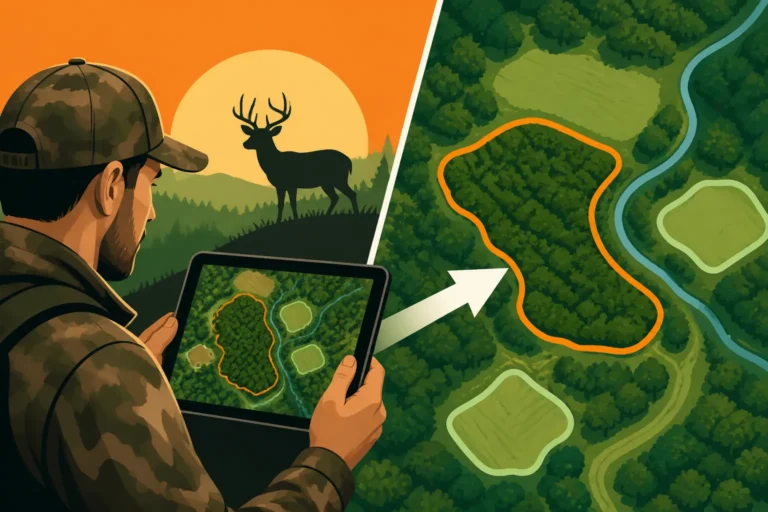
In today's hunting world, modern mapping tools are indispensable for ridgeline predator hunting. Platforms like GoHunt, onX Hunt, and other detailed topographic maps allow you to meticulously scout an area from your home, identifying potential travel corridors, pinch points, and ideal setup locations before you ever step foot in the woods. These tools provide invaluable layers, showing property boundaries (critical for public land hunting), terrain contours, vegetation types, and even historical aerial imagery.
You can use these maps to pinpoint saddles between ridges, creek drainages that predators might follow, and even dense thickets where bobcats might bed. By understanding the contours, you can predict how sound will travel and how thermals will behave. For example, a saddle might be an excellent place to set up because it funnels animals, and a detailed map can show you subtle depressions or benches where you can position yourself for concealment. Before heading out, "drop pins" on your map for potential stand locations, escape routes for game, and points of interest. This preparation saves valuable time and energy in the field and allows you to be much more strategic in your approach, greatly enhancing your chances of encountering one of Illinois's elusive predators.
Safety and Ethics on Southern Illinois Public Lands
Hunting on public lands in Southern Illinois comes with a responsibility to prioritize safety, adhere to regulations, and practice ethical hunting principles. These lands are shared by many, and our actions reflect on the entire hunting community.
Public Land Regulations and Etiquette
Hunting the vast public lands, especially areas within the Shawnee National Forest or various Illinois State Fish and Wildlife Areas, means you'll encounter a diverse group of outdoor enthusiasts. Beyond hunters, these areas are used by hikers, birdwatchers, mountain bikers, and even equestrians. Always be aware of your surroundings, and exercise extreme caution when discharging a firearm. Blaze orange requirements, typically mandatory during deer firearm seasons, are also a good idea for predator hunting, especially if you're out during daylight hours or in areas where other hunters might be present. Check specific site regulations, as many public sites have unique rules regarding hunting hours, access points, and even specific weapon restrictions. For example, some areas may have special permit requirements or designated walk-in-only zones.
Beyond formal regulations, practicing good etiquette is crucial. Be respectful of other users; a friendly wave or acknowledgment goes a long way. Leave no trace, packing out everything you pack in, and perhaps even picking up trash left by others. Avoid setting up calling stands too close to trails or established campsites. If you encounter another hunter already set up, quietly back out and find another spot. We all share these precious resources, and by being courteous and responsible, we ensure continued access and positive perceptions of hunting. Knowing about Public Hunting Land in Illinois in general helps, but Southern Illinois specifically has its own quirks.
Practicing Responsible Predator Management
Predator hunting in Illinois plays a role in wildlife management by helping to keep populations in check, particularly coyotes, which can have significant impacts on deer fawn recruitment and small game populations. However, responsible management means more than just harvesting an animal. It involves understanding the role these predators play in the ecosystem. Coyotes, for instance, are highly intelligent and resilient. Over-pressuring a specific area can sometimes lead to dispersal or a shift in their behavior, making them even warier.
Aim for ethical, humane harvests. Use appropriate firearms and ammunition to ensure a quick kill. If you wound an animal, make every reasonable effort to track and recover it. This shows respect for the animal and ensures that your hunting contributes positively to the overall management goals. When calling, avoid over-calling an area to the point where animals become "call shy." Vary your locations and methods to keep them guessing. Your impact as a hunter, both positive and negative, influences the predator populations you pursue.
Carrying Out a Successful and Safe Hunt
Finally, always prioritize your personal safety and the safety of others. Tell someone where you are going and when you expect to return, especially when hunting deep in the rugged Southern Illinois terrain. Carry a fully charged cell phone, a first-aid kit, and enough water and snacks for your outing. Be mindful of the weather, and dress appropriately for the conditions, including layers that can be adjusted as temperatures fluctuate throughout the day. The terrain itself can be dangerous, with steep slopes, loose rocks, and dense undergrowth. Watch your footing, especially when carrying a firearm.
When you've successfully called in and harvested a predator, ensure you handle the animal respectfully. If you plan to keep the fur, know how to properly skin and preserve it. If not, follow local regulations for carcass disposal. Always treat your firearm as if it's loaded, keep the muzzle pointed in a safe direction, and be absolutely certain of your target and what lies beyond it before taking a shot. By adhering to these safety protocols and ethical considerations, you ensure that your predator calling adventures in Southern Illinois are not only successful but also safe and responsible.
Disclaimer
Please note that hunting regulations, seasons, and licensing requirements can change frequently. Always consult the official Illinois Department of Natural Resources (IDNR) website or their current hunting digest for the most up-to-date and accurate information before planning any hunting trip. This guide is for informational purposes only and does not supersede state or federal regulations.