Decoy Placement for Pressured Illinois Birds
Hunting pressured birds in Illinois can feel like a constant uphill battle. You spend hours scouting, set up what you think is a perfect spread, make all the right calls, and yet, those ducks flare at the last second, geese circle a thousand yards out, or that gobbler hangs up just out of range, spooked by something you can't even pinpoint. It's incredibly frustrating when birds behave like they've seen every trick in the book. This guide is all about understanding why those birds are so wary and, more importantly, how to adapt your decoy placement strategies to finally get them to commit, even when they're highly pressured.
Understanding Pressure and Bird Behavior
When you're dealing with pressured birds, whether it's the late-season mallards on a heavily hunted public lake or a wary gobbler on private land that's seen a few too many hunters, their behavior shifts dramatically. They become more cautious, more observant, and far less forgiving of any mistakes in your setup or calling. It's not just about what they see, but what they feel is safe.
How Hunting Pressure Changes Bird Habits
Constant exposure to hunting pressure fundamentally alters how birds behave in the field. Instead of eagerly committing to a spread, they develop a keen sense of self-preservation. Ducks and geese, for instance, will fly higher, make wider circles, and often "land short" of your decoys, settling in an area they perceive as safer, even if it's less ideal. They'll scrutinize your setup for anything unnatural – a glint from a blind, a static decoy that looks out of place, or even just the overall "feel" of the area. Turkeys become notoriously "hangy-uppy," refusing to come the last 50 yards, often just out of sight, searching for the hen they hear but can't quite see convincingly.
You'll notice these changes in various ways: a flock of geese might fly a straight line over a traditional field spread without so much as a glance, or a mature gobbler might gobble his head off on the roost but go completely silent the moment he hits the ground, heading in the opposite direction from your calls. They learn quickly, associating certain locations, sounds, or visual cues with danger. This heightened wariness means your typical, run-of-the-mill decoy setup often won't cut it. You have to think like a hunted animal, not just a hungry one.
Reading the Landscape for Signs of Pressure
Identifying areas where birds are under heavy pressure is the first step in combating their wariness. Public hunting grounds, especially Illinois State Fish and Wildlife Areas, are classic examples. These spots often see consistent hunter traffic from opening day until the season closes. But even private land can have pressured birds, particularly if it's hunted by multiple groups, surrounded by other hunting properties, or near urban areas.
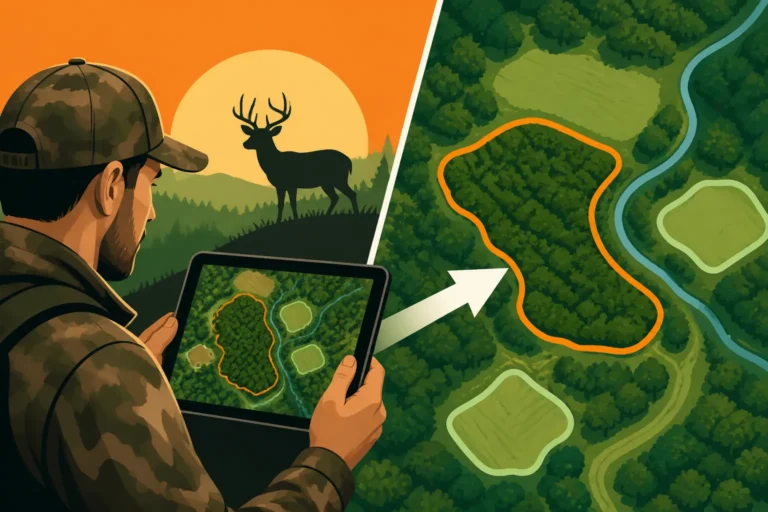
Look for subtle clues. If you're Scouting Illinois Public Land Before Season, pay attention to common access points and how far hunters typically venture. Birds will often gravitate to pockets of cover or food that are harder for hunters to reach. On waterfowl impoundments, observe how birds enter and exit the area; they often develop preferred flight corridors to avoid high-traffic spots. For turkeys, listen to how they respond to calling; if they're gobbling but rarely closing the distance, it's a strong indicator of pressure. Using mapping tools like GoHunt can help you analyze terrain features like water depth, timber edges, and elevation changes, which often reveal natural escape routes or safe zones that pressured birds will utilize. Fresh tracks, droppings, and feeding signs are good, but understanding where these signs are in relation to typical hunting spots gives you the real insight.
Strategic Decoy Placement for Ducks and Geese
Waterfowl, particularly ducks and geese in Illinois, face immense pressure throughout the season. From the opening days of early teal to the late-season diver hunts on the Illinois River, these birds are constantly being educated. Your decoy spread needs to adapt to become more convincing and less threatening.
Less-Is-More: Small Spreads for Wary Waterfowl
When dealing with ducks and geese that have been shot at all season, sometimes the most effective strategy is counterintuitive: less is more. Instead of deploying a massive spread of dozens or even hundreds of decoys, try a minimalist approach. Think small, realistic family groups or pairs. A spread of a dozen high-quality decoys, strategically placed to mimic natural behavior – a few dabbling, a few resting, a couple on alert – can often be far more effective than a huge, static spread that screams "hunter!"
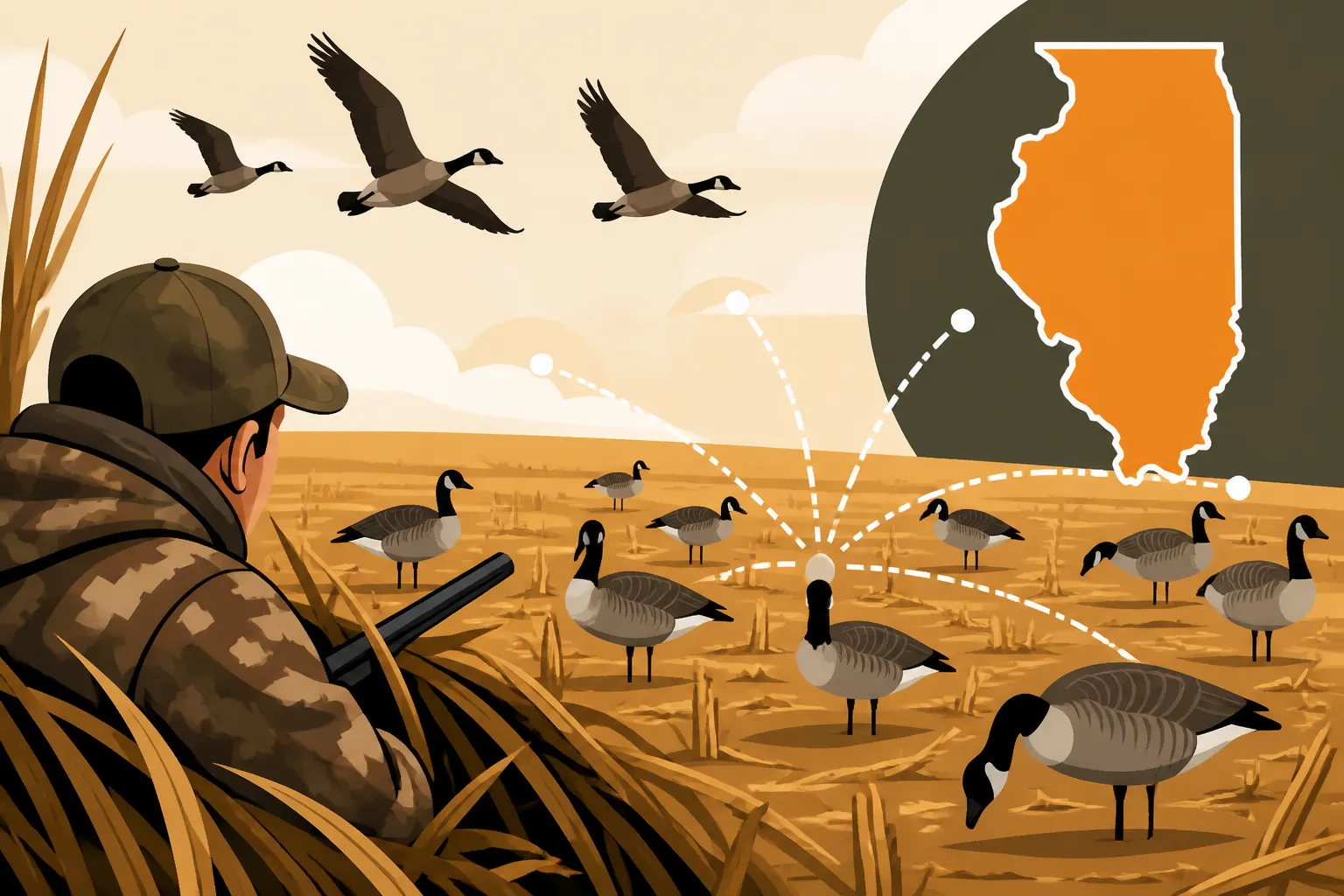
Consider the species you're targeting. For mallards, a small cluster of six to twelve decoys resembling a loafing group can be incredibly effective, especially when paired with a quality motion decoy like a Mojo or a jerk string. For geese, a spread of two to four full-body or shell decoys depicting a family unit feeding calmly can trick wary birds that might shy away from a large congregation. The key is realism and natural spacing. Birds under pressure are looking for safety, and a small, relaxed group often conveys that better than a crowded, unnatural looking "party." Remember, you’re trying to create an illusion of safety, not a convention.
Creating a Safe Landing Zone and Funnels
One of the most critical aspects of decoy placement for pressured waterfowl is creating an undeniable "safe landing zone" right where you want them. Birds will almost always land into the wind. Use this to your advantage. Arrange your decoys in a way that provides a clear, unobstructed patch of water or field directly upwind of your shooting position. This creates a natural approach path.
Common shapes for spreads include U-shapes, J-shapes, or V-shapes, all designed to guide incoming birds into that sweet spot. The open end of the "U" or "V" should face directly into the wind, with your kill hole (the target landing zone) at the bottom or inside curve. For instance, if you're Layout Blind Hunting Illinois Farm Fields for geese, you might set up a loose U-shape of full-body goose decoys, leaving a wide-open gap about 20-30 yards directly in front of your blinds. Birds will naturally try to land in that perceived safe zone, giving you perfect shot opportunities. The decoys act as a funnel, drawing them past your position at just the right distance. Quality decoys, like those from Avian-X or Dakota Decoy, with realistic poses and flocking, can enhance this illusion, making the birds more comfortable as they commit.
Hiding Your Position Effectively
Even the most perfectly placed decoy spread for pressured birds will fail if you don't effectively hide yourself. Wary waterfowl have incredible eyesight, and they've learned to associate unnatural shapes, movements, or glints of light with danger. This means your blind, whether it's a permanent pit, a layout blind, or natural cover, must be meticulously concealed.
For layout blind hunting, brush your blinds in completely. Don't just throw a few cornstalks on top; truly integrate them into the surrounding environment. If you're hunting a hedgerow or timber edge, use natural vegetation from that area to break up your outline. For water setups, ensure your boat blind is completely brushed, or if using a permanent blind, that it blends seamlessly with the shoreline. Even small details matter: avoid shiny objects, wear gloves and a face mask to eliminate skin reflection, and remain absolutely still as birds approach. Remember that birds will often circle your spread multiple times, looking for anything out of place. They're not just looking at the decoys; they're looking around them. A slight movement, a silhouette against the sky, or an unbrushed corner of your blind can send them flaring, leaving you wondering what went wrong.
Decoy Tactics for Pressured Turkeys
Turkeys in Illinois, especially those on public lands or properties with consistent hunting pressure, develop an uncanny ability to identify a hunter's setup. They become call-shy, decoy-shy, and incredibly cautious. Getting a gobbler to commit to the last few yards when he's already wary is a true test of a hunter's skill.
Realistic and Minimalist Turkey Spreads
Just like with waterfowl, a "less-is-more" philosophy often reigns supreme when targeting pressured turkeys. Forget the elaborate setups with multiple strutters and feeder hens; these can often scare off wary birds who've seen it all. Instead, focus on realism and simplicity. A single, high-quality hen decoy in a breeding or feeding posture, or perhaps a jake and a hen together, can be far more convincing.
Many seasoned turkey hunters will opt for just one or two decoys. A submissive hen or a jake in a relaxed pose can sometimes be the ticket. An aggressive full-strutter decoy might work on unpressured birds, but for those that are cagey, it can be a red flag, signaling a challenge they'd rather avoid, or simply something too good to be true. The key is to make the decoy look as natural as possible, almost invisible until the gobbler is close enough to be committed. Brands like Avian-X and Dave Smith Decoys are popular for their hyper-realistic appearance. Consider the time of year and the birds' current breeding phase. Early season might call for a breeding pair, while later in the season, a lone, receptive hen might be more effective when gobblers are feeling the pressure and looking for an easy hook-up.
Positioning for Optimal Visibility and Approach
Turkey decoys need to be visible enough to catch a gobbler's eye from a distance, but placed strategically to draw him into easy shooting range. Turkeys have incredible eyesight, a near 300-degree field of vision, so every detail matters. Place your decoy(s) about 15-25 yards from your hiding spot, slightly off to the side of your main shooting lane. This way, when the gobbler comes in to investigate, he'll often present a broadside shot as he circles or moves past your position, focusing on the decoy rather than directly on your blind.
Terrain plays a huge role here. If possible, place your decoy on a slight rise or in an open clearing where it can be seen from various angles. However, avoid putting it on a sky-line, which can make it appear unnatural. Think about how a turkey would naturally approach the area. They often use subtle contours, fencerows, or timber edges for cover as they close the distance. Your decoy should ideally be visible from these likely approach paths. For example, if you're trying to Call an Illinois Gobbler Off the Roost, having a decoy visible from their roost tree can sometimes be the final convincer to get them on the ground and headed your way. Using a mapping tool like GoHunt can provide detailed topographical maps, helping you identify optimal ridges or clearings for decoy placement, anticipating the gobbler's approach.
Safety and Ethical Considerations with Turkey Decoys
Using turkey decoys, especially realistic ones, comes with significant safety and ethical responsibilities. In the heat of the moment, another hunter might mistake your decoy for a live bird. This is particularly true with full-strutting gobbler decoys that present a large, realistic silhouette. Always, without exception, positively identify your target before pulling the trigger.
To mitigate risks, ensure you wear plenty of blaze orange when moving to and from your setup, especially when carrying decoys. Some hunters even wrap their decoys in orange fabric until they are safely positioned. It's also wise to set up with your back against a large tree or impenetrable cover, preventing any possibility of a hunter sneaking up behind your decoy and shooting in your direction. Be aware of your surroundings, especially on public land where other hunters might be present. Your primary goal is to harvest a turkey, but your absolute priority must be safety for yourself and others. These precautions are part of being a responsible hunter, ensuring that your pursuit of a pressured bird doesn't lead to a dangerous situation.
Adapting to Different Hunting Scenarios
Success in hunting pressured birds isn't just about the decoys themselves; it's about your entire approach and willingness to adapt. The birds aren't going to change their wary habits, so you have to change yours.
Public Land vs. Private Land Strategies
The dynamic between public and private land hunting in Illinois can significantly impact your decoy strategy. On public land, which often sees substantial Hunting Pressure on Illinois Public Land, subtlety is paramount. Birds here have been educated by countless hunters, calls, and decoy spreads. This often means smaller, more realistic spreads, deeper penetration into remote areas, and heightened attention to concealment. You might even find success with no decoys at all on public land if the pressure is extreme, relying solely on calling and stealth.
Private land, while potentially less pressured, can still hold wary birds if hunted frequently. However, you might have more flexibility to experiment. If you have exclusive access, you might try slightly larger spreads or more aggressive calling if you know the birds haven't been harassed much. But don't assume private land birds are dumb; treat them with respect, observe their patterns, and let their behavior dictate your strategy. Remember, access to prime private land is often secured by being a respectful and responsible hunter, so always adhere to landowner wishes.
Weather and Time of Day Adjustments
Weather conditions and the time of day are often overlooked factors that greatly influence how pressured birds react to decoys. On cold, clear days with little wind, birds often have excellent visibility and are even warier. Your setup needs to be flawless. Conversely, windy conditions can be your friend, breaking up your silhouette, muffling sounds, and making birds less likely to spot slight imperfections in your spread. However, ensuring your decoys are stable and move naturally in strong winds is crucial.
Rain or fog can drastically reduce visibility, sometimes allowing for closer setups. Ducks and geese might fly lower in heavy fog, presenting closer shots. Turkeys might be less vocal but also less likely to spot a decoy from far off. Mid-day lulls, especially for turkeys, often mean birds are less active and more prone to hanging up. You might need to adjust your calling to a softer, more subtle approach, and your decoy spread might need to be even more convincing. For example, a single hen feeding peacefully during the mid-day might draw in a tom looking for a relaxed partner, whereas an aggressive strutter would just sit there unnoticed. Always monitor current conditions and adjust your plan on the fly.
Decoy Placement Strategies for Pressured Birds
| Bird Species | Pressure Level | Decoy Type/Quantity | Placement Strategy | Key Considerations |
|---|---|---|---|---|
| Mallards | High | 6-12 realistic floaters (feeding/resting) + 1 motion | Small "J" or "U" shape upwind, tight to cover | Realism, natural motion (jerk cord), small kill hole. |
| Canada Geese | High | 2-4 full-body/shell decoys (family group) | Tight cluster, open landing zone ~20-30 yds upwind | Ultra-realistic poses, natural feeding behavior, excellent hide. |
| Diving Ducks | Moderate-High | 1-2 dozen diver floaters (ringers, cans, bills) | "Fish hook" or "X" pattern, open water for landing | Focus on active diving/feeding, wind-resistant rigging. |
| Wild Turkey | High | 1-2 realistic hen/jake (feeding/submissive) | 15-25 yds out, slightly off-center, visible from approach | Avoid aggressive poses, precise distance, excellent concealment. |
Disclaimer
Hunting is an inherently dangerous activity. Always prioritize safety, adhere to all local, state, and federal hunting regulations, and ensure you have the appropriate licenses and permits before heading afield. The information provided here is for educational purposes and should not replace proper hunter education or common sense in the field.