Illinois Waterfowl Zones and Seasons
Navigating the ever-changing landscape of waterfowl hunting regulations in Illinois can feel like trying to hit a green-winged teal at full throttle – fast, confusing, and if you're not prepared, you're likely to miss. With different zones, staggered seasons, and a myriad of permits and stamps, it's easy for even seasoned hunters to get turned around. This comprehensive guide is designed to demystify Illinois's waterfowl zones and seasons, providing you with the clear, detailed information you need to plan a successful hunt, whether you're chasing mallards in the flooded timber or snow geese across open fields.
Understanding Illinois Waterfowl Zones – A Critical First Step
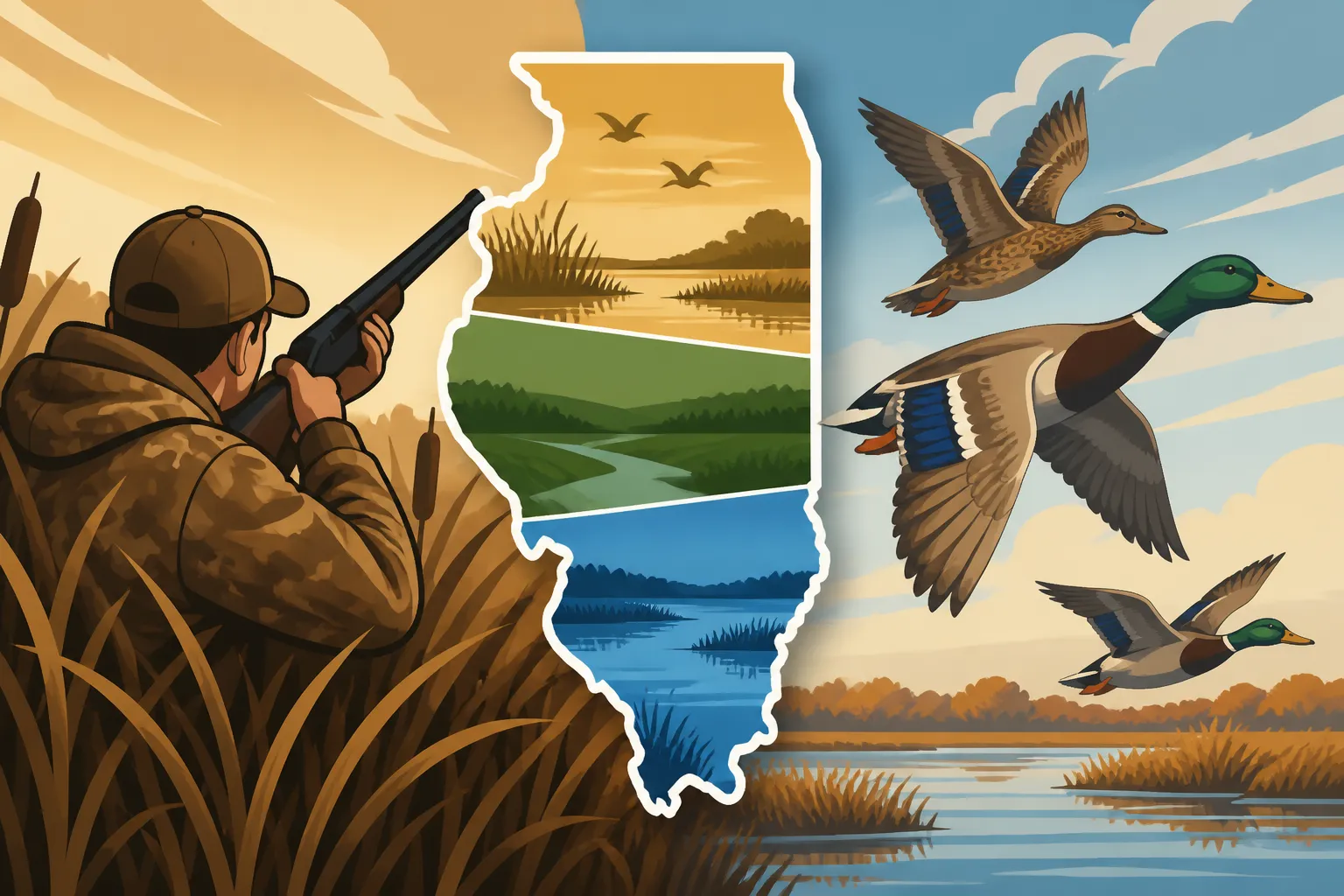
Illinois is a crucial stop on the Mississippi Flyway, a superhighway for millions of migratory birds. To manage this incredible resource effectively, the state is divided into four distinct waterfowl hunting zones, each with its own set of opening and closing dates. Ignoring these boundaries is a sure way to find yourself on the wrong side of the law, not to mention missing out on prime hunting opportunities. Truly understanding these zones isn't just about legality; it's about predicting bird movements and strategizing your hunt.
The Mississippi River Zone
This zone is arguably the most iconic and historically significant for waterfowl hunting in Illinois. It stretches along the western border of the state, following the main channel of the Mississippi River. Its boundaries are specifically defined to include the entire main channel and all adjacent backwaters, sloughs, and marshes up to the levee or flood plain line. This means it encompasses a vast and diverse habitat, from the mighty river itself to countless oxbows and bottomland swamps.
Hunting in the Mississippi River Zone offers a unique experience, often characterized by diverse species composition. You'll find everything from dabblers like mallards, wigeon, and gadwalls feeding in the flooded timber and backwater ponds, to hardy divers like canvasbacks, scaup, and goldeneyes working the main channel. The sheer volume of habitat can be overwhelming, but it also means there's always a new spot to explore. However, this popularity also means pressure, especially in easily accessible areas. Many long-standing hunting clubs operate here, often leasing prime ground, but plenty of public access exists if you're willing to scout and work for it. Understanding local water levels and their impact on bird distribution is paramount in this dynamic environment.
The Central Zone
Moving east from the Mississippi, we enter the expansive Central Zone. This is the largest of Illinois's waterfowl zones, covering the vast agricultural heartland of the state, dotted with numerous rivers, smaller lakes, and managed wetlands. Its eastern boundary is essentially the Illinois River and its associated floodplain, while its western boundary generally follows the eastern border of the Mississippi River Zone. The Central Zone is defined by a north-south line that begins at the Wisconsin border and runs roughly through various counties, so consulting the official IDNR map is crucial to pinpointing its exact geographical reach.
The hunting landscape here is a mix of natural riverine habitats, managed state sites, and significant agricultural fields. You'll find birds concentrated on larger bodies of water like the Illinois River and its major tributaries, but also scattered throughout countless smaller ponds, creeks, and flooded fields. This zone often sees a strong migration of mallards and Canada geese, drawn to the abundant corn and soybean fields. The challenge in the Central Zone is often finding consistent water and food sources that aren't heavily pressured. Hunters here need to be adaptable, ready to shift from a river blind to a layout blind in a cut cornfield depending on bird movement and weather. This zone is where you'll find some of the best opportunities for Canada Geese on Illinois Farmland once the migration truly kicks in.
The South Zone
As you travel further south in Illinois, you hit the South Zone, encompassing the lower third of the state. This zone is typically the last to open and close, acting as a crucial wintering ground for many waterfowl species, especially when colder weather pushes birds down from the northern zones. Its northern boundary is a line extending west from the Indiana border, generally following Route 154 and I-57, and then south along the Mississippi River.
The South Zone is characterized by a mix of large reservoirs, vast bottomland hardwoods, and critical managed refuges. Areas like Horseshoe Lake Fish and Wildlife Area and Cypress Creek National Wildlife Refuge are magnets for wintering geese and ducks, providing essential sanctuary and food. Hunting here often involves dealing with later seasons, which can mean more stable wintering populations but also colder, potentially harsher conditions. Waterfowl in the South Zone tend to be warier, having run the gauntlet of hunters further north. It's not uncommon to encounter impressive numbers of ducks and geese, particularly Canada geese, as they settle into their winter patterns. Many hunters find this zone offers excellent late-season opportunities, especially for ducks after a significant cold front has pushed them out of frozen areas further north.
The North Zone
At the opposite end of the spectrum is Illinois's North Zone, covering the top tier of the state, bordering Wisconsin. This zone is the first to open and close its waterfowl seasons, typically welcoming the earliest migrating birds. Its southern boundary runs from the Indiana border, generally following I-80 west to the Mississippi River, with specific diversions around urban areas.
Hunting in the North Zone often means targeting the first waves of migrating ducks and geese. Local breeding populations can also provide early-season opportunities before the main migration arrives. You'll find a mix of smaller lakes, rivers, and agricultural fields, with some urban and suburban areas even holding significant numbers of resident Canada geese. The North Zone can be feast or famine; if a strong cold front hits early, hunters might experience fantastic early-season action. However, without a significant push of birds, hunting can be slower until later in the season when birds are forced south. For many northern Illinois hunters, it's about making the most of those initial few weeks before birds continue their journey south. Understanding the nuances of these distinct zones is your first step to mastering Illinois Waterfowl Zones and Seasons.
Navigating Illinois Duck Seasons – Timing is Everything
Once you grasp the zone boundaries, the next challenge is understanding the specific duck seasons within each. These seasons are carefully staggered by the Illinois Department of Natural Resources (IDNR) to align with migratory patterns and provide equitable hunting opportunities across the state. Missing the optimal window for a particular species or zone can be the difference between a memorable hunt and a frustrating blind sit.
Early Teal Season
Before the main duck seasons even begin, Illinois offers a special early teal season, usually in early to mid-September. This season is specifically designed to allow hunters to target blue-winged and green-winged teal, which are among the earliest migratory ducks to move south. The logic behind this early season is that these fast-flying birds have largely passed through the state before the majority of other duck species begin their migration.
The early teal season is a fantastic way to kick off the waterfowl hunting year. However, it requires a specific approach. Teal are small, incredibly agile, and often found in shallow, muddy water and flooded fields, where they feed on seeds and aquatic invertebrates. Scouting is critical to locate these birds, as they can be here today and gone tomorrow with even a slight shift in weather. Your decoy spread might be smaller, and your calling more focused on high-pitched teals. The bag limits for teal are generous during this period, but accurate identification is key, as no other duck species is legal during this special season. It's a high-energy hunt that demands quick reflexes and a keen eye.
Regular Duck Season Openers by Zone
The regular duck seasons in Illinois typically open in late October in the North Zone, followed by the Central Zone, and finally the South Zone. This staggered approach directly reflects the southward progression of the waterfowl migration down the Mississippi Flyway. The North Zone gets the first crack at the initial waves of northern migrants, while the Central Zone often sees its peak around late October to mid-November. The South Zone's later opening ensures that hunters there have opportunities as birds are pushed further south by colder temperatures and ice formation.
Each zone's opening day brings its own excitement and challenges. North Zone hunters often deal with milder weather, while South Zone hunters are bracing for colder, sometimes freezing conditions. Regardless of the zone, the first few days of the season can be fantastic as birds are less wary. However, this also means more hunting pressure. It’s vital to consult the official IDNR waterfowl hunting guide each year, as exact dates can shift slightly. Websites like GoHunt often have up-to-date regulations, but always cross-reference with the official state resources to ensure you have the most current information for Illinois Duck Zone Boundaries.
Mid-Season Strategies and Peak Migration
The mid-season, typically from mid-November through early December in the Central and South Zones, is often considered the heart of the Illinois duck season. This is when large numbers of mallards, pintails, and various diving ducks are typically moving through or settling into wintering grounds. However, mid-season hunting can also be the most challenging, as birds have been pressured for weeks and have become incredibly wary.
During this period, successful hunters are constantly adapting. This might mean adjusting your decoy spreads to be more realistic and less aggressive, changing your calling cadence from excited hails to soft, subtle quacks, or moving to different locations as birds shift their patterns due to weather or food availability. Identifying the primary food sources – whether it's acorns in flooded timber or waste grain in cut fields – becomes paramount. Focusing on bottlenecks and natural funnels where birds are forced to fly low can also increase success. This is also when understanding the local nuances of Illinois Waterfowl on the Mississippi Flyway really pays off, as different species peak at different times and prefer distinct habitats.
Late-Season Opportunities and Freeze-Up
The late season, extending into late December and sometimes early January in the Central and South Zones, offers some of the most memorable – and physically demanding – waterfowl hunting experiences. As temperatures drop and smaller bodies of water begin to freeze, ducks and geese concentrate on remaining open water, making these spots magnets for hungry birds.
Hunting in the late season requires tough gear, warm clothing, and a relentless attitude. Ice can make boat access challenging, and cold winds can be brutal. However, the rewards can be incredible. Finding a pocket of open water in a sea of ice, or a field with fresh waste grain during a cold snap, can lead to incredible shoots. Dabblers like mallards and black ducks will seek refuge in flowing rivers or spring-fed sloughs, while divers will concentrate on larger, deeper lakes and the main channels of the Mississippi and Illinois Rivers. Accessing these spots might involve breaking ice or long walks, but the sheer number of birds and the pristine winter conditions make it all worthwhile for the dedicated waterfowler. This is also when hunters need to be hyper-aware of their local weather forecasts and how freeze-up affects bird movement, as even a small pond freezing over can push hundreds of birds to your location.
Illinois Goose Seasons – Separate But Related
While ducks often steal the spotlight, goose hunting in Illinois offers its own incredible opportunities, with separate seasons and specific strategies required. From resident Canada geese to migrating snow geese, understanding these distinct periods is crucial for maximizing your chances.
Early Canada Goose Season
Illinois kicks off its goose hunting with a special early Canada goose season, typically in September. The primary purpose of this season is to help manage the growing resident Canada goose population, which has flourished in many areas, including urban and suburban environments. These geese are non-migratory and often nest within the state, posing different management challenges than their migratory cousins.
This early season offers unique hunting scenarios. Hunters often target these birds on smaller ponds, local golf courses (with permission, of course!), or agricultural fields close to their roosting areas. Since these birds haven't been heavily pressured yet, they can be more susceptible to calling and decoying. Bag limits are often more liberal during this period to encourage harvest. For those eager to get out before the main migration, the early goose season provides an excellent opportunity to fine-tune calling skills and brush off the cobwebs from the off-season. It's a chance to engage with a local resource and contribute to wildlife management efforts by targeting these plentiful birds.
Regular Goose Season by Zone
Following the early season, the regular Canada goose seasons align with the three major waterfowl zones: North, Central, and South. Like ducks, these seasons are staggered, with the North Zone opening first and the South Zone last, to coincide with the southward migration of geese from Canada and the northern states.
Regular goose season brings a different scale of hunting. While resident geese are still present, the focus shifts to the massive flocks of migratory Canada geese. These birds are often targeted in large agricultural fields, especially cut corn or soybean fields, where they feed heavily to fuel their journey. Layout blinds, large decoy spreads (sometimes hundreds of decoys!), and powerful calls are common tools. Beyond Canada geese, hunters can also pursue other species. Illinois Goose Season Dates also cover white-fronted geese (specklebellies) and light geese (snow and Ross's geese), each with their own bag limits and often distinct migratory timing. Specklebellies are highly prized for their meat and cautious nature, requiring precise calling and decoy setups. Light geese, while numerous, can be incredibly challenging to decoy, often flying in massive, high-altitude flocks.
Light Goose Conservation Order
Illinois participates in the Light Goose Conservation Order (LGCO), a special management period designed to reduce the skyrocketing population of snow and Ross's geese. These species have overpopulated their Arctic breeding grounds, causing significant habitat destruction. The LGCO typically runs from late winter through early spring, after the regular waterfowl seasons have closed, offering a unique, often liberalized, hunting experience.
During the LGCO, hunters are allowed to use electronic calls, unplugged shotguns (meaning no three-shell limit in the magazine), and can hunt during extended hours. There are no daily bag or possession limits, emphasizing the conservation goal of reducing their numbers. Hunting light geese under the conservation order is an experience unlike any other. It often involves massive decoy spreads, sometimes thousands of full-body decoys or silhouettes, aimed at enticing wary birds from high altitudes. The sheer spectacle of thousands of snow geese descending into a spread is something every waterfowl hunter should experience. While challenging, the LGCO provides an important opportunity to contribute to conservation efforts while enjoying incredibly exciting hunting. You'll definitely want to use mapping tools like the ones on GoHunt to find those critical feeding areas for these massive flocks.
Essential Permits, Stamps, and Licenses for Illinois Waterfowlers
Before you even think about setting out decoys or blowing a call, you absolutely must ensure you have all the necessary paperwork. Illinois, like all states, has a strict set of requirements for waterfowl hunters. Missing even one permit or stamp can result in hefty fines and the loss of hunting privileges. Don't let a clerical oversight ruin your hunt!
Illinois State Hunting License and Habitat Stamp
Every hunter in Illinois, regardless of whether they are a resident or nonresident, must possess a valid Illinois hunting license. This is the foundational permit upon which all other specific season permits are built. For residents, various options exist, including annual or lifetime licenses, while nonresidents typically purchase annual licenses. You can find detailed information on these options and their costs in guides like Illinois Resident License Options and Illinois Nonresident License Options.
In addition to the base hunting license, anyone hunting migratory waterfowl in Illinois, or even just hunting on property owned or managed by the IDNR, must purchase a State Habitat Stamp. This stamp is not just another fee; the funds generated directly support critical habitat acquisition, restoration, and enhancement projects across the state, benefiting countless wildlife species, including the waterfowl we love to hunt. Think of it as your direct contribution to ensuring there are healthy places for birds to thrive and for us to hunt. Always carry proof of both your base hunting license and your habitat stamp while afield, either as a physical copy or electronically on your phone through the official IDNR app.
Federal Duck Stamp and HIP Certification
Beyond state requirements, migratory bird hunters face federal mandates. The most prominent of these is the Federal Migratory Bird Hunting and Conservation Stamp, universally known as the Federal Duck Stamp. Any waterfowl hunter aged 16 or older must possess a current Federal Duck Stamp. This stamp, issued by the U.S. Fish and Wildlife Service, is a vital conservation tool, with 98% of its revenue going directly to purchase or lease wetland habitats for the National Wildlife Refuge System. It's a small sticker with a massive impact, directly funding the very places many of these birds live and travel through.
Equally important for migratory bird hunters is the Harvest Information Program (HIP) certification. This isn't a physical stamp or permit but rather a registration process. Each year, before hunting migratory birds, you must register with HIP through the IDNR's licensing system. This certification allows the U.S. Fish and Wildlife Service to collect critical harvest data from a sample of hunters, providing vital information for setting future migratory bird hunting seasons and bag limits. It's a quick, free process, but it's absolutely mandatory. Both the Illinois Federal Duck Stamp Requirement and Illinois HIP Certification for Bird Hunters are non-negotiable for waterfowl hunting.
Additional Local Permits and Public Land Considerations
While the state and federal requirements cover most scenarios, hunters planning to utilize Illinois's extensive public land system, particularly State Fish and Wildlife Areas or National Wildlife Refuges, may encounter additional site-specific permits. Many popular public hunting areas, especially those with managed waterfowl programs, require hunters to apply for a draw permit, often through a lottery system, to gain access on specific dates or within designated zones.
These site-specific regulations are put in place to manage hunting pressure, ensure fair chase, and protect the resource. Examples include quota hunts at certain state parks or specific refuge permits. It's crucial to research the specific public area you intend to hunt well in advance. The IDNR website is the primary source for this information, often detailing application periods, draw results, and on-site rules. Some areas, like Crab Orchard National Wildlife Refuge, have very specific regulations you need to know. Don't assume your state license is enough; always check the local rules. Using a robust mapping app, like one that GoHunt provides, can help you identify these specific public land boundaries and regulations before you even leave home.
Bag Limits, Species Identification, and Legal Considerations
Waterfowl hunting isn't just about finding birds and shooting straight; it's about ethical hunting and strict adherence to regulations. This includes understanding daily bag and possession limits, accurately identifying species in flight, and respecting equipment restrictions. These rules are in place to ensure sustainable populations for future generations of hunters.
Daily Bag and Possession Limits for Ducks
Illinois, like all states, has specific daily bag limits for ducks, which means the maximum number of ducks you can harvest in a single day. These limits are not simply a total number of ducks but are often species-specific. For example, while the total daily bag limit for ducks might be six, there are often sub-limits within that total for certain species, such as mallards (often with a restriction on the number of hens), pintails, canvasbacks, black ducks, and wood ducks.
The possession limit, on the other hand, refers to the maximum number of legally harvested and tagged ducks you can have in your possession at any given time, including those at your home, freezer, or camp. This is typically three times the daily bag limit. The absolute critical skill here is accurate species identification. Many duck species have similar flight patterns, but their coloration, size, and call can differentiate them. Mistaking a hen mallard for a gadwall, or a pintail for a wigeon, can put you over the species-specific bag limit and result in a violation. Hunters are legally responsible for identifying their birds before they shoot and for knowing their limits. The IDNR provides excellent resources, including illustrated guides, to help with Illinois Duck Daily Bag Limit identification.
Daily Bag and Possession Limits for Geese
Goose limits also vary by species and sometimes by zone. Canada geese, often the primary target, have their own daily bag limit, which can fluctuate. White-fronted geese (specklebellies) typically have a smaller daily limit due to their population status and unique migration patterns. Light geese (snow and Ross's geese) often have very liberal or even no bag limits during the conservation order, as discussed earlier, due to their overpopulation concerns.
Similar to ducks, the possession limit for geese is usually three times the daily bag limit. Again, accurate identification is paramount. Telling the difference between a Canada goose and a white-fronted goose, especially at a distance or in low light, requires practice. The call is often the most reliable identifier. These limits are not arbitrary; they are set by federal frameworks and state biologists based on population surveys, breeding success, and harvest data to ensure the long-term health of these migratory flocks. Always check the current year's Illinois Duck and Goose Bag Limits and regulations before heading into the field, as they can change from season to season.
Legal Shooting Hours and Equipment Restrictions
Beyond bag limits, hunters must adhere to strict rules regarding shooting hours and equipment. In Illinois, legal shooting hours for waterfowl are generally from one-half hour before sunrise to sunset. Hunting outside these hours is strictly prohibited. You'll need a reliable watch or, more commonly these days, a hunting app on your phone that automatically calculates sunrise and sunset times for your specific location.
Equipment restrictions are equally important. Shotguns are the only legal firearm for waterfowl, with a maximum size of 10-gauge. All shotguns used for waterfowl must be "plugged" so they cannot hold more than three shells in the magazine and chamber combined. This includes during the regular duck and goose seasons; only during the Light Goose Conservation Order can you remove the plug. Furthermore, only non-toxic shot (steel, bismuth, tungsten-alloy, etc.) is legal for waterfowl hunting. Lead shot is strictly prohibited to prevent lead poisoning in birds. Other prohibitions include the use of live decoys, baiting (placing feed to attract birds), and electronic calls (except during the LGCO). These rules are fundamental to ethical and legal waterfowl hunting in Illinois, and ignorance is no excuse for a violation.
Planning Your Hunt Around Illinois's Waterfowl Landscape
Successful waterfowl hunting in Illinois isn't just about knowing the rules; it's about understanding the environment and adapting to it. The state's diverse geography and notoriously fickle weather mean that a static approach rarely yields consistent results. Effective scouting, weather analysis, and a strategic choice of hunting ground are your keys to success.
Scouting and Habitat Analysis
The most overlooked, yet most crucial, aspect of consistent waterfowl success is scouting. This isn't just a pre-season activity; it's an ongoing process throughout the hunt. Ducks and geese are creatures of habit and necessity; they need food, water, and safety. Your job is to find where those three elements converge. Scouting involves observing flight patterns, identifying roosting areas, and locating prime feeding grounds. Pay attention to water levels in sloughs and backwaters along the rivers, and which agricultural fields have been harvested and are attracting birds.
Modern technology has revolutionized scouting. Gone are the days of just driving around aimlessly. Aerial maps, often available through apps like GoHunt or similar mapping platforms, allow you to identify potential hotspots, hidden water, and natural funnels from the comfort of your home. You can mark potential blind locations, identify entry routes that minimize disturbance, and even assess habitat types like flooded timber or standing corn. Understanding how these elements interact with prevailing winds and sun angles is critical. For instance, knowing how to interpret Reading a River Bottom Slough for a Morning Flight can give you an edge by anticipating bird movement. Scouting also helps you gauge hunting pressure; if you see a dozen trucks at a public access, it might be time to look for a less obvious spot.
Weather's Impact on Migration and Movement
Waterfowl hunting is inextricably linked to the weather. Cold fronts, snowstorms, and ice events aren't just inconveniences; they are drivers of migration and daily bird movement. A strong cold front from the north can push thousands of new birds down the flyway, replenishing local populations and invigorating the hunting. Conversely, warm spells can stall migration, making hunting slow.
Wind is another critical factor. Ducks and geese prefer to land and take off into the wind. This means understanding wind direction is crucial for decoy placement and blind setup. A strong north wind might mean birds are flying lower and working decoys more aggressively, while a calm, sunny day might make them wary and prone to circling high. Ice formation is perhaps the most significant weather event for late-season waterfowlers. As smaller ponds and shallow backwaters freeze, birds are forced to concentrate on remaining open water, whether it's flowing rivers, large lakes, or managed open-water holes. Monitoring weather forecasts, understanding how past weather events have influenced migration, and predicting future bird movements based on incoming fronts is a skill that develops over years but is absolutely vital for consistent success. This is especially true when hunting open water, as covered in Diver Hunting on the Illinois River.
Choosing Between Public and Private Land
Illinois offers a blend of public and private land hunting opportunities, each with its own set of advantages and challenges. Many hunters dream of private land access – less pressure, consistent scouting, and often prime habitat. Securing private land permission, especially in prime agricultural counties, can be challenging but incredibly rewarding. It often involves building relationships with landowners, offering to help with chores, or leasing land. For those interested, exploring options like Illinois Hunting Lease Costs can provide more insight into this avenue.
However, Illinois also boasts a significant amount of public land managed by the IDNR, U.S. Forest Service (like the Shawnee National Forest), and U.S. Fish and Wildlife Service (National Wildlife Refuges). Public land offers accessible hunting, often for free or with minimal permit fees, but it comes with the trade-off of higher hunting pressure. Success on public land often means walking further, scouting harder, and being willing to hunt less conventional spots that others overlook. For example, understanding how to effectively hunt Waterfowl Hunting the Illinois River Valley on public access points requires specific tactics. Many public areas also have specific rules regarding blinds, ATVs, and access times, which must be carefully followed. Whether you choose public or private, understanding the specific land type and its unique challenges is key to planning your hunt.
Key Illinois Waterfowl Hotspots and Management Areas
Illinois is blessed with some truly legendary waterfowl hunting locations. From vast river systems to dedicated refuges, these areas serve as critical migration corridors and wintering grounds. Knowing where these hotspots are and how they are managed can give you a significant advantage in planning your next hunt.
Illinois River Valley Focus
The Illinois River Valley is a name synonymous with waterfowl hunting history and tradition. This floodplain, stretching from near Peoria down to its confluence with the Mississippi, forms a critical segment of the Mississippi Flyway. Its vast network of backwater lakes, sloughs, and flooded timber provides ideal resting and feeding habitat for millions of ducks and geese. Historically, this region was famous for its numerous private duck clubs, some dating back over a century, which manage their properties intensively for waterfowl.
Public access exists along the Illinois River, though it can require diligent scouting and sometimes dealing with higher pressure. State Fish and Wildlife Areas and Conservation Areas offer managed hunting opportunities. The river's dynamics, including water levels and ice formation, dictate bird movement. Mallards, pintails, and wood ducks are common targets in the backwaters, while diving ducks like canvasbacks and scaup often utilize the main river channel and larger lakes. Understanding the current conditions, local river levels, and identifying primary food sources (like waste grain in flooded fields or acorns in flooded timber) is crucial here. Resources like Illinois River Valley Diving Ducks provide specific insights into hunting tactics in this unique landscape.
Mississippi River Flyway
The mighty Mississippi River forms the entire western border of Illinois, serving as a primary conduit for migratory waterfowl. The sheer scale of the river and its adjacent floodplain – hundreds of thousands of acres of bottomland timber, sloughs, and agricultural fields – make it an unparalleled waterfowl resource. This zone sees an incredible diversity of ducks and geese, from the earliest teal to the last push of late-season mallards and divers.
Hunting opportunities along the Mississippi are diverse. You can find excellent hunting in the vast backwater systems, often accessed by boat, targeting dabbling ducks. Other areas offer field hunting for geese and mallards. National Wildlife Refuges and State Fish and Wildlife Areas provide managed hunting programs, often through a permit system. Some of the river's unique features, like the extensive chain of pools and locks, also create distinct habitat zones. The challenge and reward of the Mississippi lie in its vastness; there's always a new slough or backwater to explore, but it demands thorough scouting and an understanding of river dynamics. For more specific guidance, consider checking out information on Hunting the Mississippi River Backwaters.
Southern Illinois Refuges and State Areas
When winter truly sets in and northern waters freeze, Southern Illinois becomes an incredibly vital wintering ground for large concentrations of waterfowl. Areas like Horseshoe Lake Fish and Wildlife Area in Alexander County and Cypress Creek National Wildlife Refuge in the Cache River watershed are legendary for the sheer numbers of geese and ducks they hold. These are meticulously managed areas, often with large refuge pools providing sanctuary and managed food plots to hold birds.
Hunting around these refuges and state areas is a popular choice, often utilizing controlled hunting programs or hunting on adjacent public and private lands where birds fly out to feed. Horseshoe Lake, in particular, is famous for its massive concentrations of Canada geese, and specific managed hunts are held there. Cypress Creek offers diverse wetland habitats for ducks. These areas typically have strict regulations, including specific draw dates for permits, designated hunting zones, and sometimes limitations on blind types. Because these birds have often migrated thousands of miles and endured hunting pressure along the way, they can be incredibly wary. Success often hinges on strategic positioning along flight corridors, expert calling, and perfectly concealed blinds. These southern strongholds are critical for the overall health of the flyway and offer unparalleled late-season waterfowl hunting experiences.
Disclaimer
The information provided in this guide is for informational purposes only and is subject to change. Hunting regulations, season dates, and zone boundaries are determined by the Illinois Department of Natural Resources (IDNR) and the U.S. Fish and Wildlife Service, and they can be updated annually. It is the responsibility of every hunter to consult the official, current year's Illinois Hunting and Trapping Digest and any specific site regulations before hunting. Failure to comply with all applicable laws and regulations can result in penalties. Always prioritize safety, ethical hunting practices, and respect for wildlife and private property.