Illinois Captive Cervid Oversight
The complexity surrounding captive cervid operations in Illinois can be a real head-scratcher for anyone concerned about the health of our wild deer herd, or even just trying to understand the regulatory landscape. It's not always clear who's in charge, what the rules are, and how these facilities impact the broader hunting picture. This guide aims to clear up that confusion, diving deep into how Illinois oversees its captive deer and elk.
Understanding Illinois's Captive Cervid Landscape
When we talk about captive cervids in Illinois, we're discussing privately owned deer and elk that are kept within enclosures, often for breeding, antler production, or even for "canned" hunting operations in some states (though Illinois has specific regulations around that). The very existence of these operations brings a unique set of challenges and responsibilities, primarily centered around disease management and ensuring the health of our precious wild deer populations.
The Importance of Oversight for Wild Populations
The biggest concern, without a doubt, is disease transmission. Anyone who's followed hunting news in Illinois knows about the shadow of Chronic Wasting Disease (CWD). This neurological disease is always fatal and spreads easily among cervids. The fear is that if CWD or other diseases like Bovine Tuberculosis or Epizootic Hemorrhagic Disease (EHD) get into a captive herd, they could potentially escape into the wild, or wild deer could come into contact with infected captive animals or contaminated environments. Our wild deer are a public trust, a resource for all hunters and wildlife enthusiasts, and protecting them from preventable disease outbreaks is paramount. It’s a constant tightrope walk for wildlife managers, trying to safeguard the wild while acknowledging the existence of private operations. We've seen firsthand how Chronic Wasting Disease in Illinois Deer has spread, and the last thing anyone wants is another vector.
Who Regulates Captive Cervids in Illinois?
This is where it gets a little complicated, and it's a common point of confusion for many. In Illinois, the oversight of captive cervids is primarily shared between two state agencies, each with a distinct focus:
- Illinois Department of Natural Resources (IDNR): The IDNR is traditionally responsible for the management and conservation of wild animals. Their role regarding captive cervids largely revolves around preventing the escape of these animals into the wild and minimizing any potential disease transmission risks to the free-ranging herd. They are concerned with the ecological impacts and the integrity of wild populations. For instance, any escaped captive deer immediately falls under their jurisdiction for management, much like any other wild animal.
- Illinois Department of Agriculture (IDOA): The IDOA, on the other hand, views captive cervids more akin to livestock. Their focus is on animal health within agricultural operations, promoting commerce, and protecting the health of domestic animals. This means they oversee aspects like disease testing within captive herds, facility standards from a livestock perspective, and the movement of captive cervids for commercial purposes.
This dual oversight can sometimes lead to intricate regulations, as both agencies have a vested interest but approach the issue from slightly different angles. Imagine two different sheriffs patrolling the same block – they both want to keep the peace, but their methods and specific concerns might vary.
Key Regulations Governing Captive Cervid Facilities
Operating a captive cervid facility in Illinois isn't just a matter of putting up a fence and buying some deer. There's a stringent framework of regulations designed to minimize risks and ensure responsible animal husbandry. These rules cover everything from who can own a facility to how often animals are tested for diseases.
Licensing and Permit Requirements
If you're looking to raise deer or elk in a captive setting in Illinois, you're going to need permits – plural. You'll typically need to obtain a Game Breeder Permit from the IDNR, which acknowledges your operation as dealing with protected species (even if they're captive-bred). This permit usually comes with conditions related to preventing escapes and adhering to general wildlife statutes. Beyond that, the IDOA will require that you register as a Livestock Dealer or comply with specific Exotic/Non-Traditional Livestock regulations, especially if you're involved in the buying, selling, or processing of these animals.
The application process involves a review of your facilities, a statement of your intentions (breeding, raising for venison, etc.), and often a fee. These permits aren't a one-and-done deal; they typically require annual renewal, ensuring ongoing compliance. Inspectors from both departments might visit your property during this process, checking everything from the integrity of your fences to your animal health records. It's a significant commitment, and rightly so, given the potential implications for our state's wildlife.
Disease Surveillance and Testing Protocols
Disease surveillance is the cornerstone of captive cervid oversight. Illinois mandates strict testing protocols, especially for CWD, to protect both the captive animals and the wild population. All cervids over a certain age that die or are harvested within a captive facility must be tested for CWD. This isn't optional; it's a critical data point for monitoring disease presence.
Beyond individual testing, many facilities participate in CWD Herd Certification Programs. These are voluntary programs run by the IDOA in cooperation with the USDA, designed to provide a higher level of assurance that a herd is CWD-free. Herds in these programs undergo years of consistent testing and strict biosecurity measures. Animals cannot be introduced from non-certified herds, and there are rigorous record-keeping requirements. The goal is to establish a long-term track record of no CWD detection, which is vital for the value of the animals and for public confidence. In addition to CWD, other diseases like tuberculosis are also monitored, and regular veterinary inspections are often required to maintain certifications. Hunters should always be aware of Illinois CWD Testing for Hunters rules, as those directly impact how they handle their harvest, whether near a captive facility or not.
Fencing, Enclosures, and Security Standards
One of the most visible and crucial aspects of captive cervid regulation is the physical enclosure itself. The rules are designed to prevent two main issues: captive animals escaping into the wild, and wild animals (especially deer) from entering the captive facility. This is a critical barrier for disease prevention.
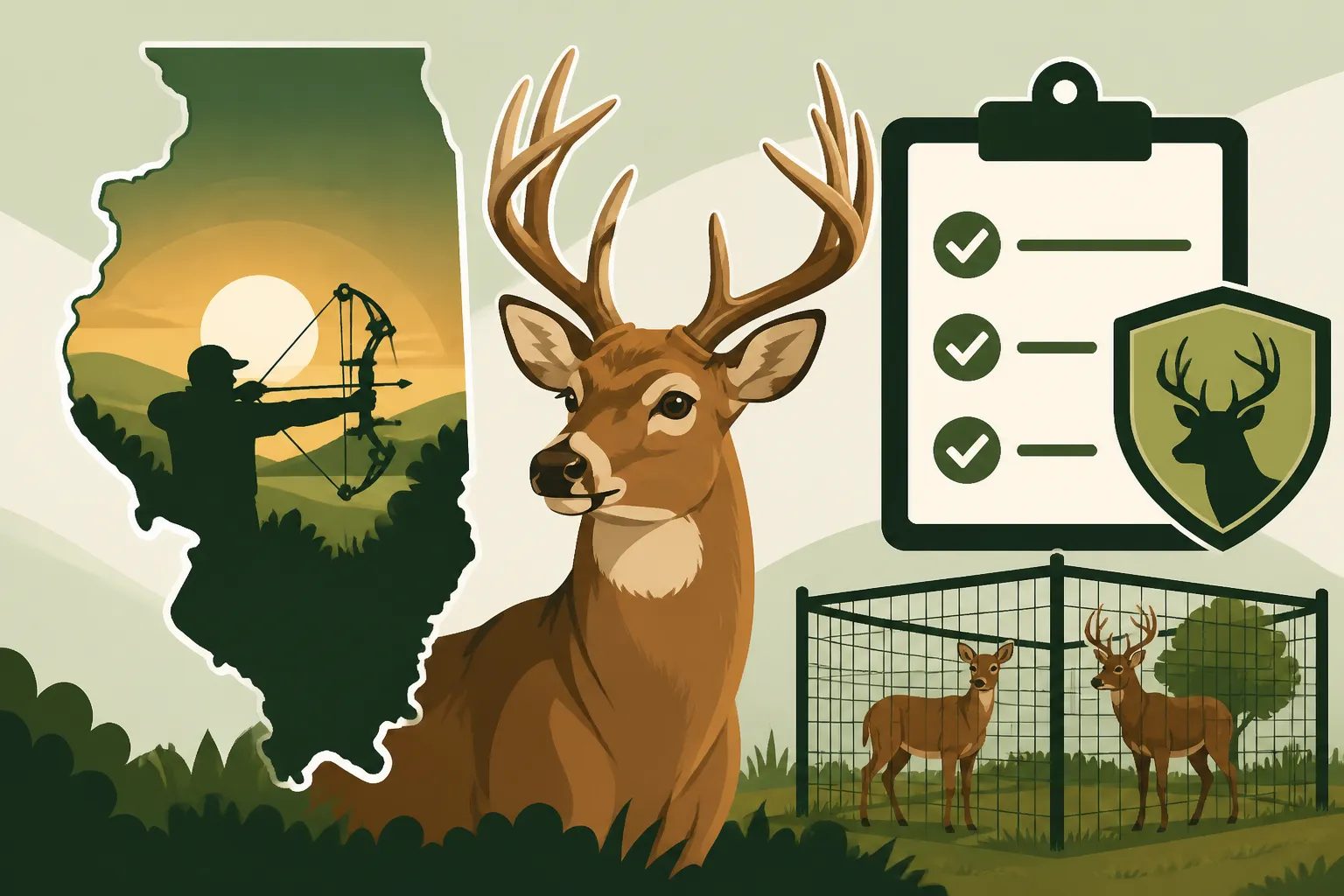
Illinois regulations typically require robust perimeter fencing for captive cervid operations. This usually means a fence at least eight feet high, often constructed of high-tensile woven wire or a similar sturdy material, designed to withstand animal pressure and deter breaches. Some regulations may even call for double fencing, creating a buffer zone between the captive herd and the outside world. This added layer of security provides an extra measure of protection against escapes and limits direct contact between wild and captive animals. Gates must be secure, self-closing, and regularly inspected. The idea is to make these enclosures as escape-proof as possible, because a single breach could have significant consequences for the wild deer herd just beyond the fence line. These standards are rigorously checked during inspections, because even a small weak point could become a problem.
Challenges and Controversies in Captive Cervid Management
The management of captive cervids is rarely without its complexities and debates. It sits at the intersection of agriculture, wildlife conservation, and public interest, often leading to tension and differing viewpoints. It's a topic that hunters, farmers, and conservationists alike often have strong opinions on.
The Ongoing Battle Against Disease Transmission
Despite stringent regulations, the potential for disease transmission remains the most significant challenge and source of controversy surrounding captive cervid facilities. CWD is a prime example. While some argue that well-managed, certified captive herds are safer than wild populations due to controlled environments and mandatory testing, others contend that any captive facility poses an inherent risk. A single escape from an infected herd or a breach in biosecurity protocols could introduce CWD to a previously unaffected wild population, or exacerbate existing outbreaks.
We’ve seen the devastating impact CWD has had in parts of Illinois. For instance, Illinois's Chronic Wasting Disease Zone continues to expand, and biologists are working tirelessly to contain its spread. The fear is that captive facilities, even unintentionally, could undo years of conservation efforts. There's also the challenge of detecting CWD early; current tests require brain or lymph node tissue, meaning an animal must be deceased. This makes proactive management within a live herd incredibly difficult. The continuous vigilance required to prevent cross-contamination is immense, and it's a burden that both facility owners and state agencies must bear.
Balancing Economic Interests with Wildlife Conservation
Captive cervid operations represent a diverse industry. Some facilities focus on breeding specific genetic lines for larger antlers, others raise deer for venison, and some operate as hunting preserves where hunters can pay to harvest a deer within an enclosure. These are legitimate agricultural and business enterprises that contribute to the rural economy, providing jobs and taxable income.
The challenge for Illinois regulators is to balance these economic interests with the overarching goal of protecting the state's wild deer herd and ensuring ethical hunting practices. Striking this balance is incredibly difficult. On one hand, you have entrepreneurs investing in a legal business; on the other, you have public land hunters and conservation groups who prioritize the health and integrity of wild game. Regulations aim to achieve this balance by imposing strict health and security standards on captive operations, effectively making the cost of doing business higher, but also safer. However, debates persist about whether enough is being done, or if the risk is simply too high. Hunting platforms like GoHunt, while primarily focused on wild game, often encounter discussions about these types of facilities, as they are part of the broader hunting ecosystem. Hunters use tools like GoHunt to understand game populations, whether it's White-Tailed Deer Across Illinois or specific regional densities, and the presence of captive cervids nearby can factor into their overall scouting strategy or concerns.
| Regulatory Body | Primary Focus | Key Responsibilities Regarding Captive Cervids |
|---|---|---|
| IDNR | Wild Wildlife Conservation | Preventing escapes, minimizing disease transmission to wild herds, enforcing game breeder permits, ecological impact. |
| IDOA | Livestock Health & Agriculture | Disease surveillance (CWD testing, herd certification), facility health standards, commercial movement, exotic livestock regulations. |
The Future of Captive Cervid Oversight in Illinois
The conversation around captive cervids is constantly evolving, driven by scientific advancements, public opinion, and the ongoing fight against diseases like CWD. Illinois, like many other states, is always re-evaluating its approach to ensure the best outcomes for both agriculture and wildlife.
Potential Regulatory Changes and Enforcement
The regulatory landscape for captive cervids is rarely static. As new research emerges on disease transmission, or as challenges in enforcement become apparent, agencies like IDNR and IDOA regularly review and propose updates to existing laws and rules. For example, there might be discussions around increasing fencing requirements, altering disease testing frequencies, or even stricter penalties for non-compliance. These changes often involve public comment periods, where hunters, landowners, and captive cervid operators can voice their concerns and suggestions. It’s a dynamic process, influenced by legislative actions, scientific advisory committees, and the practical realities on the ground. The state's commitment to Illinois Wildlife Disease Monitoring is constant, and that data frequently informs potential adjustments to oversight policies.
What This Means for Illinois Hunters
For the average hunter in Illinois, understanding captive cervid oversight might seem removed from their daily pursuit, but it's fundamentally important. The health of the wild deer herd is directly linked to these regulations. If captive cervid facilities are poorly managed, or if disease escapes into the wild, it directly impacts the opportunities and experiences of all hunters. A strong regulatory framework helps ensure that hunters can continue to pursue healthy deer across the state, from the farmlands of central Illinois to the forests of the south.
Hunters have a role to play too. Staying informed, reporting sick deer to the IDNR, and diligently following all Illinois Carcass Movement Restrictions, especially in CWD zones, are crucial. Platforms like GoHunt can be invaluable resources for staying updated on regulation changes, CWD zones, and local deer populations, helping hunters make responsible and informed decisions in the field. Ultimately, responsible oversight of captive cervids is a part of the larger picture of wildlife management that ensures the future of hunting in Illinois for generations to come.
Disclaimer
The information provided in this article is for general informational purposes only and does not constitute legal advice. Hunting regulations and captive cervid oversight rules can change frequently. Always consult the official Illinois Department of Natural Resources (IDNR) and Illinois Department of Agriculture (IDOA) websites or contact their offices directly for the most current and accurate information before engaging in any hunting activities or operating a captive cervid facility.