How Illinois Tracks Wandering Bear Sightings
It’s a truly wild experience to be out enjoying the Illinois outdoors and suddenly come face-to-face with something you never expected: a black bear. While they aren't native residents in the way our deer or turkeys are, these majestic animals do occasionally wander into our state, and knowing how Illinois tracks and manages these rare sightings is crucial for both public safety and wildlife understanding. This guide will walk you through the process, from initial sighting to the official monitoring efforts.
The Unexpected Guest: Why Bears in Illinois are Such a Rarity
For many years, the idea of seeing a black bear roaming the woods of Illinois felt like something straight out of a tall tale or an old history book. Our state’s landscape has been so heavily shaped by agriculture and human development that the notion of large predators like bears just didn’t seem to fit. Yet, every now and then, the rumors start, a grainy photo surfaces, and before you know it, an official confirmation comes: a black bear has indeed paid Illinois a visit. It’s an exciting, almost unbelievable event for many of us who cherish our wild spaces.
Historical Context of Black Bears in Illinois
Historically, black bears absolutely roamed what we now call Illinois. They were part of the vast, diverse ecosystem that existed before widespread settlement and habitat alteration. However, centuries of westward expansion, deforestation, and unregulated hunting led to their extirpation from the state. They were gone, vanished, a chapter closed in Illinois's wildlife story for a very, very long time. This is why when one does show up, it’s not just a curious occurrence, but a significant ecological event that sparks conversations about habitat connectivity and the resilience of wildlife. We often talk about Illinois's Occasional Black Bear Wanderers as if they’re entirely new, but they’re actually a whisper from the past.
It’s important to remember that these aren't bears being "reintroduced" by Illinois conservation efforts. Unlike states that have active reintroduction programs to bring back native species, Illinois doesn't currently have a similar initiative for black bears. The bears we see are almost always wanderers, individuals—often young males—dispersing from established populations in neighboring states. They're on an adventure, pushed by instinct to find new territory, and sometimes that journey brings them across our borders.
Why Sightings are So Notable
When a black bear is spotted in Illinois, it becomes headline news in local papers and lights up social media. Why such a fuss? Primarily, it’s because it’s so unexpected. Most hunters and outdoor enthusiasts are well-versed in deer, turkey, or even coyote behavior, but bear encounters are completely outside the norm for our state. The sheer size and power of a bear naturally command attention, and the rarity of the event makes it feel special, almost like spotting a mythical creature.
This notoriety also stems from the fact that black bears, while generally shy, are large wild animals that can pose a risk if not given proper space and respect. The novelty quickly turns into a need for public awareness regarding safety and coexistence. Knowing What to Do If You See an Illinois Black Bear becomes paramount, not just for the animal's well-being but for our own. The collective surprise and awe are a testament to how profoundly absent bears have been from our everyday natural landscape, making each appearance a truly remarkable occasion.
Reporting a Black Bear Sighting: What to Do and Why It Matters
So, you’re out scouting for deer, checking trail cameras, or maybe just hiking with the family, and there it is: a black bear. Your heart races, your phone is probably buried deep in your pack, and you're wondering, "Now what?" The first reaction for many is pure awe, maybe a quick, shaky photo if they can manage it. But beyond the initial excitement, knowing how to properly report that sighting to the Illinois Department of Natural Resources (IDNR) is incredibly important. It's not just about satisfying curiosity; it's about contributing to vital wildlife data.
Immediate Actions if You See a Bear
Your first priority, always, is safety. Black bears are wild animals, and while most are wary of humans, they are still powerful and unpredictable. If you encounter a bear:
- Stay Calm: Don't panic. Running can trigger a chase instinct, and sudden movements can be perceived as a threat.
- Make Yourself Look Big: Raise your arms above your head, spread out your jacket. Speak in a loud, firm voice.
- Back Away Slowly: Give the bear plenty of space. Do not approach it, especially if it has cubs or is near a food source.
- Never Feed a Bear: This is crucial. A fed bear is a dead bear. It teaches them to associate humans with food, leading to dangerous encounters and often resulting in the bear needing to be removed or euthanized.
Once you are in a safe location, that's when you can start thinking about documenting and reporting. A clear photo or video, even from a distance, can be incredibly helpful for verification. Try to note any distinguishing features, the bear’s direction of travel, and its general size.
How to Properly Report to IDNR
Reporting your sighting promptly and accurately is essential for IDNR wildlife biologists to track these rare events. They depend on citizen science, in a way, to understand bear movements. Don't just post it on social media and hope for the best; make an official report. The IDNR has established channels for this very reason.
Typically, you should contact your local IDNR office or call their main dispatch number. You'll want to provide as many details as possible: the exact date and time of the sighting, the precise location (GPS coordinates if you have them, or a clear landmark), a description of the bear (size, color, any unique markings), its behavior, and any photographic or video evidence you managed to capture. They'll also want to know your contact information so they can follow up if needed. This direct line ensures that the information gets to the right people who can assess the situation and add it to their official records.
The Importance of Accurate Data for Wildlife Management
Every bear sighting in Illinois is a puzzle piece. Without accurate data, wildlife managers can't understand if these are isolated incidents or if there's a trend, perhaps indicating potential for a more established population down the road. Knowing the frequency, location, and behavior of these wandering bears helps the IDNR develop appropriate public outreach and management strategies. This information feeds into broader conservation discussions, even touching on topics like Why Illinois Has No Bear Season, as it helps inform policy makers about the current state of our wildlife.
Think of it like keeping track of deer harvest numbers or turkey brood surveys; each piece of data, no matter how seemingly small, builds a bigger picture. For GoHunt users, this kind of detail can even inform how they use their mapping tools to understand potential wildlife corridors, even if it's for something as rare as a bear. This meticulous tracking allows the IDNR to educate the public, prevent potential conflicts, and monitor the ecological health of our state, ensuring that if bears do become more common, we’re prepared.
The IDNR's System: How Sightings are Verified and Monitored
When you report a black bear sighting to the Illinois Department of Natural Resources, it doesn't just go into a digital black hole. There's a systematic process in place to verify the information, document the event, and integrate it into a larger wildlife monitoring effort. Because these sightings are so infrequent and often generate a lot of public excitement (and sometimes misinformation!), verification is a critical first step. The IDNR isn't just taking your word for it, they're looking for concrete evidence.
Verification Methods and Protocols
Once a sighting is reported, IDNR wildlife biologists or conservation police officers will spring into action, albeit cautiously. Their primary goal is to confirm that it was indeed a black bear and not a large domestic animal, a coyote, or even a hoax. This verification can take several forms:
- Photographic and Video Evidence: This is often the quickest and most definitive way to confirm a sighting. Clear, high-resolution images or videos allow experts to identify the species and sometimes even individual characteristics. Even if it's a bit blurry, they can often discern enough detail to make a positive identification.
- Physical Evidence: If a bear lingers in an area or leaves distinct signs, IDNR staff may investigate on the ground. This could involve looking for tracks (which are quite distinctive from dog or hog tracks), scat, hair samples (which can be used for DNA analysis), or claw marks on trees.
- Witness Interviews: Conservation police or biologists will often follow up with the reporting party and any other witnesses to gather more detailed accounts of the encounter, the bear's behavior, and its specific location. Cross-referencing multiple reports from the same area can also help confirm a bear's presence and track its movement.
Each piece of evidence helps build a stronger case for the bear's presence and aids in understanding its journey through Illinois.
Data Collection and Mapping Efforts
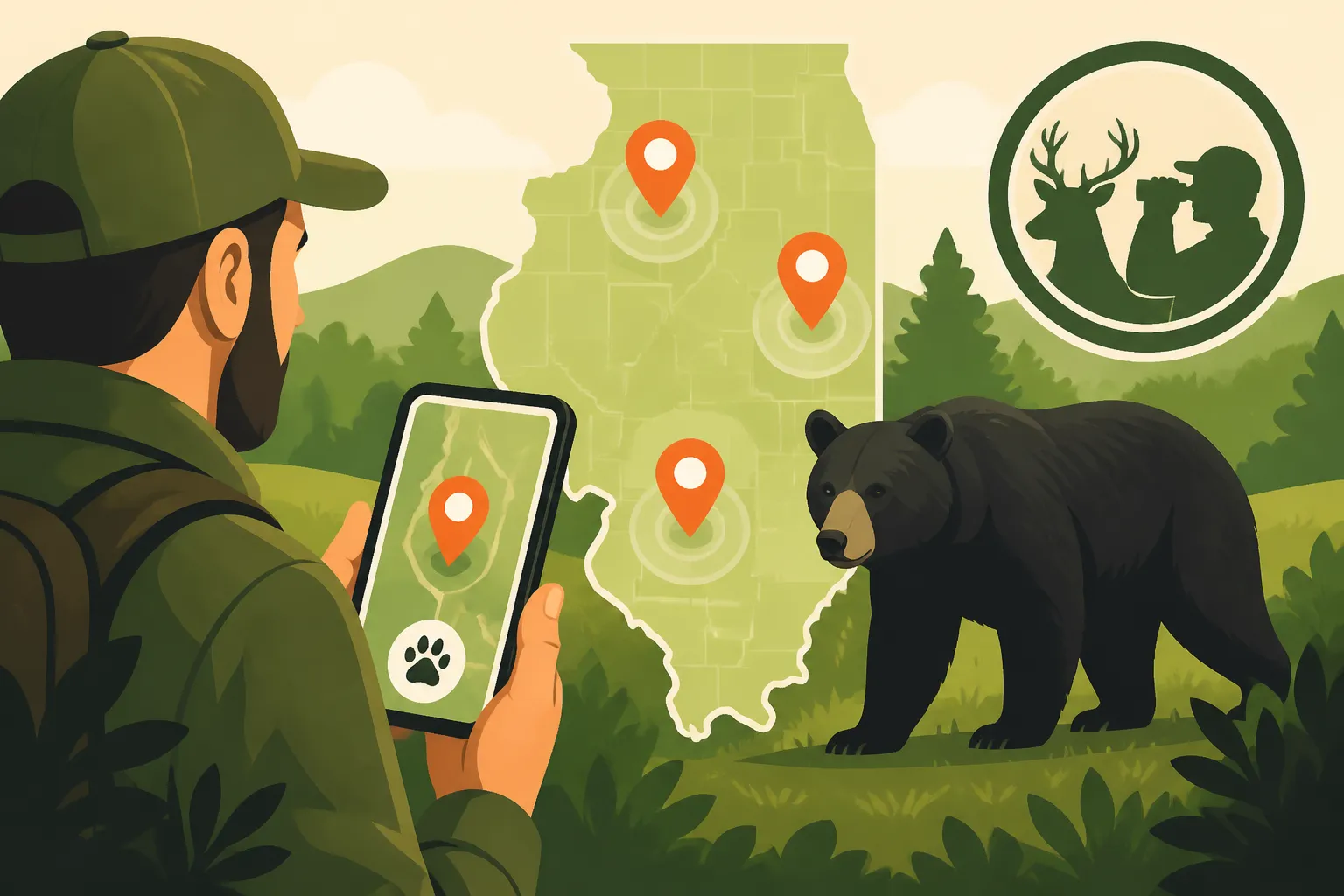
Once a sighting is verified, the data is meticulously collected and added to the IDNR's wildlife database. This isn't just a simple spreadsheet; it involves detailed records that capture everything from the date and time to the exact GPS coordinates of the sighting. This information is then often plotted on internal maps, allowing biologists to visualize the bear's travel path, identify potential corridors it might be using, and understand if it's heading toward populated areas or more remote habitats.
This systematic data collection helps answer crucial questions like Why Black Bear Sightings Are So Rare in Illinois by showing how sporadic and geographically spread out these events truly are. By mapping these events, the IDNR can also identify areas where future encounters might be more likely, enabling them to proactively educate local communities. It’s an ongoing, living record that contributes to our understanding of the broader wildlife landscape, much like how many of us use mapping apps from GoHunt to plot our own hunting territories and scout for game.
The Long-Term Impact of Tracking
The continuous tracking of wandering bear sightings has several long-term benefits for wildlife management and public safety in Illinois. Firstly, it allows the IDNR to monitor any potential increases in bear activity. While still very rare, a gradual increase in sightings over many years could signal a shift in regional bear populations or habitat availability in neighboring states. Secondly, this data helps the IDNR develop informed public education campaigns. If a bear is known to be in a certain area, they can quickly issue advisories about securing food sources, managing trash, and general bear-aware practices to prevent conflicts.
Furthermore, the data contributes to a broader understanding of species dispersal and migration patterns. These wandering bears are effectively scouts for their species, testing the landscape. Their movements tell us about the ecological connectivity between Illinois and states like Wisconsin and Missouri, highlighting areas where wildlife corridors might exist or need protection. It also reinforces the agency's commitment to monitoring Illinois Wildlife Disease Monitoring, ensuring that any unusual behavior or apparent illness in a bear is noted and investigated to protect both the animal and other wildlife.
Understanding Bear Movements: Where Do These Bears Come From?
It's natural to wonder, when a black bear shows up in Illinois, just where it came from. Are they suddenly appearing out of nowhere? The answer, typically, is no. These bears are almost always guests from our neighboring states, following ancient instincts that sometimes lead them far from home. Understanding their origins helps us appreciate the larger ecological picture and why Illinois might see more of these wanderers in the future.
Neighboring State Populations
Illinois is bordered by states with established and, in some cases, growing black bear populations. To our north, Wisconsin has a robust black bear population, particularly in the forested northern regions. To our west, Missouri has seen a significant recovery of its black bear numbers, largely in the Ozark Mountains. Indiana and Kentucky also have smaller, more nascent bear populations. These neighboring populations act as the "source" for Illinois's occasional visitors.
The bears that wander into Illinois are usually young males. Why males? Because as they reach maturity, typically between two and four years old, they are often pushed out of their natal territories by older, dominant males. This dispersal instinct drives them to seek out new, unclaimed areas where they can establish their own home range and potentially find mates. It's a natural behavior for many solitary animals, and for a young male bear, the vast, open landscapes of Illinois can look like prime, if temporarily unoccupied, territory.
Dispersal Behavior of Young Males
Imagine being a young bear, roughly the size of a large dog when you leave your mother, but quickly growing into a formidable animal. You've spent your formative years learning to forage, hunt, and survive within a known area. But suddenly, as you mature, the competition for food and mates intensifies, and the established males in your home range make it clear you're not welcome to stay. This triggers an innate urge to disperse, to strike out and find your own path.
This drive leads these young males on incredible journeys. They'll travel for miles, often crossing major rivers, highways, and vast stretches of unfamiliar terrain. They might cross the Mississippi River from Missouri or the Wisconsin border, venturing into Illinois in their quest for new horizons. These are not necessarily targeted migrations; rather, they are exploratory movements driven by instinct and a need to survive and reproduce. Sometimes they find suitable habitat, sometimes they encounter obstacles, and sometimes, they simply turn around and head back to more familiar grounds.
Habitat Suitability in Illinois
While Illinois is heavily agricultural, it's not a uniform sea of corn and soybeans. We have significant tracts of timber, particularly in Southern Illinois, along major river systems like the Illinois and Mississippi, and within areas like Shawnee National Forest. These areas provide surprisingly good habitat for transient bears: dense cover for security, a variety of food sources (berries, nuts, acorns, insects), and access to water. Hunting Shawnee National Forest is a popular pastime for deer and turkey, but the diverse habitat found there could certainly support a wandering bear.
The challenge for a bear isn't necessarily finding temporary food and cover, but finding enough contiguous habitat, and more importantly, other bears to establish a truly resident population. While an individual bear can certainly survive and thrive for a time in Illinois's fragmented landscapes, the long-term viability of a breeding population requires more extensive, interconnected wild spaces. This ongoing dynamic between wandering individuals and the limits of available habitat is what makes tracking these rare sightings so important for the future of Illinois wildlife.
| Feature | What to Do If You See a Bear | What to Report to IDNR | Why it Matters |
|---|---|---|---|
| Immediate Safety | Stay calm, make yourself look big, back away slowly, never run, never feed. | N/A | Prevents conflict, ensures personal safety. |
| Documentation | Take photos/video from a safe distance. Note distinguishing features. | Submit photos/video evidence. Describe bear's size, color, behavior. | Confirms species, aids ID, supports tracking. |
| Location Detail | Note exact spot where seen (GPS if possible). | Provide precise location (GPS, landmarks, county). | Allows IDNR to map movements, identify corridors. |
| Date & Time | Note when the encounter occurred. | Provide exact date and time of sighting. | Helps establish timelines and patterns. |
| Contact IDNR | After ensuring safety, contact local IDNR office or dispatch. | Provide your contact information for follow-up. | Ensures official record, allows for further investigation. |
Disclaimer
This article is for general informational purposes only and does not constitute professional advice. Laws, prices and regulations vary by location and change over time. Consult a qualified professional for guidance on your specific situation.