Illinois Waterfowl Banding Programs
It can feel like a real mystery sometimes, looking up at the sky as flocks of ducks and geese fly overhead, wondering where they came from, where they're going, and what's truly happening with their populations. For Illinois waterfowl hunters, understanding the complex world of migratory birds is paramount, not just for a successful season, but for ensuring these traditions continue for generations. This guide is going to pull back the curtain on Illinois's waterfowl banding programs, showing you how crucial this scientific effort is and how it directly impacts your hunts and conservation efforts.
Why We Band Waterfowl in Illinois
Waterfowl banding isn't just a quirky scientific endeavor; it's the bedrock of understanding and managing the incredible diversity of ducks and geese that grace our Illinois skies. Without this consistent, long-term data collection, wildlife biologists would be flying blind, making educated guesses about populations instead of informed decisions. It's truly a monumental task, carried out with dedication by state and federal agencies, often with the help of passionate volunteers.
Understanding Migration Patterns
One of the most fascinating aspects of waterfowl is their incredible migratory journeys. These birds travel thousands of miles, navigating across continents, following ancestral routes. But those routes aren't always set in stone, and they can shift due to weather patterns, habitat changes, or even human development. By banding birds across their breeding grounds, migration corridors, and wintering areas, biologists can piece together their precise travel itineraries. For example, banding efforts in northern states and Canada might reveal that a significant portion of the mallards wintering on the Illinois River in January actually hatched in Manitoba. This kind of detail helps us understand which specific breeding populations contribute to our local flocks, influencing decisions about harvest limits and habitat protection across different states and even international borders. It’s like a massive, continent-wide tracking system, giving us an unparalleled look into the birds' annual cycles.
Population Health and Dynamics
Beyond just knowing where birds go, banding tells us a lot about how well they're doing. Every band recovered by a hunter or found observer provides a crucial data point. How old was the bird when it was banded? How old was it when it was recovered? Was it a male or female? This information is vital for calculating survival rates, estimating population sizes, and understanding reproductive success. If biologists notice a decline in the recovery rate of bands from a particular species, it might signal a problem in their population, whether it's on the breeding grounds, during migration, or in their wintering habitats. This long-term monitoring allows for quick identification of potential issues, from disease outbreaks to habitat loss. Think of it as a constant health check-up for entire species, ensuring that our cherished ducks and geese are thriving, not just surviving. Understanding these dynamics helps us interpret changes in annual surveys and adjust our management strategies accordingly, which is incredibly important for future generations of waterfowl.
Informing Hunting Regulations
This is where the rubber truly meets the road for Illinois waterfowl hunters. All that detailed data collected through banding programs directly informs the hunting regulations that are set each year, from season lengths to bag limits. The Central Flyway and Mississippi Flyway councils, in conjunction with the U.S. Fish and Wildlife Service, use banding data to create population models. These models help them forecast how many birds are likely to return to the breeding grounds and how many can be harvested sustainably. For instance, if data shows a strong year for mallard production and high survival rates, we might see more liberal season lengths or higher bag limits. Conversely, if populations are struggling, expect more conservative rules. This scientific approach ensures that hunting remains sustainable and doesn't jeopardize the long-term health of the resource. Without banding data, establishing fair and effective regulations would be a much more subjective and less reliable process, risking either overharvest or underutilization of healthy populations. When you're checking the Illinois Waterfowl Zones and Seasons or reviewing Illinois Duck and Goose Bag Limits, remember that these numbers are rooted in decades of banding data.
How Waterfowl Banding Programs Work
Waterfowl banding is a meticulously planned and executed operation, requiring specialized knowledge and dedication. It's not simply catching a bird and putting a ring on its leg; there's a science to the entire process, from choosing the right trapping methods to carefully recording every piece of data associated with each individual bird. This effort involves a massive collaborative network of biologists, technicians, and volunteers.
The Catch-and-Release Process
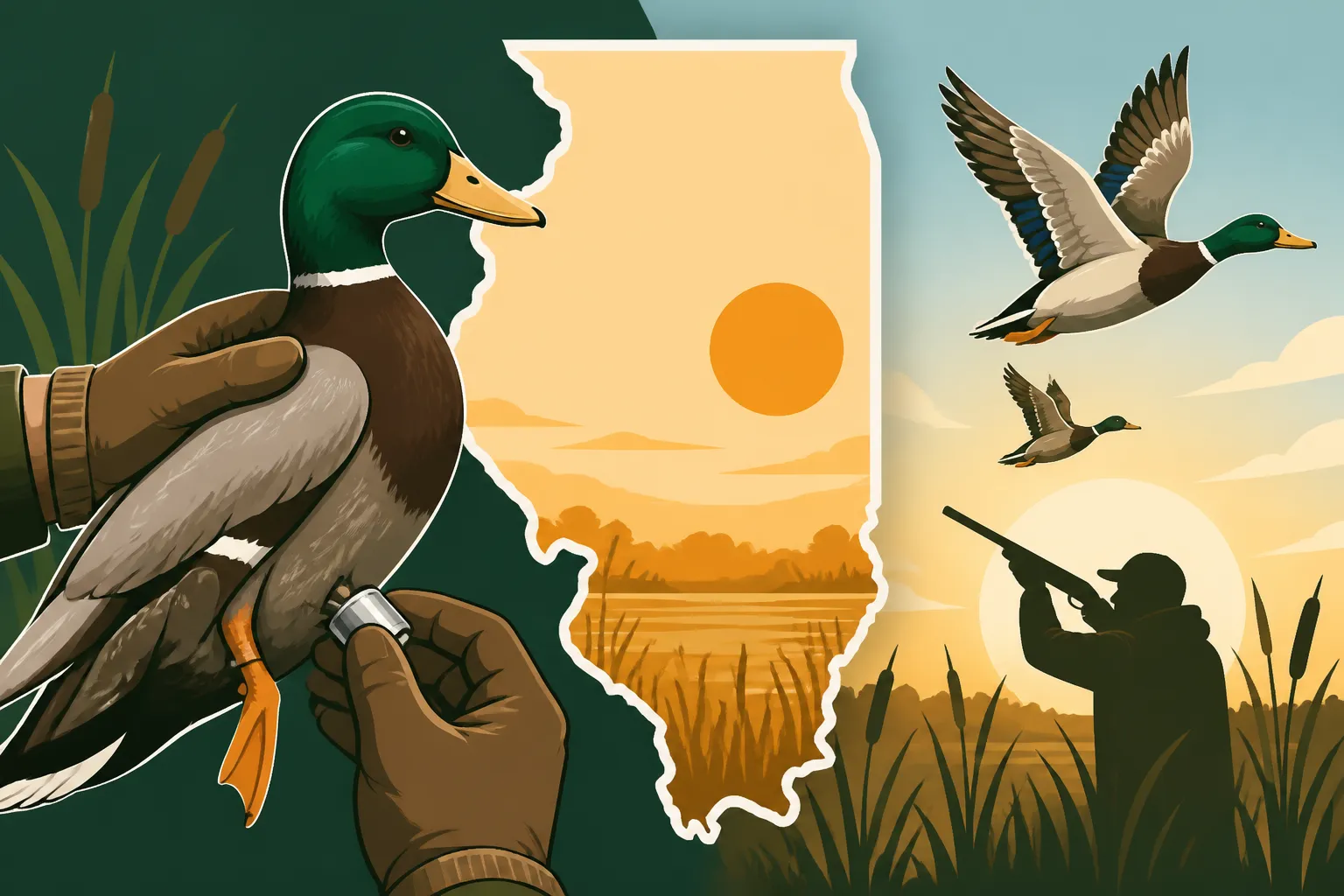
The actual process of catching waterfowl for banding is quite fascinating and varies depending on the species and location. For ducks, especially during their flightless molting period or when they're concentrated in specific areas, large drive traps or rocket nets are often used. These methods allow for the capture of multiple birds safely and efficiently. For geese, especially Canada geese that might be in family groups or large flocks, similar netting techniques are employed. Once caught, the birds are handled carefully to minimize stress. Each bird is quickly but thoroughly processed: its species, age (juvenile or adult), and sex are determined. Biologists might also take measurements like wing chord length or weight, and even conduct health assessments. Then, a small, lightweight metal band, uniquely numbered, is placed on one leg. The band is designed to fit snugly without hindering the bird's movement or flight. Once all data is recorded, the bird is immediately released, none the worse for wear. The entire process is designed to be quick and humane, ensuring the birds return to their natural behaviors as soon as possible.
Types of Bands and Data Collected
Not all bands are created equal, though they all serve the same core purpose of identification. Most common are aluminum leg bands, engraved with a unique nine-digit number and a contact website or address. Sometimes, if a bird is part of a specific study, it might receive a colored leg band or even a neck collar with larger, easily readable codes. These larger identifiers allow biologists to observe and record banded birds from a distance without recapturing them, which is incredibly valuable for studying specific behaviors or local movements. Each band tells a story: its number links to a database entry containing information about where and when the bird was banded, its species, age, and sex. This robust dataset grows with every recovery, adding layers of understanding to the bird's journey. For hunters, recovering a band is not just a cool trophy; it's a direct contribution to this vast scientific undertaking. Even if you don't hunt, understanding these programs can enhance your appreciation for Illinois Waterfowl Migration Timing and the efforts to track these magnificent birds.
| Band Type | Appearance | Purpose |
|---|---|---|
| Standard Leg Band | Small, aluminum, numbered | Basic identification, migration, survival data |
| Color Leg Band | Plastic, various colors | Visual identification for specific studies, distant observation |
| Neck Collar | Plastic, large numbers | Long-distance identification, specific behavioral studies |
| Web Tag (less common) | Small tag through foot web | Species-specific or short-term identification |
Who Conducts Banding Efforts
Waterfowl banding in Illinois, and across North America, is a collaborative effort involving various agencies and organizations. The U.S. Fish and Wildlife Service (USFWS) coordinates the North American Bird Banding Program, maintaining the central database for all banded birds. State wildlife agencies, like the Illinois Department of Natural Resources (IDNR), are key players on the ground. IDNR biologists and technicians conduct extensive banding operations, particularly in significant waterfowl areas such as the Illinois River Valley. Mallards and Geese on the Illinois River are often subjects of these local banding efforts. University researchers also get involved, conducting specialized studies that often require banding. And crucially, there are dedicated volunteers, sometimes from local conservation groups like Ducks Unlimited or other waterfowl organizations, who assist with trapping, handling, and data collection. These volunteers provide invaluable support, showcasing the strong community involvement in wildlife conservation. This widespread network ensures that banding efforts cover a broad geographical area and contribute to a comprehensive understanding of waterfowl populations. Even private landowners who cooperate with researchers play a critical role, allowing access to key habitats for trapping and banding.
What to Do If You Find a Banded Bird
Finding a banded bird, whether you harvest it during hunting season or simply discover it during an outdoor adventure, is a special moment. It's more than just a souvenir; it's a direct connection to a vital scientific program and a chance for you to contribute to waterfowl conservation. Your discovery becomes a valuable data point that helps biologists manage migratory bird populations across the continent.
Reporting Your Discovery
The most important thing to do when you find a banded bird is to report it! It's super easy, and you don't need to be a scientist to do it. The band will typically have a website address, like ReportBand.gov, or a toll-free phone number printed on it. Simply go to that website or call the number. You'll be asked for the unique nine-digit band number, the date you found the bird, and the precise location (county, nearest town, and ideally GPS coordinates if you have them). You'll also need to provide the species of bird, how you recovered it (e.g., harvested, found dead, caught in a net), and your contact information. It only takes a few minutes, but that small effort makes a huge difference. Don't worry if the band is worn or difficult to read; do your best, and they can often still help you identify it. Some hunters even like to track their previous reports, and with tools like GoHunt, you might be able to integrate information about local harvest reports with banding data, if you're a real data enthusiast.
Why Your Report Matters
Every single band report is a piece of a much larger puzzle. When you report a band, that unique number is cross-referenced with the banding record, linking the initial capture details (where and when it was banded, by whom, and its age/sex) with your recovery details. This connection allows biologists to calculate things like the bird's age, how far it traveled, and its survival rate. Imagine if thousands of hunters report bands each year—that creates an incredibly rich dataset! This data helps estimate population sizes, determine the impact of hunting pressure, and track annual migration success. Without hunters and outdoor enthusiasts actively reporting bands, a huge amount of valuable scientific data would be lost. Your contribution, no matter how small it feels, directly aids in understanding the overall health of different waterfowl populations, which in turn influences future hunting seasons and conservation efforts. It's a tangible way that hunters directly support the resource they cherish, providing insights far beyond simply checking Illinois Duck Harvest Numbers.
Receiving Your Certificate of Appreciation
One of the coolest perks of reporting a banded bird is getting a personalized Certificate of Appreciation. This isn't just a generic form letter; it's a document that details the specific banding information for your bird. It will tell you the species, where and when it was banded, and who banded it. Many hunters frame these certificates alongside their mounted birds or simply keep them as cherished mementos of a unique connection to wildlife. It’s a small token of gratitude from the scientific community for your important contribution. Beyond the certificate, you also get the satisfaction of knowing you played a direct role in waterfowl conservation. It's a connection to the science, the migratory pathways, and the passionate people who work tirelessly to protect these birds. It makes the experience of finding a band even more special, a real badge of honor for anyone contributing to the future of waterfowl.
The Impact on Illinois Waterfowling
Waterfowl banding programs have a profound, ongoing impact on the world of Illinois hunting. They are not just abstract scientific exercises; they directly influence how we hunt, how seasons are structured, and how we think about conservation. For anyone who loves chasing ducks and geese in the sprawling wetlands and river bottoms of Illinois, understanding this impact is key to appreciating the larger picture.
Long-Term Data for Better Management
The sheer volume and longevity of waterfowl banding data are truly remarkable. Generations of biologists have contributed to this massive database, creating a continuous record that spans decades. This long-term perspective allows for the identification of subtle trends and major shifts in waterfowl populations that would be impossible to detect otherwise. For example, if duck populations seem to be consistently declining, banding data can help pinpoint if it's due to poor breeding success, high mortality during migration, or other factors. This comprehensive understanding allows agencies like IDNR to develop targeted conservation strategies, whether that means habitat restoration on breeding grounds, protecting stopover points along migration routes, or adjusting harvest regulations. The data helps managers make proactive decisions rather than simply reacting to problems after they've become severe. Knowing how populations are faring over time, rather than just year-to-year, is crucial for truly sustainable management, ensuring that both Illinois Federal Duck Stamp Requirement dollars and local conservation efforts are directed where they can do the most good.
Connecting Hunters to Conservation
Waterfowl banding creates a powerful, tangible link between individual hunters and the broader world of conservation. When an Illinois hunter reports a band, they're not just providing data; they're actively participating in the scientific process that underpins all migratory bird management. This direct involvement fosters a deeper understanding and appreciation for the resource. It transforms a successful hunt into a moment of scientific contribution. Hunters often become incredibly invested in the stories their bands tell—a mallard banded in Alberta recovered in Southern Illinois, for instance. This connection strengthens the conservation ethic within the hunting community, highlighting the critical role hunters play as stewards of wildlife. Many hunters, after reporting their first band, become even more interested in broader conservation initiatives and regulations, using resources like GoHunt to research Illinois Duck Zone Boundaries or specific harvest trends that might correlate with banding data. This active engagement is vital for ensuring continued support for habitat protection, scientific research, and sustainable hunting practices.
The Future of Banding and Research
While traditional banding remains incredibly valuable, the future of waterfowl research is also embracing new technologies. Satellite telemetry, GPS transmitters, and even tiny data loggers are now used alongside bands to provide even more detailed insights into individual bird movements, habitat use, and survival. These high-tech devices can track birds in real-time or record precise data points over an entire migratory cycle, offering unprecedented detail. However, these advanced methods are typically more expensive and can only be deployed on a smaller number of birds. This means that classic leg banding will continue to be the workhorse of large-scale population monitoring, providing the broad, long-term data needed for comprehensive management. The combination of traditional banding with cutting-edge technology promises an even richer understanding of Illinois's waterfowl, allowing for more precise management decisions and ensuring these incredible birds continue to thrive. It’s an exciting time for waterfowl research, and hunters will remain crucial partners in this ongoing journey of discovery and conservation.
Disclaimer
This article is for general informational purposes only and does not constitute professional advice. Laws, prices and regulations vary by location and change over time. Consult a qualified professional for guidance on your specific situation.