Firearm Safety Rules on a Guided Group Hunt
Stepping into a guided group hunt can be one of the most exciting experiences in the Illinois outdoors, whether you're chasing whitetails in the timber or ducks in a flooded field. But with that excitement comes a critical responsibility: ensuring everyone, including yourself, returns home safely. Firearm accidents are preventable, and understanding the core safety rules, especially in a dynamic group setting with a guide, isn't just about following the law—it's about respecting the hunt, your fellow hunters, and your own life. This guide will walk you through the essential firearm safety rules you absolutely must know and follow on any guided group hunt, helping you enjoy the experience without incident.
The Absolute Golden Rules of Firearm Safety Always, No Exceptions
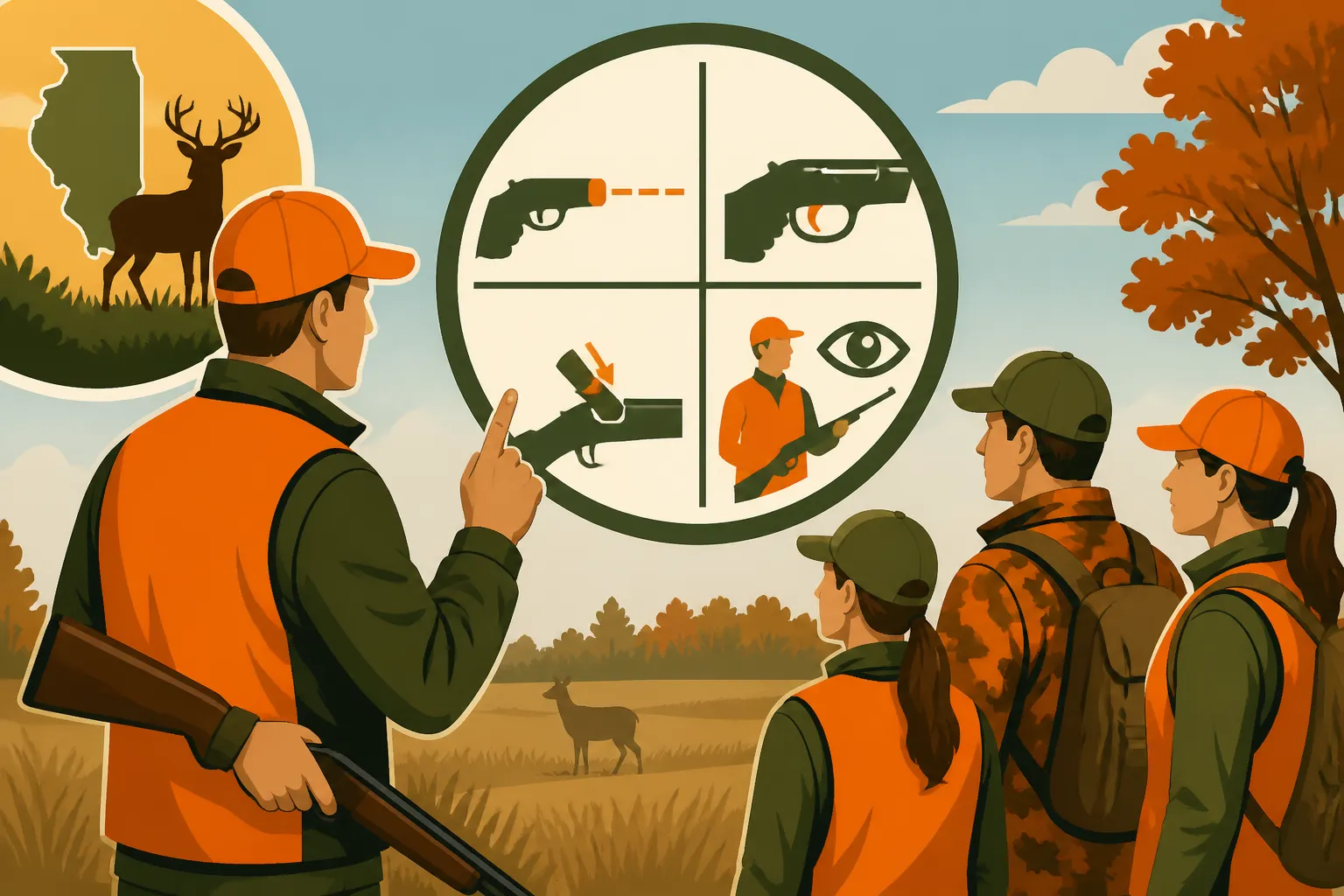
Before we dive into the specific nuances of group hunts, let's nail down the foundational four rules of firearm safety. These aren't suggestions; they are non-negotiable principles that form the bedrock of responsible firearm handling, whether you're alone in the woods or with a dozen other hunters and a guide. Forget any one of these, and you're inviting trouble.
Treat Every Firearm as if it's Loaded
This is the first and perhaps most crucial rule. It doesn't matter if you just unloaded it, if you "know" it's empty, or if someone else handed it to you claiming it was clear. Assume it's loaded. This mindset forces you to practice all other safety rules instinctively. Think about it: how many times have you heard a story, or even experienced yourself, a "known empty" gun going off? It happens more often than anyone wants to admit, precisely because someone got complacent.
In a group hunting scenario, this means you never let your guard down. When a guide tells you to unload before getting into a vehicle, physically verify that the chamber is empty, and then assume that any gun you handle afterward is loaded until you personally verify its status again. Even if you're handed a gun, clear it yourself. This isn't distrust; it's prudent safety. The moment you slack off, thinking, "Oh, it's fine, it's not loaded," is the moment an accident becomes a real possibility. Your diligence protects not only yourself but every person around you.
Never Point a Firearm at Anything You Are Not Willing to Destroy
Muzzle control is paramount, especially on a guided group hunt where you might be sharing tight spaces or moving through dense cover. The muzzle of your firearm dictates where the bullet will go. If it's pointing at something, that something is in harm's way. This rule is often stated as "always keep the gun pointed in a safe direction," but the "willing to destroy" part adds a stark, necessary gravity to it. Would you be willing to destroy your guide, your hunting buddy, or a valuable piece of equipment? Of course not. So, don't let your muzzle drift towards them.
Consider a common scenario: sitting in a crowded duck blind. You might be jostling for position, or a dog might be moving around. Your firearm's muzzle should always be pointing either straight up towards the sky (a common practice when standing or adjusting) or straight down at the ground in front of you (away from your feet and anyone else's). Never let it sweep across another person or any part of their body. When walking through thick brush or getting into a truck, keep the muzzle either ahead of you pointed safely, or securely broken open and pointed away. Even a moment of inattention can lead to a negligent discharge with devastating consequences. Your guide should reinforce this, but it’s ultimately your responsibility.
Keep Your Finger Off the Trigger Until Ready to Fire
This rule might seem obvious, but it's where many accidental discharges stem from. When you're excited, cold, or tense, it's incredibly easy for your finger to inadvertently rest on the trigger. Modern firearms have excellent safety mechanisms, but none of them are foolproof if a finger is on the trigger when it shouldn't be. "Ready to fire" means you have identified your target, assessed the background, and are in the process of taking the shot. It doesn't mean you're walking to the stand, getting out of the truck, or waiting for a deer to turn broadside.
On a guided group hunt, especially during a Deer Drives With Three or Four Hunters scenario or when waterfowl are decoying, adrenaline can run high. Your finger should be resting alongside the trigger guard, not inside it, until the exact moment you're putting the crosshairs or bead on the vitals of legal game. A sudden trip, a slip, or an unexpected movement could cause an accidental shot if your finger is prematurely on the trigger. Practice this diligently, and it will become second nature.
Be Sure of Your Target and What's Beyond It
In a group hunt, this rule takes on immense importance. You're not just confirming it's legal game; you're confirming it's only legal game, and that no other hunter, dog, vehicle, or structure is in the line of fire, or beyond. Imagine a deer drive where hunters are positioned at different points. You spot a deer, but is your buddy on the other side of the ridge also moving up to get a shot? What's behind that thicket? On a waterfowl hunt, is that a low-flying duck, or is it another hunter's decoy spread on the horizon?
A good guide will establish clear zones of fire and remind everyone to be absolutely certain of their target and beyond. Never shoot at sound or movement alone. Always visually identify your target. This is especially critical during Illinois's Two Firearm Deer Seasons when visibility might be low due to weather, or when hunting in dense cover. If there's even a sliver of doubt, do not take the shot. No trophy is worth risking another person's safety.
Specific Challenges and Solutions for Guided Group Hunts in Illinois
Group hunts introduce unique dynamics and potential hazards that require extra vigilance beyond the four golden rules. When you're sharing space, moving together, and reacting to game, the margin for error shrinks.
Muzzle Control in Blinds and Vehicles
Let's face it, hunting blinds, especially those set up for waterfowl or ground blinds for deer, can get pretty cozy. Add multiple hunters, a guide, maybe a dog, and gear, and space becomes a premium. This is where meticulous muzzle control becomes absolutely non-negotiable. When you're sitting in a layout blind waiting for ducks in a cut cornfield, your shotgun should be pointed safely downrange, typically with the muzzle resting on the front edge of the blind, or at least angled away from fellow hunters. Never let it sweep across anyone when you're swinging on birds.
The same goes for vehicles. Whether it's a truck, ATV, or UTV, loading and unloading firearms when getting in and out is a moment of high risk. The general rule should be: firearms are unloaded before entering a vehicle and remain unloaded until you are out of the vehicle and at your hunting spot, ready to set up. Your guide should lead this process. Many guides will insist on carrying firearms in cases, especially when driving on public roads or across private land to prevent accidental discharge from bumps or jostles. For instance, when getting dropped off for a stand in Shawnee National Forest Hunting, you should unload your rifle, case it, and only retrieve it and load it once you are in your stand and settled. Always confirm with your guide their specific rules for transport; they are there for your safety.
Communication and Shot Angles with Multiple Hunters
Group hunting often involves coordinated movements, such as a Deer Drives on Illinois Public Land. In these situations, effective communication is your best friend. Before the hunt begins, your guide should conduct a thorough safety briefing, clearly outlining:
- Assigned Positions: Where each hunter will be located.
- Zones of Fire: The specific areas each hunter is cleared to shoot into. These zones should never overlap in a way that allows a hunter to shoot towards another hunter's position.
- Signaling: How hunters will communicate with each other (e.g., hand signals, radio, or specific calls).
- "Stop the Hunt" Signal: A clear, universally understood signal for an emergency or to halt all activity.
When a deer breaks cover, or a flock of geese banks towards the decoys, there's an instant of chaos and excitement. It's in these moments that hunters must maintain discipline. You might see a shot, but is it your shot within your assigned zone of fire? Is it safe? Your guide is there to manage this, but every hunter must also be aware. For example, if you're hunting in a river bottom funnel and multiple shooters are spaced along it, never take a shot that could send a bullet in the direction of another hunter, even if the animal is beyond them. The terrain in places like Hunting the Illinois River Valley can be tricky, with bluffs and thick cover, making it even more crucial to know what's beyond your target.
Handling Loaded Firearms During Movement
Moving through the woods or fields with a loaded firearm presents its own set of challenges. Trips, falls, and unexpected obstacles are common, especially in uneven terrain or dense cover. Most experienced hunters and guides will advocate for firearms to be unloaded when crossing significant obstacles like fences, climbing into treestands, or navigating steep embankments. It’s always safer to take an extra minute to unload and reload than to risk a fall with a hot gun.
When walking, always carry your firearm in a manner that allows for safe muzzle control. A sling can be helpful, but ensure the muzzle is always pointed in a safe direction—either up or down, never at someone's back or side. If you're walking in a line, maintain a safe distance from the person in front of you. A good rule of thumb is to be far enough back that if they stop suddenly, your muzzle doesn't sweep past them. Your guide will often set the pace and formation for movement, especially in thick cover. Pay attention to these instructions.
The Guide's Role in Ensuring Safety
A professional guide isn't just there to put you on game; they are, first and foremost, responsible for the safety of everyone in their charge. A guided hunt is a team effort, but the guide is the team captain when it comes to safe practices.
Setting Expectations and Briefings
A hallmark of a good outfitter or guide is a comprehensive safety briefing before the hunt begins. This isn't just a quick "be careful." It should be a dedicated session where the guide covers:
- Their specific safety protocols: Every guide might have slightly different rules based on the terrain, game, and type of hunt.
- Emergency procedures: What to do in case of an accident or injury.
- Communication protocols: How to signal, what commands mean.
- Weapon specific rules: Such as when to load/unload, safe areas to carry a loaded firearm, and restricted shooting lanes.
This briefing is your chance to ask questions. Don't be shy. If something isn't clear, ask. If you're unsure about a certain procedure or a part of the hunting area, clarify it. A responsible guide will appreciate your proactive approach to safety. If a guide rushes past safety, consider that a red flag. When you're Vetting an Illinois Outfitter Before You Book, always inquire about their safety briefings and protocols.
Leading by Example and Intervening When Necessary
A guide's behavior sets the tone for the entire hunt. They should be the embodiment of firearm safety, always adhering to the rules themselves. They should never handle a firearm unsafely, and they should consistently enforce the rules with their clients. If a guide sees unsafe behavior, they should intervene immediately and firmly. This isn't being rude; it's being responsible.
Imagine a situation where a hunter carelessly sweeps their muzzle across another hunter in a blind. A good guide will stop the action, address the behavior directly, and ensure it doesn't happen again. This immediate correction is vital, not just for the individual involved but for the entire group, reinforcing that safety is paramount. If you ever witness unsafe behavior from a guide, or if they consistently ignore safety breaches from other hunters, that's a serious concern that needs to be addressed or reported. You can often find reviews and insights into an outfitter's professionalism on platforms like BookYourHunt or GoHunt.
Understanding Your Comfort Level and Speaking Up
You, as the hunter, are an active participant in safety. You have the right, and the responsibility, to speak up if you feel uncomfortable or witness something unsafe. Peer pressure, especially in a group setting, can sometimes make people hesitant to voice concerns. However, your safety and the safety of others depend on it.
If you're in a situation where you feel a shot is unsafe, don't take it. If another hunter is consistently violating safety rules, discreetly inform your guide. If you're nervous about a particular aspect of the hunt, communicate that. For example, if you're not comfortable with how closely hunters are spaced during a Deer Drives With Three or Four Hunters scenario, articulate your concern. A good guide will listen and make adjustments. Remember, no one wants an accident, and being proactive can prevent one.
Essential Gear and Practices for Group Safety
Beyond the rules of firearm handling, there are also practical considerations regarding gear and general practices that significantly enhance safety on a guided group hunt.
Blaze Orange and Visibility
This is a non-negotiable for firearm deer hunting in Illinois. How Much Blaze Orange Illinois Requires is specific, and your guide will ensure you comply. Typically, a solid blaze orange cap and outer garment (vest or jacket) are required. The purpose is simple: to make you highly visible to other hunters, reducing the risk of being mistaken for game. Even outside of deer season, or in hunts where it's not strictly mandated, wearing some form of high-visibility clothing can be a wise choice, especially if you're moving through dense brush or areas with other hunters.
| Hunt Type | Blaze Orange Requirement (General) | Notes |
|---|---|---|
| Firearm Deer | Required | Hat and outer garment (vest/jacket), solid blaze orange |
| Muzzleloader Deer | Required | Same as firearm deer |
| Fall Turkey | Not required | But often recommended when sharing woods with deer hunters during overlap |
| Waterfowl | Not required | Camouflage is key, but be mindful of background safety |
| Small Game (Firearm) | Recommended/Required | Varies by season/area, highly recommended for visibility |
Always check the current Illinois Department of Natural Resources (IDNR) regulations for specific requirements, especially if rules change or if you're hunting within a specific public land site that has its own unique rules. For instance, some sites in Illinois State Fish and Wildlife Areas might have particular blaze orange requirements even for archery hunters during certain overlap periods.
Eye and Ear Protection
While not always legally mandated for every type of hunting, wearing eye and ear protection is a smart practice, especially in a group setting where multiple shots might be fired.
- Eye Protection: A stray piece of shotgun wad, a ricochet (though rare, it can happen), or even an unexpected branch in the face can cause serious eye injury. Simple shooting glasses provide crucial protection. They also help with visibility in varying light conditions.
- Ear Protection: The concussive blast of a firearm, especially a shotgun or a high-powered rifle, can cause permanent hearing damage with repeated exposure. In a group blind, the sound can be amplified. Electronic hearing protection is ideal as it allows you to hear conversations and game movements while still protecting your hearing from gunshots. Consider it a critical piece of gear for any firearm-based group hunt.
Proper Firearm Storage and Transport
When you're not actively hunting, your firearm should be stored safely and securely. This means:
- Unloaded: Always confirm your firearm is unloaded when not in use.
- Cased: Transporting firearms in a proper case protects the firearm and prevents accidental handling. Hard cases are great for long trips, while soft cases are convenient for shorter hauls to and from the field.
- Secured: Keep firearms out of reach of unauthorized individuals. In camp, ensure they are stored in a designated, secure location, often locked up.
Your guide will usually have protocols for how firearms are handled at the lodge or camp. Respect these rules. They are designed to prevent accidental access or misuse. When traveling to Illinois for a guided hunt, be aware of state and federal laws regarding firearm transport, especially if you're crossing state lines.
Firearm safety on a guided group hunt is a shared responsibility, but it starts and ends with you. By internalizing the golden rules, understanding the unique challenges of group dynamics, and actively participating in creating a safe environment, you ensure that your Illinois hunting adventure is memorable for all the right reasons. After all, the best memories are the safe ones.
Disclaimer
This article is for general informational purposes only and does not constitute professional advice. Laws, prices and regulations vary by location and change over time. Consult a qualified professional for guidance on your specific situation.