Illinois South Zone Turkey Periods
Trying to make sense of the Illinois Department of Natural Resources (IDNR) spring turkey season structure can feel like deciphering an ancient scroll, especially when you're eager to hit the woods. The thought of missing out on peak gobbling activity or applying for the wrong permit can be genuinely frustrating, leaving many hunters scratching their heads. This guide is here to untangle the complexities of the Illinois South Zone turkey periods, offering a clear roadmap so you can plan your hunts with confidence and maximize your time in the field.
Understanding Illinois's Spring Turkey Zones
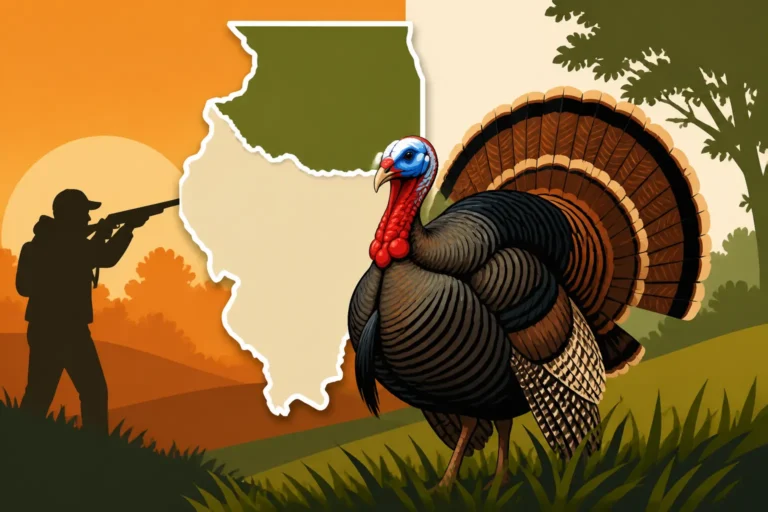
Illinois, being a long state from north to south, experiences significant differences in climate and the onset of spring. This ecological reality directly influences when wild turkeys begin their breeding cycles, making a one-size-fits-all statewide turkey season impractical. To account for these natural variations, the IDNR wisely divides the state into two distinct regions for spring turkey hunting: the North Zone and the South Zone. Each zone has its own set of season dates and permit application periods, designed to align with the peak gobbling and breeding activity in that specific part of the state. It’s a crucial distinction that can make or break your spring success.
The Rationale Behind Zone Splits
The primary reason for splitting Illinois into North and South zones for spring turkey hunting boils down to biology and geography. Turkeys in the southern part of the state, benefiting from milder temperatures and earlier spring green-up, typically begin their breeding rituals—gobbling, strutting, and nesting—weeks ahead of their northern counterparts. If the season dates were uniform statewide, hunters in the South Zone might miss the crucial early gobbling phase, while those in the North Zone would be hunting before birds are even thinking about breeding. This zonal approach ensures that hunters across the state have the best possible chance to encounter active, vocal turkeys during their respective prime times, optimizing both hunter success and wildlife management goals.
Consider the subtle, yet significant, differences in habitat. Southern Illinois, particularly the Shawnee Hills region, boasts more rugged terrain, mature timber, and a longer growing season. This creates a different environment for turkeys compared to the vast agricultural landscapes and smaller woodlots of Central and Northern Illinois. The IDNR uses data from brood surveys, hunter harvest reports, and turkey population trends to fine-tune these season dates, striving for a balance that provides ample opportunity for hunters while maintaining healthy, sustainable turkey populations. Without this careful consideration, we'd see vastly different success rates and potentially impact the long-term health of our wild turkey flocks.
Key Counties Defining the South Zone
The Illinois South Zone encompasses a significant portion of the state, generally covering the southern third. This region is characterized by its rolling hills, expansive timber blocks, and often warmer spring weather compared to the central and northern sections. Counties like Union, Jackson, Williamson, Saline, Pope, Johnson, Pulaski, Massac, Alexander, and Hardin are all firmly within the South Zone. These counties are often prime destinations for turkey hunters due to their robust turkey populations and the abundance of diverse habitats, including national forest lands like the Shawnee National Forest.
Understanding which counties fall into the South Zone is not just a geographical exercise; it's fundamental for planning your hunt. If you're targeting a specific public land area or private property, knowing its zone designation is your first step. For instance, a hunter planning a trip to the Horseshoe Lake Fish and Wildlife Area or Cypress Creek National Wildlife Refuge needs to be acutely aware of the South Zone's specific dates. The IDNR website provides detailed maps and lists of counties within each zone, which are essential resources for any hunter to consult before applying for permits or heading afield. This granular information helps prevent the frustrating scenario of showing up to hunt only to realize you're in the wrong zone or outside the legal hunting period.
Delving into South Zone Turkey Periods
Once you've confirmed you're in the South Zone, the next layer of the season structure to understand is the "periods." The IDNR divides the spring turkey season within each zone into multiple shorter periods. For the South Zone, there are typically five distinct hunting periods. These periods, while seemingly short, are designed to distribute hunter pressure and provide varied experiences throughout the spring. Each period has a set number of permits allocated, and hunters often have to apply through a lottery system for their preferred period, especially for the coveted early dates.
The Early Periods: What to Expect
The early periods in the South Zone, typically the first two (Periods 1 and 2), are often considered the most desirable for many hunters. These periods usually fall in mid to late April, when spring is in full swing in southern Illinois. The woods are just bursting to life, new leaves are unfurling, and the turkeys are in their most active breeding phase. You can expect more aggressive gobbling on the roost and on the ground as toms are actively seeking hens. This is often when you'll hear those booming morning gobblers from a distance, making locating birds a bit easier.
However, these early periods also come with increased competition. Because of the allure of vocal birds and often more favorable weather, these periods are usually the hardest to draw in the lottery. You'll likely encounter more fellow hunters on public lands, and birds might be slightly more skittish after the initial shock of opening day. It's a trade-off: higher gobbling activity and receptive birds versus potentially more hunter pressure. Scouting before the season, even just listening for Roost Hunting Illinois Gobblers, becomes absolutely critical during these periods to find those less-pressured birds and honey holes.
Later Periods: Pressure and Changing Tactics
As the South Zone season progresses into periods 3, 4, and 5 (typically extending into early to mid-May), the hunting landscape begins to shift. By this point, many hens are bred and sitting on nests, which means fewer hens are receptive to gobblers. Consequently, gobblers might be less vocal throughout the day, spending more time alone or with smaller groups of hens that haven't committed to a nest yet. The woods are also fully leafed out, reducing visibility and making it harder to spot birds from a distance.
Hunter pressure can also take its toll. Birds that have been called at, spooked, or shot at during the earlier periods often become "call-shy" or "hunter-wary." This doesn't mean they're unhuntable, but it does require a significant adjustment in tactics. Aggressive calling that worked wonders in Period 1 might now send a tom running. Hunters need to become more patient, subtle in their calling, and often more mobile, employing strategies like Run-and-Gun Turkey Tactics on Public Land. The later periods truly test a hunter's woodsmanship and adaptability, often rewarding those who are willing to put in the legwork and understand the nuances of late-season turkey behavior.
Here's a quick overview of the typical South Zone periods in Illinois, though exact dates can shift slightly year to year based on the calendar:
| Period | Start Date (Approx.) | End Date (Approx.) | Typical Gobbling Activity | Hunter Pressure | Key Behavior/Tactics |
|---|---|---|---|---|---|
| 1 | Mid-April | Late April | High, often aggressive | High | Roosting, aggressive calling, decoys |
| 2 | Late April | Early May | Moderate to High | Moderate | Locator calls, subtle setups |
| 3 | Early May | Mid-May | Moderate | Moderate to Low | Patient setups, soft calling, mobility |
| 4 | Mid-May | Mid-May | Low to Moderate | Low | Locate and stalk, ambush points |
| 5 | Mid-May | Late May | Very Low | Very Low | Silence, patience, targeting lone toms |
Note: These dates are approximate and hunters must always verify current season dates and regulations with the official Illinois Department of Natural Resources (IDNR) guides.
Permit Application and Management for South Zone Hunters
Securing a permit for your desired South Zone turkey period is often the first hurdle for Illinois hunters. The IDNR uses a lottery system to allocate permits, especially for the more popular early periods and prime public lands. This system ensures fairness but also means there's no guarantee you'll get your first choice. Understanding how to navigate this process, including application windows and strategies, is key to successfully planning your spring turkey hunt. For non-residents, the process can be even more competitive, making early application and strategic choices even more vital.
Navigating the IDNR Lottery System
The IDNR spring turkey permit lottery typically opens in early January, giving hunters a solid month or so to submit their applications. It's crucial to pay close attention to the deadlines for each draw period. Hunters can usually apply for up to three choices for specific counties and periods. For example, you might apply for Union County, Period 1 as your first choice, then Union County, Period 2 as your second, and perhaps Jackson County, Period 1 as your third. The system attempts to award your highest choice first, then moves down the list if your prior choices are unavailable. This is where using a tool like GoHunt can be invaluable. Its comprehensive platform often provides insights into draw odds and previous year's statistics, helping you make informed decisions about which periods and counties might offer the best chance of success, especially for harder-to-draw areas.
Missing these application deadlines means you'll be limited to over-the-counter (OTC) permits, which become available later in the spring, usually in March. While OTC permits are guaranteed, they are often for less popular periods or counties, or for periods that have remaining quotas after the lottery draws. For prime South Zone counties and early periods, relying solely on OTC permits means you're likely out of luck. Always double-check the IDNR's official website for the exact application periods each year, as they can shift slightly. This diligence upfront saves a lot of potential disappointment down the road.
Maximizing Your Chances with Multiple Permits
Illinois allows hunters to purchase up to three spring turkey permits. This is a significant advantage, especially for those who want to extend their season or hunt different areas. However, there's a catch: you can only harvest one turkey per permit. Initially, you apply for your first permit through the lottery. If you're successful in drawing one, you then have the option to purchase additional permits as they become available. After the initial lottery period concludes, and usually after a second lottery draw for remaining permits, any unclaimed permits are offered as OTC sales.
For a South Zone hunter, this strategy might look like applying for your top-choice early period permit for a specific county like Pope County. If you draw it, fantastic. Then, you might keep an eye on OTC permits for a later period in the same county, or perhaps an adjacent one like Saline County, to extend your season. This allows you to experience the different phases of the spring rut, adapting your tactics as the birds change behavior from Hunting an Early South Zone Turkey Period to the later, more challenging periods. Just remember, each permit requires a separate tag, and you must adhere to the county and period specified on each permit. This flexibility allows dedicated hunters to truly immerse themselves in the spring woods across different weeks.
Tactical Considerations for Each South Zone Period
Hunting wild turkeys successfully in the Illinois South Zone demands adaptability. What works like a charm in the opening weeks might fall completely flat by the close of the season. The key is understanding how turkey behavior changes through the spring and adjusting your strategies, calling, and setup accordingly. It’s not just about getting a permit; it’s about knowing how to use it effectively throughout the various periods.
Early Season Strategies: Roosting, Aggressive Calling, and Decoys
During the early South Zone periods, especially the first two, turkeys are often at their most vocal and responsive. This is prime time for locating birds on the roost the evening before your hunt. Getting into position before first light, listening for those tree yelps and booming gobblers, can set you up for a fantastic morning. Turkeys are actively looking to establish dominance and find receptive hens, making aggressive calling highly effective. Loud cuts, excited yelps, and sharp clucks can often provoke a gobbler to answer or even come charging in.
Decoys, particularly a strutter and hen setup or a single hen, can also be incredibly potent. A visual cue combined with compelling calling often tips the scales for a dominant tom. Setting up against a natural barrier like a large oak tree, ensures you break up your outline and provides crucial back cover, especially if you're working birds in open timber. Remember, these early birds are often less pressured and more willing to investigate. However, always be mindful of other hunters, especially on public land. Calling too aggressively without confirming the bird's location can sometimes draw in other hunters more than the turkey itself. This is where patience and observation, even when birds are hot, are critical.
Mid to Late Season Adaptations: Run-and-Gun, Soft Calling, and Patience
As the South Zone season wears on, from Period 3 into 4 and 5, turkey behavior undergoes a noticeable shift. Hens are increasingly on nests, reducing the number of available mates for gobblers. The lush spring foliage has fully emerged, making sightlines tougher and forcing hunters to get closer to their targets. Birds become more wary, having likely heard a variety of calls and possibly encountered hunters. This is when the "run-and-gun" tactic often shines. Instead of setting up and waiting, hunters actively cover ground, calling periodically, listening for a response, and then quickly moving to set up on a bird.
Soft, subtle calling often outperforms aggressive tactics in these later periods. Mimicking soft clucks, purrs, and quiet hen yelps can reassure a wary gobbler or pique the interest of a lonely tom that's been ignored by other hens. Decoys, if used, might be scaled back to a single hen or even no decoys at all to avoid spooking call-shy birds. Patience is paramount. You might have to sit longer, call less frequently, and be prepared for a gobbler to circle wide or come in silently. Understanding When Illinois Gobblers Go Quiet in May is crucial for adjusting your expectations and your approach. This transition from aggressive pursuit to quiet, methodical hunting is a hallmark of successful late-season South Zone turkey hunters.
Essential Gear and Preparation for South Zone Hunting
Regardless of the period you're hunting in, having the right gear is non-negotiable for spring turkey hunting in the Illinois South Zone. Proper preparation goes beyond just knowing the dates; it includes understanding the legal requirements for your firearm and ensuring your camouflage and calls are up to snuff for the specific conditions you'll face.
Shotguns, Chokes, and Ammunition
For spring turkey hunting in Illinois, shotguns are the primary legal firearm. The most common gauges are 12 and 20, though 10-gauge is also permissible. When choosing a shotgun, reliability and comfortable handling are key. Modern turkey hunting shotguns often come equipped with or are drilled and tapped for optic mounting, which can greatly improve accuracy. Illinois law specifies that only shotguns, muzzleloading shotguns, and bows/crossbows are permitted for spring turkey hunting, meaning no rifles or handguns.
The choice of choke and ammunition is critical for effective turkey hunting. A tight constriction choke, often a "full" or "extra-full" (sometimes referred to as "turkey choke"), is essential for creating a dense pattern at longer ranges, ensuring enough pellets hit the turkey's head and neck for a clean kill. Paired with modern high-density loads, such as those from Winchester, Federal, or Remington, designed specifically for turkeys, this combination maximizes your ethical range. Patterning your shotgun with your chosen choke and ammunition before the season is an absolute must. This allows you to understand your gun's effective range and ensures you can make a clean shot when the moment arrives. Many hunters neglect this step, leading to missed opportunities or, worse, wounded birds.
Camouflage, Blinds, and Calls
Full camouflage, from head to toe, is paramount for turkey hunting. Turkeys have incredibly sharp eyesight, and they'll spot even the slightest bit of exposed skin or an unnatural outline. Opt for patterns that blend with the spring woods, typically a mix of greens, browns, and grays. A face mask or face paint and gloves are also essential. Remember to sit as still as possible when turkeys are in sight, as any movement will likely give you away.
Many South Zone hunters utilize ground blinds, especially when hunting field edges or in areas with limited natural cover. A good pop-up blind offers concealment, allows for some subtle movement, and provides protection from the elements. However, blinds require setup time and are not always practical for run-and-gun tactics. For mobile hunters, simply finding good natural cover like a downed tree, a thick bush, or setting up against a sturdy oak provides concealment.
As for calls, a variety is always best. This allows you to adapt to different situations and bird moods. A good pot call (slate or glass), a versatile mouth call (diaphragm), and a reliable box call are standard. Locator calls, such as owl hoots or crow calls, are invaluable for getting shock gobblers to reveal their location without giving away your position. Practicing your calling well before the season is critical. Turkeys can differentiate between good and bad calling, and a realistic turkey vocalization can often be the difference between a bird coming in or hanging up out of range. Don't forget that Illinois Hunter Education Requirements covers firearm safety and ethical hunting practices, which includes knowing your effective range and shot placement for turkeys.
Respecting Regulations and Ethical Hunting
Hunting in Illinois, especially for spring turkey, comes with a clear set of rules and ethical considerations. Adhering to these regulations is not just about staying legal; it's about respecting the resource, ensuring fair chase, and promoting a positive image for all hunters. The IDNR works diligently to manage turkey populations, and our cooperation as hunters is vital to this success.
Daily Bag Limits and Season Reporting
In the Illinois South Zone, hunters are allowed to harvest one gobbler (or bearded hen) per permit. With up to three permits, that means a potential maximum of three birds per hunter for the entire spring season. However, there's also a daily limit: you can only harvest one bird per day. So, even if you have multiple permits, you can't tag two birds on the same morning. This daily limit helps distribute hunter success and prevents over-harvesting on specific days.
Equally important is the requirement to register your harvest. Every turkey harvested in Illinois must be reported to the IDNR by 10 PM on the day it was killed. This can be done online through the IDNR website or by phone. This data is critical for biologists to monitor harvest rates, assess population health, and make informed management decisions for future seasons. Failing to report your harvest is a violation and can result in penalties. Always carry your permit and a pen or pencil to properly tag your bird immediately after recovery. Understanding Illinois Turkey Checking Requirements is a fundamental part of responsible hunting.
Safety Practices in the Spring Woods
Spring turkey hunting involves unique safety considerations. One of the most critical is firearm safety, especially when multiple hunters are in the woods. Always identify your target positively before shooting, ensuring it is a legal turkey and knowing what is beyond your target. Blaze orange is not required for spring turkey hunting in Illinois, and in fact, hunters wear full camouflage to blend in. This makes positive identification even more important. Never wear red, white, or blue while turkey hunting, as these colors are present on a gobbler's head and neck and could be mistaken for a turkey by another hunter.
When moving through the woods, especially when calling, be acutely aware of your surroundings. Avoid "fanning" or "reaping" in areas of high hunter density or thick cover, as presenting a turkey fan could attract another hunter's shot. When calling, always position yourself with a large tree or other solid barrier at your back to protect yourself from a potential shot from behind. Communicate with your hunting partners, if applicable, about your positions and movements. These practices, combined with basic firearm safety rules like keeping your muzzle pointed in a safe direction and finger off the trigger until ready to shoot, are essential for a safe and enjoyable spring turkey season in the South Zone.
Disclaimer
Please remember that hunting regulations, dates, and requirements can change. Always consult the official Illinois Department of Natural Resources (IDNR) website or their current hunting guide for the most up-to-date and accurate information before planning any hunting trip.