Illinois Whitetail Color Phase Rarities
Most hunters in Illinois spend countless hours in the timber, glassing fields, and sitting in treestands, encountering hundreds of whitetail deer over their lifetimes. For the vast majority, every deer they see will sport that familiar, comforting brown coat. But occasionally, the Illinois woods reveal something truly special – a deer with a coloration so rare it stops you in your tracks. This guide will delve into these fascinating genetic anomalies, exploring the different color phases, what causes them, and what it might mean if you're lucky enough to spot one of these unique animals.
Beyond the Typical Brown: A Deep Dive into Whitetail Coloration
When we think of a whitetail, a very specific image comes to mind: a fawn with spots that disappear as it matures, growing into an adult with a reddish-brown summer coat that deepens to a grayish-brown in winter. This standard coloration is so prevalent that any deviation seems almost mythical. Yet, the genetic blueprint of a deer can sometimes throw a beautiful curveball, resulting in individuals that look strikingly different from their herd mates. Understanding these variations goes beyond just recognizing them; it helps us appreciate the intricate genetics at play in nature.
The Standard Whitetail Palette
The familiar brown coat of an Illinois whitetail isn't just one color; it's a symphony of shades designed for camouflage and thermoregulation. The hairs themselves contain pigments, primarily eumelanin (which creates black and brown tones) and pheomelanin (which creates red and yellow tones). The distribution and concentration of these pigments, along with the structure of the hair shafts, determine the final color we see. This natural palette allows deer to blend seamlessly into the diverse Illinois landscape, from the dense underbrush of the Shawnee National Forest to the sprawling cornfields of central Illinois. Think about how a deer almost disappears when it freezes in a woodlot, even in broad daylight – that's the power of their typical coloration at work.
Why Genetic Anomalies Occur
Every living creature carries a complex set of genes that dictate everything from antler growth to coat color. Most of the time, these genes produce the traits that are most beneficial for survival, like that perfect brown camouflage. However, sometimes, a recessive gene or a mutation can occur. These aren't necessarily harmful, but they can express themselves in ways that stand out dramatically. It's like finding a four-leaf clover; a genetic variation, often a recessive trait, causes a deviation from the norm. For hunters, encountering a deer with one of these rare color phases is akin to finding that four-leaf clover – a truly uncommon and memorable event. While it might feel like hitting the lottery, these variations are usually just a roll of the genetic dice, not an indicator of health issues in the animal itself.
The Genetic Lottery: Understanding Leucism, Melanism, and Albinism
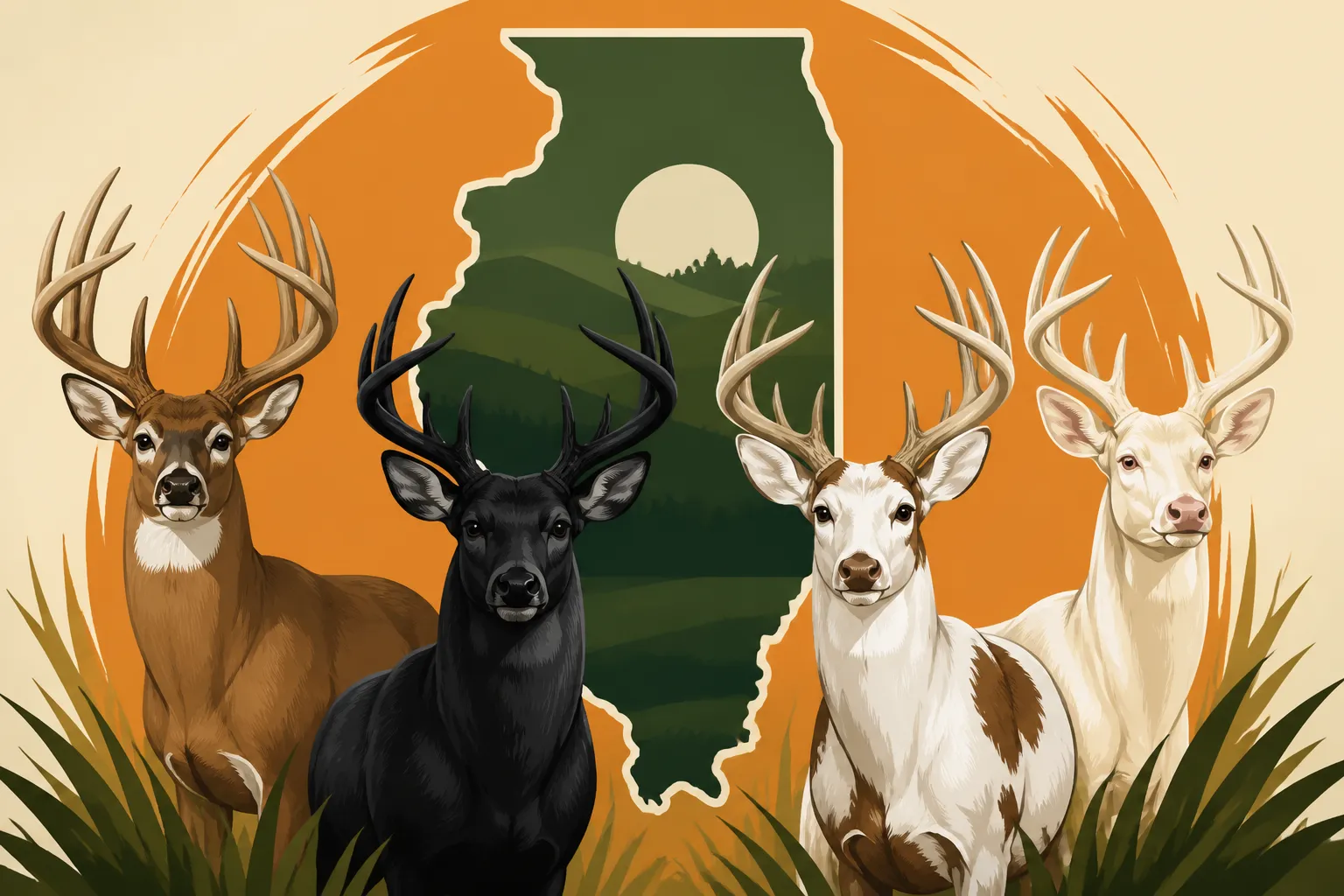
The most striking color phase rarities in whitetail deer are typically categorized into three main types: albinism, leucism, and melanism. While often confused, especially albinism and leucism, they are distinct genetic conditions that result in very different visual characteristics. Each represents a fascinating glimpse into the diversity that can exist within a species we often see as uniformly colored.
Albinism: The True White Deer
True albinism is probably the most recognized and iconic of all the rare color phases. An albino deer lacks all pigment in its body. This isn't just about white hair; it extends to their eyes, nose, and hooves. What you'll notice immediately are the stark white coat, pink eyes, and pink nose. The pink hue in the eyes comes from the blood vessels showing through the iris, as there's no pigment to block them. These deer can be quite sensitive to bright light because of the lack of pigment in their eyes, which normally helps filter sunlight. While beautiful, being completely white can be a significant disadvantage in the wild, as it makes them incredibly conspicuous to predators, both two-legged and four-legged. Many hunters feel a strong ethical pull to let truly albino deer walk, recognizing their rarity and the challenges they face.
Leucism: The Piebald and White Deer
Leucism is often mistaken for albinism, but there's a key difference: leucistic deer have a partial loss of pigment, not a complete absence. This means while they might have a mostly white coat, they will still retain some normal pigmentation in their eyes (which will be brown or blue, not pink), nose (which will be black or dark), and hooves (dark). Leucism manifests in a spectrum, from deer that are almost entirely white to those with "piebald" patterns – patches of white mixed with their normal brown coat. Piebald deer are more common than fully white leucistic or albino deer. You might see a piebald deer with a white blaze on its face, white legs, or large white patches along its flanks. These deer can sometimes have other genetic issues associated with the same recessive gene, such as skeletal deformities, short legs, or bowed noses, though many are perfectly healthy. Spotting a piebald deer can be a thrilling experience, especially for those who spend a lot of time Scouting Illinois Public Land Before Season.
| Color Phase | Hair Color | Eye Color | Nose Color | Hoof Color | Key Characteristic |
|---|---|---|---|---|---|
| Typical Brown | Shades of brown/grey | Brown | Black | Black | Standard camouflage |
| Albino | Pure white | Pink | Pink | Pink | Complete lack of pigment |
| Leucistic | White or piebald patches | Brown/Blue | Black/Dark | Black/Dark | Partial lack of pigment |
| Melanistic | Dark brown/black | Brown | Black | Black | Excess pigment |
Melanism: The Black Whitetail
On the opposite end of the spectrum from albinism and leucism is melanism. Melanistic deer have an excess of dark pigment (eumelanin), resulting in a coat that is much darker than normal, often appearing deep brown or even black. Their eyes, nose, and hooves will still be dark, as with a typical whitetail. Melanism is incredibly rare in whitetail deer, far less common than albinism or leucism. While a dark coat might seem to offer some camouflage advantage in shadowy timber, it can also make them stand out in open fields, especially against snow. If you've ever thought you saw a shadow move a bit too quickly through the woods, it's possible, though highly unlikely, you glimpsed one of these elusive dark beauties. The chance of seeing one is exceptionally low, making them a true trophy of the eyes. White-Tailed Deer Across Illinois provides a good overview of the typical deer you'll encounter.
Spotting the Rarities: What to Look For in the Illinois Woods
Encountering a deer with a rare color phase is a truly unforgettable moment for any hunter or outdoors enthusiast. It’s the kind of story you’ll tell around campfires for years to come. While you shouldn’t expect to see one every season—many hunters go their entire lives without such an encounter—knowing what to look for, and where these deer might be observed, can heighten your awareness and appreciation for these unique animals.
Identifying Subtle Differences
It's easy to assume any white deer is an albino, but as we discussed, leucism is far more common. The key is to look beyond just the coat. Is the nose black or pink? Are the eyes brown, blue, or pink? These details are crucial for accurate identification. A deer that appears very light brown or almost blonde might be a minor leucistic variation, but if its eyes and nose are dark, it's not a true albino. Similarly, a deer that looks unusually dark, especially against its typical brown herd mates, could be melanistic. Pay attention to how the light hits their coat – does it absorb the light or reflect it in an unusual way? Observing these subtle differences is part of the joy of truly studying wildlife, and tools like the GoHunt app can help you mark these unique sightings on your maps.
Geographic Hotspots and Observations
While these color phases can theoretically appear anywhere, certain areas might report more sightings simply due to higher deer populations or greater human observation. In Illinois, with its robust Illinois Deer Population Estimate, there's always a chance. Anecdotal evidence suggests that piebald deer, the most common leucistic variant, seem to pop up more frequently in certain localized areas, hinting at a small, localized gene pool where the recessive trait might be more prevalent. However, there's no specific county known for a "black deer" or "pink-eyed albino" hotbed. It's truly a random genetic event that could occur in the river bottoms near the Mississippi, the expansive agricultural lands of central Illinois, or the rugged hills of southern Illinois. The more time you spend in the woods, the higher your chances, even if infinitesimal, of witnessing one of these beauties. Regularly checking your trail cameras, particularly those running advanced AI like GoHunt's image recognition, might even flag such an anomaly for you.
Ethical Considerations for Hunters
For many hunters, encountering an albino or heavily leucistic deer presents an interesting ethical dilemma. While legally huntable in most parts of Illinois, many choose to let these rare deer walk. This is often driven by a sense of awe for their uniqueness, and sometimes by a desire to allow that rare gene to continue in the population. The discussion often arises in hunting forums and at deer camps: should such a rare animal be taken? There's no right or wrong answer prescribed by law, but it's a personal decision that reflects a hunter's individual values and appreciation for wildlife. If you're a nonresident hunter planning a trip, understanding these local hunting ethics can be just as important as knowing the Illinois Nonresident License Options. Some even believe that hunting them brings bad luck, a superstition that certainly encourages preservation.
Hunting Ethics and Management of Unique Deer
The presence of a deer with a rare color phase often sparks conversation among hunters and wildlife managers. While fascinating to observe, their unique appearance also raises questions about their survival, their role in the herd, and how humans should approach them from a management perspective.
Survival Challenges for Anomalies
For deer with very distinct color phases, life in the wild can be tougher. An albino deer, with its bright white coat, lacks the natural camouflage that a typical brown deer possesses. This makes them significantly more vulnerable to predation from coyotes, bobcats, and even domestic dogs. The lack of pigment in their eyes can also lead to vision problems, especially in bright sunlight, further hindering their ability to detect threats or navigate dense cover. Melanistic deer, while offering camouflage in certain dark environments, might stand out against snow or light-colored fields. Leucistic deer, particularly piebalds with moderate white patches, might not face as severe a disadvantage as a fully white albino, especially if their coloration still offers some degree of blend into varied environments. Despite these challenges, the fact that they survive to adulthood is a testament to their resilience and often a bit of luck. It's a reminder that even animals that stand out can find a way to thrive, at least for a time.
Management Philosophy in Illinois
Illinois's wildlife management philosophy for whitetail deer, as outlined by the IDNR, generally focuses on herd health, population control, and providing hunting opportunities, rather than specifically managing for or against rare color phases. There are no special protections for albino, leucistic, or melanistic deer in Illinois; they are considered part of the overall deer population and are subject to the same hunting regulations as any other whitetail. This means if you have a valid permit, like an Illinois Resident Archery Deer Permit Cost, and you encounter one, it's legal to harvest. However, the IDNR monitors deer health across the state, including conditions like Chronic Wasting Disease in Illinois Deer, and these rare color phases are just part of the overall genetic diversity. While they don't receive special protection, most wildlife biologists view them as interesting anomalies rather than a population health concern.
The Role of Observation and Reporting
While not required, some hunters and land managers choose to report sightings of unusually colored deer to their local IDNR biologists. This isn't for management purposes necessarily, but it can contribute to a broader understanding of genetic diversity within the state's deer herd. Documenting these sightings, perhaps with a clear photo, can be a great way to contribute to citizen science, even if it's just a personal log on a hunting app like GoHunt. Sharing these unique observations helps to paint a more complete picture of the incredible wildlife we have in Illinois. It also fosters a deeper appreciation for the wild spaces where we pursue our passion, recognizing that every time we step into the woods, there’s a chance to see something truly extraordinary. It’s part of the rich tapestry of Illinois Hunting Licenses and What They Cost and the experience of being an outdoors enthusiast.
Disclaimer
This article is for general informational purposes only and does not constitute professional advice. Laws, prices and regulations vary by location and change over time. Consult a qualified professional for guidance on your specific situation.