Illinois Wild Turkey Nesting Success
Few things are as emblematic of spring in Illinois as the thunderous gobble of a wild turkey, but behind those exciting morning hunts lies a complex story of survival, growth, and the delicate balance of nature. Many hunters feel the frustration when spring gobbler numbers seem lower than expected, or when they hear stories of unsuccessful nesting seasons. The truth is, wild turkey nesting success in Illinois is a critical indicator of the overall health of our turkey population, and it faces a myriad of challenges each year, from persistent predators to unpredictable weather. This comprehensive guide will pull back the curtain on what goes into a successful nesting season, explore the many hurdles poults face, and show how careful management and hunter involvement play a vital role in ensuring strong turkey populations for generations to come.
Understanding Wild Turkey Reproduction in Illinois
The annual cycle of wild turkeys truly begins with successful reproduction. If hens aren't laying viable clutches and those eggs aren't hatching, or if the poults don't make it to maturity, our spring woods would be a much quieter place. It's a testament to the resilience of these birds that they manage to thrive despite the odds stacked against them. For us hunters, understanding this foundational aspect of their lives is key to appreciating the larger picture of turkey management and conservation.
The Spring Ritual: Courtship and Breeding
As the days lengthen and temperatures warm in March and April, Illinois's wild turkey woods come alive with the sounds of courtship. The male turkeys, or gobblers, begin their strutting displays, fanning their tails, dragging their wings, and puffing up their iridescent feathers to attract hens. This visual spectacle is often accompanied by their iconic gobble, a booming call designed to announce their presence and dominance to potential mates and rival toms alike. Hens, more discreet in their movements, will respond to these displays with yelps and clucks, eventually seeking out the most impressive gobbler in their vicinity. Mating typically occurs in early to mid-spring, setting the stage for the crucial nesting period that follows.
After breeding, the hen's focus shifts entirely to finding a suitable nest site and laying her clutch. She’ll often breed with multiple gobblers, which can help ensure genetic diversity and increase the chances of successful fertilization. The entire spring season, from the first tentative gobbles to the last poults hatching, is a whirlwind of activity, driven by the instinct to reproduce. The vitality of this initial breeding phase directly impacts the number of nests that will be initiated across the state, and thus the potential for future turkey numbers.
Nest Site Selection and Construction
Once bred, a hen will spend considerable time and energy scouting for the perfect nest location, a decision that can literally mean the difference between life and death for her offspring. She's looking for a spot that offers concealment from predators and shelter from the elements, but also allows for a quick escape if disturbed. Common nest sites in Illinois include thick undergrowth in timbered areas, dense patches of tall grass or weeds along field edges, old logging roads that have grown up, or brushy creek bottoms. Often, she'll choose an area with an overhead canopy to break up her outline from aerial predators, combined with dense lateral cover to hide her from ground-based threats.
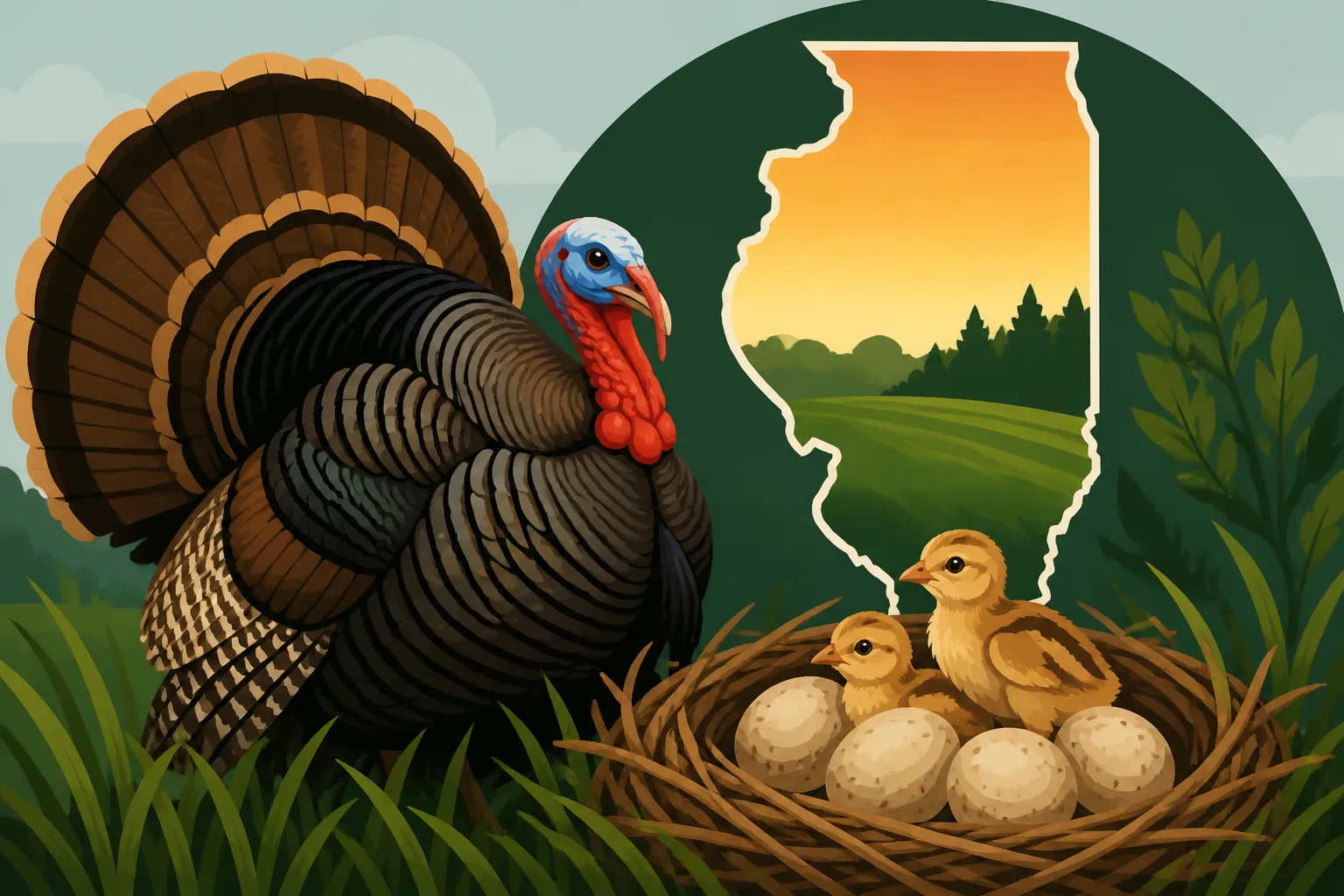
The nest itself is usually a simple, shallow depression scratched out in the soil, often at the base of a tree, under a fallen log, or within a dense clump of vegetation. She'll line it with a few leaves, pine needles, or whatever soft material is readily available, sometimes plucking a few feathers from her own breast for added insulation and camouflage. Hens typically lay one egg per day, continuing until her clutch is complete, which can range from 8 to 15 eggs. During this laying period, she may leave the nest for short intervals to feed, but once the full clutch is laid, she commits to incubating the eggs almost continuously for about 28 days. This period is incredibly vulnerable for her and her unborn poults, as she remains steadfastly on the nest, relying entirely on her camouflage and stillness to avoid detection. You can learn more about Where Illinois Gobblers Roost to understand their habitat preferences beyond just nesting.
Factors Influencing Nesting Success
Nesting success isn't just about a hen laying eggs; it's about those eggs surviving incubation and hatching successfully. It’s a precarious journey, fraught with dangers from start to finish. For every successful nest that produces a brood of poults, there are often several that fail due to a variety of factors, making the overall success rate a major determinant of our statewide turkey population.
Predation: The Silent Threat
Predation is, without a doubt, one of the leading causes of nest failure for wild turkeys in Illinois. A hen on a nest is incredibly vulnerable, and many animals are opportunistic predators of turkey eggs. Raccoons, skunks, opossums, coyotes, and snakes are all common culprits, often detected by the hen's absence during her brief feeding excursions or by the scent she leaves behind. Even crows and raptors can be a threat, especially during the egg-laying phase when the nest might be left unattended for longer periods. It's heartbreaking to find a disturbed nest, with shells scattered and no sign of the hen or her poults, a clear indication that a predator found it first.
The sheer abundance of these predators in many parts of Illinois's fragmented agricultural and timber landscape makes it a constant battle for nesting hens. While predator control can be a contentious topic, habitat management that provides better, thicker nesting cover can go a long way in giving hens a fighting chance. Think of a thick, thorny briar patch, or a dense stand of switchgrass — these offer far more protection than an open woodlot or a sparse fencerow. Understanding this constant pressure helps us appreciate the tenacity of a hen successfully hatching a brood. The Illinois Department of Natural Resources (IDNR) tracks data on Nest Predation and Illinois Turkey Hatches to better understand these dynamics.
Weather's Impact on Nests and Poult Survival
Illinois weather is nothing if not unpredictable, and that unpredictability poses a significant threat to wild turkey nesting success. Heavy, prolonged rains during the incubation period can flood nests, chilling the eggs and making them inviable. A sudden cold snap can have a similar effect, leading to egg mortality if the hen cannot maintain sufficient warmth. Violent thunderstorms, with their high winds and hail, can directly destroy nests, scattering eggs or even injuring the incubating hen.
Beyond direct destruction, adverse weather can also impact the hen’s ability to incubate effectively. If she’s forced to leave the nest more frequently for food or shelter during harsh conditions, the eggs are exposed to greater risks. Once poults hatch, the weather continues to play a critical role in their survival, as sustained cold, wet conditions can lead to hypothermia, which is particularly deadly for young, vulnerable poults lacking full feather development. This is why a mild, dry spring after a good hatch is always celebrated by wildlife biologists and hunters alike; it gives the poults the best possible start.
Habitat Quality and Cover
The old adage "habitat is king" holds especially true for wild turkey nesting success. Hens need safe places to lay and incubate their eggs, and high-quality nesting habitat provides both concealment and protection. This means areas with dense, herbaceous cover, such as native prairie grasses, thick stands of weeds, brushy edges, or young timber with a dense understory. Without adequate cover, nests are far more susceptible to predation and discovery. In agricultural landscapes, this often means fencerows, small woodlots, or CRP (Conservation Reserve Program) fields become critical nesting strongholds.
Fragmented habitat, where suitable nesting cover is scarce or isolated, forces hens to travel further to find a spot, exposing them to more dangers. It also concentrates nesting activity in fewer areas, making those nests easier for predators to locate. Conversely, large, contiguous blocks of diverse habitat, particularly those with a mosaic of mature timber, young regenerating forest, and open grasslands, offer hens numerous safe options. Landowners and public land managers who focus on creating and maintaining such diverse habitat are performing an invaluable service for the Illinois turkey population. Supporting initiatives that protect and enhance these critical areas is something we can all do, whether through direct involvement or simply understanding their importance. GoHunt, with its mapping and scouting tools, can be a great asset for hunters looking to identify potential high-quality habitat areas, helping them understand where turkeys might be more likely to succeed in nesting.
Poult Survival: The Next Critical Stage
Hatching is a monumental achievement, but it's far from the end of the journey for young wild turkeys. The first few weeks of a poult's life are incredibly challenging, with high mortality rates being a natural, albeit tough, part of their existence. Just because eggs hatch doesn't mean those poults will make it to adulthood.
Early Life Challenges for Poults
Newly hatched turkey poults are tiny, vulnerable, and completely dependent on their mother for survival. They are precocial, meaning they can walk and feed themselves shortly after hatching, but they are highly susceptible to chilling, particularly in wet conditions. Their downy feathers offer little insulation, making them prone to hypothermia if they get wet and cold. This is why hens will "brood" them frequently, sheltering them under their wings, especially during rain or cool temperatures.
Beyond weather, poults are a tempting meal for an even wider array of predators than eggs were. Everything from hawks and owls to foxes, coyotes, and even domestic cats can prey on young poults. The hen does her best to protect her brood, often employing distraction displays to draw predators away, but the sheer number of threats means many poults simply won't survive their first few weeks. Disease and parasites can also take a toll, especially if poults are stressed by poor weather or inadequate nutrition. The period from hatching to about six weeks of age is often referred to as the "bottleneck" for turkey populations, as this is when most mortality occurs. This contributes significantly to Poult-to-Hen Ratios and What They Mean for population health.
The Importance of Brood Rearing Habitat
To overcome the challenges of early life, poults and their mothers need specific types of habitat – often called "brood rearing habitat." This isn't necessarily the same as nesting habitat, though there can be overlap. Ideal brood rearing habitat provides several key elements: easily accessible insect protein, dense overhead cover for protection from aerial predators, and relatively open ground cover that allows poults to move easily and forage. Insects like grasshoppers, crickets, and spiders are crucial for poults' rapid growth and development, providing essential protein.
Therefore, areas with a mix of open woodlands, native warm-season grass fields, old fields, and edges with abundant forbs and insects are ideal. Think of a meadow with tall grasses and wildflowers bordering a timber stand; this offers both food and refuge. Hens will lead their poults through these areas, scratching and pecking for insects, while constantly vigilant for danger. Maintaining and enhancing these diverse habitats is essential for ensuring that the poults that do hatch have the best possible chance to grow into adult turkeys. Hunters can use detailed mapping applications, such as those provided by GoHunt, to identify and scout areas that offer this critical mix of cover and food sources, whether on public or private land.
Monitoring and Management Efforts
Understanding the dynamics of wild turkey populations, particularly nesting success, is a continuous effort. The Illinois Department of Natural Resources (IDNR) and various conservation organizations work tirelessly to monitor populations, assess habitat, and implement management strategies to support healthy turkey numbers across the state. This proactive approach is vital to balancing hunting opportunities with sustained conservation.
IDNR Surveys and Data Collection
The IDNR employs a variety of methods to monitor Illinois's wild turkey population, with a particular focus on reproduction and survival. One of the primary tools is the annual brood survey, where volunteers, landowners, and IDNR staff report sightings of turkey hens and their broods during the summer months. By collecting data on the number of hens observed and the number of poults seen with each hen, biologists can calculate poult-to-hen ratios. This ratio is a critical indicator of reproductive success: a high ratio suggests a strong hatch and good poult survival, while a low ratio can signal a poor nesting season or high early poult mortality.
This data, along with harvest statistics from Illinois Spring Turkey Harvest Numbers and observations from staff in the field, helps the IDNR track Illinois Turkey Population Trends. They can then identify areas where populations might be struggling and investigate potential causes, such as habitat deficiencies, increased predation, or localized disease outbreaks. This data-driven approach allows for informed decisions regarding season structures, bag limits, and habitat improvement projects, all aimed at ensuring the long-term health and stability of Illinois's turkey resource.
Habitat Improvement Initiatives
Recognizing the crucial role of habitat in turkey nesting and poult survival, the IDNR and numerous conservation partners actively engage in habitat improvement projects across Illinois. These initiatives often focus on creating and enhancing the specific types of cover that hens and poults need. This might involve prescribed burns to rejuvenate native grasslands and reduce dense understory in timber, encouraging the growth of insects and herbaceous cover. It could also include thinning timber stands to promote new growth on the forest floor, or planting native warm-season grasses and wildflowers in open areas to provide both nesting cover and a rich insect forage base.
Many of these projects are undertaken on public lands like State Fish and Wildlife Areas and within portions of the Shawnee National Forest. However, private landowners are also key players. Through programs that offer technical and financial assistance, such as the Conservation Reserve Program (CRP) or the Wildlife Habitat Incentives Program (WHIP), private citizens can be encouraged to implement turkey-friendly habitat practices on their properties. These efforts are not just good for turkeys; they often benefit a wide array of other wildlife species, contributing to overall ecosystem health.
Hunter's Role in Conservation
As hunters, we are often the most passionate advocates for wildlife and wild places. Our connection to the land and the animals we pursue gives us a unique perspective and a critical role in the ongoing conservation of species like the wild turkey. Supporting ethical practices and funding conservation efforts are fundamental responsibilities.
Ethical Hunting Practices
Ethical hunting is paramount to ensuring the sustained health of any game population, including wild turkeys. For spring turkey hunting in Illinois, this primarily means adhering to all regulations set forth by the IDNR, such as bag limits, hunting hours, and legal methods. Taking only gobblers (or bearded hens where legal) helps protect the breeding hens, who are the backbone of reproduction. Respecting private property, knowing and following safe firearm handling procedures, and making clean, ethical shots are not just about legality; they're about demonstrating respect for the animal and the hunting tradition.
Beyond the regulations, ethical hunting also involves a broader commitment to conservation. This includes practicing responsible land stewardship if you own property or have permission to hunt private land. It means being a good ambassador for hunting, educating others about the positive role hunters play in conservation, and setting an example in the field. Every time we head into the woods, we have an opportunity to reinforce the values that underpin sustainable hunting and conservation. Consider how crucial it is to understand all the rules before heading out, which is why resources like Illinois Hunter Education Requirements are so vital.
Supporting Conservation Through License Purchases
Perhaps one of the most direct and impactful ways hunters contribute to wild turkey conservation in Illinois, and indeed across the nation, is through their purchase of hunting licenses, stamps, and permits. A significant portion of the revenue generated from these sales goes directly back into wildlife management, habitat restoration, and research programs. This includes funding for the IDNR's turkey surveys, habitat projects, law enforcement, and public land acquisition and maintenance. It's a user-pay, user-benefit system that has been incredibly successful.
Without these funds, many of the programs designed to monitor turkey populations, improve nesting success, and enhance brood rearing habitat would simply not exist. Every time an Illinois resident buys an Illinois Resident Archery Deer Permit Cost or a spring turkey permit, they are directly investing in the future of these magnificent birds. This financial support, combined with the advocacy and ethical practices of hunters, forms a powerful conservation engine that helps ensure we will continue to hear those thrilling gobbles echoing through the Illinois woods for generations to come. When you plan your next hunt, whether it's Spring Turkey Hunting in Illinois or Hunting Illinois's Fall Turkey Zones, remember that your permit purchase is a vital contribution.
Understanding Turkey Nesting Success: A Summary of Key Factors
Here's a quick overview of the primary factors that influence wild turkey nesting success and poult survival in Illinois.
| Factor | Impact on Nesting Success | Impact on Poult Survival | Hunter's Role |
|---|---|---|---|
| Predation | High: Raccoons, skunks, coyotes destroy nests. | High: Hawks, owls, foxes, coyotes prey on poults. | Support habitat improvement, ethical hunting. |
| Weather | High: Flooding, cold, storms destroy eggs. | High: Hypothermia, chilling, disease. | No direct control; awareness helps adjust expectations. |
| Habitat Quality | Critical: Dense cover for concealment & protection. | Critical: Insect-rich areas, protective cover. | Advocate for habitat programs, practice land stewardship. |
| Hen Health | Important: Well-nourished hens lay more eggs. | Important: Strong hen can protect brood better. | Ethical hunting, leaving hens to breed. |
| Human Disturbance | Moderate: Can cause nest abandonment. | Low: Less direct impact on hatched poults. | Respect posted land, minimize disturbance in known nesting areas. |
| Disease/Parasites | Low-Moderate: Can weaken hens, reduce egg viability. | Moderate: Especially for stressed young poults. | Report sick animals, support wildlife disease monitoring. |
Understanding the intricate dance between these factors helps paint a clearer picture of why each spring's turkey outlook can be so different.
Navigating the Future of Illinois Turkeys
The story of the wild turkey in Illinois is one of remarkable recovery and ongoing dedication. From near extirpation in the early 20th century to a thriving population today, it’s a conservation success story. Yet, as this guide has shown, the challenges of ensuring continued robust numbers are ever-present, particularly concerning nesting success and poult survival. The spring woods might feel full of birds one year, and surprisingly quiet the next, and often, the answers lie in the preceding nesting season.
For hunters, appreciating these biological complexities adds a layer of depth to every hunt. It transforms a simple pursuit into an active participation in conservation. From contributing to population data, whether informally through observations or more formally through programs like GoHunt's data tracking features, to supporting conservation funding through license purchases, every action plays a part. Whether you're planning for Illinois Muzzleloader-Only Season Tactics or just enjoying scouting with your Scouting Illinois Public Land Before Season information, remember the foundational role of successful nesting. By staying informed, advocating for smart land management, and practicing ethical hunting, we can all help ensure that the iconic gobble of the wild turkey continues to resonate across the diverse landscapes of Illinois for generations to come.
Disclaimer
This article is for general informational purposes only and does not constitute professional advice. Laws, prices and regulations vary by location and change over time. Consult a qualified professional for guidance on your specific situation.