Illinois Youth Deer Season Rules
It can be incredibly frustrating trying to introduce younger generations to hunting, especially with all the complex rules and regulations that vary from season to season, not to mention balancing school and other activities. The Illinois Youth Deer Season offers a fantastic, dedicated window for young hunters to get out in the field without the intense pressure of the regular firearm seasons. This guide aims to demystify those specific rules, permit requirements, and safety guidelines, ensuring you and your youth hunter are fully prepared for a successful and memorable experience.
Understanding the Purpose of Illinois's Youth Season
The Illinois Department of Natural Resources (IDNR) implemented the youth deer season with a clear vision: to foster a love for hunting and conservation in younger generations. It’s not just about harvesting a deer; it’s about creating lasting memories, teaching ethical hunting practices, and ensuring the future of our outdoor heritage. This special season carves out a unique opportunity, providing a less competitive environment compared to the sometimes crowded regular seasons.
Encouraging New Hunters and Conservation
One of the biggest challenges facing hunting today is declining participation. The youth season is a direct response to this, designed specifically to remove barriers and create a positive, encouraging first experience for young people. Imagine trying to learn how to track deer, load a firearm, and identify legal bucks while simultaneously navigating throngs of experienced hunters on public land. It can be overwhelming. The youth season offers a quieter, more focused time. It allows mentors to really concentrate on teaching woodsmanship, shot placement, and respect for the animal, rather than feeling rushed by other hunters or limited by short windows. This focus on education and positive experience is crucial for developing lifelong conservationists who understand the importance of healthy wildlife populations and habitats.
Providing a Reduced Pressure Hunting Environment
The regular firearm seasons in Illinois can be quite an event, especially on public lands or smaller private tracts. The sheer volume of hunters, combined with the often-short duration of the season, can lead to hurried decisions and crowded conditions. The Illinois Youth Deer Season, in contrast, typically occurs when many regular seasons aren't active, often during a window in October before the main firearm seasons. This timing, coupled with the age restrictions, naturally reduces the number of hunters in the field. This allows youth hunters and their mentors to move more slowly, observe more, and feel less pressured to take the first deer they see. It's an ideal setting for honing skills, from patiently waiting in a stand to quietly still-hunting through a woodlot, without the added stress of competing with dozens of other groups.
Eligibility and Permit Requirements for Youth Hunters
Navigating the permit system can sometimes feel like trying to solve a puzzle, but for the youth deer season, the requirements are pretty straightforward once you understand them. It’s designed to be accessible while still upholding safety and regulatory standards.
Age Restrictions and Hunter Education
To participate in the Illinois Youth Deer Season, a hunter must be under the age of 18 at the time they apply for the permit. Specifically, hunters must be between the ages of 10 and 17, inclusive, on the opening day of the season. This ensures that the program truly targets young people. However, age is just one part of the equation; hunter education is paramount. All hunters born on or after January 1, 1980, must possess a valid Hunter Education Certificate before they can legally hunt in Illinois. This is a critical requirement designed to instill safety, ethics, and responsible hunting practices from a young age. Many youth hunters fulfill this requirement through online courses combined with field days, or traditional in-person classes offered by the IDNR. It’s important to make sure this certification is complete well in advance of applying for permits. You can find more detailed information on hunter education requirements by checking out the guide on Illinois Hunter Education Requirements.
Permit Types and Application Process
For the Illinois Youth Deer Season, eligible hunters must obtain a special Youth Deer Hunting Permit. These permits are typically issued for specific counties and are often available over-the-counter or through online application processes administered by the IDNR. Unlike some lottery-based permits, youth permits are generally more readily available, aligning with the season’s goal of accessibility. When applying, youth hunters (or their parents/guardians) will need to select the county they intend to hunt in. It's crucial to apply for the permit in the correct county where you plan to hunt, as these permits are county-specific.
The permits themselves are for either-sex deer, meaning the youth hunter can harvest an antlered or antlerless deer, offering a great opportunity to fill the freezer or target a first buck. The application process usually opens up in late summer, giving families ample time to plan. While the system is user-friendly, always double-check all information before submitting, especially the hunter's date of birth and hunter education number. Sometimes, online portals like GoHunt can provide an integrated system for managing permit applications and checking deadlines, making the entire process smoother for busy families.
Here’s a quick overview of some key permit details:
| Permit Type | Eligibility | Cost (Resident) | Cost (Non-Resident) | Notes |
|---|---|---|---|---|
| Youth Deer Permit | Ages 10-17 | $10-15 | $25-35 | Either-sex, county-specific. Requires base license + habitat stamp. |
| Annual Hunting License | All hunters (16+) | ~$12 | ~$58 | Required for all hunters 16 and older. |
| Habitat Stamp | All hunters (16+) | ~$5 | ~$5 | Required for all hunters 16 and older. |
| Apprentice Hunter Lic. | Mentored (10+) | ~$8 | ~$8 | Option for new hunters without hunter education (with mentor). |
Note: Prices are estimates and subject to change. Always verify current costs with the IDNR directly.
Remember, if the youth hunter is 16 or older, they'll also need to purchase an Illinois Resident License Options or Illinois Nonresident License Options and an Illinois State Habitat Stamp in addition to their youth deer permit. For younger hunters, or those participating in an apprentice program, the rules can vary slightly. Make sure to consult the IDNR website for the most current information.
Season Dates and Huntable Counties
Timing is everything in hunting, and the Illinois Youth Deer Season has a specific window that you need to be aware of. It's not a year-round opportunity, and the exact dates can shift slightly each year, so staying current with the IDNR regulations is paramount.
Statewide Versus Specific County Hunts
The Illinois Youth Deer Season is generally held statewide, but it's crucial to understand that the permits are issued on a county-specific basis. This means if you buy a permit for Adams County, you can only hunt in Adams County. You can't just cross over into Pike County with that same permit. This county-specific rule is important for managing local deer populations and hunter distribution. While most counties participate, there might be specific state-managed sites or counties that have unique restrictions or require special applications, so always check the specific regulations for your intended hunting area. The IDNR website or their annual digest will list all participating counties and any exceptions. Many hunters use mapping tools like GoHunt to visualize county boundaries and ensure they are hunting within their permitted area, especially if they are close to a county line.
Key Dates to Remember Each Year
The Illinois Youth Deer Season typically takes place over a single three-day weekend in early to mid-October. This timing is strategic, placing it after the initial archery season opener but before the hustle and bustle of the first firearm season. This provides a crucial window where deer haven't been heavily pressured by modern firearms, increasing the chances for a youth hunter to have a successful encounter. For example, recent seasons have seen the youth hunt fall on a weekend like October 7-9, or similar dates. It's a short, sweet window, so planning ahead is key. You'll want to scout your hunting location, get stands set up, and make sure all equipment is dialed in well before those dates roll around. Keep an eye on the IDNR’s official publications each spring for the exact dates to ensure you don't miss this valuable opportunity. The guide on Illinois Youth Deer Weekend Dates often provides the specific calendar details as soon as they are released.
Legal Weapons and Equipment Restrictions
Ensuring your youth hunter is equipped with the correct and legal gear is a non-negotiable part of a safe and successful hunt. Illinois has specific regulations for what can and cannot be used during the youth deer season, primarily focusing on safety and ethical harvest.
Firearm and Archery Options
During the Illinois Youth Deer Season, hunters are generally permitted to use legal firearms for deer hunting, which primarily include shotguns, muzzleloaders, and certain straight-walled cartridge rifles. The specifics can sometimes be a little confusing, especially with the introduction of straight-wall cartridges in recent years. For shotguns, 10, 12, 16, and 20 gauge shotguns are typically allowed, firing slugs only. Muzzleloaders must be .45 caliber or larger, and straight-walled cartridge rifles must be chambered in a cartridge with a minimum case length of 1.16 inches and a maximum case length of 1.80 inches, and fire a bullet with a diameter of at least .30 caliber. Common examples include .450 Bushmaster, .350 Legend, or .45-70 Government.
Crossbows are also permitted for youth hunters during this season, providing another great option, especially for those who might find traditional archery equipment more challenging or who are new to hunting. Many youth hunters find crossbows easier to master quickly, allowing them to focus more on the hunting experience itself rather than the steep learning curve of a compound bow. It's important to remember that centerfire rifles that use bottlenecked cartridges (like .30-06 or .270) are not legal for deer hunting in Illinois. Always double-check the current Legal Weapons During Illinois Firearm Season rules on the IDNR website before heading afield.
Blaze Orange and Safety Gear
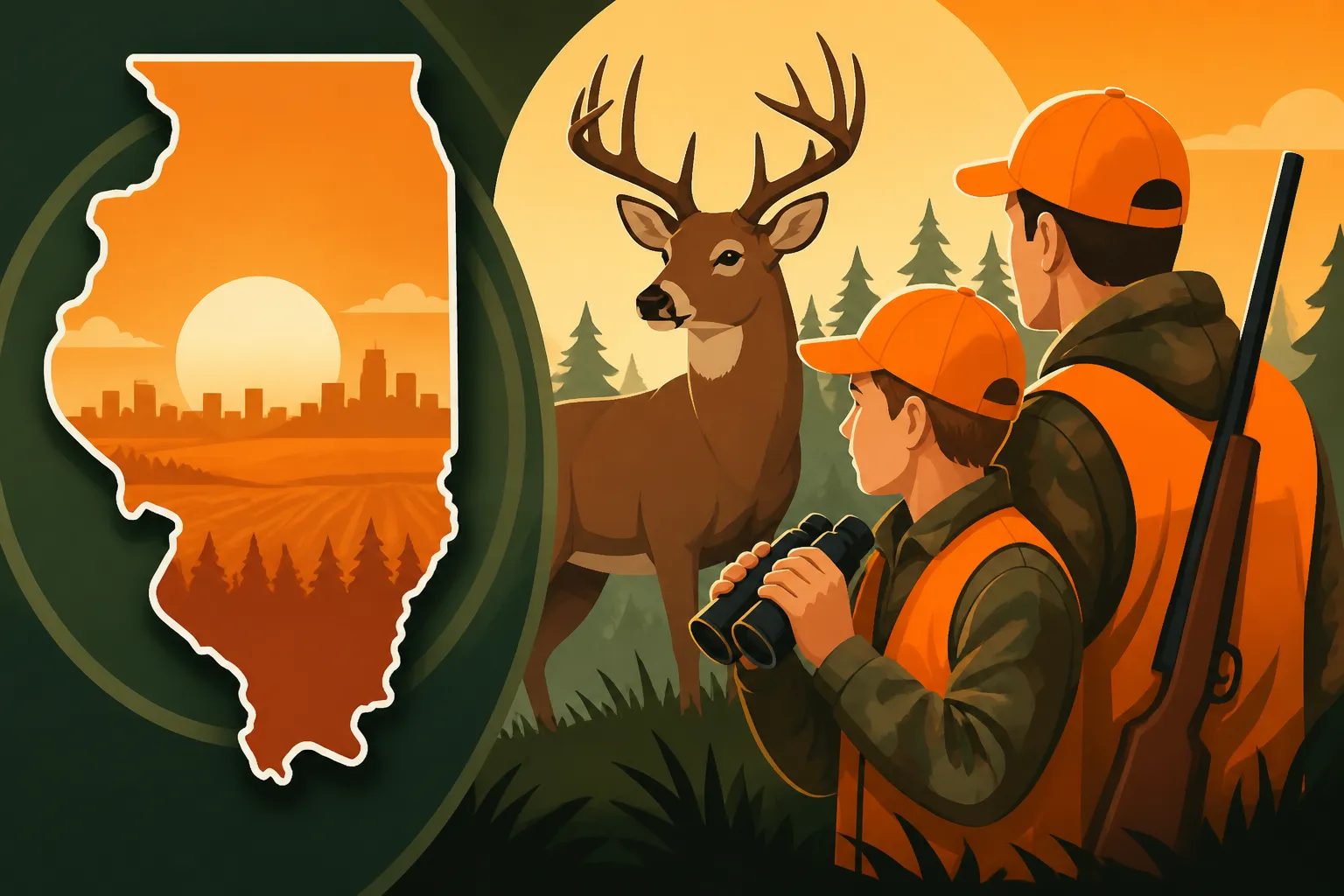
Safety is paramount, particularly when introducing new hunters to the field. Illinois mandates specific blaze orange requirements during the youth deer season to ensure maximum visibility and safety. All youth deer hunters, as well as their adult supervisors, must wear a solid blaze orange cap and a solid blaze orange outer garment, such as a vest or jacket. This orange must be visible from all sides, a minimum of 400 square inches, while in the field. This requirement applies even if you are hunting from a ground blind.
Beyond the legal requirements, it's wise to equip your youth hunter with additional safety gear. This includes a safety harness when hunting from an elevated treestand – this is non-negotiable for anyone, especially youth. Good quality hearing protection and eye protection are also critical, particularly when shooting firearms. A reliable first-aid kit, a whistle, and a fully charged cell phone (for emergencies, not distractions!) are also essential additions to any hunter's pack. Teaching these safety protocols from day one is just as important as teaching them how to shoot accurately. You can read more about specific requirements in the article, How Much Blaze Orange Illinois Requires.
Mentorship Requirements and Responsibilities
The youth deer season isn't just about the young hunter; it's a team effort, heavily relying on the guidance and responsibility of an experienced adult mentor. This mentorship is enshrined in the regulations to ensure safety, ethical conduct, and a positive learning experience.
The Role of the Adult Supervisor
Every youth hunter participating in the Illinois Youth Deer Season must be accompanied by a non-hunting adult supervisor. This isn't just a suggestion; it's a legal requirement. The adult supervisor must be at least 18 years of age and hold a valid Illinois hunting license and a Habitat Stamp, unless they are exempt (e.g., landowners hunting their own property). Their role extends far beyond simply being present. They are responsible for ensuring the youth hunter understands and follows all hunting laws, safety regulations, and ethical guidelines. This means actively supervising, offering instruction, and intervening if necessary. It’s an opportunity to teach by example, demonstrating patience, respect for wildlife, and responsible firearm handling.
Think of it as an apprenticeship. The adult isn't just a chaperone; they are the primary educator, setting the tone for the youth hunter's entire hunting career. They help with scouting, tracking, field dressing, and truly immerse the youth in all aspects of the hunt. This is a perfect scenario to utilize resources like GoHunt, not just for planning but also for teaching the youth how to read maps, understand topography, and predict deer movement, turning scouting into an educational adventure.
"One-on-One" Direct Supervision
The IDNR regulations emphasize "direct supervision," which often means a one-on-one mentor-to-youth ratio. This isn't a situation where one adult can supervise multiple youth hunters in different locations or simultaneously. The adult supervisor must be close enough to the youth hunter to provide immediate assistance and instruction. This typically means being within arm's reach or voice command, especially when firearms are involved. If the youth hunter is in a treestand, the mentor should be in an adjacent stand or directly below, maintaining constant communication and visual contact.
This close supervision is critical for several reasons: safety is paramount, ensuring that the youth handles their weapon properly and identifies their target correctly. It also allows for immediate coaching, helping the youth learn from every experience, whether it's identifying a scrape line, understanding wind direction, or making the decision to pass on a shot. This direct interaction helps solidify the lessons learned in hunter education and builds confidence in the young hunter. For those considering starting without a hunter education certificate, the Illinois Apprentice Hunter License Rules provides more specific details on how that pathway works under strict mentorship.
Reporting Your Harvest and CWD Considerations
The hunt doesn't end when a deer is down. There are crucial steps every hunter, especially youth hunters and their mentors, must follow regarding harvest reporting and, increasingly, understanding chronic wasting disease (CWD) protocols.
Mandatory Deer Reporting
In Illinois, reporting your deer harvest is not optional; it's mandatory. Every deer harvested during the youth season must be reported to the IDNR by 10:00 PM on the same day it was harvested. This reporting can be done online through the IDNR website, by phone, or through the official Illinois DNR Direct app. This process is vital for wildlife management, as it provides the IDNR with critical data on harvest rates, population trends, and overall deer health.
When reporting, you'll need information like your permit number, the county of harvest, and the type of deer (antlered or antlerless). It's a straightforward process, but sometimes connectivity in remote hunting areas can be an issue. Always plan ahead for how you'll get your report in. Many mentors make this part of the youth hunter's responsibility, walking them through the steps to complete the Reporting a Deer Through Illinois's App themselves, reinforcing accountability and understanding of wildlife management. After reporting, you'll receive a confirmation number, which must be written on your permit and kept with the carcass until it is processed.
Navigating CWD Zones with Youth Hunters
Chronic Wasting Disease (CWD) is a serious concern for deer populations in Illinois, particularly in the northern and parts of the central regions. The IDNR has established CWD management zones, which can impact how you handle and transport a harvested deer. If you are hunting in one of Illinois's CWD-positive counties, there may be mandatory CWD testing requirements for harvested deer. This often involves taking the deer's head to a designated CWD sampling station within 48 hours of harvest.
For youth hunters, understanding these protocols is another important lesson in responsible hunting. Mentors should check the current CWD status of their chosen hunting county well before the season. Information regarding Mandatory Testing Inside an Illinois CWD County and carcass movement restrictions is updated annually by the IDNR. Teaching youth about CWD, why it's a concern, and how hunters play a role in monitoring and managing it, transforms a regulatory requirement into a conservation lesson. It highlights the direct link between hunting and wildlife health. Tools like GoHunt can often show overlays of CWD zones, helping you make informed decisions about where to hunt and what protocols to expect.
Disclaimer
Please remember that hunting regulations can change. While every effort has been made to provide accurate and up-to-date information, it is the hunter's responsibility to verify all current rules and regulations with the Illinois Department of Natural Resources (IDNR) prior to hunting. This guide is for informational purposes only and does not constitute legal advice.