Land Management Services Beyond the Hunt
Many hunters in Illinois dream of owning their own slice of heaven, a place where they can implement strategies to improve wildlife habitat and elevate their hunting experience. But let's be honest, for most of us, that dream quickly runs into the brick wall of time, expertise, and sheer physical labor. You might have the vision for lush food plots or strategic bedding areas, but actually executing those plans, especially on larger tracts, can feel utterly overwhelming. This guide is here to shed light on how professional land management services in Illinois can transform your hunting property, taking the burden off your shoulders and turning those dreams into a tangible reality, even if you’re not a full-time farmer or forester.
What Are Land Management Services Beyond the Hunt?
When we talk about hunting, most of us focus on the hunt itself—the scouting, the stand placement, the shot. But truly successful hunting, especially year after year, comes from what happens before and after the season, particularly in managing the land. Land management services, in this context, go far beyond simply guiding you to a stand or cleaning your deer. They encompass a whole suite of specialized tasks aimed at improving the overall health, productivity, and attractiveness of your property for wild game, ensuring a sustainable and rewarding hunting future.
Beyond the Deer Stand: A Holistic View
Think of it this way: a chef can cook an amazing meal, but if the ingredients aren't top-notch and the kitchen isn't well-maintained, the results will suffer. Similarly, an outfitter can be the best guide in Illinois, but if the land they're hunting isn't managed to optimize for wildlife, the hunting opportunities will be limited. These services look at your property holistically, considering soil health, existing timber, water sources, and topography to create an environment where deer, turkey, waterfowl, and small game can thrive year-round, not just during hunting season. It's about building an ecosystem, not just a hunting spot.
This holistic approach often starts with a detailed property assessment. Professionals will walk your land, analyze aerial maps, take soil samples, and identify natural bottlenecks, travel corridors, and bedding areas. They're not just looking for where a big buck might be, but rather where the deer herd wants to be and what resources are currently missing or underutilized. They consider factors like how deer move through different timber cuts or how topography influences wind patterns, drawing on years of biological knowledge specific to Illinois ecosystems. This initial phase sets the stage for a tailor-made plan, ensuring every hour and dollar invested yields maximum benefit for your hunting goals.
Why Outfitters Get Involved in Habitat
It might seem unusual for outfitters, whose primary business is guiding hunts, to also offer land management services. But for many, it's a natural extension of their expertise and a critical component of their success. A top-tier outfitter understands that providing consistent, high-quality hunting experiences depends directly on the quality of the habitat. By actively managing the land, they can control and enhance key factors like food availability, cover, and security, which in turn leads to healthier, more numerous, and more predictable game populations.
For outfitters operating on leased or owned properties, investing in habitat management is a long-term strategy. It allows them to differentiate their offerings, guaranteeing clients access to prime hunting grounds that are actively maintained for wildlife. This deep involvement means they're not just finding existing game; they're actively growing and holding game on their managed parcels. When you're looking for a guided hunt, you might even find listings on platforms like BookYourHunt that specifically highlight properties with extensive food plot systems or carefully managed timber, a direct result of these land management efforts. It's an assurance that they're committed to the land's health, which translates directly to better hunting for you.
Types of Land Management Services Illinois Outfitters and Consultants Offer
The spectrum of land management services available in Illinois is broad, covering everything from improving nutrition to creating optimal bedding and security cover. These services are often tailored to the specific game species you're targeting and the unique characteristics of your property.
Food Plot Planning and Installation
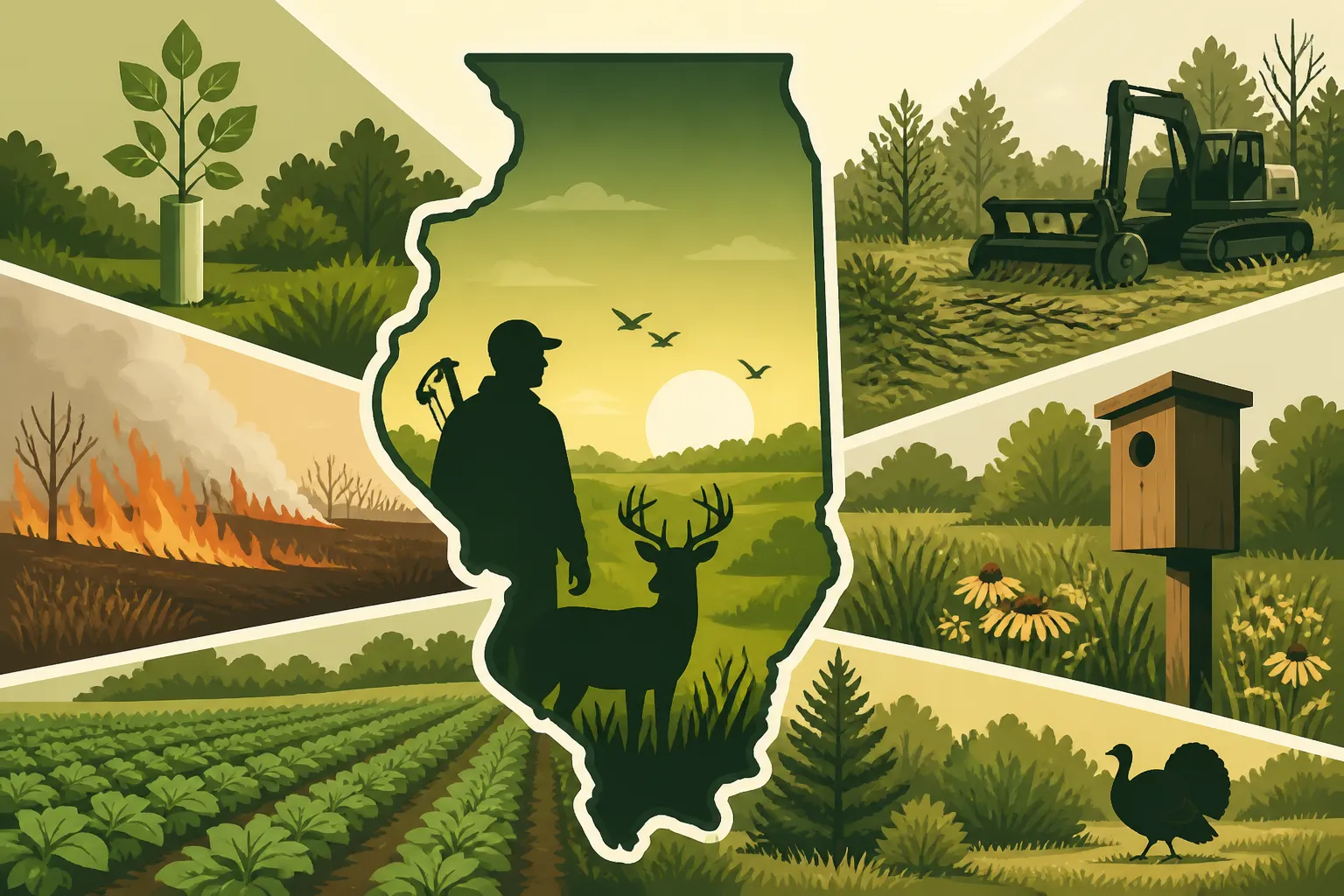
One of the most popular and impactful land management services is the planning, planting, and maintenance of food plots. It’s far more involved than just scattering some seed. Professionals consider your soil type, sunlight availability, deer pressure, and even the local agricultural landscape to recommend the most effective mix of annuals (like clover or brassicas) and perennials (like corn or soybeans) for year-round attraction and nutrition.
A common scenario might involve a hunter with a small, wooded property surrounded by large crop fields. While the deer are certainly visiting those fields, they might only be passing through your timbered parcel. A land management expert could advise on planting a small, strategic food plot of a high-protein perennial like clover or chicory, establishing a consistent attractant that holds deer on your property, especially during daylight hours. They'll handle everything from soil testing and lime application to precise planting and ongoing fertilization, ensuring your plot thrives. This careful planning can drastically improve your odds, particularly when you're Hunting a Green Field Planted for Deer.
Timber Stand Improvement and Edge Feathering
Healthy timber isn't just about trees; it's about diverse habitat. Timber stand improvement (TSI) and edge feathering are crucial for creating the varied cover and food sources that whitetails and turkeys crave. TSI involves strategically thinning trees to allow more sunlight to reach the forest floor, promoting the growth of native browse and understory plants. Edge feathering focuses on creating a gradual transition zone between open fields and dense woods, offering vital bedding and fawning cover.
Imagine a property with mature, open timber. It might look beautiful, but it offers little in the way of deer browse or security. A land management team could come in, identify mature trees for strategic harvest (which could even yield some income), and remove less desirable species or diseased trees. This opens the canopy, encouraging the growth of briars, saplings, and forbs—all critical food and cover for deer. Simultaneously, they might "feather" the edges of adjacent fields by hinge-cutting some trees or planting shrubby species, creating an impenetrable buffer that gives deer confidence to feed closer to open areas. This kind of work completely alters how deer utilize the landscape, influencing Timber Cuts and Where Deer Move After.
Access Routes and Water Management
Efficient access to and from your hunting areas, and reliable water sources, are often overlooked but vital aspects of effective land management. Professional services can design and implement discreet access routes that minimize disturbance to bedding areas, as well as develop natural or man-made water features to ensure wildlife have a consistent supply, especially during dry periods.
Consider a property where every entry to your stands spooks deer. A consultant might map out hidden trails, perhaps utilizing natural depressions or dense cover, that allow you to approach and exit undetected. They might also suggest creating small, hidden waterholes in strategic locations, or improving existing natural springs. This attention to detail means not only better hunting but also healthier animals. For example, a reliable water source close to prime bedding areas can encourage deer to spend more daylight hours on your property, rather than traveling long distances to a creek or pond off your land.
Deer and Turkey Supplemental Feeding Programs
While not legal everywhere or year-round in Illinois, where permitted and applied ethically, supplemental feeding programs can be part of a broader land management strategy, particularly for improving herd health and density. This goes beyond simply putting out a feeder; it involves understanding the nutritional needs of local wildlife and supplementing natural food sources responsibly.
However, it's crucial to understand Illinois's Chronic Wasting Disease Zone and other regulations regarding feeding. Many areas have restrictions, particularly in CWD counties, to prevent the congregation of deer and potential disease transmission. Always check current IDNR regulations for your specific county. If used, professional services can help establish feeding sites that minimize negative impacts and maximize benefits, focusing on high-quality forage and mineral supplements that contribute to the overall well-being of the herd. This can be especially important in areas with poor mast crops or severe winters, helping does recover after fawning or bucks rebuild after the rut.
The Benefits of Professional Land Management for Hunters
Engaging professionals for land management isn't just about convenience; it's about investing in the long-term health and productivity of your property, leading to more enjoyable and successful hunting experiences.
Boosting Wildlife Populations and Health
The most direct benefit of professional land management is the positive impact on wildlife. By ensuring a consistent supply of high-quality forage, secure bedding areas, and safe travel corridors, you're essentially creating a five-star resort for your local deer, turkey, and other game. This leads to healthier animals, better fawn survival rates, and often, larger racks on bucks due to improved nutrition.
Think about the difference between a sparse, open woodlot and one with dense undergrowth, diverse food plots, and year-round water. The latter becomes a sanctuary, a place where deer feel safe to bed, feed, and raise their fawns. This directly influences Illinois Deer Herd Size and density on your specific property. By providing everything they need, you encourage deer to spend more time on your land, reducing their need to wander onto neighboring properties in search of resources. Healthier does produce more fawns, and well-fed fawns have a better chance of survival, contributing to a robust and thriving population.
Maximizing Hunting Opportunities and Success
A property that is actively managed for wildlife naturally translates into more, and better, hunting opportunities. When deer movements become more predictable due to strategically placed food, water, and cover, your chances of encountering them during legal hunting hours increase dramatically. You're not just hoping deer show up; you're actively orchestrating their presence.
This means you can plan your hunts with more precision. Instead of simply hanging a stand where you think deer might pass, you can place it knowing they'll be moving from a managed bedding thicket to a specific food plot, or traveling along a newly created funnel. This is a game-changer for hunters who spend countless hours scouting. Services that implement smart habitat strategies effectively create the conditions for better encounters, making the most of every hour you spend in the woods. For those researching habitat needs, resources available on platforms like GoHunt can provide deeper insights into how specific management techniques impact game movement and density, allowing you to better understand the decisions your land manager makes.
Long-Term Investment in Your Property
Beyond the immediate hunting benefits, land management is a significant long-term investment in your property's value and ecological health. A well-managed property, rich in wildlife habitat and boasting a healthy ecosystem, becomes a more desirable asset, whether for personal enjoyment, future sale, or even conservation easements.
Consider a property that, through consistent effort, consistently produces quality deer or healthy turkey populations. This reputation can add tangible value. Moreover, practices like selective timber harvesting, erosion control, and invasive species removal protect the land itself, ensuring its productivity for generations. It’s about building a legacy, creating a place where you, your family, and friends can enjoy the outdoors and the thrill of the hunt for years to come. This careful stewardship also supports the broader goals of wildlife conservation across Illinois.
Choosing the Right Land Management Partner in Illinois
Deciding to invest in professional land management is a big step. Finding the right partner—whether an outfitter with a habitat division or a dedicated land management consultant—is crucial for a successful outcome.
Vetting Credentials and Experience
Just as you wouldn't trust your car to an inexperienced mechanic, you shouldn't trust your valuable hunting land to just anyone. Look for professionals with a solid track record, relevant certifications, and deep experience with Illinois ecosystems and wildlife. Ask about their educational background, professional affiliations (like wildlife biologist associations or forestry groups), and how long they've been operating in the state.
A reputable consultant will be transparent about their methods and willing to show you examples of their work on other properties. Don't be shy about asking for references from past clients who can speak to the long-term results of their management plans. Understanding their expertise in specific areas, such as food plot success rates or Habitat Work on Illinois Fish and Wildlife Areas, will help you gauge if they align with your specific goals. You're looking for someone who understands not just plants and animals, but also Illinois hunting regulations and local challenges like soil variations and climate.
Understanding Contractual Agreements and Costs
Before any work begins, ensure you have a clear, written contract that outlines the scope of services, timelines, expected outcomes, and, crucially, all associated costs. Land management projects can range widely in price depending on the size of your property, the intensity of the work, and the specific services requested. Get a detailed breakdown, not just a lump sum.
A good contract will specify payment schedules, cancellation policies, and what happens if unforeseen issues arise (e.g., unexpected weather impacting planting). Some services might offer tiered packages, while others might operate on an hourly or project basis. Don't hesitate to compare quotes from several different providers to ensure you're getting fair value. Remember, the cheapest option isn't always the best when it comes to long-term habitat improvement. Investing wisely upfront can save you headaches and expenses down the road.
Leveraging Online Resources for Research
In today's digital age, there's a wealth of information and tools to help you research land management practices and even find potential partners. Utilize online mapping tools, government wildlife resources, and specialized hunting forums to gather insights.
Websites like the Illinois Department of Natural Resources offer valuable information on best practices, regulations, and even lists of certified foresters or wildlife biologists. Online mapping platforms can help you visualize your property's topography and potential habitat features before you even talk to a consultant. For those looking to learn more about specific habitat techniques or even plan their own smaller-scale projects, resources like those found on GoHunt can offer invaluable insights into wildlife biology and effective land stewardship practices. These platforms can arm you with knowledge, making you a more informed client and enabling you to ask the right questions when vetting potential land management partners.
| Service Category | Primary Goal | Typical Effort Level | Example Scenario |
|---|---|---|---|
| Food Plot Installation | Enhance nutrition, attract and hold game | High | Planting diverse plots for year-round deer and turkey forage |
| Timber Stand Improvement | Improve forest health, create bedding/browse | Medium to High | Selective cutting to open canopy, promote understory growth |
| Edge Feathering | Create transition zones, provide security cover | Medium | Hinge-cutting trees along field edges to create thick cover |
| Access Route Creation | Minimize disturbance, provide stealthy entry/exit | Medium | Designing and clearing hidden trails to stands and food plots |
| Waterhole Development | Provide consistent water sources | Medium | Excavating small ponds or improving natural springs |
| Native Grass/Forb Planting | Establish nesting cover, diverse insect food | Medium | Converting old fields to prairie grasses for pheasants, quail, and turkey |
| Invasive Species Control | Remove undesirable plants, allow native growth | High | Eradicating bush honeysuckle or autumn olive to improve native browse |
| Soil Testing & Amendment | Optimize growing conditions for food plots/forage | Low (initial) | Testing soil pH and nutrient levels, adding lime or fertilizer as needed |
Disclaimer
This article is for general informational purposes only and does not constitute professional advice. Laws, prices and regulations vary by location and change over time. Consult a qualified professional for guidance on your specific situation.