Mississippi Palisades State Park Hunting
It's easy to assume that a beautiful state park, especially one known for its scenic bluffs overlooking the Mississippi River like Mississippi Palisades, might be off-limits for hunting. Many hunters feel frustrated when trying to discern which parks offer opportunities and what specific regulations apply, often finding general statewide rules don't quite fit. This guide aims to clear up that confusion, diving deep into the hunting prospects and unique considerations for pursuing game within Mississippi Palisades State Park.
Understanding Mississippi Palisades State Park's Unique Landscape
Mississippi Palisades State Park, nestled in Carroll County, is far more than just pretty scenery; it offers a rugged, diverse landscape that holds surprising potential for the informed hunter. Its dramatic bluffs and deep ravines, carved by millennia of water and ice, create a truly unique hunting environment within Illinois.
Bluff Country and River Views
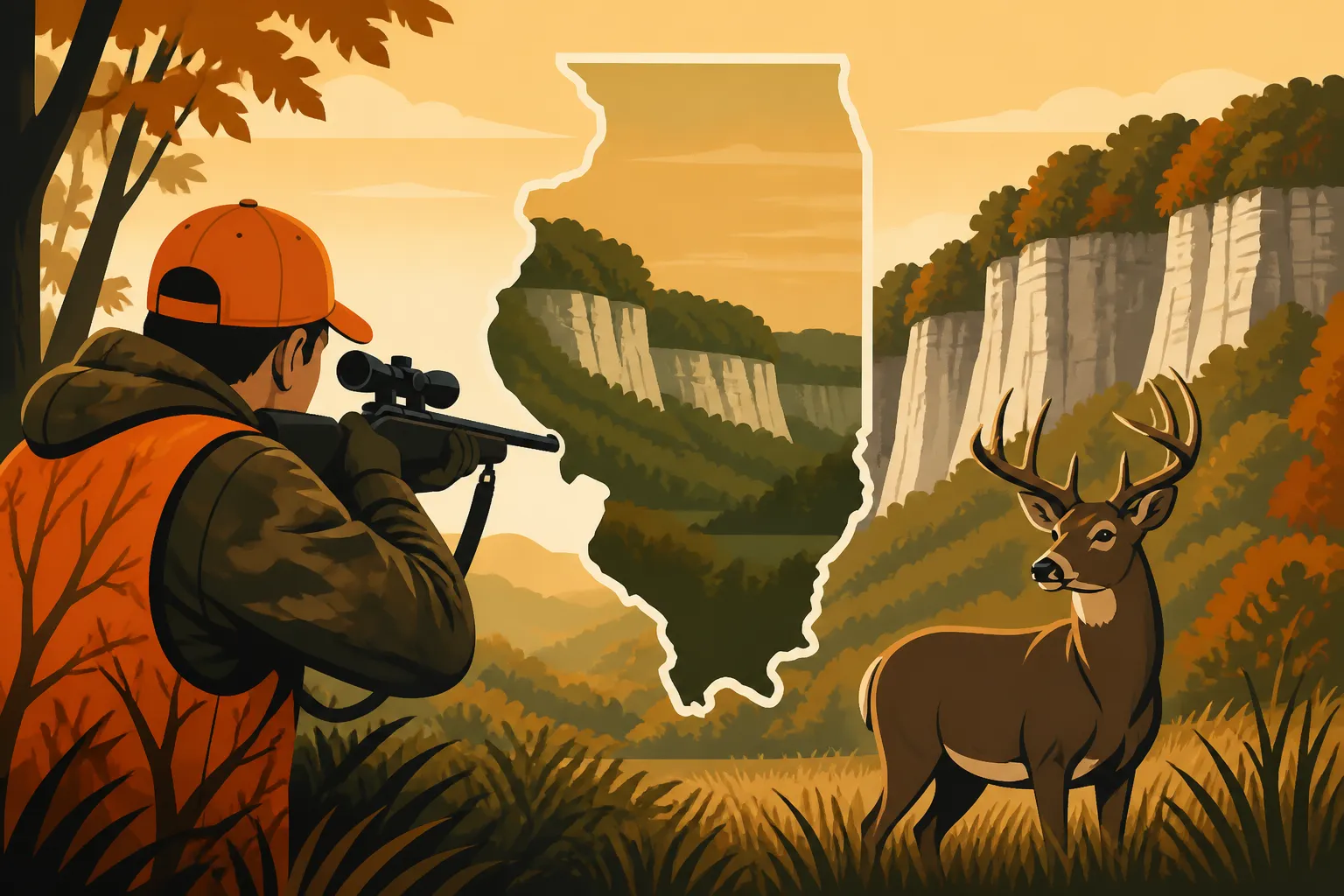
The park's most defining feature is its stunning bluff system, rising dramatically from the eastern bank of the Mississippi River. These aren't gentle slopes; we're talking about steep, rocky outcroppings interspersed with deep, timbered ravines and hollows. This topography is a double-edged sword for hunters. On one hand, it creates natural funnels and pinch points where deer and other game are forced to travel, making for predictable patterns if you can decipher them. On the other hand, navigating this terrain can be physically demanding, requiring careful scouting and smart access planning. The proximity to the Mississippi River also means that migrating birds might utilize the park's timber, and the river itself acts as a significant corridor for all wildlife. Understanding how the game uses these bluffs, the river, and the connecting ravines is paramount to success here. You'll often find deer trails cutting along benches or dipping into the protected bottoms of the deepest ravines, seeking shelter from wind and human activity.
Vegetation and Habitat
Beyond the dramatic rock formations, Mississippi Palisades boasts a rich mix of hardwood timber, dense cedar thickets, and scattered brushy areas that provide excellent cover and food sources. You'll encounter mature oak and hickory stands, vital for their mast crops which draw in deer, turkey, and squirrels. The cedar groves, often found on steeper slopes or protected pockets, offer crucial thermal cover in colder months. These diverse habitats mean that different game species will utilize various parts of the park throughout the year. For instance, squirrels will be concentrated in areas with abundant nut trees, while deer might gravitate towards brushier bedding areas during the day before moving to feed. Learning to identify these distinct habitat types and how game uses them is a critical part of Scouting Illinois Public Land Before Season. This varied vegetation also means that different sections of the park can hold very different hunting characteristics, even within a relatively small area.
Park History and Usage
Mississippi Palisades State Park has a long history as a popular destination for hikers, rock climbers, and sightseers, particularly due to its stunning vistas and well-maintained trails. This popularity means that hunters need to be acutely aware of non-hunting public usage. While hunting is permitted in designated areas during specific seasons, it's crucial to understand that you'll be sharing the park. This requires extra vigilance regarding safety zones, being visible, and simply being courteous to other park users. Don't be surprised to encounter hikers on trails, even in hunting seasons. The Illinois Department of Natural Resources (IDNR) works to balance these multiple uses, and hunters play a vital role in maintaining that balance by strictly adhering to all park-specific rules and regulations. This dual-use dynamic often means that game animals in Mississippi Palisades can be more wary, accustomed to human presence but also quick to seek refuge in the roughest, most inaccessible parts of the park.
Illinois Hunting Regulations Specific to State Parks
Hunting in Illinois State Parks, including Mississippi Palisades, isn't always a straightforward application of general statewide regulations. These areas often have unique rules designed to manage wildlife, protect natural resources, and ensure public safety amidst diverse recreational activities. It's vital to understand these specific requirements before you even think about stepping into the woods.
Permit Requirements and Application Process
Unlike some expansive public lands, many Illinois State Parks require site-specific permits, which are often obtained through a lottery system or offered on a limited, over-the-counter basis. This means you can't just show up with a valid statewide deer or turkey permit and expect to hunt. You'll need to research Mississippi Palisades specifically through the IDNR website or by contacting the park office directly to understand their current permit requirements. Often, these permits are for specific seasons, like the firearm deer seasons or spring turkey, and the application windows can be quite narrow, usually months in advance. Missing a deadline can mean missing an entire season, so proactive research is key. The number of permits issued for a state park is typically lower than the general statewide quotas, helping manage pressure and maintain a quality hunting experience. Be prepared for a bit of competition, especially for prime seasons. You can typically find information on how to apply for these permits through the IDNR's online portal, which is also where you'd generally purchase your Illinois Hunting Licenses and What They Cost and Illinois State Habitat Stamp.
Legal Weapons and Seasons
The types of weapons allowed and the specific hunting seasons open at Mississippi Palisades can also differ from broader state rules. For instance, some state parks might be archery-only for deer, even during periods when firearms are allowed statewide. For firearm seasons, there might be specific caliber or gauge restrictions. It's not uncommon for state parks to limit hunting to certain species, meaning that while deer and turkey might be fair game, other species like waterfowl or furbearers might be prohibited. Always consult the most current IDNR "Digest of Hunting and Trapping Regulations" and the specific site regulations for Mississippi Palisades State Park. These documents will clearly outline which Legal Weapons During Illinois Firearm Season are permitted and the precise dates for Illinois Deer Season Structure Explained or Illinois Spring Turkey Zones and Periods within the park's boundaries. Guessing or relying on general knowledge from other hunting areas can lead to serious legal trouble, so confirm everything.
Blaze Orange and Safety Zones
Given Mississippi Palisades' popularity with non-hunters, adherence to blaze orange requirements and understanding safety zones is paramount. Even if statewide regulations might allow for less orange in certain archery seasons, state parks often mandate more stringent visibility requirements, sometimes even for archery hunters. This is purely for public safety and to ensure that hunters are clearly visible to hikers and other recreational users. Always wear the maximum amount of blaze orange required, and if in doubt, wear more. Equally important are the designated safety zones. These are areas, typically around parking lots, picnic grounds, campgrounds, and developed trails, where discharge of a firearm or archery equipment is strictly prohibited. These zones are usually marked, but it's your responsibility to know where they are. Using a good mapping app like onX Hunt or GoHunt can help you visualize these boundaries clearly on the ground, preventing accidental violations. Respecting these safety zones is not just about avoiding a ticket; it's about being a responsible hunter and ensuring the safety of everyone enjoying the park.
Deer Hunting Opportunities at Mississippi Palisades
Despite the challenges of sharing space with other park users and navigating rugged terrain, Mississippi Palisades State Park can offer excellent deer hunting for those willing to put in the effort. The same topography that makes it challenging also creates prime deer habitat and travel corridors.
Scouting the Rugged Terrain
Scouting the steep bluffs and deep ravines of Mississippi Palisades requires a different approach than typical flatland or even rolling timber. You'll need to learn how deer use elevation changes to their advantage, often bedding on benches partway up a slope for security and thermal regulation. Look for distinct deer trails winding along these contours or cutting across ridges. Creek bottoms and the heads of hollows often serve as natural highways for deer moving between bedding and feeding areas. Don't be afraid to put some miles on your boots. Before you even set foot in the park, leverage satellite imagery from tools like onX Hunt or GoHunt to identify potential funnels, saddles, and hidden pockets that might be overlooked by other hunters. Reading a Ridge for Shawnee Forest Deer is a skill that translates perfectly to this type of topography. Pay attention to how the wind and thermals will behave in these environments; a swirling wind in a steep ravine can quickly betray your presence.
Stand Placement and Access
Placing a treestand or setting up a ground blind in the steep, often rocky terrain of Mississippi Palisades demands careful thought. Safety is paramount when working with stands on slopes, so ensure your equipment is secure and you have stable footing. Deer often travel along benches or the very tops of ridges, so identifying these travel corridors is key. Consider how deer will approach these areas, and position your stand to catch them unaware. Access routes are also critical. You might need to park quite a distance from your desired hunting spot and hike in, sometimes through difficult terrain. Plan your entry and exit routes to be as quiet and scent-free as possible, avoiding well-used hiking trails where non-hunters are present. If using a ground blind, remember the rules about temporary versus permanent structures on public land. Most Illinois public land sites have specific rules about Treestand Rules on Illinois Public Land, so check those for Mississippi Palisades. Setting up near a natural funnel created by the bluffs or a dense cedar thicket can greatly increase your odds.
Hunting Pressure and Tactics
Because state parks are often more accessible and well-known, they can experience higher hunting pressure, especially during opening weekends of firearm or archery seasons. Don't let this deter you; it just means you need to be smarter and more willing to go where others won't. Deer in pressured areas quickly learn to seek refuge in the thickest, steepest, or most remote parts of the park. This is where your in-depth scouting of those hard-to-reach ravines and hidden benches pays off. Consider still-hunting through less-traveled sections, moving slowly and deliberately, pausing frequently to observe and listen. Focusing on mid-week hunts, if your schedule allows, can also significantly reduce encounters with other hunters. Early morning or late evening often see less non-hunting foot traffic, allowing deer to move more freely. Remember, sometimes the biggest bucks in pressured areas are found not by chasing them, but by finding their safe havens. Your ability to get away from the easy access points will directly correlate with your chances of success.
Turkey and Small Game Prospects
While deer hunting often gets the spotlight, Mississippi Palisades State Park can also offer some thrilling opportunities for pursuing wild turkeys and various small game species. The diverse habitat, from mature timber to brushy bottoms, creates excellent homes for these animals.
Spring Turkey Hunting Strategies
Spring turkey hunting in Mississippi Palisades can be both challenging and incredibly rewarding. The park's steep bluffs and dense timber provide perfect roosting habitat for gobblers, but also make it tricky to pinpoint their exact locations and set up effectively. Your best bet is to scout thoroughly before the season to locate potential roost trees and strutting zones. Listen intently at dawn for gobblers sounding off from the bluffs or deep in the ravines. Once you've located a bird, planning your approach is critical. The undulating terrain means that sounds can carry in unexpected ways, and a bird might sound closer or further than it actually is. Try to get into a position that offers good visibility and a clear shot lane, ideally on the same elevation as the gobbler or slightly above him, without skylining yourself. Using calls to draw a bird across a ravine can be tough, so focusing on getting as close as possible before calling aggressively is often a good strategy. Remember that Run-and-Gun Turkey Tactics on Public Land can be very effective in this type of environment, allowing you to cover more ground and locate receptive birds.
Fall Turkey Hunting and Flock Dynamics
Fall turkey hunting in Mississippi Palisades presents a different set of challenges and opportunities. Unlike the spring's focus on individual gobblers, fall hunting often revolves around locating and breaking up flocks, primarily hens and poults. The park's extensive timber provides ample foraging opportunities for these birds, particularly during good mast years. Finding these flocks can be difficult in the dense foliage, so keen observation and listening for the subtle clucks and putts of feeding birds are essential. Once you locate a flock, the classic fall tactic is to charge in, scatter the birds, and then set up to call them back in, mimicking lost birds. This can be particularly effective in the rugged terrain where scattered birds might quickly lose sight and sound of each other. However, be prepared for long waits and patient calling. The success of Fall Turkey Tactics With No Lottery Pressure often depends on understanding the flock's movement patterns and their preferred feeding areas, which could shift daily based on food availability.
Small Game Potential
Don't overlook the potential for small game hunting in Mississippi Palisades. The mix of mature hardwoods, brushy edges, and creek bottoms makes it an ideal habitat for squirrels and rabbits. Squirrels, both fox and gray, will be abundant in areas with oak and hickory trees, especially during years with a good mast crop. Still-hunting through these timbered areas in the early morning or late afternoon can yield good results. Look for evidence of feeding – chewed nuts, bark shavings – and listen for the rustle of leaves or the chatter of squirrels high in the canopy. For rabbits, focus on the thicker, brushier sections of the park, particularly along fencerows, regenerating clearings, or the edges of dense cedar thickets. A good pair of beagles can be incredibly effective for flushing cottontails from these dense coverts, though still-hunting slowly through these areas can also work. Always confirm which small game seasons are open and if any specific regulations apply to Illinois Small Game Season Rules within Mississippi Palisades State Park before you head out. Squirrel Hunting Illinois Hickory Groves can be a fantastic way to spend a crisp autumn morning.
Navigating Logistics and Best Practices
Hunting Mississippi Palisades State Park, like any multi-use public land, requires more than just understanding the game. It demands attention to logistics, utilizing modern tools, and adhering to ethical best practices to ensure a safe and enjoyable experience for everyone.
Access Points and Parking
One of the first logistical hurdles you'll face is identifying designated hunting access points and understanding the parking situation. Not all park entrances or parking lots may allow hunter access, and some areas might be reserved for non-hunting recreational use only. Always consult the official park map or the IDNR website for specific information on where hunters can park and access hunting areas. In some cases, you might find specific walk-in only access points that lead to less-pressured areas. Be prepared for potentially long hikes, especially if you're trying to reach the more remote sections of the park's rugged terrain. Parking in unauthorized areas can lead to tickets or towing, adding unnecessary stress to your hunt. Plan your approach before you leave home, and have a backup plan in case your primary access point is unexpectedly closed or full.
Mapping Tools and Navigation
In the complex topography of Mississippi Palisades, effective navigation is absolutely critical. Relying solely on paper maps, while a good backup, might not be enough. This is where modern mapping applications truly shine. Tools like onX Hunt or GoHunt allow you to overlay property boundaries, topographic maps, and satellite imagery directly onto your phone or GPS device. This is invaluable for:
- Staying within boundaries: Avoiding accidental trespass onto private land or into prohibited safety zones within the park.
- Identifying terrain features: Pinpointing saddles, funnels, benches, and ravines that are difficult to discern on the ground.
- Marking waypoints: Saving the location of your stand, blood trails, or key sign.
- Navigating in low light: Safely entering and exiting the woods before dawn and after dusk.
Make sure to download offline maps for your chosen app, as cell service can be spotty or non-existent in some of the deeper ravines. Knowing how to use Scouting With the Illinois DNR App and other mapping tools effectively will be your best friend when exploring this challenging but rewarding landscape.
Respecting Non-Hunters and Park Rules
Hunting in a state park means you are sharing the outdoors with a diverse group of users – hikers, birdwatchers, photographers, and families simply enjoying nature. As hunters, it is our responsibility to be the best ambassadors for our sport. This means always being courteous, visible, and strictly adhering to all park-specific rules. If you encounter non-hunters, offer a friendly greeting, even if they seem wary of your presence. Ensure your blaze orange is prominently displayed, especially when entering or exiting the woods. Know the park's specific regulations regarding Trail Camera Rules on Illinois Public Land, treestand removal, and any other rules that might differ from general public land guidelines. Any actions that create conflict or perception of unsafety can jeopardize hunting access for everyone in the future. By demonstrating respect, safety, and adherence to regulations, you contribute to a positive public image of hunting and help ensure that opportunities like those at Mississippi Palisades remain available for generations to come.
| Aspect of Hunting | General Illinois Public Land Approach | Mississippi Palisades State Park Considerations |
|---|---|---|
| Permits | Statewide permits often suffice. | Site-specific permits likely required, lottery or OTC. |
| Terrain | Varies from flat to rolling hills. | Rugged bluffs, deep ravines, steep slopes dominate. |
| Access | More varied; roads into interior common. | Limited designated hunter access, often walk-in. |
| Pressure | Depends on location and reputation. | Moderate to high, especially near easy access. |
| Safety Zones | Around residences, structures. | Extended zones around trails, picnic areas, campgrounds. |
| Scouting | Look for food, cover, travel. | Focus on elevation changes, pinch points, benches. |
| Navigation | GPS/map helpful for property lines. | GPS/map essential for terrain, boundaries, safety zones. |
| Non-Hunters | Less frequent in remote areas. | Expect regular encounters, especially near trails. |
| Stand Usage | Standard rules apply. | May have stricter rules for placement/removal due to public visibility. |
Disclaimer
This article is for general informational purposes only and does not constitute professional advice. Laws, prices and regulations vary by location and change over time. Consult a qualified professional for guidance on your specific situation.