Habitat Work on Illinois Fish and Wildlife Areas
It can be incredibly frustrating to scout what looks like promising public hunting land, only to arrive and find it devoid of the wildlife you hoped for. You spend hours poring over maps, imagining the perfect setup, and then the reality hits: stagnant habitat, overgrown fields, or timber that offers little appeal to deer or turkeys. This guide is here to shed light on the unsung heroes of public hunting in Illinois – the dedicated habitat work being done on our state's Fish and Wildlife Areas (FWAs) – and how understanding these efforts can dramatically improve your hunting success.
Understanding Habitat Management on Public Lands
When we talk about "habitat work" on public lands like Illinois's Fish and Wildlife Areas, it's so much more than just mowing a path or clearing a few trees. It's a science, a long-term investment, and frankly, a labor of love that directly impacts the quality of your hunting experience. These areas are not just static patches of woods or fields; they are actively managed ecosystems designed to support robust wildlife populations, offering hunters a better chance at success.
Think about the sheer scale of the task. Illinois is a mosaic of agricultural fields, river bottoms, and scattered timber, and our public lands often have to make the most of what they've got. The Illinois Department of Natural Resources (IDNR) biologists and land managers are constantly assessing conditions, planning interventions, and executing projects that might take years to show their full potential. They're working against nature's tendency toward succession, where open areas eventually become dense forest, and also against invasive species that choke out native plants. It's a continuous battle, and these efforts are precisely why a particular FWA might hold more deer, turkeys, or pheasants than an unmanaged patch of private ground. Understanding How Illinois Fish and Wildlife Areas Are Managed gives you a deeper appreciation for the dedication involved.
Why Active Management is Crucial for Wildlife
You might wonder why we can't just "let nature take its course." In a perfect world, perhaps. But the landscape of Illinois, like much of the Midwest, has been heavily altered by human activity – agriculture, development, and historical logging practices have all left their mark. Many native habitats, like prairies and savannas, are disturbance-dependent, meaning they need things like fire or grazing to prevent them from turning into dense woodlands that are less beneficial for many game species. Without active intervention, we'd lose critical food sources, bedding areas, and nesting cover that deer, turkeys, pheasants, and quail rely on.
For example, a dense, mature forest might look great to us, but it often lacks the understory growth that deer browse on or the open ground that turkeys need for bugging and strutting. Land managers employ techniques to create that crucial diversity, ensuring there's a buffet of food, safe places to bed down, and secure spots for young animals to thrive. It's about engineering the environment to maximize carrying capacity for the species we want to hunt, which often means mimicking natural processes that are now suppressed.
The Hunter's Role in Supporting Habitat Efforts
As hunters, we're not just consumers of the resource; we're also its most fervent advocates. Your hunting license fees and the purchase of the Illinois State Habitat Stamp directly fund these habitat management projects. Every permit you buy, every piece of gear you purchase from a brand like onX Hunt, contributes to the conservation cycle. It's a tangible link: your investment in hunting fuels the very work that creates better hunting opportunities.
Beyond the financial contribution, understanding the why behind habitat work allows us to be more effective hunters. When you see a prescribed burn area, instead of just seeing scorched earth, you can anticipate the flush of new growth that will attract deer. When you spot a freshly thinned timber block, you know that new browse will soon emerge. Being informed makes you a more appreciative and often, a more successful hunter. It also empowers you to articulate the value of these lands to non-hunters, fostering broader support for conservation.
Common Types of Habitat Work You'll Find on Illinois FWAs
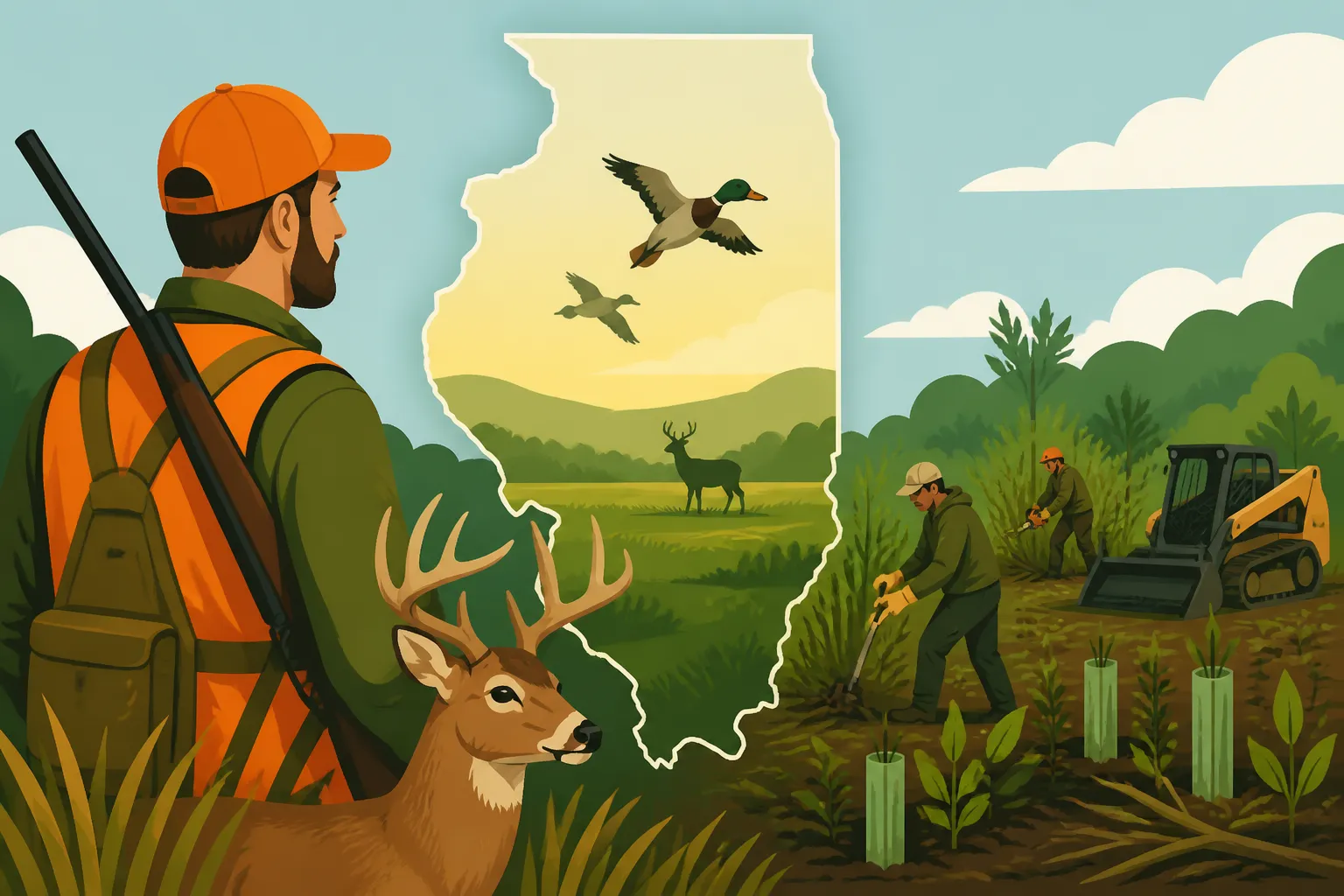
Illinois Fish and Wildlife Areas are hotspots of diverse habitat management. Managers employ a variety of techniques, often specific to the primary game species they aim to benefit in that particular location. From maintaining open grasslands for pheasants to enhancing wetland areas for waterfowl, each effort plays a vital role.
Prescribed Fire and Timber Stand Improvement
Fire has always been a natural component of many Midwestern ecosystems, especially prairies and savannas. On Illinois FWAs, prescribed burns are a key tool. These controlled fires clear out undesirable woody brush, reduce leaf litter, and stimulate the growth of native grasses and forbs that are highly nutritious for deer, turkeys, and small game. After a burn, you'll often see a surge of new, succulent growth that acts like a magnet for wildlife.
Beyond fire, timber stand improvement (TSI) is incredibly important. This might involve thinning out overcrowded trees to allow more sunlight to reach the forest floor, encouraging browse and understory growth. Sometimes, undesirable species like multiflora rose or honeysuckle are targeted and removed to make way for native plants. These efforts can create vital escape cover, promote acorn production in oaks, and provide diverse structure within a woodlot. Reading a Ridge for Shawnee Forest Deer can give you an idea of how varied timber management might impact movement, even if specifically for a national forest, the principles still apply to FWAs.
Food Plots and Agricultural Crop Management
While some food plots are privately managed, many public FWAs also incorporate strategic planting of agricultural crops or specific forage blends to enhance wildlife nutrition, especially during lean times of the year. These aren't just for attraction; they provide essential calories and nutrients that help deer put on weight for the rut and winter, and provide energy for turkeys and pheasants.
These might include standing corn or soybeans, specifically left unharvested through fall and winter, or fields of clover, winter wheat, or brassicas. The goal isn't just to feed animals but to concentrate them in accessible areas for hunters, while also providing critical late-season sustenance. Sometimes, these plots are rotated, with managers letting a field lie fallow for a year to revitalize the soil and allow natural processes to occur before planting again. Knowing how to spot these and understanding their purpose can be a huge advantage when Hunting a Standing Soybean Field or a cornfield edge.
Wetland Restoration and Grassland Establishment
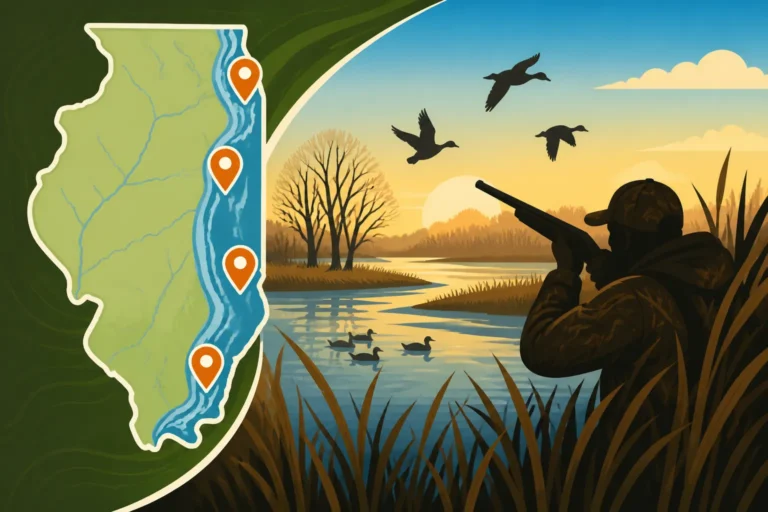
For waterfowl hunters, wetland management is paramount. Many Illinois FWAs are located along major river systems like the Illinois and Mississippi, making them critical stops on the Mississippi Flyway. Managers actively control water levels in impoundments, plant moist-soil crops like millet or smartweed, and create shallow water habitats that diving ducks, dabblers, and geese rely on for feeding and resting. These efforts ensure prime habitat is available throughout the migration and wintering periods.
Similarly, extensive grassland management is vital for pheasants, quail, rabbits, and ground-nesting birds. This often involves planting native warm-season grasses like switchgrass, big bluestem, and indiangrass, which provide dense cover for nesting and escape from predators. These tall, sturdy grasses offer excellent thermal cover in winter and are a world away from a mowed hayfield. You might find areas designated as Illinois Pheasant Habitat Area Access where these grasslands are meticulously maintained.
Here's a look at how different habitat efforts benefit hunters:
| Habitat Work Type | Primary Goal | Benefits for Hunters | Target Species |
|---|---|---|---|
| Prescribed Fire | Remove invasives, promote new growth | Attracts deer to fresh browse, improves visibility | Deer, Turkey, Quail, Pheasant |
| Timber Stand Improvement (TSI) | Enhance understory, improve forest health | Increases browse, creates bedding cover, opens up stalking lanes | Deer, Turkey, Small Game |
| Food Plots / Crop Management | Supplemental nutrition, concentration | Draws game to specific areas, crucial late-season food | Deer, Turkey, Waterfowl |
| Wetland Restoration | Create waterfowl foraging/resting | Concentrates ducks/geese, improves flight paths | Ducks, Geese, Migratory Birds |
| Native Grassland Establishment | Nesting cover, thermal protection | Holds pheasants/quail, provides rabbit cover | Pheasant, Quail, Rabbit, Small Game |
| Shrub/Hedgerow Enhancement | Travel corridors, dense cover | Funnels deer movement, provides escape cover | Deer, Small Game, Turkey |
How Hunters Can Leverage and Identify Habitat Work
Knowing that habitat work is happening is one thing; understanding how to use that knowledge to your advantage as a hunter is another. This is where your scouting skills, combined with modern mapping tools, become invaluable. You can effectively become an armchair biologist, predicting game movement based on these management activities.
When you're Scouting Illinois Public Land Before Season, look beyond just trails and obvious funnels. Train your eye to spot the subtle signs of habitat work. Are there areas of younger growth indicating a recent timber thinning? Do you see the tell-tale checkerboard pattern of a prescribed burn from a few years back? These aren't just random occurrences; they are intentional acts designed to improve the property for wildlife, and by extension, for you.
Using Mapping Tools to Identify Management Zones
Modern hunting apps like onX Hunt have become indispensable for public land hunters. These tools allow you to layer aerial imagery with land ownership boundaries, topo maps, and often, even specific management unit boundaries or past burn histories if available from the managing agency (check the FWA's specific website or office). Before you even step foot on the property, you can spend hours scouting from your couch, identifying potential hot spots created by habitat work.
Imagine you're looking at an FWA on onX Hunt. You might see a clearly defined section of timber surrounded by open fields. If you zoom in and notice a patchy, uneven canopy with lots of low-lying vegetation visible, that could be a recent TSI project. Mark that area as a potential bedding or browse zone. If you see distinct, rectangular blocks of ground with a different texture or color, these could be unharvested food plots or newly established native grasslands. Similarly, GoHunt's mapping features can help you identify these patterns and deviations from uniform habitat, giving you an edge in understanding how deer, turkeys, or pheasants might utilize the area.
Anticipating Wildlife Responses to Habitat Changes
Wildlife, especially deer, are incredibly responsive to changes in their environment. A fresh timber cut, while initially looking barren, will soon sprout tender new shoots and provide an explosion of forage that deer will flock to. A prescribed burn, once it greens up, becomes a favored feeding area for both deer and turkeys, offering easy access to insects and seeds. Understanding these ecological principles allows you to predict where animals will be.
For example, if you know an FWA recently had a significant prescribed burn in a timber block, you can bet that once the green-up occurs, deer will be drawn to that area for the fresh browse. During the late season, when natural food sources are scarce, an unharvested standing cornfield or a food plot of winter wheat becomes a primary attraction. By researching the FWA's management plans (often available on the IDNR website or by calling the site office), you can get a heads-up on upcoming projects and plan your hunts accordingly. This proactive approach turns "hoping to get lucky" into "hunting with a purpose."
The Challenges and Future of Habitat Work on FWAs
Despite the incredible efforts by land managers, habitat work on Illinois Fish and Wildlife Areas faces ongoing challenges. From limited budgets and manpower to the relentless spread of invasive species and the impacts of climate change, it's a constant uphill battle. However, these challenges also highlight the importance of continued support and adaptation in conservation strategies.
Funding, Staffing, and Invasive Species
Let's be real: managing thousands of acres of diverse public land with limited resources is tough. Land managers are often juggling multiple projects, from equipment maintenance to permit draws, all while trying to execute complex habitat plans. Funding from hunting licenses and federal conservation programs is crucial, but it's often stretched thin across many different needs. Illinois Hunting Licenses and What They Cost gives you insight into this financial backbone.
Then there are invasive species. Plants like honeysuckle, autumn olive, and sericea lespedeza can quickly take over native habitats, outcompeting beneficial forage and creating monocultures that offer little value to wildlife. Controlling these requires constant effort, whether through chemical treatment, mechanical removal, or repeated prescribed burns. It's a never-ending war that diverts resources from other beneficial projects. These invasive plants not only reduce the quality of forage and cover but can also make it incredibly difficult for hunters to move through an area or retrieve game.
Long-Term Vision and Adapting to Environmental Shifts
Habitat work isn't a quick fix; it's a long-term commitment. Many projects take years to fully mature and yield their intended benefits. Land managers often work on multi-year plans, making small, incremental changes that accumulate over time to create a healthier, more productive ecosystem. This requires patience, foresight, and a deep understanding of ecological processes.
Furthermore, managers are increasingly having to adapt to environmental shifts, including changing weather patterns and disease threats like Chronic Wasting Disease in Illinois Deer. These factors can influence everything from crop planting schedules to the timing and intensity of prescribed burns. For instance, prolonged droughts might make certain food plots less effective, requiring managers to adjust their plantings. These dynamic challenges mean that habitat management must be flexible and responsive, constantly evolving to meet the needs of wildlife in a changing world.
How Hunters Can Continue to Support These Efforts
As hunters, our support is more critical than ever. Beyond buying licenses and stamps, consider volunteering for habitat projects on your local FWA. Many sites host volunteer days for tree planting, invasive species removal, or trail maintenance. It's a fantastic way to give back to the resource you love and learn firsthand about the management techniques being employed.
Educating yourself about the specific challenges and successes of different FWAs can also help. Engage with IDNR staff, attend public meetings, and spread the word about the importance of these lands. The more informed and active the hunting community is, the stronger the voice for conservation and the better our public lands will be for future generations. Your active participation, whether through financial contribution, volunteerism, or informed advocacy, ensures that the vital work of enhancing wildlife habitat on Illinois Fish and Wildlife Areas continues, providing better and more sustainable hunting opportunities for everyone.
Disclaimer
This article is for general informational purposes only and does not constitute professional advice. Laws, prices and regulations vary by location and change over time. Consult a qualified professional for guidance on your specific situation.