Greene County Public Land for Deer
For many deer hunters, the dream of chasing whitetails on prime private land can feel out of reach, especially when you're not lucky enough to own a big tract or have a buddy with a massive farm. But don't let that discourage you! Illinois, and specifically counties like Greene, offer some fantastic public hunting opportunities if you know where to look and how to approach them. This guide will walk you through what to expect when deer hunting public land in Greene County, offering practical advice to help you punch your tag.
Understanding Greene County's Deer Hunting Landscape
Greene County, nestled in west-central Illinois, might not be as famous as some of its northern neighbors for gargantuan bucks, but it holds its own as a solid deer hunting destination. It's a place where diverse habitats meet, creating a rich environment for whitetails.
The Geography of Greene County
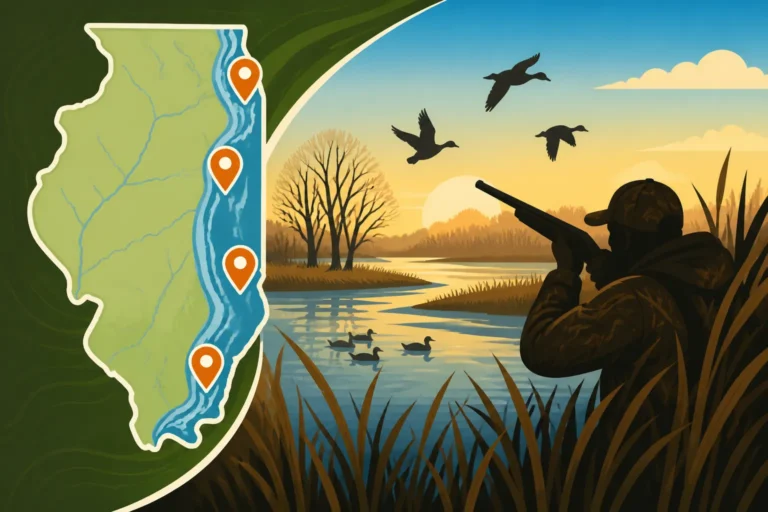
Imagine rolling farmland giving way to timbered river bottoms and steep bluffs that overlook the mighty Illinois River. That's a good picture of Greene County. The western edge of the county is defined by the Illinois River itself, bringing with it classic river bottom habitat – think dense thickets, mature hardwoods, and countless sloughs and oxbows. As you move eastward, the terrain transitions into a mix of agricultural fields (corn, beans, wheat) interspersed with smaller woodlots, creek drainages, and brushy fencerows. This patchwork of cover and food sources is precisely what makes it so attractive to deer. These geographical features create natural funnels and bedding areas that, once identified, can be incredibly productive. Understanding this lay of the land is your first step to success on public ground here.
Deer Numbers and Habitat
Greene County generally maintains a healthy deer population, benefitting from the rich agricultural bounty and ample cover. The river bottoms provide sanctuary during hunting pressure, while the vast crop fields offer consistent, high-energy food sources for much of the year. Deer here are often patterned around these resources. You'll find a mix of mature timber, brushy edges, and dense regeneration areas, all critical components of a thriving whitetail habitat. However, due to the prevalence of private land, the public parcels often experience more hunting pressure. This means deer can become more nocturnal or seek out the thickest, nastiest cover during daylight hours. Your job as a public land hunter is to anticipate these movements and adapt your tactics accordingly. Knowing what kind of browse is available, how close bedding areas are to feeding, and where natural travel corridors exist will give you a significant edge.
Key Public Hunting Areas in Greene County
While Greene County doesn't boast a massive national forest, it does offer a mosaic of public access points, from state sites to smaller, often overlooked parcels. Finding these spots requires a bit of homework, but the reward is worth the effort.
Identifying State Fish and Wildlife Areas and Conservation Sites
Illinois is home to numerous State Fish and Wildlife Areas (SFWAs) and other conservation sites managed by the Illinois Department of Natural Resources (IDNR). While I can't list every specific tract within Greene County without live data, you should absolutely start your search by looking at areas specifically designated for public hunting. These might be named "Greene County Conservation Area" or similar. These sites are typically well-marked and often have dedicated parking areas. They usually consist of a mix of timber, old fields, and sometimes even managed food plots.
Hunting these areas often requires an understanding of specific site regulations, which can vary from the statewide rules. For instance, some may have sign-in/sign-out procedures, special weapon restrictions, or specific hunting hours. Always check the individual site's regulations before you go. A great first step is to visit the IDNR's website and use their map tools. This will help you identify official public hunting lands. Consider what you might find by Using the Illinois DNR Map Tool as a first point of research. These maps are invaluable for seeing boundaries and getting a general idea of the terrain.
Finding Smaller, Less-Known Parcels
This is where the real public land wizardry comes into play! Beyond the named SFWAs, there are often smaller, less-advertised parcels of public ground. These could be small state-owned timber tracts, slivers of land managed by local conservation districts, or even overlooked federal lands. These hidden gems are often ignored by hunters who stick to the larger, more obvious spots, meaning less pressure for you.
To find these, you'll need to become a master of digital scouting. This is where tools like onX Hunt truly shine. You can zoom in on Greene County, activate the public/private land layers, and literally see every parcel of land and its ownership status. Look for small blocks of public land that might be surrounded by private farms. These often get less attention because they require more effort to access or are harder to hunt. Pay close attention to narrow strips of public ground along creeks or rivers, or small timber blocks that connect larger wooded areas. These can be incredible travel corridors for deer trying to avoid the crowds. GoHunt is another excellent resource for planning hunts, though onX Hunt is unparalleled for boots-on-the-ground navigation and real-time property line checks. Understanding onX Layers for Illinois Land Status will revolutionize your ability to find these often-overlooked spots.
Here's a quick comparison of general public land types you might encounter:
| Public Land Type | Typical Characteristics | Hunting Pressure Tendency | Access Notes |
|---|---|---|---|
| State Fish & Wildlife Areas | Larger, managed for wildlife, often diverse habitat (timber, fields, wetlands). May have amenities. | Moderate to High | Clearly marked, check specific site rules, potential sign-in. |
| State Parks (Hunting Zones) | Limited hunting within designated zones, focus on conservation. | Moderate | Highly regulated, usually quota-based or lottery. |
| Conservation Easements | Privately owned land with public access for specific activities like hunting. | Low to Moderate | Less common, specific rules set by easement, usually well-marked. |
| Army Corps of Engineers/Other Federal | Often associated with major waterways (Illinois River), varying habitat. | Variable | Check federal regulations, can be less restrictive than state. |
| County/Local Parks (Hunting) | Rare, but some smaller parcels might allow hunting. | Low | Very specific, often lottery or limited permits. |
Strategies for Hunting Public Land Deer in Greene County
Hunting public land is a different ballgame than private land, especially in a county like Greene where agricultural influences are strong. You've got to be smarter, more patient, and willing to work harder to find success.
Scouting and E-Scouting
Your preparation begins long before you set foot in the woods. E-scouting is non-negotiable for public land hunters. Use tools like onX Hunt to analyze topography, identify potential bedding areas on high ground, locate pinch points between fields and timber, and find water sources. Look for areas where different habitat types converge – a thicket meeting a mature timber stand, or a creek bottom that funnels into a crop field. These are natural deer magnets.
Once you have a few promising spots identified, it’s time for boots-on-the-ground scouting, preferably outside of hunting season. Walk the boundaries, look for old rubs, scrapes, and established trails. Pay attention to how deer enter and exit fields. Where do they cross creeks? Where are the thickest bedding areas? Even seemingly small details can give away deer movement patterns. Remember, Scouting Illinois Public Land Before Season is not just a good idea, it's often the key to unlocking success on pressured ground. Look for subtle terrain features that might offer a deer a sense of security, even if it's just a slight dip or a dense cluster of cedars.
Tactics for Different Habitats
Greene County's diverse landscape means you'll need a versatile approach.
- River Bottoms: These areas can be incredibly productive, especially during the rut, as bucks cruise for does. Look for distinct travel corridors along the river, often indicated by heavy trails. Funnels where the timber pinches down, or where a slough forces deer into a narrow crossing, are prime stand locations. Hunting here often means dealing with thick cover and sometimes challenging terrain, but the reward can be a mature river-bottom buck. Hunting Illinois River Bottom Funnels provides excellent insights into this specific habitat. Be mindful of scent control and approach, as the wind and thermals can be tricky near water.
- Bluffs and Ridge Systems: The bluffs overlooking the Illinois River, though less pronounced than in deeper southern Illinois, still offer elevation changes that deer use to their advantage. Bucks will often cruise these ridge lines, especially during the rut. Look for saddles, points, and benches where deer might pause or travel. Understanding Wind and Thermals on a Southern Illinois Ridge can be adapted to Greene County's less dramatic, but still influential, elevation changes. Deer will often bed on lee sides of these bluffs, escaping the wind and catching the first rays of morning sun.
- Farmland Edges and Woodlots: When public land abuts private agricultural fields, you have a direct link to a primary food source. Deer will often stage in thick cover just inside the public timber before moving out to feed at dusk. Set up along these field edges, paying attention to prevailing winds. Small woodlots surrounded by fields, especially if they offer thick cover, can hold surprising numbers of deer. Entry and exit routes are critical here to avoid spooking deer moving to and from fields. Consider a tactic like Hunting a Funnel Between Two Woodlots if you find these isolated timber blocks.
Dealing with Pressure
Let's be realistic: public land often sees more hunters. This pressure changes deer behavior. Deer become more nocturnal, and they'll seek out the nastiest, most impenetrable cover during daylight hours. Your strategy must adapt to this.
- Go Deeper, Go Harder: Most hunters stick close to parking areas or well-worn trails. If you're willing to walk further, navigate rougher terrain, or cross a creek, you significantly increase your chances of finding unpressured deer. Deer are smart; they know where the easy access points are for hunters.
- Hunt the Thick Stuff: Don't shy away from briar patches, dense cedar thickets, or areas with heavy blowdowns. These are precisely where pressured deer will hide. It might be uncomfortable, but these overlooked sanctuaries can be goldmines. Think about strategies for Finding Ground Others Walk Past – it's all about looking where others aren't willing to look.
- Hunt Mid-Week and Off-Peak Hours: If your schedule allows, hunting on a Tuesday morning after a full weekend of pressure can be far more productive than Saturday. Similarly, hitting the woods midday when other hunters are back at camp for lunch can sometimes yield results, as deer may be on their feet making small movements between bedding areas.
- Adapt to Hunting the Rut: During the peak of the rut, bucks often throw caution to the wind. This is when deep-woods stands, rattling, and grunting can be highly effective, even on pressured public land. Don't underestimate the power of a well-timed grunt call or a rattling sequence to bring a curious buck into range. Rattling and Grunting in Illinois is a great resource to refine these tactics.
Essential Gear and Mindset for Greene County Public Land
Success on public land isn't just about strategy; it's also about being prepared and having the right mindset.
Navigational Tools and Technology
Beyond your weapon, your most important tool on public land is reliable navigation. A high-quality GPS unit or a robust mapping app like onX Hunt on your smartphone is indispensable. You need to know where you are at all times, where the public land boundaries are, and how to get back to your vehicle. Don't rely solely on cell service, as signal can be spotty in remote areas; download offline maps to your device before you head out. Reading Aerial Photos for Southern Illinois Deer offers principles that apply equally well to Greene County when using your mapping tools. A physical map and compass are also smart backups, especially for those deep pushes into unfamiliar territory.
Being Prepared: Gear and Realistic Expectations
A day pack with essentials is crucial. Think water, snacks, a first-aid kit, a headlamp, game bags, and perhaps a small saw or knife for field dressing. Consider your retrieval plan as well; dragging a deer out of a river bottom or a deep ravine is tough work. A deer cart or a good sled can make a world of difference. Dragging a Deer Out of a River Bottom will give you some valuable tips on this strenuous task.
Perhaps most importantly, cultivate a realistic mindset. Public land hunting can be challenging. You might see other hunters, find less sign than you hoped, or come home empty-handed more often than on private ground. But the satisfaction of earning a public land deer is immense. Every trip is a learning experience. Embrace the challenge, enjoy the solitude (when you find it!), and appreciate the opportunity to hunt wild deer in their natural habitat. Greene County offers a fantastic opportunity for this, especially if you're willing to put in the time and effort. Remember to check Illinois Hunting Licenses and What They Cost and ensure you have all the necessary permits before heading afield.
Disclaimer
This article is for general informational purposes only and does not constitute professional advice. Laws, prices and regulations vary by location and change over time. Consult a qualified professional for guidance on your specific situation.