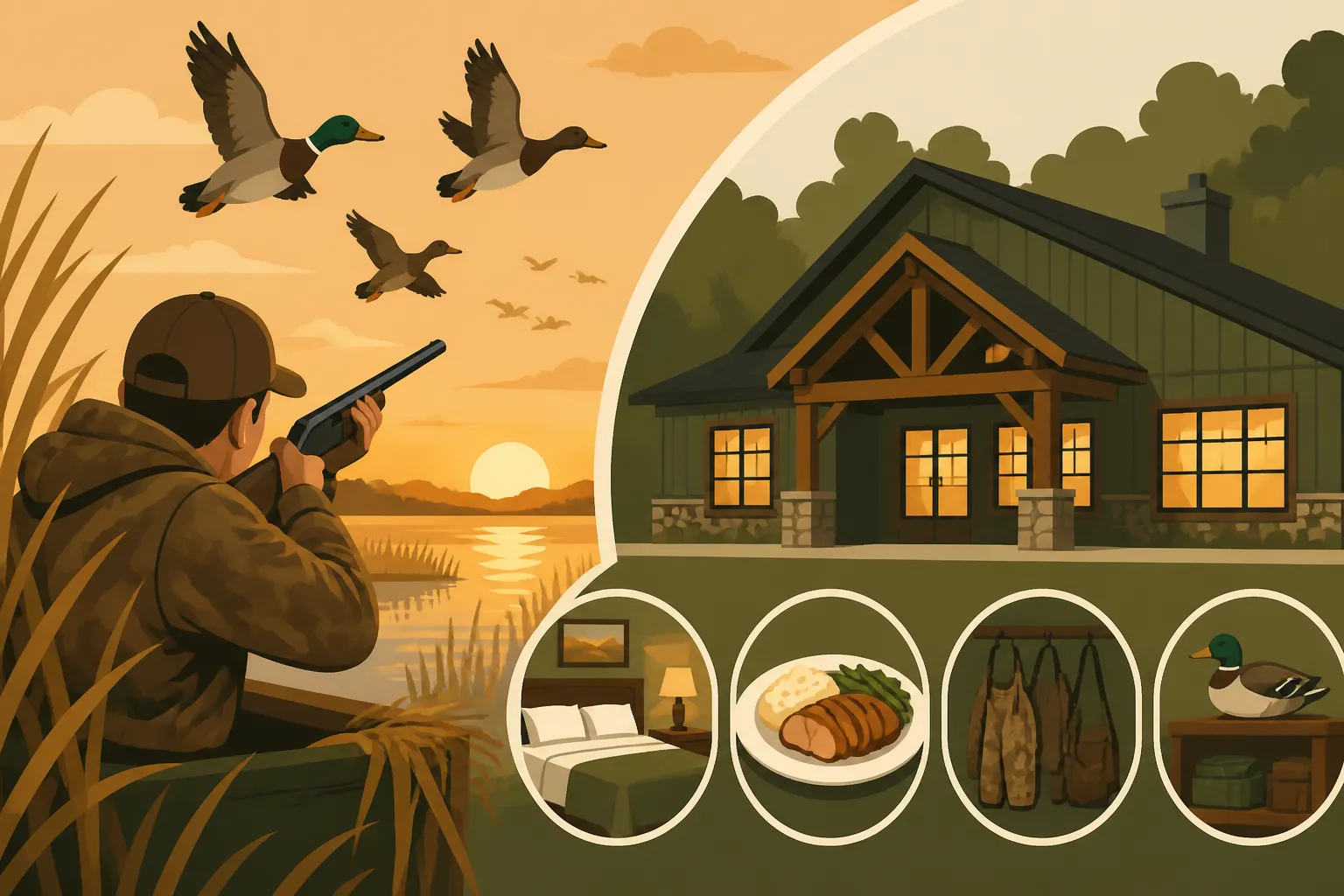
What’s Included in an Illinois Duck Lodge Stay
Planning a duck hunting trip can feel like a daunting task, especially when you're dreaming of those legendary Illinois migrations but live far away. The logistics alone – finding good ground, securing lodging, coordinating gear, and frankly, just figuring out where the birds are going to be – can quickly turn an exciting prospect into a headache. Many hunters wrestle with how to pull off a seamless, productive hunt without spending more time on planning than actually calling birds. That's where an Illinois duck lodge stay can truly shine, bundling much of the experience into one package. This guide will meticulously break down what you can expect to be included, and what you'll still need to arrange, ensuring you can make an informed decision for your next waterfowl adventure.
Beyond Just a Blind: The Core Offerings of an Illinois Duck Lodge Stay
When you book a duck lodge stay in Illinois, you're signing up for more than just a spot in a blind. These operations are designed to provide a comprehensive experience, taking the stress out of many trip planning elements. They often cater to both seasoned duck hunters and those new to the game, providing a turnkey solution that allows you to focus on the hunt itself.
Lodging and Accommodation
One of the most appealing aspects of a duck lodge package is, naturally, the lodging. You won't be scrambling to find a hotel room every night or roughing it in a tent after a long day in the marsh. Most Illinois duck lodges offer comfortable, dedicated accommodations, often designed with hunters in mind. Think cozy common areas perfect for recounting the day's tales, and private or semi-private rooms that allow for a good night's rest.
Expect varying levels of rustic charm versus modern comfort. Some lodges might be converted farmhouses, offering a home-away-from-home feel with shared bathrooms and a communal living room. Others might be custom-built facilities with individual bedrooms, private baths, and amenities like satellite TV or Wi-Fi. The key is that it's a dedicated space where you can relax, dry out your gear, and prepare for the next day's hunt without worrying about outside distractions. These lodges understand that hunters need a comfortable base camp to truly enjoy their time in the field.
Guided Hunting Experience
This is truly the heart of an Illinois duck lodge stay. You're not just renting a room; you're securing expert guidance on prime hunting ground. The guides are typically local experts who live and breathe waterfowl hunting. They've spent countless hours scouting, setting up, and calling birds, and they know the local patterns, weather effects, and bird movements like the back of their hand. They'll handle all the heavy lifting of the hunt itself.
This means they provide the decoys – often hundreds of them, from mallards and pintails to geese, deployed strategically to create a lifelike spread. They'll also provide the blinds, whether it's a permanent pit blind overlooking a flooded field, a layout blind brushed into a cut cornfield, or a boat blind tucked into a river bottom slough. You won't have to haul in your own blind or a dozen full-body decoys. The guides also bring the calls and do the calling, adapting their techniques based on the birds' responses and the day's conditions. This expertise is invaluable, especially when you're hunting complex environments like the Illinois River Valley. They're essentially giving you access to years of accumulated knowledge and prime real estate that would be nearly impossible to secure on your own. For those who want to experience Waterfowl Hunting the Illinois River Valley without the immense logistical challenges, a guided lodge experience is often the best route.
Meals and Refreshments
Let's be honest, hunting makes you hungry. Another significant benefit of a duck lodge stay is that many, if not most, include hearty meals. Forget packing your own cooler with sandwiches or trying to find a restaurant that opens early enough before a morning hunt. Lodges typically provide a hot, delicious breakfast before you head out, often featuring classic hunter's fare like eggs, bacon, sausage, and pancakes to fuel you for the cold hours ahead.
After the morning hunt, some lodges will offer a warm lunch back at the lodge, while others might provide substantial field lunches to keep you going. Then, in the evenings, you can look forward to a full, home-cooked dinner. This could be anything from slow-cooked roasts and casseroles to steaks or even wild game, often served family-style, providing a perfect opportunity to unwind and swap stories with your fellow hunters. The focus is on providing nutritious, satisfying meals so you don't have to worry about cooking, cleanup, or where your next meal is coming from. A great resource like GoHunt can provide insights into what to expect from different types of guided trips, including meal quality. For a deeper dive, check out What Illinois Duck Lodge Meals Typically Include.
The Little Things That Make a Big Difference: Essential Amenities and Services
Beyond the main pillars of lodging, guided hunts, and meals, Illinois duck lodges often go the extra mile to provide amenities and services that enhance the overall hunting experience and eliminate common frustrations. These thoughtful additions truly elevate a trip from merely functional to genuinely enjoyable and memorable.
Game Processing and Care
One of the biggest questions for any waterfowl hunter is, "What do I do with the birds once we've shot them?" Duck lodges typically offer services for handling your harvest. After the hunt, guides will usually take care of retrieving all the birds, and back at the lodge, they'll often have a dedicated area for cleaning and processing your ducks and geese. This could range from a simple cleaning station for you to use yourself to full-service breasting out or plucking by lodge staff.
They understand that proper game care is crucial for quality table fare, and they'll ensure your birds are handled correctly. Many lodges also have facilities for storing your birds, whether it's large coolers or freezers, so you don't have to worry about keeping them fresh during your stay. Some might even offer vacuum-sealing services or recommendations for local meat processors who can prepare your birds for the journey home, making sure your hard-earned venison (or in this case, duck meat!) is ready for your freezer.
Gear Storage and Drying Facilities
Anyone who has hunted waterfowl knows that it involves a lot of gear, and that gear often gets wet, muddy, and cold. Duck lodges are designed with this reality in mind. You won't be dragging muddy waders through the main living area or trying to dry out your damp hunting clothes in your bedroom. Instead, many lodges provide designated mudrooms or gear rooms where you can shed your wet outerwear, boots, and waders.
These areas are often equipped with boot dryers, hanging racks for jackets and vests, and even heated spaces to help everything dry out overnight. This thoughtful provision means you're more likely to start each day with dry, comfortable gear, which can make a huge difference in your enjoyment and ability to stay warm in the blind. It's a small detail, but it significantly impacts the overall comfort and convenience of your trip.
Transportation to and from Hunting Sites
Imagine waking up, enjoying breakfast, and then simply hopping into a vehicle that takes you directly to the blind. That's the reality with most duck lodge stays. Your guides will handle all the transportation to and from the hunting locations, whether those are flooded timber holes, river bottom sloughs, or agricultural fields. This means you don't have to worry about navigating unfamiliar back roads in the dark, finding parking, or hauling heavy equipment long distances.
The guides often use specialized vehicles like ATVs, UTVs, or even boats to get you to those prime, secluded spots. This service is particularly valuable when hunting challenging terrains, such as those associated with Hunting Illinois River Valley Diving Ducks or when using Layout Blind Hunting Illinois Farm Fields where access might be restricted. They ensure you arrive safely and efficiently, ready to hunt, and then bring you back to the warmth and comfort of the lodge at the end of the shooting hours. This eliminates a huge layer of logistical complexity, especially for non-local hunters.
What to Clarify Before You Book: Important Considerations and Exclusions
While duck lodges offer a fantastic all-inclusive experience, it's crucial to understand that "all-inclusive" usually doesn't mean absolutely everything. There are always some key items and expenses that hunters are responsible for, and clarifying these upfront will prevent any unwelcome surprises during your trip. Many hunters discover these lodges through online platforms like BookYourHunt, which often have detailed listings, but a direct conversation with the outfitter is always recommended.
Licenses, Stamps, and Permits
This is perhaps the most significant exclusion from virtually any guided hunting package, and it's something you must arrange yourself well in advance. Every hunter in Illinois, resident or nonresident, is required to possess the necessary hunting licenses, state habitat stamps, and federal and state waterfowl stamps (HIP certification). These are personal to you and your legal right to hunt.
You'll need to purchase your Illinois hunting license, state waterfowl stamp, and federal duck stamp separately. Don't forget your Harvest Information Program (HIP) certification, which is also mandatory for migratory bird hunters. These costs are completely separate from the lodge fee, and the lodge will typically require proof that you have them before you even step foot in a blind. Be sure to check the Illinois Waterfowl Zones and Seasons and Illinois Duck and Goose Bag Limits regulations for the most up-to-date requirements for your specific hunting dates and species. Without these, even the best lodge in Illinois can't legally put you in a blind.
Shotgun Shells and Personal Gear
While the lodge provides the guided hunt, decoys, and blinds, you'll always be responsible for your own personal hunting gear. This includes your shotgun, of course, and critically, your shotgun shells. Waterfowl hunting can burn through a lot of ammunition, so make sure you bring plenty of the appropriate gauge and shot size. Steel shot or other approved non-toxic shot is mandatory for waterfowl hunting in Illinois, so leave the lead at home.
Beyond ammunition, you'll need your waders, waterproof and warm clothing appropriate for the often-frigid Illinois weather, gloves, a hat, face mask, and any personal optics like binoculars. Don't forget essentials like a headlamp for those pre-dawn walks to the blind, and perhaps a small dry bag for your phone or camera. A good cooler for transporting your processed birds home is also a wise investment. The lodge provides the structure of the hunt, but your personal comfort and success hinge on bringing the right gear for the conditions.
Tipping and Gratuities
A topic often overlooked but incredibly important is tipping. Guides and lodge staff work incredibly hard to make your trip enjoyable and successful, and gratuities are a customary and expected part of the experience. While not a direct "cost" included in the initial booking price, it's an additional expense you absolutely need to budget for.
The amount can vary depending on the quality of service, your satisfaction with the hunt, and the duration of your stay. A common guideline for guides is often a percentage of the total hunt cost per hunter, or a per-day rate. For lodge staff, a separate gratuity for cooks, cleaners, and other support personnel is also appropriate. It's always a good idea to inquire about the lodge's suggested tipping policy when you book or upon arrival, so you can plan accordingly. Factor this into your overall trip budget, just as you would for Illinois River Duck Guide Day Rates or Multi-Day Duck Lodge Package Pricing.
Weighing the Value: When a Duck Lodge Makes Sense
Deciding whether a duck lodge stay is the right choice for your Illinois hunting adventure really comes down to what you value most in a hunting trip. For some, the DIY challenge is part of the fun. For others, convenience, expertise, and access are paramount. When you consider all the moving parts of a successful waterfowl hunt, the lodge experience often makes a compelling case.
Convenience for Out-of-State Hunters
For hunters traveling from outside of Illinois, the sheer logistics of planning a self-guided trip can be overwhelming. You're dealing with unfamiliar terrain, potentially complex public land regulations, and the challenge of finding birds without local knowledge. This is where an Illinois duck lodge truly shines. They eliminate the need for you to:
- Scout extensively: Guides have already done the legwork, knowing where the birds are feeding and roosting.
- Haul large amounts of gear: Decoys, blinds, and boats are typically provided.
- Figure out local access: Guides know the private lands or optimal public access points.
- Stress about meals and lodging: It's all taken care of.
The lodge handles the minutiae, allowing you to simply show up, hunt, and enjoy your time. This convenience makes it possible for hunters with limited time or geographical constraints to experience world-class Illinois waterfowl hunting without the headache of a fully self-planned expedition. Many non-residents, especially, find this value proposition irresistible, as it streamlines their entire visit.
Access to Prime Hunting Ground
One of the biggest advantages of booking with a reputable duck lodge is gaining access to prime hunting ground. Many lodges lease thousands of acres of private land, including flooded crop fields, river bottom sloughs, and managed impoundments, that would otherwise be completely inaccessible to the average hunter. These are often areas specifically managed for waterfowl, with controlled water levels and planted food sources that attract and hold birds.
For instance, hunting property along the Illinois River or in key agricultural areas can mean the difference between seeing a handful of birds and experiencing consistent, high-volume flights. While public lands in Illinois can offer great hunting, they often come with significant hunting pressure. Lodges, by contrast, can offer exclusive access to unpressured birds on properties strategically located along major migration routes. This access often means higher success rates and a more consistent hunting experience, which is particularly important when considering Booking a Late-Season Duck Hunt in Illinois when birds are warier.
Learning from Experienced Guides
Beyond just putting you on birds, a guided lodge stay offers an incredible educational opportunity. The guides are seasoned professionals with years of experience reading birds, calling, and setting up spreads. For newer hunters, or those looking to refine their skills, it's an invaluable chance to learn from the best.
You can observe their calling techniques, ask questions about decoy placement, learn how they read weather patterns and bird behavior, and understand their approach to specific hunting scenarios. This hands-on learning experience can dramatically improve your own hunting acumen, making you a more effective and knowledgeable hunter in the long run. It's like a masterclass in waterfowl hunting, providing insights you'd be hard-pressed to gain quickly on your own. Plus, guides can offer unique perspectives on local wildlife management and the intricacies of the Illinois Deer Season Structure Explained if those topics pique your interest during downtime.
| Feature | Typically Included in an Illinois Duck Lodge Stay | Not Typically Included (Hunter's Responsibility) |
|---|---|---|
| Lodging | Comfortable accommodations at the lodge | Separate hotel stays before/after lodge booking |
| Guided Hunts | Expert guides, decoys, blinds, calling | Personal hunting strategy or blind setup |
| Meals | Breakfast, lunch (field or lodge), dinner | Snacks, alcoholic beverages (often extra), personal drinks |
| Game Processing | Bird cleaning station, basic storage, guide assistance | Full taxidermy, specialized meat processing (unless specified) |
| Gear Facilities | Mudroom, boot dryers, drying racks | Personal gear (waders, clothing, boots, etc.) |
| Transportation | To/from hunting sites | Travel to/from the lodge, airport transfers |
| Hunting Licenses | No | Required Illinois hunting license, state/federal stamps, HIP certification |
| Ammunition | No | Shotgun shells (non-toxic shot mandatory) |
| Gratuities | No (expected additional cost) | Tips for guides and lodge staff |
Ultimately, an Illinois duck lodge stay offers a comprehensive and convenient way to experience some of the best waterfowl hunting in the country. It takes care of most of the heavy lifting, allowing you to immerse yourself in the hunt itself, connect with fellow hunters, and potentially learn from experienced guides. While you'll still need to handle your personal licenses, gear, and tips, the value of a well-organized, stress-free hunting adventure often far outweighs these individual considerations. By clarifying these details upfront, you can ensure your next Illinois duck hunting trip is nothing short of fantastic. Remember to always consider Weather Contingency Policies for Duck Guides when booking your hunt, as Mother Nature always has the final say.
Disclaimer
This article is for general informational purposes only and does not constitute professional advice. Laws, prices and regulations vary by location and change over time. Consult a qualified professional for guidance on your specific situation.