Hog Hunting Outfitters and Night Hunts
The relentless march of feral hogs across Illinois landscapes is a headache for farmers and a significant ecological threat, but it also presents a unique and exciting opportunity for hunters. If you've ever felt overwhelmed by finding prime hog territory, getting permission, or trying to secure the specialized gear for effective hog eradication, this guide is for you. We'll delve into how Illinois hog hunting outfitters can be your best bet for a successful hunt, especially when the sun goes down, and what to expect from these often intense and always memorable experiences.
The Menace of Feral Hogs in Illinois and Hunter Opportunities
Feral hogs are a truly destructive force, an invasive species that wreaks havoc on Illinois's agricultural fields, sensitive ecosystems, and even native wildlife. Their constant rooting and aggressive breeding make them a year-round challenge, and for hunters, a year-round target. Understanding why they're such a problem lays the groundwork for appreciating the role outfitters play in managing their populations.
Why Feral Hogs Are a Problem
Imagine waking up to see an entire cornfield torn to shreds, or a pristine wetland turned into a muddy, barren wasteland. That's the reality for many landowners in the areas Which Illinois Counties Have the Most Hogs where feral hogs roam. These animals are voracious omnivores, consuming crops, acorns, and even the eggs and young of ground-nesting birds, directly impacting species like wild turkeys and quail. Their rooting behavior can also destroy critical habitat for many native animals, compact soil, and contribute to erosion. Beyond the immediate destruction, feral hogs are known carriers of diseases that can spread to domestic livestock and even humans, adding another layer of concern for agricultural communities. It's a constant battle, and one that hunters are increasingly called upon to join.
Illinois's Liberal Hog Hunting Rules
Because of the severe damage feral hogs inflict, Illinois has adopted a very aggressive stance on their management. Unlike most game species, feral hogs are considered unprotected animals. This means there's no closed season, no bag limits, and perhaps most enticing for hunters, virtually no restrictions on hunting hours or methods on private land, including the use of lights and thermal imaging at night. This open-door policy is designed to encourage as much eradication as possible. This is where the allure of guided hunts, particularly night hunts, really comes into play. Illinois Feral Hog Regulations are designed to facilitate, not hinder, their removal. Many hunters, especially those from out-of-state, are surprised and thrilled by the freedom this affords. When you're dealing with an animal that reproduces as quickly as a hog, traditional hunting seasons simply aren't effective enough to make a dent. The year-round nature of the problem demands a year-round hunting solution, and outfitters are uniquely positioned to provide that.
Why Consider a Guided Hog Hunt in Illinois?
While the idea of hunting feral hogs might seem straightforward given the liberal regulations, actually finding and successfully harvesting them, especially at night, can be a monumental task. This is where the expertise and resources of an experienced outfitter become invaluable. They handle many of the logistical headaches, allowing you to focus on the hunt itself.
Accessing Private Land and Hunting Expertise
One of the biggest hurdles for any hunter, especially those from out-of-state or new to an area, is gaining access to prime hunting ground. Feral hogs are often found on private agricultural lands where they feed heavily, and securing permission can be a time-consuming and often fruitless endeavor. Illinois hog hunting outfitters have usually spent years cultivating relationships with landowners, securing vast tracts of private land that are known to hold hogs. This is their bread and butter. You're not just buying a hunt; you're buying access to areas that would be almost impossible to find on your own.
Beyond access, a good outfitter brings a wealth of local knowledge and hunting expertise. They know the movement patterns of the hogs in their specific areas, where they bed, where they feed, and how they react to pressure. They understand how different weather conditions affect hog activity. This isn't information you can just pick up from a map or a few days of scouting. It comes from countless hours spent in the field, tracking, observing, and hunting these intelligent and elusive animals. An outfitter can put you in the right place at the right time, dramatically increasing your chances of success.
Specialized Equipment and Techniques
Night hunting, particularly with modern thermal or night vision equipment, is a game-changer for feral hog control. Hogs often become more active at night, moving from cover to feed when temperatures are cooler and human activity is minimal. However, investing in high-quality thermal optics, night vision devices, and specialized weapon setups (often involving suppressed firearms) can be incredibly expensive. For many hunters, especially those who only plan a few hog hunts, the cost simply isn't justifiable.
Outfitters typically have a significant investment in this type of gear. They can provide clients with top-of-the-line thermal scopes, powerful spotlights, and even suppressed firearms, removing the barrier of entry for you. This means you get to experience the thrill of a night hunt with professional-grade equipment without the hefty price tag. Moreover, they are experts in using this gear effectively. Spotting a heat signature in a vast field or navigating through timber in the dark requires skill and practice. Your guide will teach you the nuances of using the equipment, how to approach hogs undetected in the dark, and how to make ethical shots under low-light conditions. Without this specialized gear and guidance, trying to execute a night hunt on your own would be incredibly challenging, and potentially unsafe.
Time Efficiency and Success Rates
Let's be honest, for many of us, hunting time is precious. Between work, family, and other commitments, carving out dedicated time for scouting, setting up stands, and multiple days of hunting can be tough. A guided hog hunt is designed for efficiency. When you book with an outfitter, you're tapping into their pre-scouted locations, their established food plots or bait sites, and their knowledge of current hog movements. This means you spend less time searching and more time hunting.
Outfitters often boast impressive success rates precisely because they remove so many variables. They've done the legwork, they have the gear, and they know the hogs. While success is never guaranteed in hunting, a guided trip significantly stacks the odds in your favor compared to a completely self-guided endeavor on unfamiliar public land. If your goal is to harvest hogs and experience the unique thrill of a night hunt, an outfitter offers a streamlined path to achieving that. Think about it: a weekend trip can yield multiple hogs with a good guide, whereas a similar solo effort might end with nothing but frustration and mosquito bites.
The Thrill and Strategy of Night Hunting Feral Hogs
Night hunting feral hogs isn't just a practical approach to control; it's an exhilarating experience unlike most other forms of hunting. The darkness adds a layer of intensity and challenge, transforming familiar landscapes into something entirely new. Night Hunting Hogs With Lights on Private Land offers a specific set of tactics and considerations that are best navigated with experienced guidance.
The Advantage of Darkness and Thermal/NV Gear
The cloak of night offers a distinct advantage when pursuing feral hogs. These animals are often highly nocturnal, especially in areas with human pressure. They feel safer moving, feeding, and breeding under the cover of darkness. This shift in behavior makes night hunting incredibly effective, as you're targeting them during their most active periods.
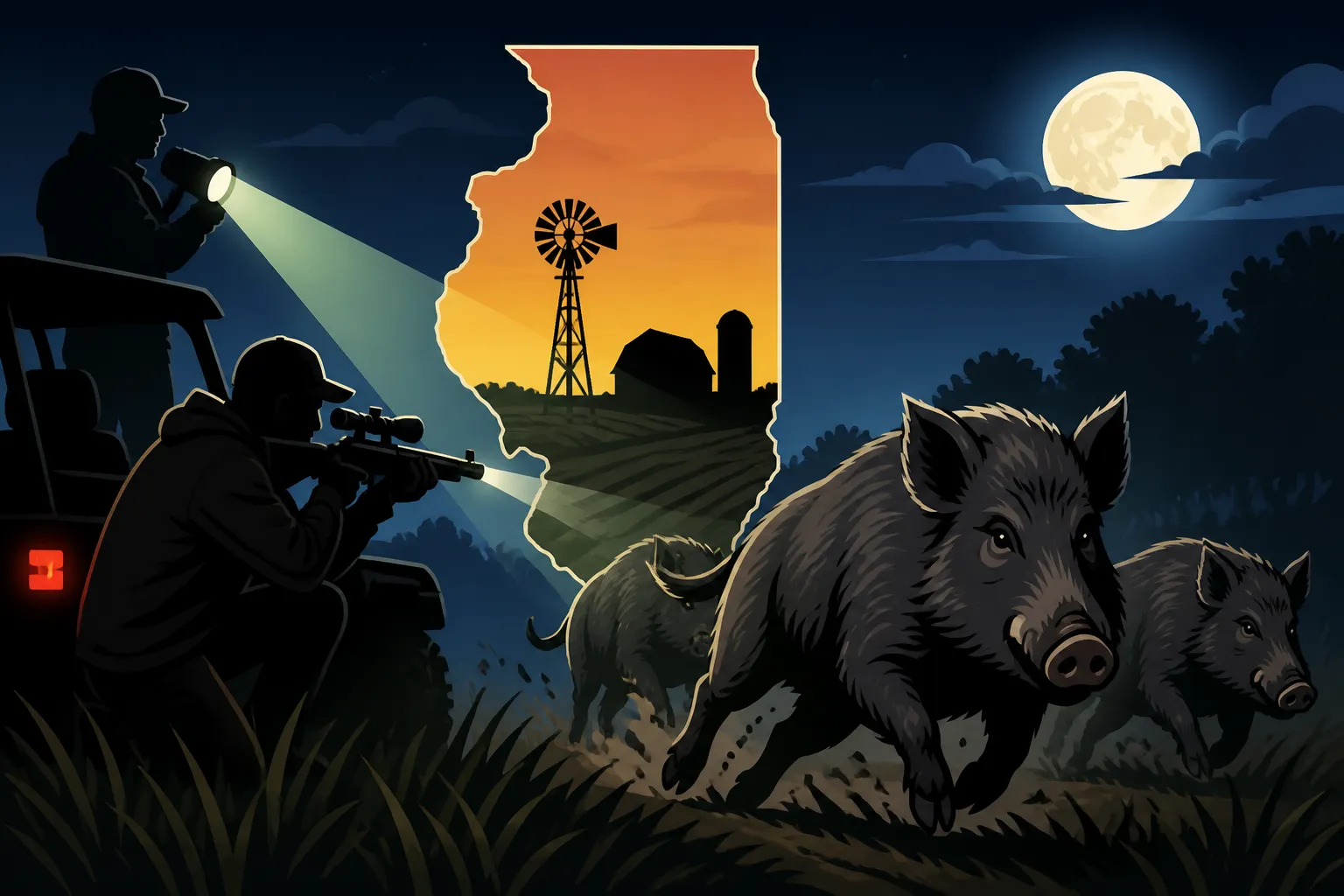
Modern thermal and night vision (NV) optics are the key enablers of successful night hunting. Thermal scopes detect heat signatures, allowing you to "see" hogs even in complete darkness, dense fog, or thick brush that would hide them from the naked eye. Imagine scanning a dark field and seeing bright white or black outlines of hogs moving, sometimes dozens of them. Night vision, on the other hand, amplifies ambient light, allowing you to see in green-hued detail what the human eye cannot. Outfitters often employ a combination of these technologies, using thermal for initial detection and then switching to night vision or powerful spotlights for positive identification and shot placement. The experience of spotting a sounder of hogs with thermal, formulating a stalk plan, and moving into position under the cover of night is a rush that's hard to replicate. The hogs rarely know you're there until it's too late, as they aren't accustomed to predators that can see them in their nocturnal domain.
Setting Up for a Successful Night Hunt
A successful night hunt with an outfitter involves meticulous planning and execution. It's not just about showing up with a rifle. Your guide will often have a strategy tailored to the specific property and current hog movements. This might involve sitting in an elevated blind overlooking a known food source or bait station, strategically placed to offer clear shooting lanes and a good backdrop for safety. Other times, it could involve active stalking, where the guide uses their knowledge of terrain and hog behavior to close the distance on a feeding group.
Communication between you and your guide is paramount. They will often direct your gaze, point out hogs, and advise on shot placement. When using spotlights, the guide controls the light, illuminating the target only when necessary to avoid spooking the animals prematurely. For thermal hunting, it's about steady movement, understanding wind direction, and being ready to take a quick, ethical shot. The guide will often position you downwind, and choose an approach path that uses topography or vegetation to mask your movement. The goal is to get as close as possible without being detected, allowing for a confident, humane harvest. This often means slow, deliberate steps, pausing frequently to scan and listen.
Safety Considerations Under the Stars
Hunting at night, especially with specialized optics and firearms, introduces unique safety considerations that a reputable outfitter will prioritize. The first rule is always positive target identification. With thermal or night vision, every heat signature or outline needs to be confirmed as a hog before a shot is taken. Your guide will be vigilant in this, often using lower-power optics or red/green lights for confirmation before giving you the go-ahead.
Furthermore, understanding your backstop in the dark is critical. Outfitters will choose hunting locations where shots can be safely taken without risk to unintended targets or property. They'll brief you on safe shooting angles and zones. Communication within the hunting party is also key. Knowing where everyone is positioned, especially during a stalk or in open terrain, prevents accidents. Wearing minimal light-emitting devices, moving slowly and deliberately, and always following the guide's instructions are essential for a safe and enjoyable experience. The guide's experience in navigating the darkness, understanding the terrain, and managing the hunt ensures that while exciting, the experience remains safe for everyone involved.
Vetting Illinois Hog Hunting Outfitters
Choosing the right outfitter can make or break your hog hunting experience. With many options available, it's crucial to do your homework and ask the right questions. You want to ensure you're booking with a reputable service that aligns with your expectations for the hunt. Websites like BookYourHunt can be a starting point for discovering potential outfitters, but the real vetting starts after you find them.
Researching and Comparing Services
Start your search by looking for outfitters specifically advertising "Hog Hunting Outfitters and Night Hunts" in Illinois. Online searches will likely bring up several options. Don't just pick the first one you see. Instead, gather a list of 3-5 potential outfitters.
Once you have a list, dive into their online presence. Look for dedicated websites that clearly detail their services, hunting areas, and pricing structures. Pay attention to testimonials or review sections. Are there consistent positive reviews, or do you see recurring complaints? Social media pages can also offer insights into their recent success, the types of hogs harvested, and how they interact with clients. Pictures and videos can tell a story about their operation. If an outfitter doesn't have a strong online presence or seems hard to contact, that might be a red flag.
Compare the hunting methods they emphasize. Do they specialize in thermal night hunts, or do they offer day hunts, spot-and-stalk, or stand hunting over bait? Ensure their primary offerings align with what you're looking for, especially if a dedicated night hunt is your priority. Look at their commitment to safety and ethical hunting practices. Are they transparent about their methods? A good outfitter will be proud to share details about how they operate. Vetting an Illinois Outfitter Before You Book covers this in more detail.
Understanding Package Options and Inclusions
Hog hunting outfitters typically offer various package options, and understanding what's included is crucial to avoid surprises. Packages can range from basic day hunts to multi-day, all-inclusive experiences with lodging and meals.
Here's a breakdown of common inclusions and exclusions:
| Feature | Basic Package (Often) | Deluxe Package (Often) | Key Questions to Ask |
|---|---|---|---|
| Hunting Days | 1-2 | 3+ | How many actual hunting sessions (day/night) are included? |
| Guide Service | Yes | Yes | Is it 1:1, 2:1, or group guiding? |
| Weapon Use | Bring your own | Outfitter's available | Can I use my own rifle/bow? Are suppressors provided? |
| Optics | Bring your own | Thermal/NV provided | Is thermal/NV included, or an add-on? |
| Ammunition | Bring your own | Sometimes included | Is ammo provided if using their firearm? If so, what caliber? |
| Lodging | No | Yes | Is it a lodge, motel, or bunkhouse? Private or shared rooms? |
| Meals | No | Yes | All meals, or just dinner? Self-catered options? |
| Transportation | Self-drive to site | Field transport | Transport from lodge to hunting areas? Airport pickup? |
| Hog Recovery/Cleaning | Basic field dressing | Full processing | What level of game care is included? Quartering? Processing? |
| Trophy Fees | None | None (usually) | Are there any extra fees for large hogs or multiple hogs? |
| Non-Hunter Guests | No | Sometimes allowed | Can a non-hunter accompany me, and what's the cost? |
| Licenses/Permits | Not included | Not included | Are they clear on what licenses I need to purchase separately? |
Always clarify what isn't included, such as hunting licenses, the Illinois State Habitat Stamp, transportation to the hunting area, gratuities for guides, or taxidermy services. Some outfitters might have a set number of hogs included in the price, while others might allow for multiple harvests without additional fees, especially given the eradication focus on hogs. Don't assume anything; get everything in writing or a detailed email.
Crucial Questions to Ask Before Booking
Once you've narrowed down your choices, direct communication is key. Don't be shy about asking detailed questions. A professional outfitter will appreciate your thoroughness.
- "What is your typical success rate on night hunts, and how many hogs can I reasonably expect to harvest?" While success is never guaranteed, a reputable outfitter can give you a realistic expectation based on past client experiences and current hog activity. Be wary of anyone guaranteeing a "trophy" or an unrealistic number of hogs.
- "What specific thermal or night vision equipment do you provide, and will I receive instruction on how to use it?" You want to ensure they have quality gear and that you won't be fumbling with unfamiliar equipment in the dark.
- "What are your hunting areas like? Are they primarily open fields, timber, or a mix?" This gives you a sense of the terrain and the type of hunting experience.
- "What is your policy on wounded animals? What happens if a hog is wounded but not recovered?" This is an important ethical consideration. A good outfitter will have a clear, responsible policy for tracking wounded game.
- "Can you provide references from recent clients who have done a night hog hunt?" Talking to past clients is one of the best ways to gauge an outfitter's reliability and the quality of their service.
- "What are your payment terms, deposit requirements, and cancellation policy?" Understand these fully before putting any money down. Life happens, and you need to know what your options are if you have to cancel or reschedule. Questions to Ask Before Booking an Illinois Hunt provides an even more comprehensive list.
- "What are the guide-to-hunter ratios on your night hunts?" For night hunting, a lower ratio (like 1:1 or 1:2) is generally better for personalized attention and safety.
- "What are the average group sizes for your guided hog hunts?" Some hunters prefer smaller, more intimate groups, while others are fine with larger parties.
By asking these questions, you'll gain a clearer picture of what each outfitter offers and help you make an informed decision.
Preparing for Your Illinois Guided Hog Hunt
Once you've booked your hunt, the excitement builds! But a successful and comfortable experience also depends on your preparation. Thinking ahead about your gear, physical readiness, and what happens after the shot will ensure you make the most of your time in the Illinois hog woods.
Gear Essentials for Day and Night Hunts
While your outfitter will likely provide specialized night vision or thermal gear, there's still plenty you'll need to bring for a comfortable and effective hunt. The dynamic nature of hog hunting, especially across different times of day and various terrains, means being prepared for a range of conditions.
- Clothing Layers: Illinois weather can be unpredictable. Pack clothing that can be layered to adapt to fluctuating temperatures. Even if it's warm during the day, nights can get surprisingly cool, especially when sitting still in a blind. Think moisture-wicking base layers, insulating mid-layers, and a quiet, scent-free outer shell. For night hunting, dark, non-reflective clothing is crucial to blend into the darkness. Avoid anything with bright colors or reflective strips.
- Footwear: Comfortable, broken-in, waterproof boots are non-negotiable. You might be doing a fair amount of walking, potentially through muddy or uneven terrain. Good ankle support is also a plus.
- Personal Optics: Even if the outfitter provides thermal scopes for shooting, bring your own binoculars or a monocular for general observation during daylight hours or to aid in spotting during the initial stages of a night stalk when you're not actively aiming.
- Flashlights/Headlamps: A good headlamp with a red or green light option is invaluable for navigating to and from stands, field dressing, or packing gear without ruining your night vision or spooking game with a bright white light.
- Bug Spray: Depending on the time of year, mosquitoes, ticks, and other biting insects can be relentless. Pack an effective repellent.
- Hunting Pack: A small daypack to carry water, snacks, extra layers, a first-aid kit, and any personal items is essential.
- Firearm/Ammunition: If you're bringing your own firearm, ensure it's sighted in and you're proficient with it. Bring ample ammunition. Discuss caliber requirements with your outfitter; many prefer specific calibers for hogs to ensure humane kills. For example, some may recommend .30 caliber or larger.
- Cleaning Supplies: Basic field dressing tools, like a sharp knife, game bags, and gloves, are always a good idea. Your outfitter will likely assist, but it's good to be prepared.
A little planning here goes a long way in ensuring your comfort and focus are on the hunt, not on cold feet or pesky bugs.
Physical and Mental Readiness
Hog hunting, especially at night, can be physically demanding. While some hunts might involve sitting in a blind, others could require long stalks over challenging terrain in the dark. You might be asked to quickly get into position, hold steady for a shot, or help drag a harvested hog. Being in reasonably good physical condition will enhance your enjoyment and increase your chances of success. This doesn't mean you need to be a marathon runner, but being able to comfortably walk a few miles, climb into a stand, and maintain focus for extended periods will serve you well.
Mentally, be prepared for anything. Hogs are smart, tough, and sometimes unpredictable. You might sit for hours and see nothing, or you might encounter a large sounder moments after arriving. Maintaining patience, staying focused, and being ready for a quick reaction are critical. A night hunt adds an extra layer of sensory input; sounds seem louder, and shadows can play tricks on your eyes. Trust your guide, remain calm, and be ready to act when the opportunity arises. It's a different kind of hunting, and embracing the unique challenges makes it all the more rewarding.
Post-Hunt Logistics and Expectations
So, you've successfully harvested a hog (or several!) on your guided hunt. Now what? Your outfitter will typically handle the initial field dressing and recovery of the animal. Discuss these logistics beforehand. Some outfitters will have facilities on site to quarter and cool your game. Others might take it to a local processor.
Here are a few things to clarify:
- Game Processing: Will the outfitter assist with quartering or full processing? Is there an additional fee for this service? Many outfitters will, at minimum, help you field dress and cool the animal. If you plan to take the meat home, discuss how it will be packaged and stored.
- Meat Transport: How will you get your hog meat home? If you're traveling a long distance, you'll need coolers, ice, or even dry ice. Some outfitters may offer shipping services for processed meat.
- Taxidermy: If you're hoping for a shoulder mount or European mount, discuss how the outfitter handles caping and preparing the hog for a taxidermist. They might have a preferred local taxidermist or can prepare it for your chosen professional.
- Gratuities: It's customary to tip your guide for their hard work and expertise. Discuss typical gratuity expectations with the outfitter or research standard tipping rates for hunting guides. This is a crucial part of the economics of being a guide, so budget for it.
- Photos: Most outfitters are happy to take photos of you with your harvest. These memories are often a highlight of the trip.
Having a clear understanding of these post-hunt logistics ensures a smooth end to your adventure. You want to be celebrating your success, not scrambling to figure out how to get your meat home or where to find a processor. The entire experience, from the booking to the final farewell, should be as seamless as possible, allowing you to focus on the unforgettable thrill of chasing hogs under the Illinois stars.
Disclaimer
This article is for general informational purposes only and does not constitute professional advice. Laws, prices and regulations vary by location and change over time. Consult a qualified professional for guidance on your specific situation.