Weather Contingency Policies for Duck Guides
There's nothing quite like the excitement of a planned duck hunt in Illinois, especially when you've booked a trusted guide to lead the way. You've dreamed of those cold, crisp mornings, the sound of wings overhead, and the splash of decoys hitting the water. But then, Mother Nature decides to throw a curveball – a sudden deep freeze, an unexpected heat wave, or a storm that makes travel impossible. This guide is all about navigating those frustrating moments, understanding what to expect from your duck guide when the weather refuses to cooperate, and how to best prepare for the unpredictable.
The Unpredictable Nature of Waterfowl Weather
Duck hunting, more than many other forms of hunting, is intimately tied to the weather. Waterfowl movement, feeding patterns, and even their willingness to decoy are dictated by atmospheric conditions. A perfect spread and expert calling mean little if the ducks aren't flying or if the habitat is suddenly locked up. This inherent unpredictability is precisely why understanding your guide's weather contingency policy is so crucial.
When the Skies Get Too Wild: Severe Storms and High Winds
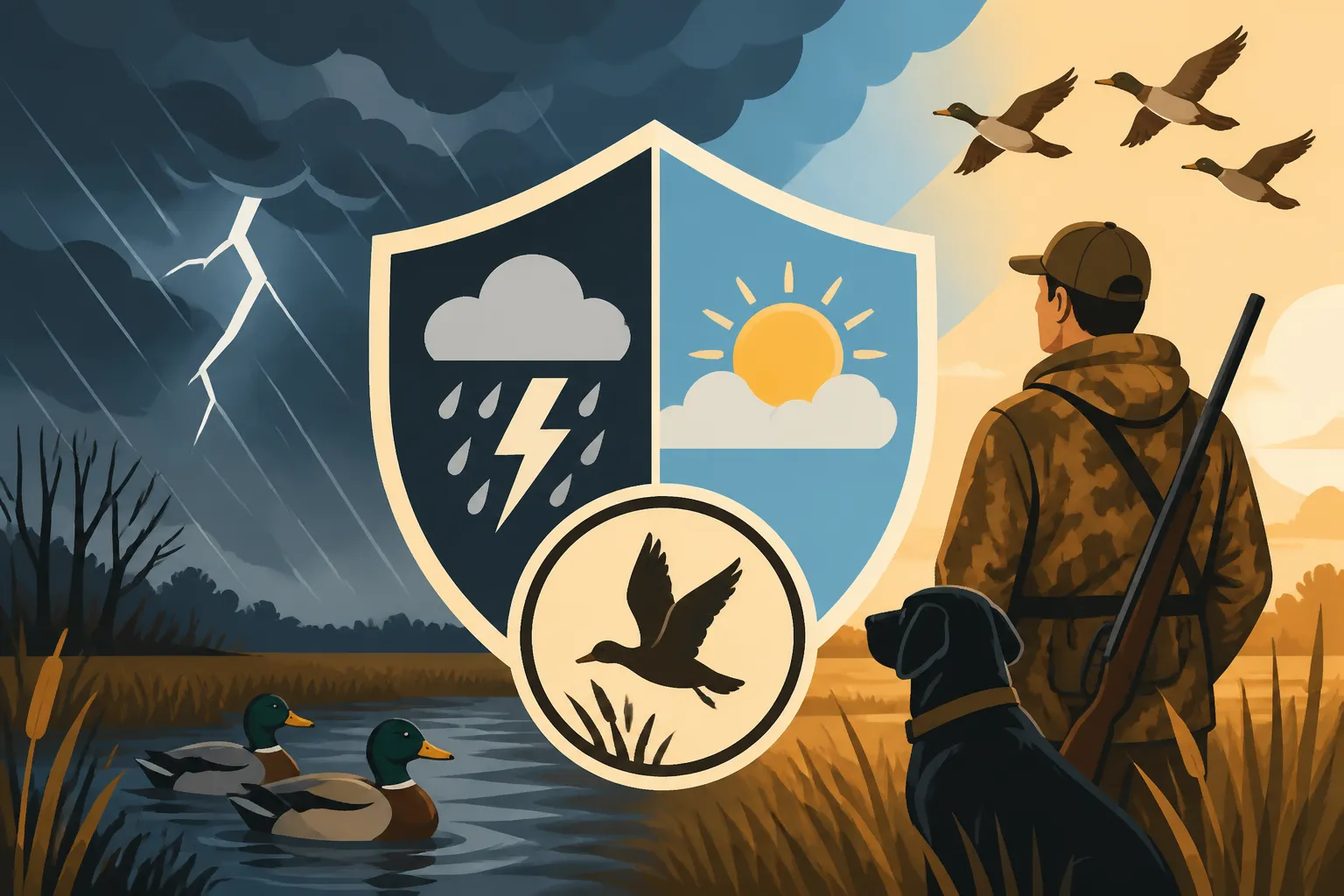
Imagine waking up to gale-force winds whipping across the Illinois River Valley, or a thunderstorm rolling in that makes the thought of being out on open water terrifying. Safety, above all else, is the primary concern for any reputable duck guide. High winds can make running a boat dangerous, especially on large bodies of water like parts of the Mississippi River or the Illinois River. Decoys become impossible to manage, blowing out of spreads or getting tangled. Torrential rain can reduce visibility to nothing, making accurate shooting and safe navigation a gamble no one should take.
A guide's decision to cancel or postpone due to severe weather isn't just about protecting their equipment; it's about protecting you. They're weighing the risks of hypothermia in extreme cold and wet, the danger of lightning strikes, or the possibility of capsizing in rough water. For instance, if you're booked for a layout blind hunt in a cut cornfield and a severe wind advisory comes through, it's not just uncomfortable—it could be genuinely unsafe for hunters in exposed blinds, not to mention the ducks won't be flying in any organized manner. These are the "no-brainer" cancellations, where everyone usually agrees it's for the best.
The Freeze-Up: Ice and Lack of Open Water
Perhaps the most common and devastating weather issue for duck hunters in Illinois is the deep freeze. One day you're hunting open water, and the next, your prime spots are locked under a thick sheet of ice. This is particularly relevant for those hunting the mighty rivers, where open water is essential. When the sloughs, backwaters, and even parts of the main channel freeze solid, ducks have no choice but to push further south or find isolated pockets of open water that might be few and far between.
A guide operating on the Illinois River Valley needs to be acutely aware of ice conditions. If their normal hunting grounds become unfishable or too dangerous to navigate a boat through, they have a serious problem. Likewise, even on smaller ponds or flooded fields, ice can render decoys useless or make wading treacherous. When a widespread freeze-up occurs, it's not just about comfort; it's about the complete absence of huntable conditions. This scenario almost always warrants a discussion with your guide about rescheduling or alternative options, as the ducks simply won't be there. You might find guides specializing in Hunting Illinois River Valley Diving Ducks are particularly sensitive to these sudden changes.
Unseasonably Warm or Dry Spells
While not as immediately dangerous as severe storms or ice, unusually warm weather or extended dry spells can still drastically impact a duck hunt. When temperatures in December feel more like October, ducks don't feel the same migratory urge. They might stick to northern regions longer or simply not move and feed with the same intensity. This can lead to what hunters call "bluebird days"—clear skies, no wind, and very few birds flying. It's frustrating when you've planned a trip specifically for Hunting the Late-Season December Lull only to find the weather is more akin to early fall.
Similarly, dry conditions can mean low water levels in key wetlands, sloughs, or impoundments. If your guide relies on specific flooded timber or shallow water holes, a lack of rain or snowmelt can render those spots dry and unhuntable. This isn't necessarily a safety issue, but it dramatically reduces the chance of success. In these cases, guides might try to move to different locations, but sometimes, their hands are simply tied by the lack of habitat.
Deciphering Your Duck Guide's Weather Policy
When booking a guided hunt, especially for something as weather-dependent as ducks, understanding the guide's specific weather policy is paramount. It can feel like reading fine print, but it truly protects both you and the guide. Most reputable guides will have a clear policy in place, often outlined on their website, in their booking confirmation, or provided directly when you inquire.
The "Act of God" Clause and Its Meaning
You'll often hear the term "Act of God" thrown around in these policies. What does it actually mean in the context of a duck hunt? Essentially, it refers to events outside human control—like extreme weather. For a guide, this clause often protects their business from having to issue full refunds when a hunt is negatively impacted by natural forces, but not necessarily canceled due to unsafe conditions.
For example, if a guide cancels a hunt because of a legitimate blizzard warning that makes travel to their location impossible, or because the river is completely frozen over, that falls under an "Act of God." In such situations, most guides will offer a full refund or, more commonly, a chance to rebook for a later date. However, if the weather is simply poor—say, a warm front that makes ducks lethargic and the hunting slow—and you choose to cancel, the "Act of God" clause might mean your deposit is non-refundable. The guide technically could have run the hunt, even if it wouldn't have been stellar. It's a fine line, and the best policies clearly define what constitutes an "Act of God" cancellation from the guide's perspective.
Rebooking, Rescheduling, and Refund Scenarios
This is where the rubber meets the road. What happens to your hard-earned money and precious vacation time if a hunt gets weathered out? Guide policies vary, but here are the common scenarios:
- Guide-Initiated Cancellation Due to Unsafe Conditions: If your guide cancels because they deem conditions truly unsafe (e.g., severe thunderstorm, dangerous ice, official warnings from authorities), you typically have two options:
- Full Refund: The guide returns your deposit or full payment.
- Reschedule: You work with the guide to find an open date later in the season or even next season. This is often the preferred option for both parties, as it ensures future business for the guide and still gives you a hunt.
- Guide-Initiated Cancellation Due to Unhuntable Conditions (but not unsafe): This might be a widespread freeze-up that eliminates all reasonable hunting opportunities, even if it's not actively dangerous. Most guides will still offer a full refund or reschedule option in these cases, as their goal is to provide a quality experience.
- Hunter-Initiated Cancellation Due to Poor, but Safe, Conditions: This is trickier. If you decide the weather is too warm, too cold, or just too slow for your liking, but the guide is still willing and able to take you out, you will likely forfeit your deposit. The guide held that date for you and incurred costs in preparation. They might offer a partial credit towards a future hunt, but a full refund is unlikely.
- Voucher/Credit System: Some guides, particularly larger operations, might offer a voucher for a future hunt if a booking is impacted by weather. This acts like a credit that can be applied to a later date, giving you flexibility.
- Partial Refunds: In very specific situations, a guide might offer a partial refund, perhaps if the hunt was cut short due to unexpected weather deterioration, but you still got some hunting in. These are less common and usually at the guide's discretion.
It's crucial to distinguish between a "cancel with refund" policy and a "reschedule only" policy. Some guides, especially those with tight booking schedules, might lean heavily towards rescheduling, which can be tough if you've traveled a long distance and don't have flexibility. Platforms like BookYourHunt or GoHunt often include summaries of cancellation policies, but it’s always best to confirm directly with the outfitter.
Communication is Key: Before and During Your Hunt
The best duck guides are proactive communicators. You shouldn't have to call them on the morning of your hunt to find out if it's on or off if severe weather is predicted. A good guide will monitor forecasts closely and reach out to you with updates, ideally 24-48 hours in advance for major weather events.
- Pre-Hunt Communication: Expect communication about evolving weather conditions. They should tell you if a decision is pending, or if they've made a firm call to cancel or adjust. This allows you to alter your travel plans, if necessary. For instance, if you're coming from out of state to hunt Mallards and Geese on the Illinois River, knowing a few days ahead saves you a wasted drive.
- Morning-Of Adjustments: Sometimes, the weather changes rapidly. A thick fog might roll in that prevents safe boat travel until later in the morning. A guide should communicate these on-the-spot adjustments clearly, explaining why they are happening and what the plan is. Patience and understanding are key from the hunter's side in these situations.
- Backup Plans: A truly prepared guide might even discuss alternative plans if the weather isn't perfect but still huntable. Could you move to a more sheltered blind? Focus on field hunting if river conditions are too rough? This shows they're committed to giving you the best possible experience under the circumstances.
What to Ask Your Guide Before You Book
Before you commit to a guide and put down a deposit, have an open and direct conversation about their weather contingency policies. Don't be shy; a professional guide will appreciate your thoroughness. This isn't about being pessimistic; it's about being prepared and understanding expectations.
Specific Questions About Weather Triggers
Go beyond the general "what's your weather policy?" question. Get specific. Hypothetical scenarios can help you understand where the guide draws the line.
- "At what sustained wind speed do you consider canceling or rescheduling for safety?" This is especially important if you're considering a field hunt in a Layout Blind Hunting Illinois Farm Fields or a wide-open river spot.
- "What is your policy if the water freezes completely, making boat access or decoy spreads impossible?" This applies heavily to river and backwater hunting.
- "If we have unseasonably warm temperatures and the birds aren't flying, what are my options?" Understand if a "slow day" is still considered a "huntable day" in their book.
- "What if travel conditions (like icy roads) prevent me from safely getting to the meeting point, even if the hunting conditions themselves are fine?" This is particularly relevant for hunters traveling from a distance.
- "How much notice will I receive if you have to cancel or reschedule due to weather?" Knowing this can save you significant travel time and expense.
By asking these questions, you'll gain a much clearer picture of their operational philosophy and how they handle adverse conditions. A clear and concise answer indicates a guide who has thought through these possibilities and runs a professional operation.
Understanding Payment and Rebooking Logistics
Beyond the "if" of cancellation, clarify the "how" of payment and rebooking.
- Deposit Refundability: Confirm if your deposit is fully refundable, partially refundable, or only transferable to a future date if the guide cancels due to weather.
- Reschedule Process: If rescheduling is offered, what does that look like? Do they provide a list of available dates? Is there a time limit to rebook (e.g., within the current season, or can it roll over to next year)? Are there any additional fees associated with rescheduling?
- Who Initiates the Call: Who makes the final call on a weather cancellation—the guide, or can the hunter initiate if they feel conditions are unsafe or unhuntable? Generally, the guide makes the call based on safety, but understanding this boundary is important.
- Documentation: Will you receive written confirmation of a cancellation or rescheduling, and any associated refund or credit? This protects both parties.
Knowing these logistical details upfront will prevent misunderstandings and frustrations later. You've invested time and money in your hunt, so clarity on these points is essential. For instance, knowing the Illinois Hunting Licenses and What They Cost and What a Guided Illinois Trophy Deer Hunt Costs might be straightforward, but the nuances of weather policies often hold the key to a stress-free experience.
Considering Travel Insurance
For many hunters, especially those traveling a significant distance or booking a higher-cost guided hunt, travel insurance can be a wise investment. While it won't necessarily cover a "slow hunting day," it can protect your financial investment if the hunt is canceled due to severe weather that prevents you from traveling, or if you encounter other unforeseen circumstances like illness or injury.
Read policies carefully, as coverage for "acts of nature" can vary. Some policies might cover trip interruption or cancellation if a named storm (like a blizzard or hurricane) directly impacts your destination or departure point. This can be a game-changer for non-resident hunters coming to Illinois, particularly during volatile weather periods. Think about the costs involved: your guide fee, transportation, lodging, and even the Illinois Nonresident Archery Deer Permit Cost if that's part of your trip. Protecting that investment can offer significant peace of mind.
Maximizing Your Experience, Come What May
Even with the best planning and a clear guide policy, there will be days when the weather just isn't ideal. It might not be bad enough for a cancellation, but it's certainly not the "bluebird sky, screaming ducks" scenario you envisioned. In these moments, flexibility and a positive attitude can salvage your experience.
Flexibility and Adaptability on the Water
A skilled guide will always have a few tricks up their sleeve. If the wind shifts unexpectedly or the birds aren't working the main river channel, they might suggest moving to a sheltered backwater or a different field. Adaptability is a waterfowl guide's superpower.
- Location Changes: Don't be surprised if your guide suggests moving blinds or even entirely different locations mid-hunt if conditions aren't producing. For instance, if river hunting is slow, they might have access to a small slough or a nearby field where geese are working. Hunting the Mississippi River Backwaters often requires different tactics than open river hunting.
- Species Shift: If duck activity is just non-existent, but geese are flying, your guide might pivot to target Canada geese or specklebellies, assuming you have the proper stamps and permits. Remember, your Illinois Duck Daily Bag Limit is different from geese, and you'll want to confirm if this is an option beforehand.
- Different Strategies: Perhaps the ducks aren't responding to aggressive calling. A guide might switch to subtler techniques, adjust the decoy spread, or suggest trying a pass-shooting setup if birds are merely flying by high. This is where their experience truly shines.
Alternative Activities
If, despite everyone's best efforts, the weather completely shuts down the hunting, or if the guide makes the difficult decision to cancel, it doesn't mean your trip to Illinois is a wash. Many hunting regions in Illinois offer other attractions or activities.
- Scouting: Use the time to scout new public lands or areas you might hunt in the future. Learning to read the landscape, identify pinch points, and find historical sign is invaluable. Check out how to be Scouting Illinois Public Land Before Season.
- Local Attractions: Southern Illinois, for instance, has beautiful state parks, wineries, and small towns with unique shops and restaurants. The Illinois River Valley has historical sites and other natural areas.
- Gear Prep: Take the time to clean your shotgun, organize your hunting pack, or check your waders for leaks. Sometimes a forced break is exactly what you need to fine-tune your equipment.
- Processing Game: If you had a successful hunt earlier in the season, use the downtime to process any game meat you might have brought with you.
The Learning Opportunity
Even a slow or challenging hunt due to weather is a learning opportunity. Pay attention to how your guide adapts, what they observe about bird behavior in different conditions, and their strategies for trying to make the best of a tough situation.
- Observing Bird Behavior: Note how ducks react to different wind directions, light conditions, or precipitation. You'll learn that ducks often prefer specific flight paths or feeding patterns depending on the weather.
- Decoy Spreads: Watch how the guide sets up decoys in various wind conditions or water depths. There's an art to making a spread look natural and inviting.
- Calling Nuances: Listen to your guide's calling. When do they call aggressively? When do they use softer, more subtle sounds? How does the weather affect the sound carrying? This can enhance your own skills for future Waterfowl Hunting the Illinois River Valley trips.
- Understanding the Ecosystem: A tough weather day can also highlight the incredible resilience and migratory instinct of waterfowl, reminding you of the vast forces at play in their world.
Here's a quick look at common weather impacts and potential guide responses:
| Weather Scenario | Impact on Hunt | Typical Guide Response | Hunter's Action |
|---|---|---|---|
| Severe Thunderstorm/Lightning | Extremely dangerous conditions, no hunting | Cancel with full refund/reschedule. Safety is paramount. | Accept cancellation, reschedule, or request refund. Prioritize safety. |
| Gale-Force Winds | Unsafe boat travel, decoys unmanageable, no bird movement | Cancel with full refund/reschedule. Or move to highly sheltered locations if possible and safe. | Accept cancellation or consider alternative sheltered spots if offered. |
| Widespread Freeze-Up | All open water gone, habitat unavailable | Cancel with full refund/reschedule. Or pivot to goose hunting fields if available and birds are present. | Discuss refund or reschedule options. Be open to a different species hunt if viable. |
| Heavy Snow/Blizzard | Dangerous travel for hunter/guide, no bird movement | Cancel with full refund/reschedule. May cause travel bans. | Accept cancellation; check travel insurance. |
| Unseasonably Warm & Sunny | Birds lethargic, slow movement, little decoying | Hunt still proceeds. Guide may try different locations, smaller spreads, or less aggressive calling. Reduced success likely. | Adjust expectations. Focus on learning from the guide. May forfeit deposit if hunter cancels. |
| Heavy Fog | Delayed start, navigation issues, low visibility | Delayed start. Guide will wait for fog to lift for safety. Hunting may be shortened. | Be patient. Enjoy breakfast/coffee. Prepare for a potentially shorter hunt. |
| Light Rain/Drizzle | Can be excellent for duck movement | Hunt proceeds. Often considered prime conditions by many guides. | Dress appropriately in waterproof gear. Enjoy the hunt! |
| Minor Cold Front | Often excellent for duck movement | Hunt proceeds. Guide will capitalize on increased bird activity. | Dress warmly. Get ready for potentially fast action. |
Ultimately, booking a guided duck hunt in Illinois is an investment in a memorable experience. While you can't control the weather, you can certainly control how prepared you are for its impact. By asking the right questions, understanding your guide's policies, and bringing a flexible mindset, you'll ensure that even if the weather doesn't cooperate, your hunting adventure remains as enjoyable and rewarding as possible.
Disclaimer
This article is for general informational purposes only and does not constitute professional advice. Laws, prices and regulations vary by location and change over time. Consult a qualified professional for guidance on your specific situation.