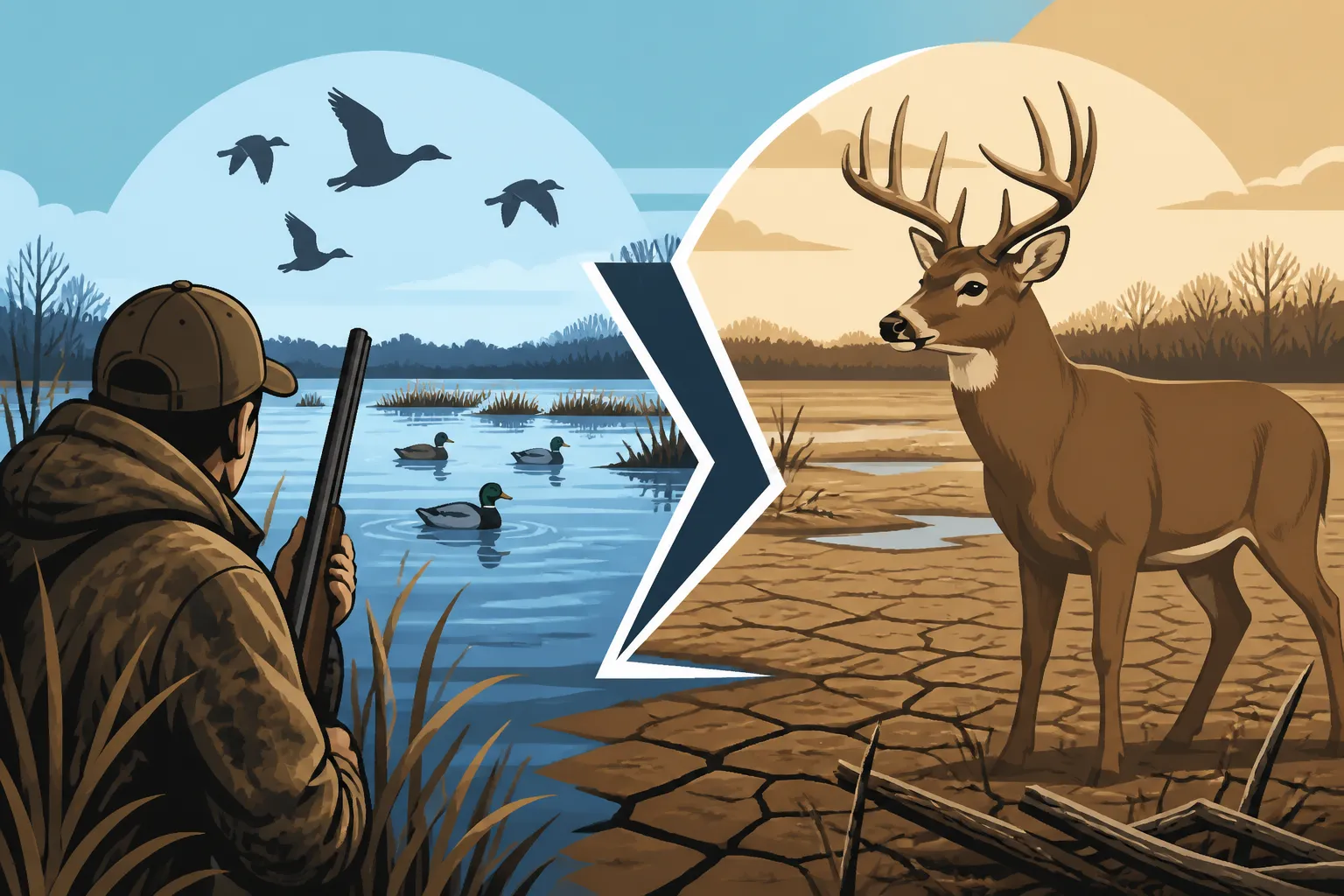
What Happens If Water Levels Drop Mid-Season
There's nothing quite like planning a waterfowl hunt, getting all your gear ready, only to arrive at your favorite slough or flooded timber block and find the water levels have dropped significantly mid-season. It can feel like all your scouting and preparation was for naught, leaving you scratching your head about what to do next. This guide is here to walk you through the realities and implications of mid-season water level drops in Illinois, offering practical advice on how to adapt your hunting strategy and still find success.
The Immediate Impact on Waterfowl Hunting
When water levels recede dramatically in the middle of duck and goose season, it creates a whole new set of challenges and opportunities for hunters. The landscape literally changes overnight, forcing both birds and hunters to adjust. It's a critical moment for understanding how to react.
Shifting Duck Behavior and Habitat
Ducks are inherently tied to water, and a significant drop can completely alter their patterns. What was once a prime feeding flat or resting area can become a muddy, uninviting puddle or even dry ground.
- Loss of Resting and Roosting Areas: Ducks need safe, open water to rest and roost, especially diving ducks. When large bodies of water shrink, these secure zones become smaller, forcing birds to concentrate in the remaining deeper pockets or seek out entirely new locations. This can make them more skittish and harder to approach. You might find huge concentrations of birds in what used to be a minor backwater, creating intense competition among hunters, or they might simply abandon a region for areas with more stable water.
- Changes in Feeding Patterns: Many dabbling ducks, like mallards, feed in shallow water on submerged vegetation or invertebrates. As water recedes, these food sources might become exposed or less accessible. Birds will then shift their attention to grain fields, particularly those with standing water or recent rainfall. This means a move from hunting flooded timber or marsh edges to setting up in cut corn or bean fields, often requiring entirely different equipment and tactics. Understanding these shifts is key when considering Hunting Illinois River Valley Diving Ducks or even Diver Hunting on the Illinois River.
- New Travel Corridors and Concentration Points: When water is scarce, ducks will often gravitate towards the few remaining reliable water sources. This could be a deeper section of a river, a larger lake, or even private impoundments that maintain consistent levels. These remaining water bodies become natural magnets, creating new travel corridors between roosting and feeding sites. Your job as a hunter is to find these new bottlenecks and concentration points.
Challenges for Goose Hunters
While ducks are more directly affected by water levels, geese also feel the impact, though often indirectly. Geese frequently feed in dry fields but rely on open water for safety and roosting.
- Roosting Site Disruptions: Just like ducks, geese need secure, open water for roosting. If their usual river sandbars or large lake expanses shrink or become too shallow, they'll relocate. This might mean longer flights to new roosts, or using less conventional areas, which can change their flight paths to feeding fields.
- Field Feeding Shifts: Geese love waste grain in harvested fields. If heavy rains often accompany normal water levels, creating puddles in fields, a mid-season dry spell can mean fewer puddle-filled fields for them to loaf in. They might concentrate more heavily on specific fields or shift to different types of agriculture entirely. You might find yourself needing to focus more on Layout Blind Hunting Illinois Farm Fields than before.
Access Issues for Hunters
Beyond bird behavior, low water levels can make simply getting to your hunting spot a real headache, or even impossible.
- Boat and Decoy Spreading Limitations: That perfect deep-water channel you used to boat down now might be ankle-deep mud. Boat motors can get damaged in shallow, debris-laden water, and getting decoys out can become an exhausting slog through muck. What was once an easy boat-in setup now might require hours of pulling a shallow-draft boat or even carrying all your gear on foot. This often pushes hunters to embrace tactics like Jump-Shooting an Illinois Creek or scouting areas accessible solely by waders.
- Blind Placement Difficulties: Your carefully brushed-in blind might suddenly be high and dry, sticking out like a sore thumb. You'll need to adapt quickly, either moving the blind to the new water's edge or constructing temporary hides from natural vegetation. This often means less comfortable, more exposed setups.
Consequences for Other Game Species
While waterfowlers feel the direct hit, don't assume other game species are unaffected by significant mid-season water level drops. The ripple effect can influence everything from deer movement to the behavior of furbearers, altering food sources, bedding areas, and travel routes.
Deer Movement and Water Sources
Deer, particularly whitetails in Illinois, rely on consistent water sources. While they can often find water, a widespread drying trend, especially in river bottoms or lowland areas, can force them to concentrate.
- Concentration Around Remaining Water: If numerous small creeks and low-lying seeps dry up, deer will inevitably seek out more stable water sources like larger rivers, permanent ponds, or even cattle tanks. This can lead to increased deer activity around these limited areas, creating new potential stand locations. Conversely, it might also make deer more wary as they encounter more activity in these concentrated zones. Hunters scouting for Deer Drives on Illinois Public Land or even just Reading a Ridge for Shawnee Forest Deer need to account for these shifts.
- Changes in Bedding Areas: Deer often bed in thick cover adjacent to water, especially in river bottoms or swampy areas. If these areas become dry, the cover might still be there, but the associated coolness and security of water will be gone. Deer might shift their bedding to higher, denser thickets or move closer to remaining wet areas. This could mean they're bedding further from their preferred feeding grounds, altering traditional travel corridors. You might need to adjust your approach for Hunting Illinois River Bottom Funnels if the funnel's water component has vanished.
- Impact on Food Sources: While deer primarily browse and eat acorns, persistent dry conditions can stress certain plants and reduce mast crop production in the following years. It can also affect the palatability of some forbs they rely on. This isn't usually an immediate mid-season impact but can certainly influence long-term habitat quality and deer health.
Furbearers and Small Game
Furbearers like muskrats, beaver, mink, and raccoons are heavily reliant on water, and small game like rabbits and squirrels can also be affected by habitat changes.
- Direct Impact on Aquatic Furbearers: Muskrats and beavers are perhaps the most directly impacted. As water levels drop, muskrat dens can become exposed, making them vulnerable to predators and forcing them to relocate. Beaver ponds might shrink drastically, reducing their food caches and making their lodges accessible. Trappers would need to adapt their strategies dramatically, focusing on remaining pockets of water or even dry land sets where animals are forced to travel further for resources.
- Mink and Raccoon Foraging Shifts: Mink hunt along water edges for frogs, fish, and small mammals. Raccoons are opportunistic feeders, often found near water. When water levels drop, their usual foraging grounds change. They might venture further from water in search of food or concentrate heavily on the few remaining wet areas where prey might also be concentrated.
- Habitat Stress for Small Game: While not as direct, rabbits and squirrels thrive in diverse habitats that include water components. Extended dry periods can reduce succulent vegetation that rabbits browse on, and potentially impact the health of mast-producing trees for squirrels. This can lead to minor shifts in their localized populations or movements, though it's less dramatic than for waterfowl.
Adapting Your Hunting Strategy
A sudden mid-season drop in water levels isn't a reason to pack it in. It's a call to action, demanding flexibility, adaptability, and a willingness to adjust your approach. The most successful hunters are those who can read the landscape and the game, and pivot their plans accordingly.
Intensive Scouting and Reconnaissance
Your old assumptions about where the birds or deer will be are likely out the window. This is the time to put boots on the ground, or eyes in the sky (via maps), and truly understand the new reality.
- Foot Scouting the New Shorelines: Walk the new mud flats and exposed banks. Look for fresh tracks, feeding sign, and signs of concentrated bird activity. Observe where birds are flying from and to. This immediate, on-the-ground scouting is invaluable. You might find that what was once a sprawling marsh now has distinct, deeper channels or isolated pockets that are now prime real estate for ducks.
- Utilizing Aerial Imagery and Mapping Tools: Before you even head out, spend time with satellite maps. Tools like GoHunt (or other similar platforms) can show you the topographical changes and where water might still be holding. Look for depressions that would naturally collect water, or deeper creek beds that might still have flow. Compare recent satellite images with older ones to identify areas that typically hold water versus those that are prone to drying out. This can help you pinpoint new potential spots without wasting valuable time. Scouting Illinois Public Land Before Season is crucial, but re-scouting during the season is just as vital with changing conditions.
- Observe Neighboring Properties: If you have access to observe, see how ducks and geese are reacting on nearby private land. Are they flocking to private impoundments that maintain stable levels? Are they moving to different agricultural fields? This can provide clues about their regional patterns.
Adjusting Your Setup and Tactics
Once you've identified potential new areas, your actual hunting setup will need to change to match the conditions.
- Decoy Spreads for Shallow Water: Forget the deep-water decoy lines. In shallow water or mud flats, you'll need shorter anchor lines, or even just push-pole stakes. Focus on realistic, tight spreads near any remaining water. Consider using more full-body field decoys if ducks are now feeding on exposed mud or newly damp ground. Motion decoys become even more important to create the illusion of life in a desolate landscape.
- Mobile Blinds and Natural Cover: Your permanent blind might be useless. Be prepared to hunt from a mobile layout blind, or even just natural cover like cattails, brush piles, or flooded timber edges. Camouflage becomes paramount, as birds will be wary and often concentrated. If you're hunting an area with limited cover, consider taking extra time to brush in a ground blind effectively. Brushing In a Blind on a Field Edge is an art form that really pays off in these situations.
- Calling Strategy: In situations where birds are concentrated and wary due to low water, over-calling can spook them. Start with soft greeting calls and observe their reaction. If they're working, keep it subtle. If they seem hesitant, a well-timed comeback call might be all it takes. Sometimes, less is more.
Exploring New Opportunities
Don't put all your eggs in one basket. Low water might close some doors, but it opens others.
- Focus on Other Species: If waterfowl hunting becomes too difficult or unproductive, consider shifting your focus. This might be a great time to target deer, particularly if their movement patterns are altered by the dry conditions, pushing them to concentrate near remaining water or new travel routes. This could involve trying Hunting the Late-Season December Lull or focusing on Late-Season Food Sources for Illinois Whitetails.
- Consider Guided Hunts in Unaffected Areas: If your local spots are just too dry, and you're determined to get on birds, consider booking a guided hunt in an area known for more stable water levels or managed impoundments. Websites like BookYourHunt often list outfitters who specialize in various conditions. They might have access to properties with wells or other water management systems that aren't as dependent on natural rainfall, offering a reliable alternative when public lands are struggling.
- Target Different Game Birds: A dry mid-season might also mean easier access to some upland bird covers. Pheasant and quail might become more concentrated around remaining green areas or denser cover where they can find relief from dry conditions. Pheasant Hunting Illinois Grassland might offer a good alternative.
Longer-Term Ecological and Management Considerations
The immediate impacts of mid-season water level drops on hunting are clear, but these events also carry deeper ecological consequences and can influence how wildlife agencies manage habitats in the long run. Understanding these broader implications helps hunters appreciate the complex interplay of nature and conservation efforts.
Habitat Degradation and Food Sources
Persistent low water levels, especially when combined with drought-like conditions, can have a lasting detrimental effect on wetland ecosystems.
- Impact on Moist Soil Vegetation: Many crucial duck food plants, known as "moist soil" plants, rely on specific cycles of inundation and exposure. If water recedes too quickly or stays low for too long, these plants might not germinate or mature properly. This can lead to a reduced food supply for migrating birds, not just in the current season, but potentially for the following year as well. Over time, it can shift the dominant plant species in a wetland, reducing its overall value to waterfowl.
- Invertebrate Populations: Healthy wetlands are teeming with invertebrates—insects, crustaceans, and mollusks—that are a vital protein source for ducks, especially during migration and prior to nesting. Low water can severely reduce these populations, affecting the nutritional intake of birds. This impact can ripple through the food web.
- Soil Health and Sedimentation: Exposed mud flats can dry and crack, altering soil structure. When water eventually returns, these areas might be more prone to erosion and sedimentation, potentially filling in valuable shallow water zones over many seasons.
Disease Potential and Bird Health
Stagnant, shallow, and warm water, often a consequence of receding levels, can create ideal conditions for certain wildlife diseases.
- Avian Botulism: This is a serious concern in low-water conditions. Botulism toxins are produced by bacteria that thrive in warm, anaerobic (oxygen-poor) environments, often found in decaying organic matter in shallow water. Birds consume these toxins, leading to paralysis and death. Outbreaks can be devastating, impacting large numbers of waterfowl and other water birds. Hunters should be vigilant and report any sick or dead birds to the Illinois Department of Natural Resources (IDNR).
- Other Pathogens: While less dramatic than botulism, other bacterial and parasitic infections can also become more prevalent when birds are stressed by poor conditions and concentrated in smaller areas. This can weaken individual birds, making them more susceptible to predation or other environmental challenges.
Influence on Future Management Decisions
Wildlife agencies like the IDNR are constantly monitoring environmental conditions and adjusting their management strategies. Mid-season water level drops inform these decisions.
- Water Control Structure Operations: On state fish and wildlife areas that have water control capabilities, biologists might adjust pumping or draw-down schedules in response to widespread low water. This could mean holding water longer in some impoundments or prioritizing certain areas to maintain habitat. Understanding how these sites manage water can be key to finding birds; some of the most reliable spots are often managed specifically for waterfowl.
- Habitat Restoration Priorities: Long-term drought or recurrent low water events can influence future habitat restoration efforts. Agencies might prioritize projects that enhance water retention, improve water delivery systems, or create more drought-resilient wetland designs. This contributes to the broader health of Illinois Waterfowl on the Mississippi Flyway.
- Season Structure and Bag Limits: While rarely an immediate mid-season change, sustained periods of low water and habitat degradation can, in extreme cases, contribute to discussions about future season dates or bag limits, particularly if bird populations show significant stress or decline. These decisions are complex, balancing ecological health with hunter opportunity.
| Condition | Primary Impact on Ducks | Primary Impact on Geese | Hunter Strategy Adaptations |
|---|---|---|---|
| Normal Water Levels | Widespread foraging, multiple resting areas | Diverse roosting options, broad field feeding | Varied decoy spreads, fixed blinds, traditional calling |
| Moderate Water Drop | Concentration in remaining pools, exposed food | Minor roost shifts, concentrated field feeding | Smaller decoy spreads, mobile blinds, increased scouting (e.g., Scouting Illinois Public Land Before Season) |
| Severe Mid-Season Drop | Mass exodus, concentration in deep water or managed areas | Significant roost shifts, heavy field feeding emphasis | Minimal decoys, natural cover only, intensive scouting, seeking new access (e.g., Finding Ground Others Walk Past), considering guided hunts (e.g., BookYourHunt) |
| Stagnant, Low Water Pockets | Disease risk, birds avoid | Less direct impact, but may avoid associated fields | Avoid hunting these areas, report sick birds |
| Completely Dry Wetlands | Birds abandon area entirely | May feed nearby, but roosts are gone | Relocate to new areas, shift to other species |
Dealing with mid-season water level drops is a real test of a hunter's adaptability and determination. While it can be frustrating, it's also an opportunity to deepen your understanding of the landscape, the species you pursue, and your own skills as a outdoors person. Embrace the challenge, be flexible, and you might just discover new honey holes or develop new tactics that serve you well for years to come.
Disclaimer
This article is for general informational purposes only and does not constitute professional advice. Laws, prices and regulations vary by location and change over time. Consult a qualified professional for guidance on your specific situation.