Roost Hunting Illinois Gobblers
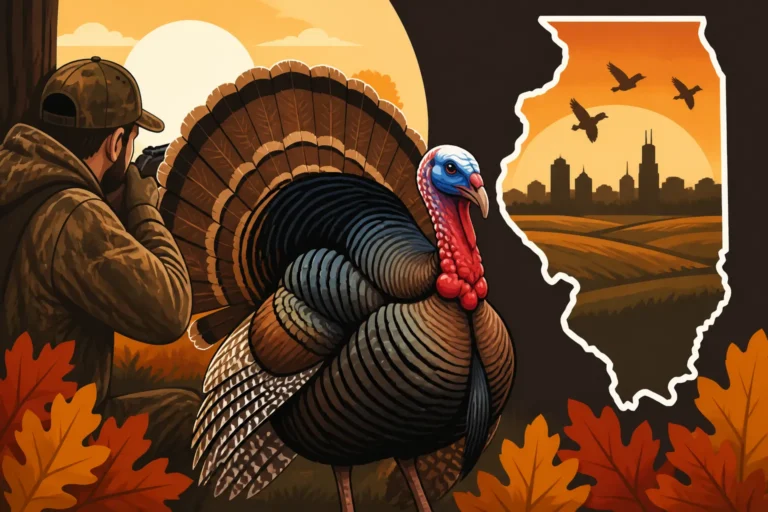
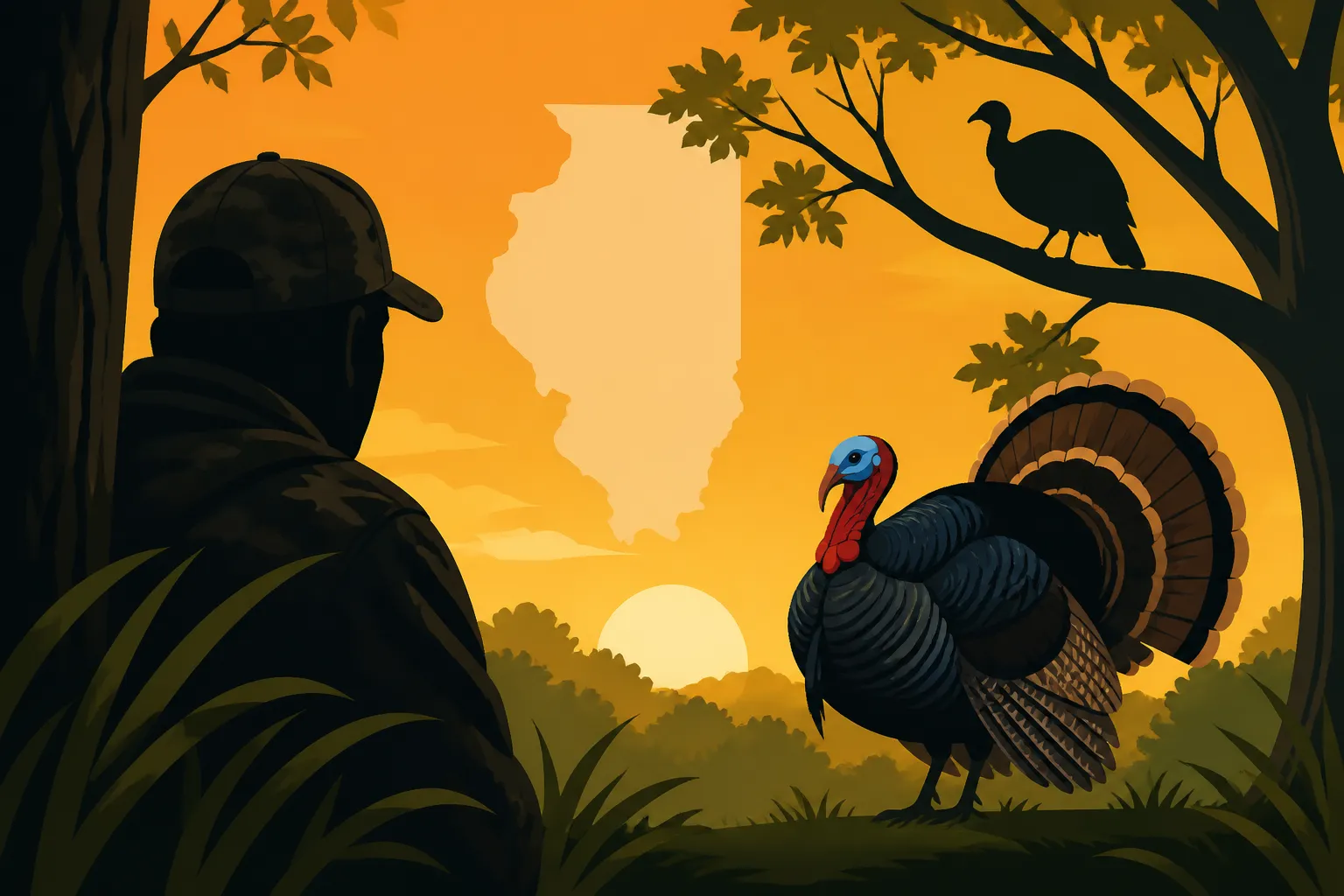
Few things are more frustrating for an Illinois turkey hunter than spending hours walking and calling, only to hear no gobblers. It often feels like the birds have vanished, but more often than not, they're simply not talking on the ground, or you're not where they want to be. This guide dives deep into the art of roost hunting, a highly effective method to pinpoint those elusive Illinois gobblers before they even hit the dirt, giving you a distinct advantage for early morning success.
Understanding Illinois Gobbler Roosting Behavior
To consistently put yourself in a position for a successful roost hunt, you first have to grasp the fundamental behaviors that drive Illinois gobblers to choose a particular tree for the night. It's not just random; there's a method to their nightly ascension.
Why Turkeys Roost in Specific Trees and Areas
Wild turkeys, including the Eastern subspecies prevalent across Illinois, aren't just picking any old tree to sleep in. Their choice is driven by a strong instinct for safety and a good vantage point. They typically seek out the tallest, most robust trees in an area, often those with strong, horizontal limbs that offer comfortable perches. These might be massive oaks, towering sycamores along river bottoms, or even large cottonwoods in more open terrain. The height provides protection from ground predators like coyotes, foxes, and bobcats, while the open canopy allows them to scan the surroundings before flying up and down. They want to be able to see potential threats from a distance, both from the air and on the ground. Think about the thick timber often found in places like Shawnee National Forest or along major river systems—these areas provide ideal, safe havens for roosting birds.
Furthermore, turkeys often return to the same general roosting areas night after night, especially if they haven't been disturbed. These "community roosts" can hold multiple birds, sometimes even entire flocks, before they disperse at fly-down. The consistency in their behavior is a hunter's best friend. Knowing the type of trees they prefer, or what we refer to as their "Illinois Turkey Roost Tree Preferences", can give you a significant leg up. For instance, in river bottom areas, look for those giant hardwoods that stand above the rest of the canopy. In more upland, rolling timber, old-growth oaks on a ridge line are often prime candidates.
Seasonal and Weather Impacts on Roosting Habits
A turkey's roosting habits aren't set in stone; they can shift with the seasons and, crucially, with the weather. Early in the spring, when leaves haven't fully emerged, turkeys often favor dense conifer stands or evergreens if available, as these provide more cover from predators and the elements. As the foliage thickens, they'll become less picky about concealment and more focused on elevation and strong perches within deciduous trees.
Weather plays a huge role. On clear, calm nights, turkeys might roost in more exposed trees, trusting their eyesight. However, on windy nights, they'll often seek out trees that offer more shelter from the buffeting gusts, possibly lower in a ravine or on the leeward side of a ridge. Rain and cold can also influence their choices, pushing them into denser cover. For instance, if a cold front rolls through during the "Hunting an Early South Zone Turkey Period", don't be surprised if the birds you've been watching in exposed trees suddenly disappear to a more sheltered spot. Understanding these subtle shifts is key to successful roost hunting, preventing you from wasting precious morning hours under an empty tree.
Identifying Prime Roosting Habitat on Public and Private Land
Whether you're hunting Illinois public land or have secured access to private ground, identifying prime roosting habitat involves a combination of geographical features and specific tree characteristics. On public lands, especially larger tracts, turkeys will often choose roosts near water sources or along distinct terrain features like ridge lines or creek bottoms, which serve as natural travel corridors. Look for mature timber that stands out from the surrounding woods. Areas with minimal human disturbance are also key, as turkeys will abandon a roost if they feel threatened.
For private land, farmers and landowners often know exactly where turkeys roost. They've seen them fly up and down for years. If you have permission to hunt, asking them directly can save you a tremendous amount of scouting time. Regardless of the land type, look for the "super trees" – those giant, old-growth specimens that dominate the canopy. These are typically surrounded by open understory or areas with good fly-down access, not extremely dense thickets. Always consider the approach and departure routes for the birds as well; they want clear flight paths.
Pre-Season Scouting for Illinois Roosts
Successful roost hunting isn't about luck; it's about preparation. The real work begins long before the season opener, with dedicated scouting that transforms speculation into solid intelligence.
Using Maps and Aerial Imagery to Pinpoint Potential Roosts
Before you ever set foot in the woods, the best scouting tool you have is often right in your pocket or on your computer: mapping applications. Services like GoHunt, onX Hunt, or even Google Earth provide invaluable aerial imagery that can reveal potential roosting locations. What you're looking for are clusters of mature timber, especially along river systems like the Illinois River Valley, creek drainages, or on prominent ridge lines. These stand out as darker, denser patches of trees on the satellite images.
Pay close attention to changes in elevation, property lines (if hunting private), and proximity to open fields. Turkeys often roost near food sources and fly down directly into fields to feed. By analyzing these maps, you can identify "funnels" or specific timber stands that look promising. Use the topo lines to find the highest points, or the steepest drop-offs, as these often coincide with dominant trees. Plotting these potential spots on your map application gives you a starting point for your physical scouting, preventing aimless wandering. This remote scouting phase is critical for optimizing your time when you eventually hit the ground.
Boots-on-the-Ground Scouting Techniques
Once you've identified potential roosting sites from your maps, it's time for boots-on-the-ground scouting. This is where you confirm your suspicions and gather real-time intel. The best time for this is usually late afternoon or early evening, a few weeks before the season. Position yourself quietly in an area where you can observe without disturbing the birds. Listen for the distinct "cluck-cluck-cluck" as they gather before flying up, or the "whump-whump-whump" of their wings as they ascend to their nightly perches. More importantly, listen for their final gobble before dark. This "fly-up gobble" is a golden ticket, confirming a roost tree's location.
It's crucial to be stealthy. Move slowly, avoid making noise, and try to stay hidden. Use binoculars to scan the tops of trees for silhouettes of birds. If you pinpoint a roost, resist the urge to get too close. Your goal is to locate it, not disturb it. Mark the exact spot on your GPS or mapping app, and then identify a silent, discreet approach route for your hunt day. This pre-season reconnaissance is invaluable for "Scouting Illinois Public Land Before Season" and ensuring you're not walking blind on opening morning.
Interpreting Roost Sign: Droppings, Feathers, and Tracks
Sometimes, you won't hear a gobble or see a bird fly up, but the ground itself will tell a story. Turkeys leave behind clear evidence of their overnight stays. Look directly under large, mature trees for significant accumulations of droppings. Turkey droppings are distinct, typically tubular with a white cap (urate). The more droppings you find, the more frequently birds are using that specific tree or cluster of trees. Fresh droppings indicate recent activity.
Beyond droppings, search for discarded feathers. Primary wing feathers, especially, will be quite large. Finding several under a tree is a strong indicator of a consistent roost. You might also find faint tracks in soft soil or mud around the base of the tree, made when the birds fly down in the morning. A heavily used roost area will look like a small, circular bombing range of droppings and feathers. This sign confirms active use and helps differentiate a one-off roost from a consistent, high-probability spot. Keep an eye out for these subtle clues, as they can lead you to a honey hole even if the birds are currently silent.
Here's a quick reference for interpreting roost sign:
| Sign Type | Description | Implication |
|---|---|---|
| Droppings | Tubular, white-capped. Abundant under specific trees. | Strong indicator of frequent roost use. Freshness matters. |
| Feathers | Wing and body feathers, especially large primaries. | Confirms birds are flying up/down from this spot. |
| Tracks | Three-toed tracks in soft ground near base. | Shows birds are landing and walking away. |
| Limb Rubs | Minor scuffs or bark wear on large branches. | Less common, but can show consistent perching. |
| Auditory Cues | Fly-up clucks, wing beats, final gobble. | Definitive real-time confirmation of roost. |
Executing a Successful Roost Hunt in Illinois
Locating a roost is only half the battle. The real test is in the execution—how you approach, how you set up, and how you interact with the birds once they're aware of your presence (or before).
Early Morning Approach Strategies
The most critical phase of a roost hunt is the approach. It needs to be executed in absolute darkness, with extreme stealth. Your goal is to get as close as possible to the roost tree without alerting the birds. This means moving slowly, deliberately, and quietly. Avoid snapping twigs, crunching leaves, or rustling your clothing. Use a dim headlamp set to a red or green light filter to navigate, minimizing your footprint. If you've scouted well, you should already have a silent approach path identified, one that avoids thick brush or noisy terrain.
Wind direction is paramount. Always approach with the wind in your face or quartering to you, so your scent isn't carried towards the roosting birds. Turkeys have incredible eyesight and hearing, but a poor sense of smell, so minimizing noise and staying hidden are your top priorities. A good rule of thumb is to aim to arrive at least an hour before first light. This gives you ample time to navigate, find your setup spot, and settle in without feeling rushed. Remember, it's always better to be too early than even a minute too late. For tips on navigating unfamiliar terrain in the dark, you might find insights in "Reading Aerial Photos for Southern Illinois Deer", even though it's deer-focused, the principles of silent movement apply.
Setting Up Before Fly-Down
Once you've made your silent approach, the next step is to choose your setup location. This is where many hunts are won or lost. You want to position yourself within easy shooting range (usually 40 yards or less) of where you anticipate the birds will fly down. This isn't necessarily directly under the roost tree. Turkeys almost always fly down in a specific direction, often towards an open field, a logging road, or a clear area. If you've observed them during scouting, you'll know their preferred fly-down path.
Set up with a solid backrest against a wide tree or in a well-brushed-in ground blind that breaks up your silhouette. Ensure you have clear shooting lanes in the direction you expect the birds to come from. It's often beneficial to place a decoy (or two) about 20-30 yards out in front of you, strategically positioned to draw the gobbler's attention away from your exact location. This setup should be completed well before the first hint of daylight. You should be sitting motionless, gun up and ready, as the woods begin to awaken around you. The key is to be entirely invisible and still as the first tree branches become visible against the brightening sky.
Calling Tactics Around the Roost
With the birds still on the roost, your calling strategy needs to be subtle and precise. The goal isn't to make them gobble their heads off, but to let them know a hen is nearby and interested. Start with soft, sleepy tree yelps or purrs just as it's getting light. Mimic a hen waking up. If a gobbler responds, resist the urge to call aggressively. A few soft clucks and purrs are often all it takes to get them thinking about flying down to investigate. Overcalling can make them suspicious, especially if they're "Pressured Birds and Public Land Tactics".
Once they fly down, you can increase the intensity slightly, but still keep it realistic. A few confident yelps, clucks, and purrs, followed by silence, can be incredibly effective. The idea is to make them believe the hen is coming their way, or at least staying put, enticing them to close the distance. Avoid making any calls until you know for sure they are on the ground. A gobbler will often fly down and strut away from the roost, expecting the hen to come to him. Your calling should reinforce that expectation, slowly drawing him into your kill zone. Sometimes, a well-placed soft series of calls is all it takes for a gobbler to commit and walk right in.
Common Challenges and Troubleshooting Roost Hunts
Roost hunting isn't always straightforward. Turkeys are wild animals, and they don't always follow the script. Knowing how to adapt to unexpected situations is what separates a good hunter from a great one.
Dealing with Roosted Birds That Go Silent
There's nothing quite as frustrating as hearing a gobbler sound off from the roost, only for him to go completely silent once he flies down. It happens, especially with seasoned, wary birds. When a gobbler goes silent, the first mistake many hunters make is to immediately move or call aggressively. Instead, be patient. Often, a silent gobbler is simply evaluating the situation, or he might have hens nearby that he's tending to. Maintain your position for at least 30-45 minutes after fly-down. Continue with soft, infrequent calls, perhaps a cluck or a purr every 10-15 minutes.
If he remains silent, it's time to consider a change. He might have pitched down with hens and moved off in another direction, or he's simply not interested in your calls from that specific spot. This is where a "run-and-gun" approach might be necessary. Slowly and stealthily move to a new vantage point, perhaps a ridge line or a field edge, and try to strike him with a louder series of calls. Sometimes, a change of scenery or a different type of call, like a box call or a slate, can trigger a response. Don't give up too quickly, but don't be afraid to adjust your tactics if the initial plan isn't working.
Pressured Birds and Public Land Tactics
Hunting heavily pressured birds, especially on Illinois public land, requires an even more refined approach to roost hunting. These birds have heard every call in the book and have likely been educated by previous encounters. For these wary gobblers, subtlety is key. Avoid aggressive calling, especially on the roost. Focus on soft, realistic hen vocalizations. Sometimes, simply setting up quietly under a known roost and making no calls at all can be effective, letting the gobbler's curiosity get the better of him when he sees a decoy.
Another tactic for pressured birds is to use terrain to your advantage. Try to set up on a high point or a ridge above the roost, forcing the gobbler to come uphill to your calls or to a decoy. This can make them feel more secure. Furthermore, be prepared to walk further than most other hunters. Public land gobblers often seek out remote roosting sites, deep in timber, away from easily accessible areas. Using mapping apps like GoHunt to find these remote pockets can be very beneficial. Consider "Run-and-Gun Turkey Tactics on Public Land" as a follow-up if your roost hunt doesn't pan out immediately; sometimes, you need to be mobile to connect with these tougher birds.
When to Adjust and Relocate
Knowing when to stick with your plan and when to adjust is a critical hunting skill. If a roosted gobbler flies down and immediately moves away from your setup, especially if he's actively gobbling and moving with hens, it's often best to reposition. Don't chase him directly; instead, try to get ahead of him or intercept his likely travel path. Turkeys often follow predictable routes between roosts, feeding areas, and strutting zones.
If you've roosted a bird, set up perfectly, called subtly, and he simply flies down and walks off silently in the opposite direction, it's probably time to relocate. He might have a strong urge to meet a particular group of hens, or he's just not interested. Rather than wasting the rest of the morning in an unproductive spot, pack up quietly and move to a new area. You can try to blind call from a new position, or if you have other potential roosts scouted, make a move towards one of those. The early morning hours are precious, and sometimes, a calculated change of location is the best move to salvage the hunt.
Safety Considerations for Roost Hunting
Turkey hunting, especially in the low light conditions of a roost hunt, demands absolute adherence to safety protocols. When you're dealing with camouflage, decoys, and other hunters, caution is paramount.
Navigating Dark Timber Safely
Moving through the woods in complete darkness presents unique challenges and potential hazards. Uneven terrain, fallen logs, concealed holes, and dense undergrowth can all lead to trips, falls, or worse. Always use a headlamp with a red or green lens option; red light preserves night vision better, and green can illuminate paths more clearly without spooking animals as much as white light. Walk slowly and deliberately, taking small, cautious steps. Keep one hand slightly out in front of you to feel for obstacles.
Familiarize yourself with your chosen path during daylight hours if possible, or at least study your maps carefully to identify potential obstacles like steep ravines or dense thickets. Carry a fully charged phone with GPS capabilities (like GoHunt's offline maps) as a backup navigation tool. Inform a trusted person of your hunting location and estimated return time. It's also important to be aware of other potential hazards, such as venomous snakes, particularly in the warmer months and in regions like Southern Illinois.
Communication with Hunting Partners
If you're hunting with a partner, communication is vital, especially when roost hunting. Before you even head into the woods, establish a clear plan: where each person will set up, approach routes, and how you'll communicate during the hunt without disturbing the birds. This might involve pre-arranged hand signals or minimal, whispered verbal cues once you're settled. Avoid unnecessary talking.
Most importantly, always know where your partner is located. Never assume their position, and never shoot in the direction of sound without positive identification of the target. This leads into the critical rule: "know your target and what is beyond it." Wearing some blaze orange when walking in and out of the woods (removing it once set up) can also be a good safety measure if you anticipate encountering other hunters, though not legally required for turkey hunting once stationary in Illinois.
Ethical Considerations and Disturbing Roosts
While roost hunting is a highly effective tactic, it comes with ethical responsibilities. The primary ethical consideration is to minimize disturbance to the birds. If you manage to locate a roost, do not approach it too closely during scouting, and avoid setting up directly underneath it. The goal is to hunt the birds effectively, not to stress or displace them from their preferred roosting area. Repeatedly disturbing a roost can cause birds to abandon it, making future hunts in that area less productive for everyone.
Another ethical concern is ensuring a clean kill. In the low light of dawn, target identification can be challenging. Only shoot when you have a clear, unmistakable view of the gobbler's head and neck, and you're within your effective range. Avoid "sky-busting" at birds on the roost; it's unethical, often leads to wounded birds, and is generally illegal. Respect the wildlife and the hunting tradition by practicing responsible, ethical hunting at all times. Adhering to "Illinois Turkey Hunting Hours" is also crucial, ensuring you're not disturbing birds before legal shooting light or after sunset.
Disclaimer
Please note: Hunting regulations and seasons can change. Always consult the latest Illinois Department of Natural Resources (IDNR) regulations and local ordinances before heading into the field. This guide is for informational purposes only and does not supersede official hunting laws or safety guidelines.