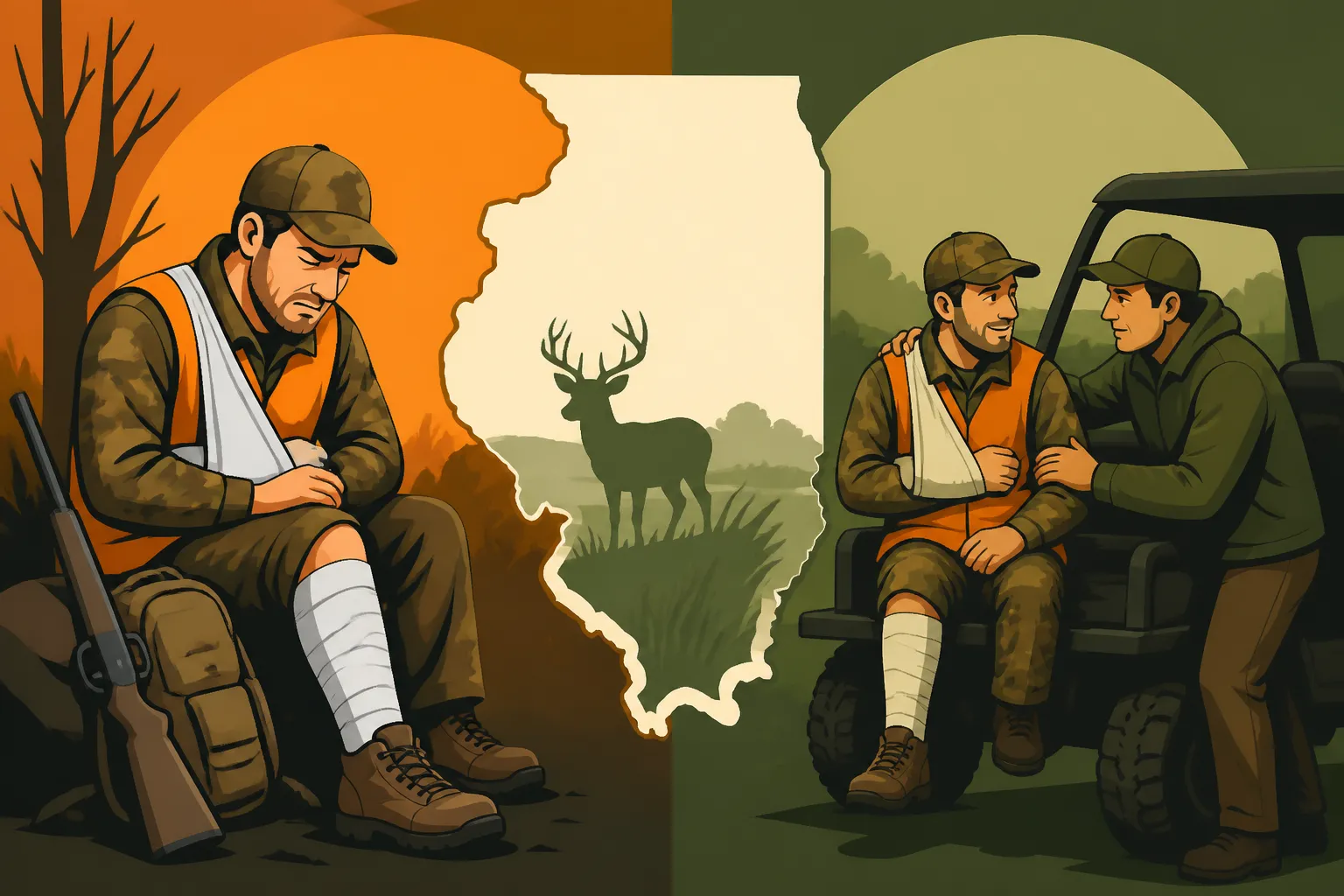
What Happens if an Illinois Guide Gets Injured
It's a tough scenario to think about, but what happens when the very person leading your hunt in the vast timber of southern Illinois or across the open farmlands suddenly faces an injury themselves? The thought can be unsettling, especially when you're relying on their expertise for a successful and safe outdoor experience. This guide will walk you through the practical, legal, and common-sense implications if your Illinois hunting guide gets injured, ensuring you understand your role and what steps come next.
The Immediate Aftermath: Prioritizing Safety and Communication
When an injury occurs, especially in the field, the immediate moments are critical. Your guide, despite their experience and preparedness, is still human, and accidents can happen to anyone. The first priority is always the safety and well-being of the injured person and everyone else present.
First Aid and Emergency Protocols
The very first thing to consider is the nature and severity of the injury. Is it a minor cut, a sprained ankle, or something far more serious like a fall from a treestand or an accidental gunshot wound? Your guide should have briefed you on their emergency plan, or at the very least, where their first aid kit is located. It's often tucked into a backpack or stored in a vehicle.
Assess the situation calmly. If the guide is conscious, they can often direct you on what to do. If they're not, you'll need to use your own judgment. Applying direct pressure to a bleeding wound, immobilizing a suspected fracture, or simply keeping them warm to prevent shock are all immediate actions you might need to take. Remember, you might be the only other person there with them.
In many remote Illinois hunting areas, like deep within Shawnee National Forest Hunting or along the meandering stretches of the Illinois River, cell service can be spotty or nonexistent. This is where a guide's pre-hunt communication about emergency devices becomes crucial. Some guides carry satellite phones or personal locator beacons (PLBs) for just such an event. Knowing how to activate these can be a lifesaver.
Who Takes Charge? Client Responsibilities
In a crisis, the client's role shifts dramatically from participant to potential first responder. If your guide is incapacitated, you become responsible for initiating rescue efforts and ensuring the safety of yourself and any other members of the hunting party. This isn't about assuming leadership in the hunt, but about handling the emergency.
Staying calm is paramount. Panicking won't help anyone. Take a deep breath and systematically think through the steps: secure the scene (e.g., unload firearms), administer first aid if you're trained and able, and then focus on communication and extraction. If the guide is able to give instructions, follow them. They know the terrain and their own capabilities best.
It's generally advised not to leave an injured person alone unless you absolutely must to seek help, and only if doing so won't put them in greater danger. For instance, if you're in a known wildlife corridor with aggressive animals, or if the injured person is exposed to extreme weather. In most scenarios, staying with them, providing comfort, and continuing first aid is the best course of action while waiting for professional help.
Notifying Authorities and Next of Kin
Once initial first aid is administered and the immediate danger is managed, the next step is to call for professional help. If you have cell service, immediately dial 911 (or local emergency numbers). Be prepared to describe your exact location as precisely as possible – landmarks, GPS coordinates, road names, or features of the terrain. Emergency services need accurate information to reach you swiftly.
The outfitter or guide should have a protocol for this, often including a backup person to contact if the guide is unreachable. If you're a client on a guided hunt, you might be given an emergency contact number for the outfitter's main office or another guide. It's not typically the client's responsibility to contact the guide's next of kin, but rather the outfitter's. They should have those details readily available.
Consider a hypothetical scenario: your guide twists an ankle badly while navigating a steep incline in the Shawnee Hills Ridgeline Public Access. It's painful, but not immediately life-threatening. You help them to a stable position, check their ankle, and then try to get a signal on your phone. If no signal, you might have to slowly and carefully help them walk out, or, if unable, leave to find help, ensuring they are as safe and comfortable as possible in your absence. A more severe incident, like a significant fall or medical emergency, would warrant an immediate 911 call as soon as connectivity is established.
Legal and Financial Realities for the Outfitter and Client
Beyond the immediate emergency, there are always legal and financial considerations when an injury occurs, especially in a professional setting like a guided hunt. Both the outfitter and the client have rights and responsibilities that come into play.
Outfitter Liability and Insurance Coverage
A reputable Illinois outfitter or guide should carry general liability insurance. This type of insurance is designed to protect businesses from claims of negligence, bodily injury, and property damage. If a guide is injured while on the job, especially if there's a question of faulty equipment provided by the outfitter, an unsafe hunting condition the outfitter should have mitigated, or a lack of proper safety briefing, this insurance can become critical.
The guide's employment status also plays a role. If they are an employee of an outfitting service, worker's compensation insurance would typically cover their medical expenses and lost wages. If they are an independent contractor, their personal health insurance or disability insurance would be their primary coverage, although the outfitter's general liability might still be in play if their negligence contributed to the injury. It’s important for clients to understand that Illinois Outfitter Insurance and Licensing are key indicators of a professional operation. Always ask about this before booking.
While most outfitters are careful and prioritize safety, accidents can still happen. The insurance coverage ensures that if the outfitter is found liable for the guide's injury due to some oversight or negligence on their part, they have the means to cover the associated costs. It protects both the outfitter and provides a pathway for the guide to receive care.
Client Waivers and Assumption of Risk
As a client, you almost certainly signed a liability waiver before your hunt began. These documents are standard practice in adventurous activities like hunting. A waiver typically states that you understand and accept the inherent risks associated with hunting – things like adverse weather, rough terrain, potential animal encounters, and the general dangers of using firearms or archery equipment.
By signing, you are generally agreeing not to hold the outfitter or guide responsible for injuries that occur due to these inherent, foreseeable risks. For example, if you trip on a root while walking through the woods or get a thorn bush scratch, that's typically covered by the assumption of risk. However, a waiver does not usually protect an outfitter or guide from claims of gross negligence or willful misconduct. If an injury to the guide (or yourself) was a direct result of the outfitter's extreme carelessness, a poorly maintained treestand they provided, or a failure to follow safety protocols, the waiver might not fully shield them.
It's a delicate balance. Hunting inherently carries risks, and most hunters understand and accept that. But clients have a right to expect a reasonable level of safety and professionalism from their guide. The waiver is there to cover the normal, expected risks, not to excuse irresponsible behavior.
Trip Interruption and Refund Considerations
If your guide is injured and the hunt has to be significantly altered or canceled, what happens to your investment? This is where an outfitter's policy on trip interruption and refunds comes into play. Most reputable outfitters will have clear terms outlined in their booking agreement, and this is an important area to clarify when reviewing Outfitter Cancellation Policies Compared before you commit.
Some outfitters might offer a partial refund, particularly if the injury occurs early in a multi-day hunt. Others might offer to reschedule your hunt for a future date, perhaps even with a different guide from their team. The exact policy can vary widely. It’s also possible they have backup guides available who can step in to complete the hunt.
For the client, this is where personal travel insurance can be a game-changer. Many policies offer trip interruption or cancellation coverage that can protect your non-refundable deposits and other expenses if a hunt is cut short or canceled due to unforeseen circumstances, including the incapacitation of a key service provider like a guide. This proactive step can provide peace of mind regardless of the outfitter's specific refund policy.
Understanding Your Rights and Responsibilities as a Client
Even in an emergency, it's crucial for you as the client to understand your rights and the role you play in the aftermath. Being prepared and knowing what to do can make a significant difference.
Documenting the Incident
After ensuring the safety of everyone involved and contacting emergency services, if the situation allows, it's a good idea to document the incident. This doesn't mean being intrusive or insensitive, but simply gathering factual information. Take notes about the time, date, location, specific details of the injury, and the sequence of events leading up to it.
If appropriate and safe, discreetly take photos of the scene or any relevant equipment, especially if there's any suspicion that equipment malfunction or an unsafe condition contributed to the injury. Gather contact information for any other witnesses present. This documentation can be invaluable for insurance claims, whether for the guide, the outfitter, or even for yourself if there are secondary implications.
This isn't about placing blame in the immediate aftermath, but about having a clear, objective record. Memories fade, and details can get muddled later. A factual account can help ensure accuracy in any subsequent investigations or processes, providing clarity for all parties involved.
Seeking Legal Counsel If Necessary
While most incidents resolve without legal action, there might be situations where consulting with an attorney becomes necessary. If you, as a client, believe the guide's injury (or your own) was a direct result of the outfitter's gross negligence, a serious breach of safety protocols, or a failure to maintain safe equipment, you might want to understand your legal options.
This doesn't automatically mean you're going to sue. Often, a conversation with an attorney is about understanding your rights, what the liability waiver truly covers, and how to navigate potential insurance claims. They can provide clarity on the legal landscape in Illinois and advise you on the best course of action to protect your interests, or even to ensure that accountability is properly established for safety improvements in the future.
It’s always prudent to know where you stand, especially if there are significant financial implications or if the injury was severe. An attorney can help you determine if the outfitter's actions or inactions fell outside the realm of "inherent risk" and into an area of negligence.
Checking Outfitter Vetting Resources
Before you even step foot in the field, you have the opportunity to minimize risks by thoroughly vetting your outfitter. Resources like BookYourHunt and GoHunt, for example, often provide platforms where hunters can review outfitters, and sometimes these platforms conduct their own vetting or verification processes. This can give you an early warning if an outfitter has a history of safety issues or unprofessional conduct.
Beyond online platforms, always make sure to ask Questions to Ask Before Booking an Illinois Hunt. Inquire about their safety record, emergency plans, and the specific experience of their guides. Don't just rely on shiny brochures or impressive photos; delve deeper. Ask for references from past clients and actually call them to get their honest feedback, not just about trophy potential but about overall safety and professionalism. Checking Reading Outfitter Success Claims is also important, as an outfitter who exaggerates one aspect might be lax in others.
Ultimately, your due diligence is your first line of defense. The process of Vetting an Illinois Outfitter Before You Book should be as thorough as scouting for your trophy animal. It’s about building trust and ensuring you're putting your safety and hard-earned money in capable hands. Remember, a cheap hunt isn't cheap if it compromises safety.
Preventing Injuries: Due Diligence Before the Hunt
The best way to handle a guide's injury is to try and prevent it from happening in the first place. While accidents are sometimes unavoidable, a significant amount of risk can be mitigated through careful planning and open communication from both parties.
Researching Outfitter Safety Records
Before you even consider booking a trip, do your homework on the outfitter's safety protocols and history. This goes beyond just asking general questions. Look for outfitters who openly discuss their safety training, equipment maintenance schedules, and emergency response plans. A transparent outfitter is usually a trustworthy one.
Ask about their guides' certifications in first aid or wilderness first responder training. Inquire about the type of equipment they use – for instance, are their treestands regularly inspected and less than a certain age? Do they provide quality safety harnesses? Understanding these details can give you a clear picture of their commitment to safety, not just for clients, but for their own staff. Consider if they've had any incidents in specific terrains, like during Still-Hunting Southern Illinois Ridges which can be physically demanding.
A reputable outfitter should be proud to share this information and will often have it readily available. If an outfitter is evasive or dismissive when you ask about safety, that should be a significant red flag. You're entrusting them with your life, and potentially theirs, in the field.
Open Communication About Health and Physical Limits
One of the most overlooked aspects of hunt preparation is honest communication about physical capabilities. As a client, be upfront with your guide about any physical limitations, health conditions, or concerns you have. Don't exaggerate your fitness to impress; be realistic. If you're not comfortable climbing steep hills or sitting in a blind for hours, say so. This allows the guide to plan a hunt that is safe and enjoyable for everyone.
Similarly, a good guide or outfitter should actively inquire about your physical condition and expectations. They should gauge whether the hunt you've booked, especially if it involves demanding terrain like the Physical Demands of a Southern Illinois Deer Hunt, is suitable for your fitness level. They might even suggest alternative hunting methods or locations if they feel the original plan is too strenuous. This two-way street of honest communication prevents putting anyone in a situation they're not physically prepared for, reducing the risk of accidents.
It’s not just about your health either; it's about making sure the guide knows if they need to pace themselves or if there are any activities they should avoid due to an existing condition. Everyone benefits from this level of transparency.
Personal Responsibility and Preparedness
Even on a guided hunt, personal responsibility is paramount. Don't rely solely on your guide for everything. Carry your own basic first aid kit, especially if you have specific medical needs. Ensure you have appropriate clothing and gear for the expected weather conditions, whether you're hunting during The Illinois Rut in Early November when weather can be mild, or braving the cold during Hunting the Late-Season December Lull. Having What to Pack for a Guided Illinois Hunt on hand, including things like extra layers, water, and an emergency whistle, can make a huge difference.
Know basic self-rescue techniques, such as how to signal for help, how to start a fire, or how to use a map and compass (or a GPS app on your phone) if you were to become separated. While your guide is there to lead, unexpected events can happen, and being able to fend for yourself, even for a short time, can be crucial. Carrying a fully charged phone or a satellite communication device of your own can add another layer of safety.
Ultimately, a safe hunt is a shared responsibility. While the outfitter and guide have a professional duty to provide a safe experience, each individual hunter must also take proactive steps to ensure their own preparedness and safety. This collective approach greatly reduces the likelihood of incidents, including those involving the guide themselves.
Disclaimer
This article is for general informational purposes only and does not constitute professional advice. Laws, prices and regulations vary by location and change over time. Consult a qualified professional for guidance on your specific situation.