When Self-Guided Public Land Makes More Sense
We all dream of that epic, fully-guided hunt where every detail is handled, but let's be real – for many of us, that's just not financially feasible, or perhaps it simply doesn't scratch the same itch as doing it ourselves. If you're wondering when the sweat equity of a self-guided hunt on Illinois's public lands outweighs the convenience of an outfitter, this guide will help you understand if going it alone is the right path for your next adventure.
Understanding Your Motivation: Why Go Self-Guided?
There's a unique satisfaction that comes from planning, scouting, and executing a hunt entirely on your own terms. It's not just about saving money; it's about the experience, the challenge, and the deep connection you forge with the land and the process. Many hunters feel that a self-guided trip sharpens their skills, forces them to learn, and ultimately makes them a more accomplished outdoorsperson. It strips away the comfort of someone else's expertise and puts the onus squarely on you, which can be incredibly rewarding.
The Desire for Autonomy and Skill Development
When you book a guided hunt, you're essentially buying an experience curated by someone else. They've done the scouting, they know the patterns, and they've likely set up the prime locations. While this can lead to high success rates, it doesn't always foster the same level of personal growth. On a self-guided hunt, every decision, every misstep, and every triumph is yours. You learn to read the landscape, interpret fresh sign, understand wind thermals, and develop patience in a way that’s difficult to replicate when you're being led. This journey of self-discovery makes success, no matter how small, feel infinitely more valuable.
Perhaps you want to master new techniques, like calling coyotes in open farm country or trying Still-Hunting Southern Illinois Ridges. These are skills best honed through repetition and experimentation, often requiring the freedom to fail and adapt without the pressure of a guide's schedule or expectations. The ability to pivot your strategy on the fly, whether it's moving your setup or changing your entire target species, is a hallmark of the self-guided hunter.
The Thrill of the Challenge
Let's face it, hunting can be tough, and sometimes, that's exactly what we're looking for. The challenge of deciphering an unfamiliar tract of Public Hunting Land in Illinois, pinpointing bedding areas, and outsmarting wary game is a powerful draw for many. When you're solely responsible for finding that hidden gem of a spot, interpreting subtle clues, and making it all come together, the sense of accomplishment is profound. It's a testament to your own woodsmanship and perseverance.
This isn't just about bagging an animal; it's about the entire process. It's about getting up before dawn, trekking miles into the timber, dealing with unexpected weather, and staying optimistic even when the deer aren't moving. For many, that raw, unvarnished challenge is the very essence of why they hunt, and it's something that often feels diluted on a highly structured, guided trip.
Cost-Effectiveness and Budgeting for the DIY Hunter
Let's be honest, for many of us, the primary driver for considering a self-guided hunt over a guided one is the cost. Outfitted hunts, especially for trophy deer or multi-day waterfowl excursions, can quickly add up, often running into the thousands of dollars. While they offer convenience and expertise, that price tag is a barrier for a lot of hunters. Self-guided hunting allows you to allocate your resources more strategically and enjoy more time afield for the same budget.
Comparing Guided Hunt Expenses to Self-Guided Costs
When you look at the total outlay for a guided hunt, you're paying for the guide's time, their scouting, their equipment (blinds, decoys, ATVs), accommodations, and often meals. It's a package deal. On the other hand, a self-guided hunt primarily involves your travel expenses, your Illinois Hunting Licenses and What They Cost, permits, food, and your personal gear. The difference can be staggering.
Consider a multi-day guided deer hunt in a prime Illinois county. You might spend a significant amount just for the hunt itself, not including your travel to Illinois, tips for the guide, and processing fees. A self-guided trip, even if it involves a motel stay or campground fees, generally costs a fraction of that. You can stretch your hunting budget significantly further, allowing for more trips or investing in better gear that will serve you for years. If you've ever browsed options on platforms like BookYourHunt and seen the price tags for premium packages, you quickly realize how much a DIY approach can save.
Here's a simplified comparison of potential costs:
| Expense Category | Guided Hunt (Illinois Deer) | Self-Guided Hunt (Illinois Public Land Deer) |
|---|---|---|
| Outfitter Fee | Significant | None |
| Travel (Gas/Air) | Varies | Varies |
| Lodging | Often Included | Camping, Hotel, or Home (variable) |
| Food | Often Included | Groceries (DIY) |
| Hunting License | Required | Required |
| Deer Permits | Required | Required |
| Gear | Your own | Your own |
| Tips | Expected | None |
| Meat Processing | Variable | Variable |
Note: Specific costs are omitted as they vary widely; this table is for illustrative comparison only.
Maximizing Your Budget on Public Land
Going self-guided doesn't mean you have to rough it entirely, but it certainly means you have more control over where your money goes. Instead of dropping a huge sum on a guided trip, you can invest in a better pair of binoculars, a more comfortable treestand, or even specialized mapping software like GoHunt to aid your own Scouting Illinois Public Land Before Season. These are investments that enhance all your future hunts, not just a single guided experience.
You can also save by choosing simpler accommodations, packing your own meals, and processing your game yourself. This isn't just about being frugal; it's about extending the hunting experience beyond just the trigger pull. The satisfaction of butchering your own deer, preparing your own meals, or camping out under the stars as part of your hunting journey contributes to the overall rich experience that self-guided hunting offers.
Leveraging Local Knowledge and Personal Scouting
One of the biggest advantages a guided hunt offers is the guide's intimate knowledge of the area. But what if you have that knowledge, or are willing to put in the work to acquire it? For many Illinois hunters, especially residents or those who frequent the same areas, self-guided public land hunting makes perfect sense because they already possess, or are committed to gaining, the crucial local insights.
Familiarity with Specific Public Land Tracts
If you've spent years hunting the same state fish and wildlife area, a particular portion of Shawnee National Forest Hunting, or even a smaller county park that allows hunting, your accumulated knowledge can rival that of any guide. You know the traditional deer crossings, where the turkeys roost, how the water levels affect duck movements on a certain slough, and where the pressure from other hunters tends to be highest. This institutional knowledge is invaluable and makes the idea of paying a guide redundant.
Perhaps you've put in the hours before season, walking the timber, checking trail cameras, and Reading Aerial Photos for Southern Illinois Deer to identify key funnels and bedding areas. You've noticed how certain food sources mature at different times, or how deer shift their patterns after a cold front. This isn't just data; it's experience, and it's exactly what a good guide provides. If you're willing to do the legwork, you can become your own best guide.
The Power of Pre-Season Scouting and Mapping Tools
Even if an area is new to you, the resources available for scouting today are incredible. Digital mapping platforms, local forums, and readily available satellite imagery mean you can do a tremendous amount of "armchair scouting" before you even step foot in the woods. Tools like the Using the Illinois DNR Map Tool or even subscription services like GoHunt allow you to identify property lines, topographic features, potential food sources, and access points from your couch.
Combine that digital homework with some boots-on-the-ground scouting trips, and you can quickly build a robust understanding of an area. You can locate old rubs, scrape lines, and well-worn trails. You can pinpoint optimal Treestand Rules on Illinois Public Land locations or identify areas to set up a ground blind. This pre-season effort, while time-consuming, is incredibly fulfilling and directly contributes to your success without the need for an outfitter. It truly empowers you to "own" your hunt from start to finish.
Matching the Hunt Type to a Self-Guided Approach
Not all hunts are created equal when it comes to the guided vs. self-guided debate. Some species, seasons, and hunting styles inherently lend themselves better to a DIY approach, especially on public land. Understanding these nuances can help you decide when a self-guided hunt isn't just feasible, but often preferable.
Deer Hunting: Archery and Muzzleloader Seasons
While Illinois offers fantastic guided firearm hunts, the Bowhunting Illinois's Long Archery Season and Muzzleloader Deer Hunting in Illinois often present prime opportunities for self-guided success. Archery hunting, in particular, is a very personal endeavor. It requires intimate knowledge of deer movement, precise stand placement, and incredible patience. A lot of bowhunters prefer the solitude and the personal challenge of doing it all themselves. They might spend weeks scouting a specific buck, learning its patterns, and waiting for the perfect wind.
Muzzleloader season, especially the dedicated Illinois Muzzleloader-Only Season Tactics dates, also tends to attract a more independent hunter. These seasons often fall during periods of less hunting pressure compared to the peak firearm seasons, giving the self-guided hunter more breathing room to roam and explore. Success in these seasons often comes down to individual woodsmanship and persistence, traits highly valued by the DIY hunter.
Small Game, Furbearers, and Early Season Opportunities
When it comes to Squirrel and Small Game Hunting in Illinois or pursuing furbearers like coyotes, a guided hunt is rarely necessary or even common. These hunts are almost universally self-guided. Grab your shotgun or .22, hit a local woodlot for squirrels, or call for coyotes along fencerows. The nature of these hunts is typically less structured, more adaptable, and often involves exploring various small tracts of land.
Even for larger game, early seasons can be ideal for self-guided trips. Spring Turkey Hunting in Illinois can be incredibly rewarding as a DIY hunter, particularly if you're willing to put in the scouting time to locate roosts. The early periods often see less pressure, and a bit of "run-and-gun" tactic on public ground can be very effective. These types of hunts thrive on flexibility and the ability to react to real-time situations, which is exactly what a self-guided hunter offers themselves.
Navigating Public Land Challenges as a Self-Guided Hunter
Choosing the self-guided route on public land isn't without its hurdles. You'll encounter other hunters, unpredictable game behavior, and the need for rigorous self-reliance. However, embracing these challenges is part of the growth, and with proper preparation, they become manageable.
Dealing with Hunting Pressure and Other Hunters
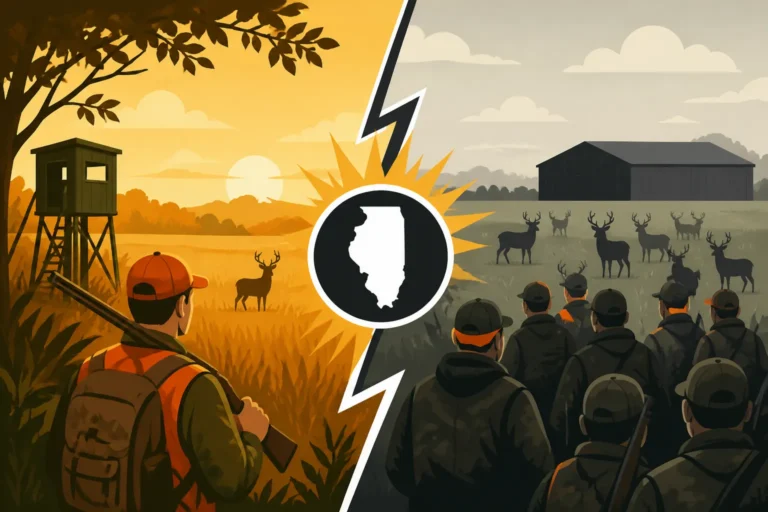
Illinois public lands can sometimes feel crowded, especially during peak seasons like Illinois's Two Firearm Deer Seasons. This is a common frustration for self-guided hunters. However, there are strategies to mitigate it. One is to hunt mid-week if your schedule allows, as weekends see the highest traffic. Another is to simply walk farther than most other hunters. Many deer hold tight just beyond the initial half-mile from access points. By pushing deeper into an area, you can often find pockets of undisturbed game. Finding Ground That Sees Fewer Hunters often means doing what others aren't willing to do.
Understanding that you're sharing the resource is key. Respect other hunters, maintain safe distances, and be visible with appropriate blaze orange when required. Planning your entry and exit routes carefully, especially in the dark, can help you avoid bumping into others and ruining hunts. The mental game of staying positive when you see another hunter's truck where you planned to hunt is also part of the self-guided experience.
Equipment, Contingency Planning, and Self-Sufficiency
When you're self-guided, you are your own logistics team. This means bringing the right gear, having backups, and being prepared for anything. A guide provides first aid, recovery assistance, and expert advice on gear. On your own, you need to think through every scenario. What if your GPS dies? Do you have a map and compass? What if you get turned around in the woods? Do you have an emergency kit?
This self-reliance extends to game recovery. If you harvest an animal, you're responsible for field dressing, quartering (if necessary), and getting it out of the woods. This might involve a cart, a pack, or calling a buddy for help. It forces you to be physically prepared and to think several steps ahead, beyond just the shot. It also pushes you to learn critical skills like Blood Trailing After Dark in Illinois or how to properly Field Dressing a Deer in Cold Weather. This holistic approach is one of the most enriching aspects of self-guided hunting.
Disclaimer
This article is for general informational purposes only and does not constitute professional advice. Laws, prices and regulations vary by location and change over time. Consult a qualified professional for guidance on your specific situation.