Hunting a Funnel Between Two Woodlots
One of the most frustrating aspects of deer hunting is feeling like the deer are just moving wherever they please, making it impossible to predict their travel. But the truth is, deer are creatures of habit and efficiency, constantly looking for the easiest and safest path between food, water, and bedding. This comprehensive guide will break down the art and science of hunting a funnel between two woodlots in Illinois, helping you understand, identify, and effectively set up on these high-traffic corridors to boost your success.
Understanding the Anatomy of a Deer Funnel
When we talk about hunting a funnel, we're really talking about exploiting natural pinch points in the landscape that concentrate deer movement. These aren't just random spots; they're strategic pathways deer use constantly, making them prime locations for a stand.
What Makes a Funnel Between Woodlots?
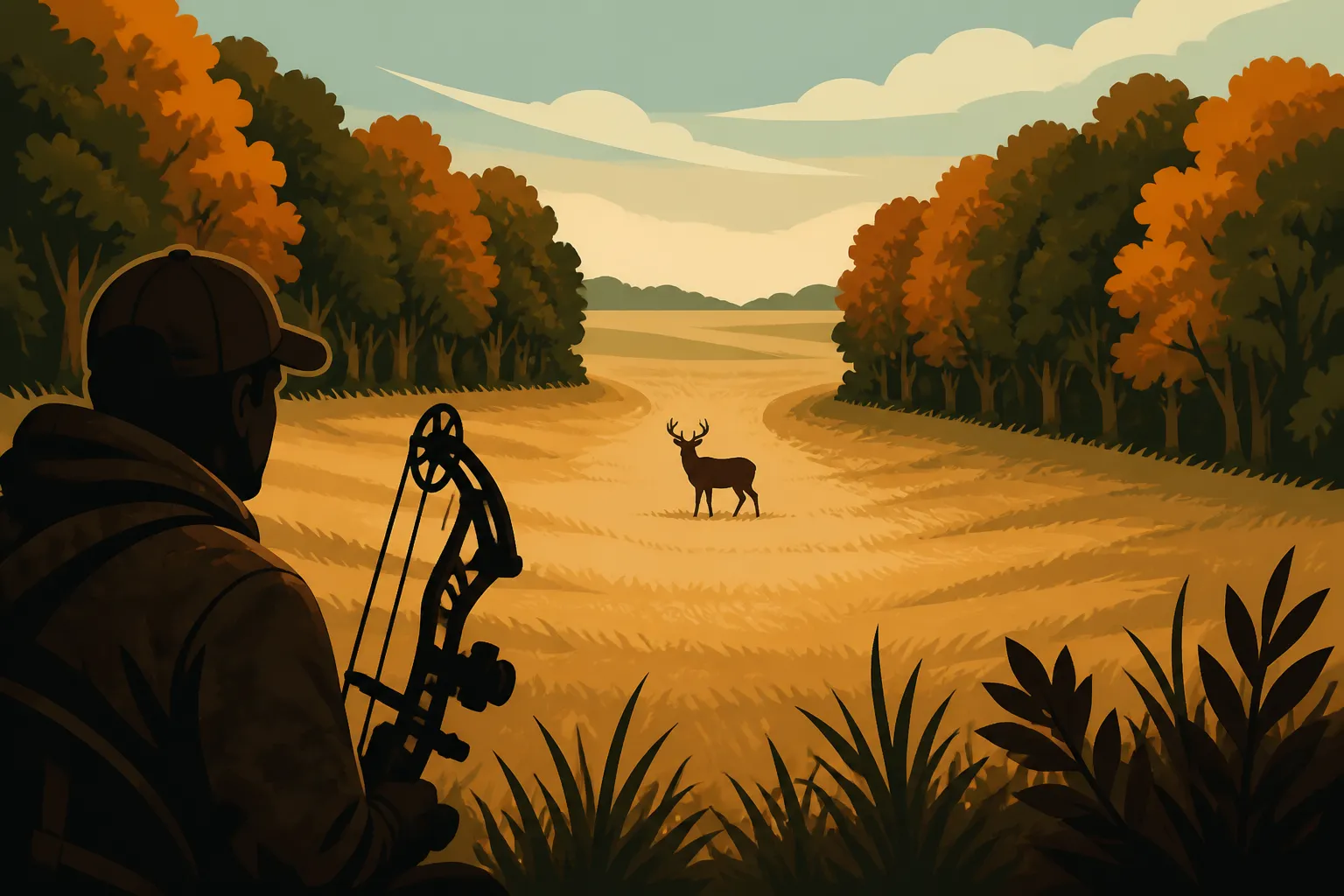
Imagine two distinct blocks of timber, maybe a quarter-mile apart, separated by an open agricultural field, a busy road, or even a small, brushy creek. Deer, being wary animals, are inherently reluctant to expose themselves in wide-open spaces, especially during daylight hours. A funnel in this context is simply the narrowest, most concealed, or most secure route connecting those two woodlots. It could be a thin strip of trees along a fence line, a shallow ditch overgrown with briars, or even just a subtle dip in the terrain that offers a momentary sense of cover.
Deer use these funnels because they minimize exposure to predators, including us hunters. They provide a quicker, safer journey from one secure area to another. This efficiency is amplified during periods of increased deer activity, like the rut, when bucks are actively cruising between bedding areas in search of does. Understanding this basic principle is the foundation for successful funnel hunting.
Types of Woodlot Funnels and Their Characteristics
Not all funnels are created equal, and recognizing the different types can help you anticipate deer movement more accurately.
- Timber Strips or Fencerows: These are perhaps the most classic examples. A narrow band of trees, often along an old fence line, connecting two larger woodlots across an open field. Deer will often hug the cover of these lines as they move, sometimes creating well-worn trails that are easy to identify. These are fantastic for early season archery or during the rut when bucks might be scent-checking the entire length of the strip. You might notice these when you're busy scouting with the Illinois DNR app.
- Creek or River Bottoms: A winding creek or river, especially if it's lined with brush and larger trees, can act as a natural highway. Deer will often follow these low-lying areas, using the banks and vegetation for cover as they travel between larger timber blocks. This is especially true if the creek bottom offers a water source, creating an even stronger draw.
- Topographical Features: Even subtle changes in elevation can create funnels. A small saddle between two hills, a drainage ditch running through an open area, or a natural depression can all act as pinch points. Deer will take the path of least resistance, and these topographical funnels provide both easier travel and a modicum of cover. Learning to identify these features is key when reading aerial photos for Southern Illinois deer, for instance.
- Man-Made Barriers: Roads, established trails, or even old building foundations can force deer into specific travel patterns. While less "natural," they function in the same way, pushing deer into a narrower corridor of movement. Always consider how human infrastructure might be subtly influencing deer paths.
Scouting and Interpreting Funnel Sign
Finding a potential funnel on a map is one thing; confirming its active use by deer is another. Effective scouting is paramount to ensure you're investing your time in a high-probability spot.
Identifying Active Funnels on the Ground
Once you've identified potential funnels on a map (using tools like GoHunt, for example), it's time to hit the woods. Don't just walk the funnel itself; approach it from different angles, observing the terrain and surrounding cover. Look for the most concentrated deer sign. This might mean following a game trail that clearly leads into and out of the funnel, or spotting rub lines and scrape lines that indicate mature buck activity. The more sign you find, the more confident you can be in the funnel's consistent use.
Pay close attention to where deer enter and exit the funnel from the larger woodlots. Are there specific trails leading out into adjacent fields? Are they funneling into a bedding area on one side and a food source on the other? Understanding these connections is crucial for predicting movement times and directions. You might find a well-used trail along a logging road that intersects with your funnel, indicating even more concentrated movement.
Interpreting Rubs, Scrapes, and Tracks
Deer sign isn't just about presence; it's about telling a story. Learning to interpret these signs will help you understand the type of deer using the funnel and when they are using it.
- Rubs: These are made by bucks scraping their antlers on trees. The size of the tree often correlates with the size of the buck. Fresh rubs indicate recent activity. A line of rubs leading into or out of a funnel suggests a buck is consistently using that path. Pay attention to the height and direction of the rub; this can sometimes indicate the direction of travel or even the buck's dominant side. During the rut, these rub lines become even more pronounced.
- Scrapes: Scrapes are patches of disturbed earth, typically under a low-hanging branch, where bucks paw the ground and deposit scent from their forehead glands and urine. Active scrapes, especially a "community scrape" used by multiple deer, are powerful indicators of consistent use. Check for freshness – disturbed leaves, wet earth, or recent urine smell. Scrapes are often "check-in" points, and a funnel with active scrapes is a goldmine. Understanding the role of grunt calls in mature Illinois timber can often relate to these active scrape lines as well.
- Tracks: Fresh tracks are undeniable proof of recent deer activity. Look for track size to estimate deer age/sex – larger, deeper tracks often indicate a mature buck. Pay attention to how many tracks, their direction, and if they're grouped. Are there parallel tracks suggesting a doe and fawn, or a buck following a doe? The ground within a funnel, especially where it might be damp, is an excellent place to find and analyze tracks. Don't forget to consider how recent rain or snow might affect track visibility.
Strategic Stand Placement and Wind Considerations
Once you've identified an active funnel, the next critical step is positioning your stand for success. This isn't just about finding a good tree; it's about understanding wind, thermals, and deer behavior.
Optimal Stand Locations Within a Funnel
Choosing the right tree or ground blind spot is paramount. You want to be close enough for a good shot but far enough away not to spook deer. The ideal location is often on the downwind side of the most concentrated travel path, allowing your scent to be carried away from the deer's approach.
Consider these factors for stand placement:
- Concealment: Can you break up your silhouette effectively? Look for trees with dense foliage, multiple trunks, or a backdrop that will help you disappear. A good stand in a dense canopy, similar to the advice for treestand setups in Shawnee National Forest, is always a plus.
- Shooting Lanes: Clear a few shooting lanes before the season, if possible, being mindful not to overdo it and alter the natural landscape too much. You want clear shots to the primary travel corridor but also to any secondary trails deer might use.
- Entry and Exit Routes: This is perhaps the most overlooked aspect. You need to be able to get to and from your stand without alerting deer. This often means using natural terrain features, ditches, or even approaching from a completely different direction than the deer will be traveling. Your entry route should typically be into the wind or crosswind, leading you directly to your stand without crossing any suspected deer paths.
- Elevated vs. Ground Blind: While a treestand gives you a height advantage for scent dispersion and visibility, a well-brushed-in ground blind can be incredibly effective in areas with limited suitable trees or heavy cover. Think about using a ground blind on Illinois public land if the conditions are right.
The Critical Role of Wind and Thermals
The wind is your most important ally and your greatest enemy in deer hunting. No matter how perfect your funnel, if your scent is blowing directly into the deer's travel path, your hunt is likely over before it begins.
- Understanding Wind Direction: Always check the prevailing wind direction for the day you plan to hunt. You want the wind to blow your scent away from where the deer are expected to come from and travel. This often means placing your stand on the downwind side of the funnel, or slightly crosswind. This is a primary consideration when hanging a stand on a Southern Illinois ridge, and it's no less important in flatter timber.
- Thermals and Their Effect: In addition to broad wind direction, thermals play a significant role, especially in hilly or varied terrain. Thermals are air currents caused by temperature changes. In the morning, as the sun warms the ground, air rises, creating an uphill thermal. In the evening, as the air cools, it sinks, creating a downhill thermal. You must account for these subtle air movements, as they can carry your scent surprisingly far, even on a seemingly calm day. This means your "perfect" stand might only be perfect for certain times of day.
- Using Multiple Stands: A smart hunter will have multiple stand locations for a single funnel, allowing them to adapt to changing wind conditions. If you only have one spot, you'll be limited to hunting it only on days with favorable winds, which dramatically cuts down your hunting opportunities. Always have a backup plan for when the wind inevitably shifts.
| Funnel Type | Ideal Stand Location (Relative to Deer Travel) | Key Wind Strategy | Best Time to Hunt |
|---|---|---|---|
| Timber Strip | Downwind/Crosswind of main trail | Wind blowing across the strip or away | Early morning, late afternoon, rut cruising |
| Creek Bottom | On the bank, slightly elevated (downwind) | Wind blowing up or down the creek, away | Midday (cruising), evening (food/water), rut |
| Topographical Dip | On the elevated edge, overlooking the dip | Wind blowing over the dip or away from path | Morning/evening (transition), rut |
| Narrow Thicket | Inside the thicket edge, with clear lanes | Wind blowing away from dense cover | Any time deer are moving through dense cover |
Tactics for Hunting Funnels Effectively
Once you've scouted, chosen your stand, and accounted for the wind, it's time to put your plan into action. Effective funnel hunting requires patience, proper timing, and sometimes, a little extra persuasion.
Timing Your Hunt for Peak Activity
The beauty of a funnel is that deer use them consistently, but there are definitely peak times when your odds increase significantly.
- Early Morning and Late Evening: These are classic times for deer movement between bedding and feeding areas. If your funnel connects a known bedding area to a food plot or agricultural field, these times are critical. Deer will often enter a field via a funnel at last light and return to bed through it at first light.
- The Rut: This is prime time for funnel hunting. As bucks search for does, they will actively cruise these narrow corridors, scent-checking for hot does. A single buck might travel miles in a day, and funnels are his most efficient routes. You can learn more about hunting the rut in early November, and you'll find that funnels are always a hot topic during this period. Bucks will be less wary and more focused on breeding during this time.
- Midday Movement: Don't discount midday, especially during the rut or on cold, cloudy days. Bucks will often cruise funnels at midday, particularly those connecting secure bedding areas, as they transition between resting spots or continue searching for does.
- Weather Fronts: Deer often move heavily before and after major weather fronts. A dropping barometer and approaching storm or a sudden cold snap can trigger increased activity as deer feed heavily.
Using Calls and Decoys to Enhance Your Odds
Sometimes, even in a prime funnel, deer might need a little encouragement. Calls and decoys can be effective tools if used correctly.
- Calling Strategies: During the rut, rattling and grunting in Illinois can be incredibly effective in funnels. The confined nature of a funnel means your calls carry well, and deer are more likely to investigate sounds coming from a pinch point. Start with soft grunts and gradually increase volume if you don't get a response. Rattle for short, aggressive bursts to simulate a buck fight, then listen intently. Be ready, as deer can come in fast.
- Decoy Placement: A single doe decoy, positioned correctly, can draw a curious buck right into your shooting lane. Place it within easy sight of the funnel, but not directly in the travel path where it might spook deer. Ensure it's downwind of your stand so any approaching buck comes into range while looking at the decoy, not smelling you. This works best during the pre-rut and rut phases when bucks are actively seeking does. Always consider the wind direction when setting a decoy.
- Scent Control: Even with perfect stand placement and wind, strict scent control is essential. Use scent-eliminating sprays, wash your clothes in scent-free detergent, and store them in airtight containers. Avoid strong-smelling foods or liquids before your hunt. This attention to detail can make all the difference, particularly if a deer briefly stops within your scent cone.
Successfully hunting a funnel between two woodlots boils down to meticulous scouting, understanding deer behavior, and respecting the wind. It's a method that works incredibly well for both bowhunting Illinois's long archery season and during Illinois's two firearm deer seasons. By putting in the effort, you'll find these natural choke points are consistently productive spots to intercept Illinois whitetails.
Disclaimer
Hunting is an inherently dangerous activity. Always prioritize safety by following all local, state, and federal hunting regulations, including those set by the Illinois Department of Natural Resources. Ensure you have the proper licenses and permits. Be aware of your surroundings, know your target and what is beyond it, and always handle firearms and archery equipment responsibly. This guide is for informational purposes only and does not replace professional instruction or local regulations.