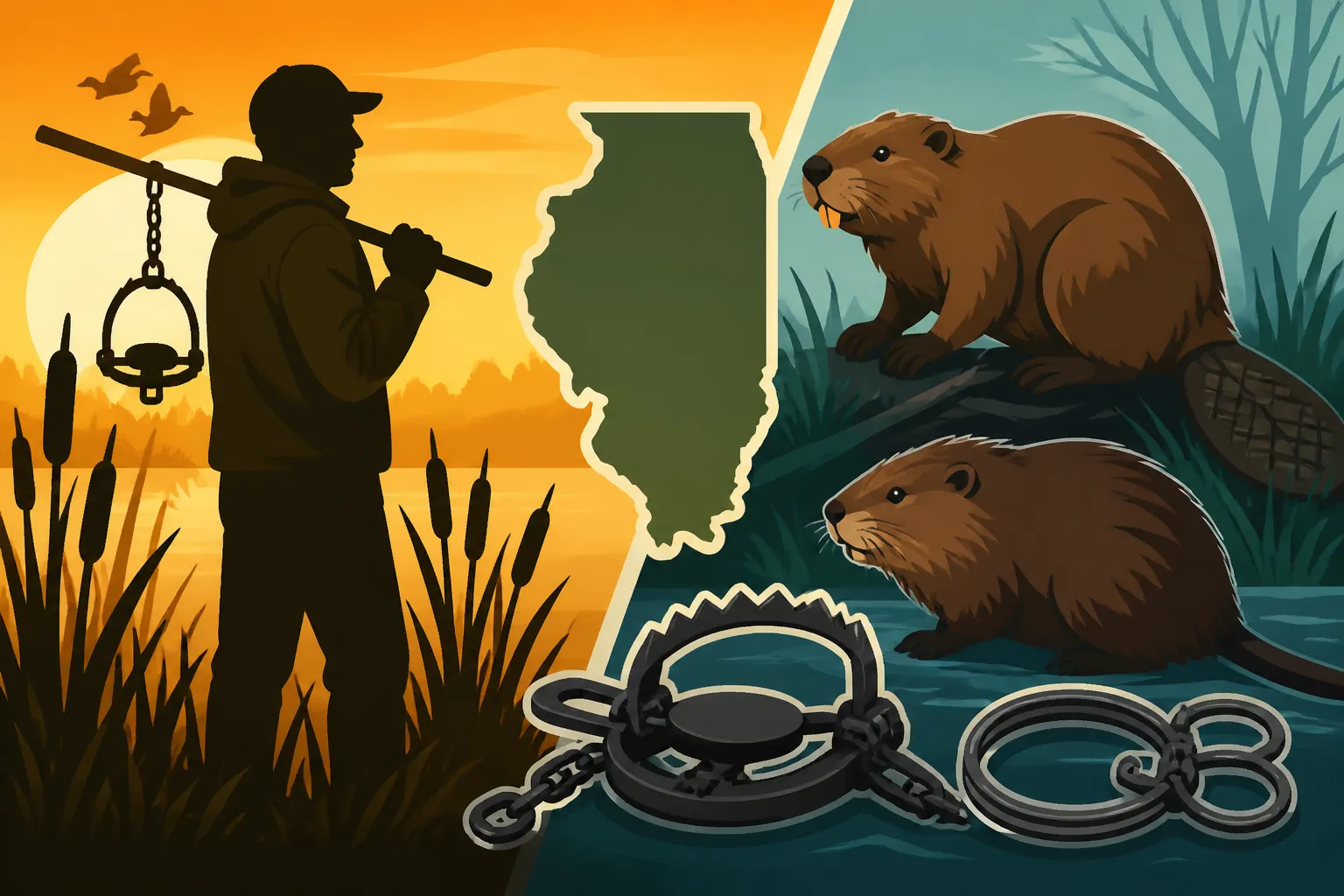
Trapping Illinois Muskrat and Beaver
The damage caused by muskrats and beavers can be incredibly frustrating for landowners and outdoor enthusiasts in Illinois. From undermining pond dams and eroding banks to felling valuable trees and flooding cropland, these industrious creatures can quickly turn a picturesque landscape into an expensive headache. This comprehensive guide will walk you through the ins and outs of trapping muskrats and beavers in Illinois, from understanding their habits to setting your traps legally and effectively.
Understanding Muskrat and Beaver Behavior in Illinois
Before you can effectively trap muskrats or beavers, you need to understand who you're dealing with. These are distinct animals with different behaviors, preferred habitats, and the specific kinds of damage they inflict. Knowing their ways is the first step to successful and ethical trapping.
The Persistent Muskrat: Digging and Damaging
Muskrats are fascinating semi-aquatic rodents, smaller than beavers but no less capable of causing significant localized damage. In Illinois, you'll typically find muskrats inhabiting slow-moving streams, farm ditches, marshes, and especially farm ponds. They are incredibly adaptable, thriving wherever there's water and vegetation. Their diet primarily consists of aquatic plants like cattails, water lilies, and sedges, along with roots and tubers. Occasionally, they'll even eat mussels or small fish.
The real headache for landowners comes from their burrowing habits. Muskrats dig extensive tunnel systems into banks, pond dams, and levees. These tunnels, often with underwater entrances, can weaken structures significantly, leading to leaks, collapses, and costly repairs. Imagine waking up to find your carefully maintained pond dam slowly eroding, or a section of your levee looking like Swiss cheese – that's often the work of muskrats. They're primarily nocturnal but can be active during the day, especially in undisturbed areas. Their breeding cycles mean populations can rebound quickly, making consistent management crucial.
The Industrious Beaver: Engineers of Destruction
Beavers, on the other hand, are the largest rodents in North America and true engineers of the wetland world. In Illinois, they favor larger rivers, streams, lakes, and expansive ponds where they can construct their iconic dams and lodges. Their diet is largely vegetarian, focusing on the cambium layer of trees like willow, aspen, and cottonwood, but they'll also consume bark, leaves, and aquatic plants.
The damage caused by beavers is often on a much grander scale than muskrats. Their damming activities can lead to extensive flooding, inundating agricultural fields, timber stands, and even roads. They frequently block culverts, causing water to back up and overflow. The sound of a chainsaw in the dead of night might not be a human, but a beaver felling a prized ornamental tree near your pond. Entire sections of timber can be drowned out, and valuable crops can be lost under rising water. Beavers live in family colonies, and once established, they can be incredibly persistent. Their activity is predominantly nocturnal, though you might spot them at dawn or dusk, especially in remote areas.
Essential Trapping Gear and Effective Setups
Choosing the right traps and knowing where to place them are paramount for both safety and success. Trapping is an art form, and having the right tools for the job makes all the difference.
Traps of Choice for Muskrats
For muskrats, the goal is often a quick, humane dispatch to preserve pelt quality and prevent escapes.
- Conibear (Body-Grip) Traps: The 110 or 120 size Conibear is a staple for muskrats. These traps are designed to kill the animal quickly by striking it across the neck and chest. They are particularly effective when placed in narrow channels, den entrances, or travel routes where muskrats are forced to swim through them. Always use a safety setter when setting these, as they are powerful. A good tip is to secure the trap to a drowning wire or a heavy stake so the animal cannot carry it off.
- Foothold Traps: Sizes #1 or #1.5 coilspring or longspring traps are also effective. When using footholds for muskrats, especially in water, a proper drowning set is crucial. This involves rigging the trap with a heavy weight (like a concrete block or heavy rebar) and a slide wire that pulls the captured animal into deeper water, ensuring a quick and humane drowning. Without a drowning set, a muskrat can escape or suffer unnecessarily. These traps can be placed on feed beds, bank slides, or underwater den entrances.
- Snare Traps: While less common for muskrats, small snare traps can be effective in specific, narrow underwater runways or culverts. However, they require careful placement and understanding of regulations, as snares can be less forgiving for non-target animals if not set correctly.
Regardless of the trap type, carrying essential tools like hip waders or chest waders, trap setters, cable cutters, and heavy-duty rebar stakes will make your muskrat trapline much more efficient and safer.
Tackling Beavers with Heavy-Duty Gear
Beavers are significantly larger and more powerful than muskrats, requiring more robust equipment and greater caution.
- Conibear (Body-Grip) Traps: For beavers, you'll be reaching for the 220 or 330 size Conibears. These are incredibly powerful traps, and extreme caution must be exercised when setting them. Always use a dedicated trap setter and practice setting them safely before heading to the field. These traps are highly effective when placed in main channels of travel, dam breaches, culvert entrances, or slides where beavers are forced to pass through. Securing these traps properly is non-negotiable; a strong cable or heavy chain anchored to immovable objects is essential to prevent the beaver from dragging the trap away.
- Foothold Traps: Sizes #3 or #4 coilspring or longspring traps are suitable for beavers. Similar to muskrats, a proper drowning set is absolutely essential for beaver footholds. A well-constructed drowning rig, often involving a heavy anchor and a long drowning wire, ensures the beaver is quickly submerged and dispatched. These can be set at the edge of dam breaches, on slides, or near castor mounds.
- Snare Traps: Cable snares are extremely effective for beavers, especially in their main runs on land (like dam crossovers) or underwater. A good beaver snare setup includes heavy-duty cable, a cam-lock or spring-loaded lock that cinches down tightly, and a swivel to prevent twisting. They must be anchored securely.
When you're out there looking for prime beaver trapping spots, remember that scouting is key. Many trappers find that having a solid scouting tool, like the detailed maps and public land overlays found on platforms like GoHunt, can make all the difference in locating prime trapping spots before you even set a foot in the water. Beyond the traps themselves, you’ll need a pry bar for anchors, heavy-duty gloves, a sharp hatchet or saw for clearing brush, and a canoe or boat if you're working larger waterways.
Navigating Illinois Trapping Regulations and Ethical Practices
Trapping furbearers in Illinois isn't just about setting a trap; it's about adhering to a strict set of regulations designed to ensure humane practices and sustainable wildlife populations. Ignoring these rules can lead to fines, permit revocation, and damage to the reputation of all trappers.
Understanding Illinois Season Dates and Legalities
The Illinois Department of Natural Resources (IDNR) sets specific seasons for furbearer trapping. Typically, the muskrat and mink trapping season in Illinois opens on November 5th and closes on February 20th statewide. Beaver season usually follows a similar opening, also on November 5th, but extends longer, closing on March 31st statewide. These dates are general, and it is absolutely vital to check the current IDNR Furbearer Hunting and Trapping Guide annually for exact dates, any zone-specific regulations, and potential changes.
To trap legally in Illinois, you'll need a valid Illinois Trapping License. Residents and non-residents alike must purchase this, along with the required Illinois State Habitat Stamp. Certain trap types are allowed, including Conibears, footholds, and snares, but there are important restrictions on their placement. For instance, body-grip traps over a certain size (typically 6.5 inches) must be completely submerged in water or placed at least 15 feet away from public roads, paths, or trails if set on land. Foothold traps must also be water sets or set a certain distance from public access points.
All traps must be checked at least once every 24 hours. This regulation is in place to ensure any captured animal is either dispatched quickly or, if a non-target species, released as soon as possible. Understanding the specific rules for Illinois Trapping License Requirements is your absolute first step, and it's also worth familiarizing yourself with broader furbearer rules, such as those governing Illinois Fox and Bobcat Trapping Season, as many general principles apply.
Humane Trapping and Responsible Land Use
Ethical trapping goes hand-in-hand with legal compliance. For water-dwelling animals like muskrats and beavers, drowning sets are not just efficient; they are considered the most humane method of dispatch. By ensuring the captured animal is quickly submerged and cannot surface, you minimize suffering. This is particularly crucial for beaver trapping, where a powerful animal in a foothold trap could otherwise struggle for extended periods.
Careful trap placement is another cornerstone of responsible trapping. Always consider the potential for catching non-target animals, including domestic pets or protected wildlife. Avoid setting traps in areas heavily frequented by people or their animals. If you do catch a non-target species, know how to safely release it or, if seriously injured, how to properly report it to a conservation police officer.
On private land, obtaining explicit permission from the landowner is non-negotiable. This isn't just good manners; it's the law. Our article on Getting Private Land Permission in Illinois offers excellent advice on how to approach landowners respectfully and secure access. If you're considering trapping on public land, be aware that these areas often have additional, specific regulations. Check with the managing agency for any particular Illinois State Fish and Wildlife Areas or general Public Hunting Land in Illinois for local rules on trap placement, identification, and access.
Finally, all traps, whether on public or private land, must be tagged with your IDNR customer identification number. This allows conservation officers to identify the owner of any trap and helps ensure accountability.
Processing Your Catch: From Field to Fur
Successfully trapping a muskrat or beaver is only half the battle. The real work begins with processing your catch to ensure the highest quality pelt and making the most of the animal's resources. This is where skill, patience, and the right techniques come into play.
Field Care and Skinning
Once you've made a catch, the first step is quick, humane dispatch. This minimizes stress on the animal and helps preserve the quality of the fur. For muskrats and beavers caught in drowning sets, this is typically already handled. If you're using footholds on land (though less common for these species), a quick, decisive blow to the head is generally the accepted method.
Transporting your catch correctly is crucial. Keep the animals cool and clean, ideally in a separate bag or container, to prevent blood or dirt from staining the fur. The skinning process itself differs slightly between muskrats and beavers due to their size and fur structure.
- Muskrats: Muskrats are typically "case skinned." This means making an incision from one hind foot to the other, circling the tail, and then pulling the skin down over the body like pulling off a sweater. The front legs are cut off at the paws, and the ears and nose are carefully skinned. The key with muskrats is to remove as much fat as possible from the pelt during the fleshing stage, as muskrat fat can quickly degrade the fur.
- Beavers: Beavers are usually "open skinned" or "blanket skinned." This involves a cut down the belly from the chin to the vent, and then cuts from each paw to the belly cut. The skin is then carefully peeled and cut away from the body, leaving it as a flat circle or oval. Beavers have a thick layer of fat, especially on their backs, which needs to be meticulously removed. This is a much more strenuous process than skinning a muskrat, requiring sharp knives and plenty of elbow grease.
Having dedicated skinning knives, a fleshing beam, and appropriate stretching boards or hoops nearby will streamline this process considerably.
Fleshing, Stretching, and Drying for Market
Once skinned, the pelt needs to be "fleshed." This is the critical step of removing all remaining fat, meat, and membrane from the hide. Any left-over material will cause the pelt to spoil or "burn" during the drying process, severely reducing its value.
- Fleshing: For muskrats, a small fleshing beam and a dull fleshing knife work well to scrape off the subcutaneous fat. For beavers, a larger, sturdy fleshing beam (often a rounded log or PVC pipe) and a sharp, two-handled fleshing knife are essential. This is hard work, but thorough fleshing is paramount for a quality pelt.
- Stretching: After fleshing, the pelt needs to be stretched and shaped. Muskrat pelts are typically stretched on wire or wooden drying boards designed to give them a uniform case shape. Beaver pelts are traditionally stretched into a large, round shape using a wooden hoop or a dedicated beaver board, carefully tacked into place. Correct stretching ensures even drying and presents the fur in the most appealing way for buyers. Knowing how to properly prepare a pelt is an art form, and many trappers consult detailed guides or even online mapping tools like GoHunt to analyze habitat and predict fur quality in different regions of Illinois.
- Drying: Finally, the stretched pelt must be dried in a cool, well-ventilated area, away from direct sunlight or excessive heat. A fan can aid air circulation, but never use direct heat. Proper drying can take several days to a week or more, depending on humidity and pelt thickness. The goal is a dry, pliable pelt with no moisture retention.
The final quality of your pelt, from its size and condition to its fur density, will dictate its market value. While fur prices fluctuate, a well-processed pelt always fetches a better return. It’s a testament to your hard work and respect for the animal. Exploring topics like Illinois Muskrat and Mink Trapping Trends or even Illinois River Otter Recovery can give you a broader perspective on furbearer management and the market.
| Feature | Muskrat Trapping | Beaver Trapping |
|---|---|---|
| Target Species | Muskrat (Ondatra zibethicus) | American Beaver (Castor canadensis) |
| Primary Damage | Bank erosion, pond dam weakening, crop damage | Tree felling, flooding, culvert blockage, crop inundation |
| Typical Traps | #110/#120 Conibear, #1/#1.5 Foothold, small snares | #220/#330 Conibear, #3/#4 Foothold, cable snares |
| Setup Locations | Den entrances, feed beds, narrow runs, bank slides | Main channels, dam breaks, castor mounds, culverts, slides |
| Drowning Sets | Highly recommended | Absolutely essential |
| Season (IL) | Typically Nov 5 – Feb 20 (check current regs) | Typically Nov 5 – March 31 (check current regs) |
| Challenges | Smaller target, occasional non-target catch | Large, powerful animal, significant gear, public perception |
Trapping muskrats and beavers in Illinois is a rewarding endeavor that contributes to wildlife management and can protect valuable property. It demands respect for the animals, a deep understanding of their habits, careful adherence to regulations, and a commitment to ethical practices. For those looking to expand their knowledge on trapping techniques and even find potential furbearer hotspots, resources like GoHunt can be invaluable, offering insights and mapping capabilities that go beyond just big game.
Disclaimer
Please note that hunting and trapping regulations in Illinois are subject to change. Always consult the most current Illinois Department of Natural Resources (IDNR) hunting and trapping regulations before participating in any trapping activities. This guide is for informational purposes only and does not supersede state laws or official IDNR publications.