Crow Hunting Seasons and Tactics in Illinois
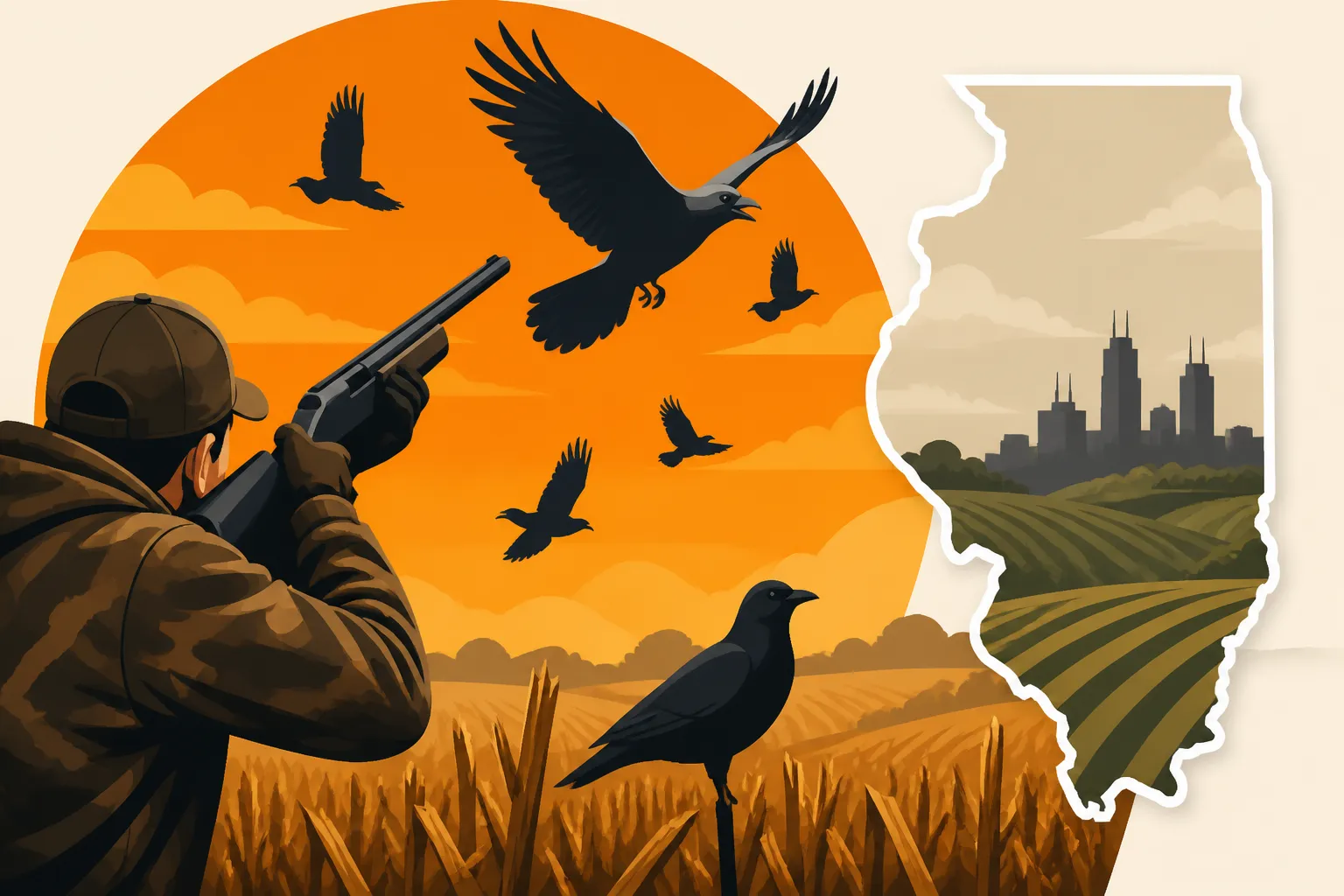
For hunters in Illinois, the off-season lull can feel impossibly long, leaving many eager to extend their time in the field when deer or turkey tags aren't in play. Crow hunting offers a fantastic, often overlooked opportunity to sharpen your skills, enjoy dynamic wing-shooting, and tackle one of nature's most intelligent birds. Many hunters find crows incredibly challenging due to their keen eyesight and social vigilance, but this guide will equip you with the knowledge to consistently bring these wary birds into range, detailing everything from seasons and regulations to advanced tactics and essential gear.
Understanding Illinois Crow Seasons and Regulations
Crow hunting in Illinois isn't just a casual affair; it's governed by specific regulations that every hunter needs to understand. Unlike some game species with very limited windows, crows often provide a much longer season, making them an excellent quarry for extending your time outdoors. However, this doesn't mean it's a free-for-all, and knowing the nuances is crucial for staying legal and successful.
Seasonal Overview and Permit Requirements
Illinois typically offers a generous crow hunting season, running from around early June through the end of October, and then often resuming in late December through early March. This extended period means you have opportunities across multiple months, allowing you to scout and hunt without the intense pressure of shorter seasons. However, these dates can shift slightly year-to-year, so always double-check the most current Illinois Department of Natural Resources (IDNR) digest. The beauty of crow hunting is its accessibility; you generally don't need a special permit beyond your standard Illinois Hunting Licenses and What They Cost. A regular Illinois hunting license is sufficient for residents, and non-residents will need their respective Illinois Nonresident License Options and perhaps a habitat stamp. This simplicity in licensing makes crow hunting a low-barrier-to-entry activity, perfect for new hunters or those looking for a different challenge. Always ensure you have your required licenses and stamps in possession while afield, as enforcement can and does happen.
When planning your hunts, consider the two distinct season blocks. The summer/fall season (June-October) often finds crows spread out in smaller family groups, focused on foraging in agricultural fields or along timber edges. The winter season (December-March) sees crows congregate in massive roosts, offering different tactical opportunities. Keeping up with these specific seasonal periods is vital, and resources like the official IDNR website or even scouting apps like GoHunt can help you stay informed about any potential changes or specific local rules that might apply.
Legal Hunting Hours and Location Rules
The legal hunting hours for crows in Illinois are generally quite flexible, extending from one half-hour before sunrise to sunset. This wide window allows for both morning and evening hunts, which can be advantageous given crow behavior. Crows are most active during the day, flying from their roosts to feeding areas at dawn and returning at dusk. This predictability in their daily patterns can be a huge asset to hunters. However, it's crucial to always be absolutely certain of your shooting lanes and backstops, especially during low-light conditions. Safety should always be your top priority, even more so when hunting in areas that might be close to human habitation or livestock.
While crows are considered an unprotected species in many contexts due to their impact on agriculture and other bird populations, there are still rules about where you can hunt them. Discharging a firearm too close to occupied dwellings, roads, or certain public areas is strictly prohibited. Always be mindful of property lines and ensure you have permission before hunting private land. For public land, research the specific site regulations for crow hunting. Some state fish and wildlife areas might have restrictions or even require Illinois Site Permit Application Process for hunting any species, including crows. Respecting these boundaries and rules isn't just about avoiding Illinois Wildlife Violation Penalties; it's about being a responsible ambassador for hunting. Knowing your location, whether through a physical map or a digital tool like GoHunt, is paramount to staying legal and safe.
Essential Tactics for Successful Crow Hunting
Crows are incredibly intelligent and have excellent senses, making them a formidable opponent. They communicate effectively, often posting sentinels to warn the flock of danger. To consistently fool these birds, you need a multi-faceted approach that combines sound, sight, and effective concealment. It's a game of chess, and you need to be several moves ahead.
Calling Strategies for Attracting Crows
Effective calling is the backbone of successful crow hunting. Crows are highly vocal and respond to a variety of calls, each communicating a different message. Your goal is to mimic these sounds convincingly to draw them into range. The most common and effective calls are distress calls, often mimicking a crow in trouble or being attacked by a predator like an owl or hawk. This call triggers their innate mobbing behavior, drawing them in to investigate and potentially harass the threat. Electronic callers, such as those from Foxpro or Primos, are incredibly effective here because they can produce a wide range of realistic crow vocalizations at high volume, which is often necessary to reach distant birds or cut through wind.
Beyond distress calls, you'll want to incorporate "come here" calls or argumentative caws, especially if crows are circling warily. These calls suggest that other crows have found something interesting, appealing to their curiosity and social nature. Varying your cadence and volume is key; don't just blast a constant sound. Start with a series of loud, urgent calls, then taper off as birds approach, perhaps mixing in some softer "assembly" calls. Pay close attention to their responses: a sudden increase in cawing from the approaching flock might indicate they've spotted something amiss or are about to commit. Just like Coyote Calling in Illinois Farm Country, it's about reading the animals' reactions and adjusting your calling accordingly.
Decoy Spreads and Positioning
While calling brings them in, decoys are what give crows the confidence to commit to your setup. Crows are highly visual creatures, and seeing other crows on the ground or in trees often overrides their natural caution. Full-body crow decoys are excellent, especially if you can get some flocked or matte-finish ones to reduce glare. Six to twelve decoys can create a convincing spread, but don't be afraid to go larger if you have them, as big numbers signal safety to an approaching flock. Positioning your decoys is critical. Place them in open areas where they are highly visible from a distance, such as field edges, open pastures, or clearings in timber.
Motion decoys can be incredibly effective, mimicking a crow flapping its wings or feeding on the ground. A simple "flapper" decoy or a rotating wing decoy like those offered by Mojo can add a lifelike element that draws crows in. When setting up, aim to position your decoys within shotgun range (25-40 yards) of your blind. Consider the prevailing wind direction; crows, like most birds, prefer to land into the wind, so position your decoys to give them a natural approach path that puts them squarely in your shooting zone. If you're hunting near a known flyway or roost, setting your decoys along that path can be incredibly productive, luring birds away from their routine route just long enough for a shot.
Hide Construction and Concealment
Crows have phenomenal eyesight, a fact often underestimated by hunters. They can spot unnatural shapes, movements, and glare from a considerable distance, especially when flying high. Therefore, creating a flawless hide is non-negotiable. A natural ground blind built from brush, fallen logs, and natural vegetation is often the most effective. Look for natural cover, like a thick fencerow, a stand of cedars, or the edge of a timber block. Utilize materials found on-site to break up your outline completely. This can involve cutting branches and weaving them into a portable blind frame or simply piling up natural debris. For more structured options, commercially available ground blinds work well, but they must be brushed in extensively to blend with the surroundings. Think about what a crow would see from above and from a distance.
Camo is also crucial. Wear a full complement of camouflage that matches your environment – dark patterns for timber, lighter patterns for field edges. Face masks or paint, and gloves are absolute necessities to cover all exposed skin. Even a shiny watch face or the glint of a gun barrel can spook a flock. Remain absolutely still as birds approach. Any movement, even a slight shift, can send them veering off. Waiting for the optimal shot opportunity, when birds are committed and ideally cupped up over your decoys, requires patience and discipline. For tips on setting up various hides, you might find valuable insights in articles discussing Using a Ground Blind on Illinois Public Land or Treestand Setups in Shawnee National Forest, adapting the principles of concealment to your specific crow hunting scenario.
| Aspect of Crow Hunting | Summer/Fall Season (June-Oct) | Winter Season (Dec-Mar) |
|---|---|---|
| Crow Behavior | Dispersed family groups, foraging | Large roosts, concentrated flights |
| Hunting Location | Farm fields, timber edges, orchards | Roost entry/exit routes, feeding fields |
| Typical Tactics | Aggressive calling, small decoy spreads | Heavy calling, large decoy spreads, flyway intercepts |
| Optimal Conditions | Overcast, calm days, post-harvest fields | Cold, clear days, pre-dawn/dusk flights |
| Concealment Need | High – small groups are very wary | Extremely High – large groups spot danger quickly |
| Ammunition Focus | Smaller shot sizes (#7.5, #6) | Larger shot sizes (#6, #5) for range/penetration |
Gear and Setup for Illinois Crow Hunting
Just like any other hunting pursuit, having the right gear can make a significant difference in your crow hunting success. While you don't need a massive investment, a few key items will greatly enhance your effectiveness and comfort, allowing you to focus on the hunt itself rather than struggling with inadequate equipment.
Firearms and Ammunition Choices
For crow hunting, shotguns are overwhelmingly the firearm of choice, and for good reason. Crows present fast, erratic targets, and the spreading pattern of a shotgun offers the best chance for a successful hit. A 12-gauge shotgun is the most versatile, capable of handling a variety of loads and ranges. A 20-gauge can also be effective, especially for younger hunters or those sensitive to recoil, but its range might be slightly more limited. Barrel length isn't as critical as with, say, Waterfowl Hunting the Illinois River Valley, but a shorter barrel (26-28 inches) can be quicker to maneuver in a blind. As for choke, a modified or improved modified choke is often a good all-around choice, providing a dense enough pattern for crows at typical ranges (25-40 yards) without being too tight for closer shots.
Ammunition selection is crucial. You'll want a load that delivers sufficient pellets to create a dense pattern for a quick, clean kill. Lead shot is typically allowed for crows, and common choices include #6 or #7.5 lead shot. For more challenging, longer-range shots, some hunters opt for #5 shot. High-velocity loads can help with effective range and pattern density. Always prioritize a clean kill, so pattern your shotgun with your chosen ammunition before heading afield. Understanding the capabilities of your firearm and ammunition is paramount for ethical hunting.
Camouflage and Other Essential Equipment
Beyond your firearm, effective camouflage is perhaps the most important piece of gear. As mentioned, crows have incredible eyesight. This means wearing a full complement of quality camouflage is not optional; it's mandatory. Choose patterns that closely match the specific environment you'll be hunting in – whether it's the dark greens and browns of a timber edge or the muted tones of a dormant cornfield. A good quality face mask or face paint is essential to break up the outline of your head and prevent any skin from shining. Gloves are also a must. You'd be surprised how easily a flash of bare skin can spook a wary crow.
Beyond camo, consider a comfortable seat. Crow hunts often involve periods of waiting, and a small stool or ground blind chair can make a world of difference. Binoculars are incredibly useful for scouting distant birds or identifying their flight paths, which ties into good pre-season Scouting Illinois Public Land Before Season. A rangefinder can help you accurately gauge distances to your decoy spread and ensure you're shooting within ethical limits. Don't forget bug spray, especially during the warmer summer season, as mosquitoes and other biting insects can quickly ruin an otherwise perfect setup. And always pack plenty of water and snacks – long sits require sustenance.
Advanced Strategies and Ethical Considerations
Crow hunting isn't just about showing up and blasting away. It's a nuanced pursuit that rewards keen observation, adaptability, and a strong ethical compass. To truly master crow hunting in Illinois, you'll need to think beyond the basics and consider the broader context of your actions.
Scouting for Crow Roosts and Flight Paths
The most consistent crow hunting success often comes from identifying and targeting their primary travel corridors and roost sites. Crows are creatures of habit, often using the same roosts year after year, especially during the winter months. These roosts can hold hundreds, even thousands, of birds. Identifying these communal roosts is a critical scouting step. Look for concentrations of crows flying to a particular woodlot or area in the late afternoon. You can often hear their collective cawing from a distance as they gather. Tools like aerial maps on platforms such as GoHunt, or even the Illinois DNR Map Tool, can help you identify potential roosting areas (dense timber blocks) and major flight lines (rivers, treelines, power lines) that connect these roosts to feeding grounds.
Once you locate a roost, don't hunt directly in it. Instead, focus on intercepting birds along their flight paths from the roost to feeding areas in the morning, or as they return in the evening. Set up a good distance away, perhaps a quarter to a half-mile, in a location that offers good concealment and visibility of the flight path. Understanding these patterns is akin to how experienced deer hunters might read a ridge for Still-Hunting Southern Illinois Ridges or identify major deer trails. A little upfront legwork in scouting can lead to dramatically more successful hunts than simply randomly setting up.
Responding to Educated Birds and Pressure
Crows are exceptionally intelligent, and they learn quickly. If you hunt the same spot too often or too aggressively, they will become "educated" to your tactics and avoid the area. This is where adaptability becomes paramount. If birds start to flare consistently before reaching your spread, it's a sign they've figured out your setup. This might mean you need to move your blind, change your decoy spread, or alter your calling sequence. Sometimes, reducing the intensity of your calling or using more subtle "assembly" calls rather than aggressive distress calls can make a difference.
Hunting pressure also plays a role. If a particular area has seen a lot of crow hunting, the birds there will be warier. It’s often beneficial to have multiple spots scouted and rotate your hunting locations to give birds a break and prevent them from becoming too wary. Think of it like trying to fool a smart whitetail during Hunting the Rut in Early November; consistency in your approach might work for a time, but ultimately, the animals adapt. Staying mobile and having fresh spots is a key advantage. Sometimes, even the smallest details, like changing your entry and exit routes to avoid spooking birds, can make a significant difference.
Ethical Hunting and Public Perception
While crows are often seen as pests by farmers and can be detrimental to other bird populations, ethical hunting practices are still paramount. Always strive for clean, humane kills. This means knowing your effective range and only taking shots when you're confident in a hit. Avoid "sky busting" or taking extremely long shots that are likely to wound birds rather than kill them cleanly. Retrieve all downed birds; leaving them in the field is not only wasteful but can also contribute to a negative public perception of hunting. Dispose of carcasses responsibly, following local regulations.
Crow hunting can sometimes be misunderstood by non-hunters, especially given the "unprotected" status in some contexts. Being discreet, respectful of private property, and mindful of noise levels (especially with electronic callers) helps maintain a positive image for all hunters. Remember, every time you're afield, you're an ambassador for hunting. Upholding high ethical standards ensures that crow hunting, and hunting in general, remains a respected and viable activity for generations to come.
Disclaimer
Please note that hunting regulations, seasons, and licensing requirements can change. Always consult the latest official Illinois Department of Natural Resources (IDNR) publications and local ordinances before engaging in any hunting activity. This guide is for informational purposes only and does not supersede official regulations.